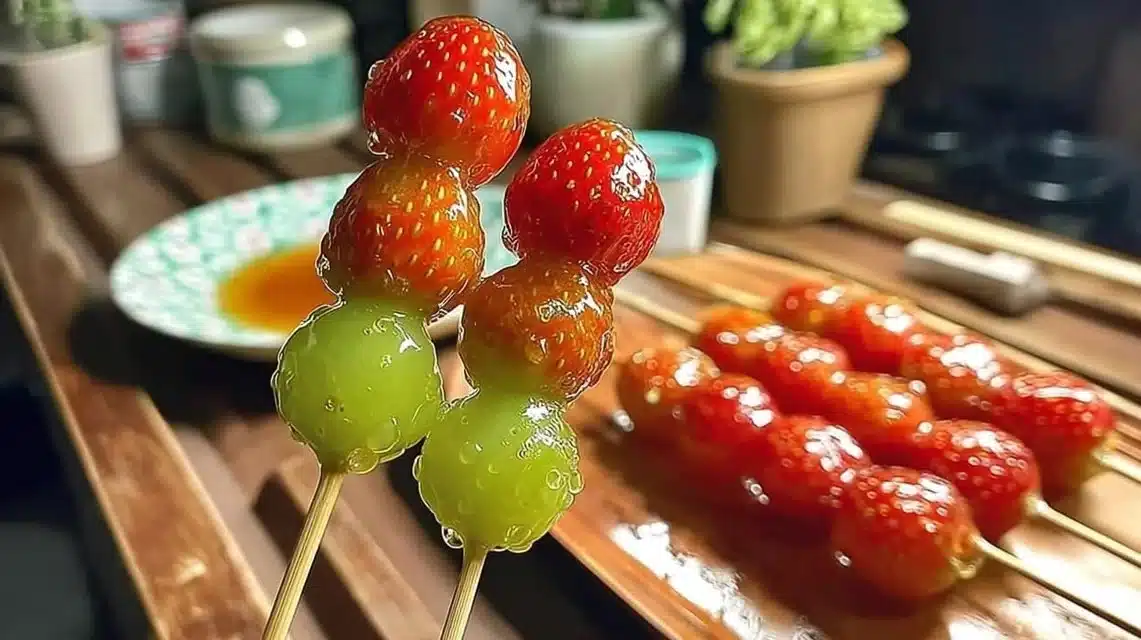
Tanghulu (Candied Hawthorn) is a glossy, sweet snack where firm, ripe berries are coated in a thin, hard sugar shell that snaps when you bite it. The contrast between the bright, juicy fruit and the glass-like candy coating is sweet, tart, and texturally thrilling. It is simple to make at home with just berries, granulated sugar, and water, and it comes together quickly once the syrup reaches the right temperature. This recipe is perfect for a festive street-food vibe at home, a fun party treat, or a quick dessert — try serving on skewers for easy sharing.
Why You’ll Love This Tanghulu (Candied Hawthorn)
- Minimal ingredients: just berries, white sugar, and water.
- High-impact contrast: crunchy candy shell and juicy fruit inside.
- Fast to make once the syrup is ready — great for last-minute treats.
- Flexible: works with strawberries or other firm berries.
- Eye-catching presentation: glossy skewers that look professional.
- Kid-friendly and shareable — fun for parties and holidays.
- Hands-on but simple: a good beginner candy project with big payoff.
- Easy to scale up or down depending on how many skewers you want.
What Is Tanghulu (Candied Hawthorn)?
Tanghulu is a classic Chinese street snack traditionally made with hawthorn berries coated in hardened sugar. The candy coating gives a bright, glassy finish and a loud snap when you bite into it. The taste is a mix of concentrated sweet caramel on the outside with the fresh, often tart fruit inside. Making tanghulu is a simple candying method: dissolve and boil sugar and water, reach the hard crack stage, then dip fruit into the syrup so a thin shell forms as it cools. The overall vibe is festive and nostalgic — it works for street-food style snacking, holiday treats, or a playful appetizer at gatherings.
Ingredients for Tanghulu (Candied Hawthorn)
Main
- Strawberries or other berries (firm and ripe)
- Granulated white sugar (equal parts with water)
- Water (equal parts with sugar)
Ingredient Notes (Substitutions, Healthy Swaps)
- Fruit: Use any firm berry such as strawberries, raspberries (use a firmer variety), blueberries, or small plums. Avoid overly soft or overripe fruit — it won’t hold up to dipping.
- Sugar: Granulated white sugar is required to get the clear, hard shell. Brown sugar or honey will change color and texture and are not recommended for the classic glossy shell.
- Water: Needed to dissolve the sugar and control the syrup consistency. You can use filtered water for the cleanest flavor.
- Sweetness control: For a less-sweet result, choose tart berries like slightly underripe strawberries or small sour cherries. Note this changes flavor balance but keeps technique the same.
- Diet swaps: There is no reliable low-sugar substitute that gives the same hard crack shell. If you need a lower-sugar alternative, consider serving fresh berries with a light honey drizzle instead (not tanghulu).
Step-by-Step Instructions
Step 1 – Prepare the fruit
Wash the berries gently and dry them thoroughly. Moisture prevents the syrup from sticking properly. If you want traditional skewers, thread berries onto clean wooden or metal skewers, leaving a little space at the end for handling.
Visual cue: Fruit should be completely dry and free of water droplets.
Step 2 – Make the syrup
In a heavy-bottomed pot, combine equal parts granulated white sugar and water. Stir over medium heat until the sugar dissolves, then stop stirring and let it come to a boil.
Visual cue: The syrup will go from cloudy to clear as the sugar dissolves.
Step 3 – Simmer to hard crack stage
Let the syrup simmer until it thickens and reaches the hard crack stage (around 300°F / 149°C) on a candy thermometer. Watch closely so it does not burn.
Pro cue: If you don’t have a thermometer, test by dropping a small amount into cold water — it should form brittle threads that snap.
Step 4 – Dip the fruit
Work carefully: quickly dip each piece of fruit or each skewer into the hot syrup, letting excess drip off, then place on a parchment-lined tray to cool. Work in small batches so the sugar stays hot enough to coat evenly.
Visual cue: The dipped fruit will have a smooth, glossy finish that sets within a minute or two.
Step 5 – Cool and serve
Allow the tanghulu to cool until the candy shell hardens completely. Serve immediately for the best snap and texture.
Pro cue: If the shell dulls or becomes sticky, the sugar may have absorbed moisture — serve right away or store briefly (see storage).

Pro Tips for Success
- Use a heavy-bottomed pot to distribute heat evenly and reduce hot spots that cause burning.
- Dry fruit thoroughly; any surface water will cause the syrup to seize or become cloudy.
- Use a candy thermometer for consistent results; the hard crack stage is around 300°F (149°C).
- Work fast but carefully when dipping — the sugar hardens quickly once off heat.
- If syrup begins to crystallize on the pot sides, wet a pastry brush with water and brush down the sides to dissolve crystals.
- Don’t stir once syrup reaches a boil — stirring can encourage crystallization.
- If making a large batch, keep the syrup over very low heat and bring back to a bubble before dipping each new batch so coating remains smooth.
- Cool on parchment or a silicone mat to prevent sticking and to preserve the glossy finish.
Flavor Variations
- Optional: Citrus twist — add a thin strip of lemon or orange zest under the berries on the skewer for a bright aromatic note (place zest between fruit pieces).
- Optional: Spiced sugar shell — stir a very small pinch of ground ginger or cinnamon into the sugar before heating for a warm spice finish (use sparingly to avoid clouding).
- Optional: Multi-berry skewers — mix strawberries, blueberries, and raspberries on one skewer for color and textural contrast.
- Optional: Seeded finish — after dipping, quickly sprinkle with toasted sesame seeds for a nutty touch (works best on larger berries).
- Optional: Chocolate finish — once the candy shell fully sets, drizzle with melted dark chocolate for a two-texture dessert (not traditional but tasty).
Serving Suggestions
- Serve skewers standing in a tall jar or laid on a simple white platter for a street-food presentation.
- Pair tanghulu with a small cheese board — the sweet crunch contrasts well with mild cheeses like ricotta or fresh goat cheese.
- Offer as a playful dessert at parties with napkins; guests love the interactive element.
- Plate 2–3 skewers per person with a side of plain yogurt for dipping that cuts the sweetness.
- Bring to outdoor festivals, picnics, or holiday gatherings — tanghulu travels well for short periods.
- Use as a festive topping for simple pound cake or vanilla ice cream for a crunchy, candied accent.
Make-Ahead, Storage & Reheating
- Make-ahead: You can prepare the fruit (wash, dry, and skewer) several hours ahead and keep it refrigerated, covered, until ready to candy. Do not pre-coat the fruit with syrup in advance.
- Storage duration: Store finished tanghulu in a single layer at room temperature in an airtight container for up to 24 hours. After that, the sugar shell will start to soften as it absorbs moisture.
- Refrigeration: Refrigerating tanghulu is not recommended because condensation will make the shell sticky.
- Reheating: Once the candy shell softens, reheating to restore crunch is not practical without melting the original coating and re-candifying. If the shell is slightly tacky, serve immediately rather than refrigerate.
Storage and Freezing Instructions
- Freezing is not recommended. The sugar shell is delicate and will crack or become sticky after thawing because moisture forms ice crystals and damages texture.
- If you must store longer than a day, consider keeping the prepared, skewered fruit (uncoated) refrigerated and candy the fruit the day you plan to serve.
- For short-term transport, keep in a cool, dry container and avoid humidity.
Nutrition Facts (Per Serving)
Calories | Protein | Carbs | Fat | Fiber | Sodium
90 kcal | 0.5 g | 22 g | 0 g | 1 g | 1 mg
Estimates vary by brands and portions.
FAQ About Tanghulu (Candied Hawthorn)
Q: Why did my sugar become grainy or crystallize?
A: Graininess happens if sugar crystals form on the sides of the pot or if you stir after boiling. Brush down sides with a wet pastry brush while heating and avoid stirring once boiling.
Q: What if the syrup is too runny after dipping?
A: The syrup didn’t reach the hard crack stage. Reheat to finish cooking, or cool slightly and test again until brittle threads form in cold water.
Q: My shell is sticky after a few hours — is it ruined?
A: The shell absorbs moisture over time. It’s best eaten within 24 hours at room temperature. Refrigeration will only make it more sticky.
Q: Can I use frozen berries?
A: No. Frozen berries release water when thawed and will spoil the syrup and final texture. Use fresh, firm berries only.
Q: How can I tell the hard crack stage without a thermometer?
A: Drop a small amount of hot syrup into very cold water; if it forms brittle threads that snap easily, it’s at hard crack.
Q: Can I reuse leftover syrup?
A: Leftover syrup that hasn’t browned or crystallized may be cooled and stored briefly, but reheating can darken it. Best to make only what you need.
TastyInspo Notes
- Serve skewers upright in a shallow glass with sugar at the bottom to keep skewers steady and display glossy shells.
- For a festive touch, alternate berry colors for a rainbow skewer effect.
- Use disposable skewers for large crowds to make cleanup easy.
- Garnish the serving tray with fresh mint sprigs for a pop of color and aroma.
- Offer a small bowl of coarse flaky salt nearby for guests who enjoy a sweet-salty contrast.
Troubleshooting
- Problem: Syrup burned or tastes bitter. Fix: Discard and start over with a clean pot; do not scrape burned sugar into new syrup.
- Problem: Shell won’t harden. Fix: Continue cooking syrup to the hard crack stage; test in cold water and resume simmering if needed.
- Problem: Sauce crystallized on pot sides. Fix: Use a wet pastry brush to dissolve crystals while cooking; avoid stirring vigorously.
- Problem: Fruit slips off skewer after dipping. Fix: Use a slightly thicker skewer or add a small knot of fruit at the base to hold pieces in place.
- Problem: Dull, cloudy coating. Fix: This usually means moisture touched the syrup or sugar browned. Dry fruit thoroughly and avoid overheating sugar.
Conclusion
Tanghulu is a simple, high-reward candy project that turns everyday berries into a festive treat. For a traditional hawthorn version and more background on this classic snack, see this guide to Bing Tanghulu candied hawthorn sticks: Bing Tanghulu candied hawthorn stick recipe.
Final Thoughts
This Tanghulu method is straightforward and rewarding: crisp, shiny candy shells and fresh fruit make a fun snack or party highlight. With careful heat control and dry fruit, you’ll get that perfect snap every time. Enjoy making and sharing these glossy, crunchy treats.
Tanghulu

A glossy, sweet snack where firm, ripe berries are coated in a thin, hard sugar shell that snaps when bitten, offering a contrasting texture between the juicy fruit and the crunchy candy shell.
For the Candy
- 2 cups Granulated white sugar (Essential for creating the hard candy shell.)
- 2 cups Water (Used to dissolve the sugar.)
For the Fruit
- 2 cups Strawberries or other firm berries (Must be firm and ripe; avoid soft or overripe fruit.)
Preparation
- Wash the berries gently and dry them thoroughly. Moisture prevents the syrup from sticking properly. If using skewers, thread berries onto clean wooden or metal skewers, leaving some space at the end for handling.
Making the Syrup
- In a heavy-bottomed pot, combine equal parts granulated white sugar and water. Stir over medium heat until the sugar dissolves, then stop stirring and let it come to a boil.
- Let the syrup simmer until it thickens and reaches the hard crack stage (around 300°F / 149°C). Watch closely to prevent burning.
Dipping the Fruit
- Work carefully: quickly dip each piece of fruit or each skewer into the hot syrup, letting excess drip off, then place on a parchment-lined tray to cool.
Serving
- Allow the tanghulu to cool until the candy shell hardens completely. Serve immediately for the best snap and texture.
For a less-sweet result, use tart berries. Keep the finished tanghulu in a single layer at room temperature for up to 24 hours. Refrigeration is not recommended as it will make the shell sticky.