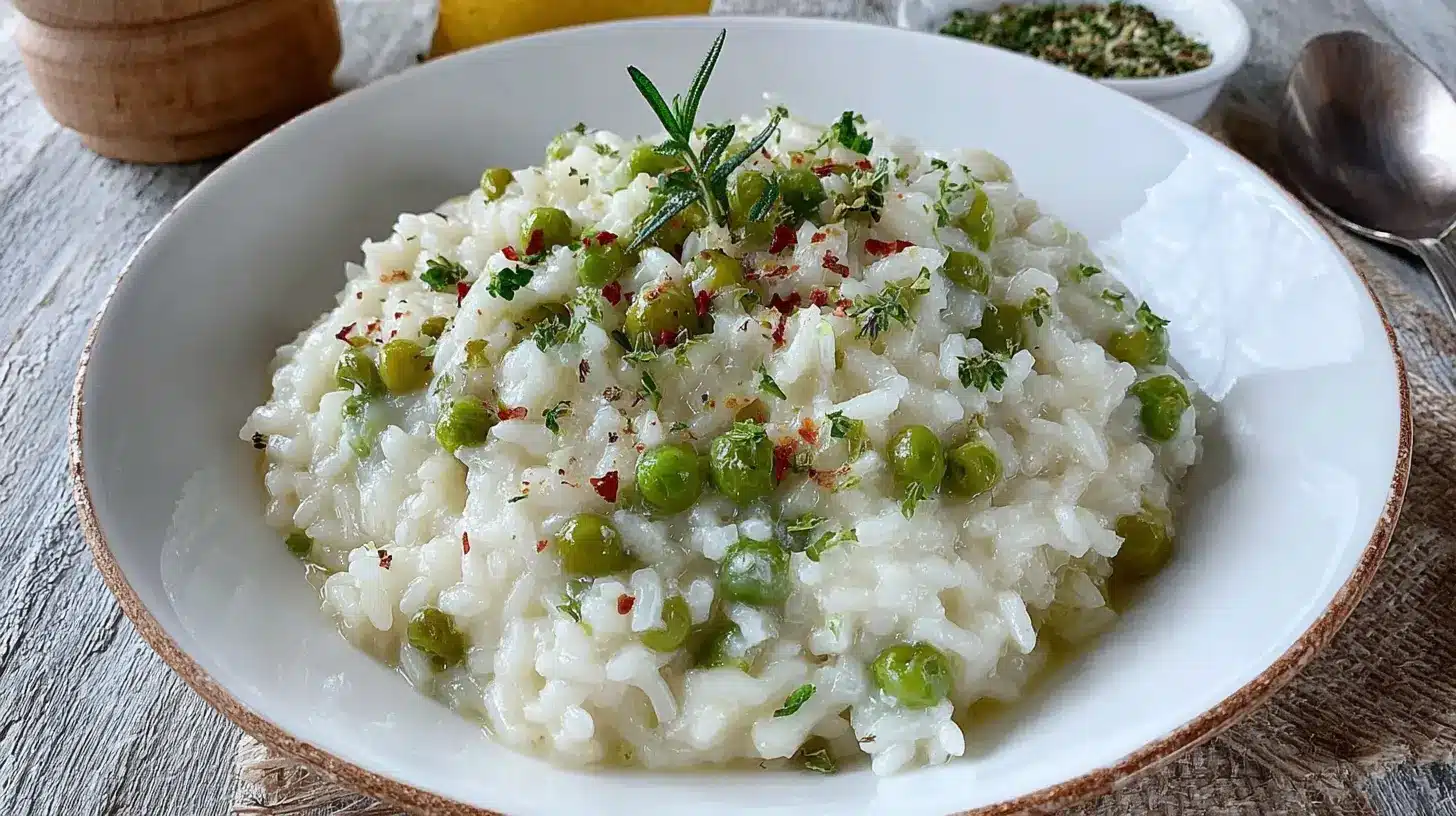
Lemongrass risotto recipe lovers, this one’s for you: a bright, creamy, plant-forward risotto infused with fresh lemongrass, thyme, and lime, finished with silky coconut milk and sweet peas. It’s comfort food with a citrusy lift—soothing and cozy while still tasting light and refreshing. You’ll simmer a quick lemongrass stock, gently stir Arborio rice until tender and glossy, then fold in coconut richness and fresh herbs for a bowl that’s both familiar and new.
Why You’ll Love This Lemongrass Risotto Recipe
Risotto has a reputation for being fussy, but this version keeps the technique simple and the flavor unforgettable. Lemongrass brings a clean, lemony aroma; thyme and rosemary add earthiness; lime adds sparkle; and coconut milk creates a creamy finish without heaviness. The method is straightforward: warm stock, sauté aromatics, add rice, ladle in hot stock, stir, and finish with coconut milk and lime. Every step is purposeful and beginner-friendly.
This dish is weeknight-feasible yet special enough for guests. The citrus-herb profile pairs beautifully with everything from roasted vegetables to seafood or tofu. It’s also incredibly customizable: add mushrooms for umami, spinach for color, or a pinch of chili for a gentle kick. Leftovers reheat like a dream, and the coconut base keeps the texture lush. If you’ve ever wanted a risotto that tastes like sunshine in a bowl, this is it.
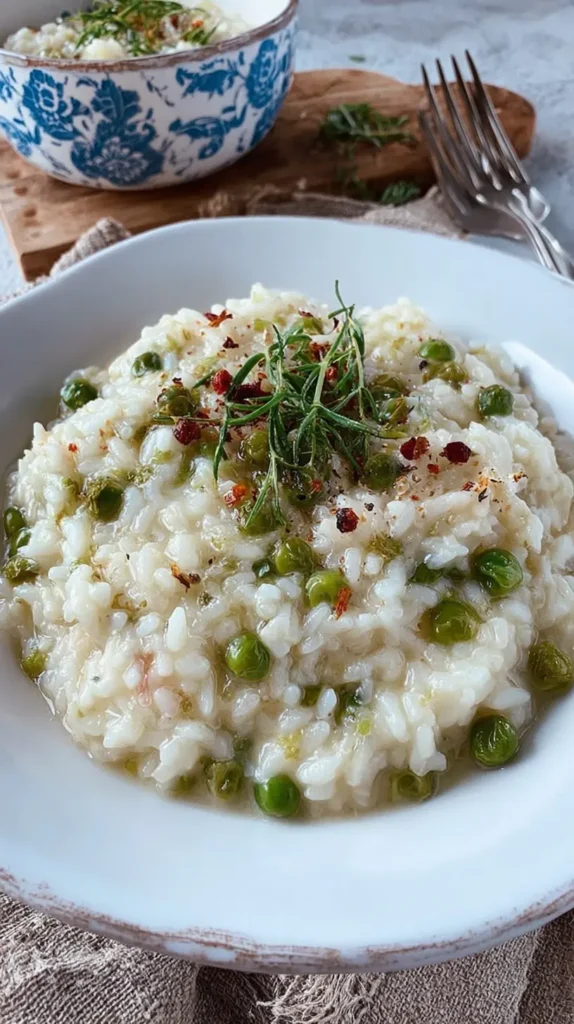
Ingredients for Lemongrass Risotto Recipe
Below is a clear, organized list. The recipe is divided into three parts: a quick lemongrass stock, the risotto base, and the finishing ingredients that make the flavors pop.
For the Quick Lemongrass Stock
- 3–4 stalks fresh lemongrass (or 2 tablespoons dried lemongrass, or 2 lemongrass tea bags)
- 6 cups water
- 1–2 vegetable bouillon cubes (or equivalent paste)
- 4–5 thyme stalks (reserve the tender leaves for finishing)
- Pinch of salt, to taste
For the Risotto Base
- 1 tablespoon olive oil (plus more as needed)
- 1 medium onion, finely chopped
- 2–3 garlic cloves, minced
- 1 small red chili, deseeded and finely chopped (optional)
- 1½ cups Arborio or Carnaroli rice
- ½ teaspoon dried rosemary, crumbled
- 1 cup green peas (fresh or frozen; no need to thaw if frozen)
To Finish
- 1 cup light, unsweetened coconut milk, warmed
- Zest of 1 lime, finely grated
- 1–2 tablespoons fresh lime juice, to taste
- Reserved fresh thyme leaves (about 1 teaspoon)
- Sea salt and black pepper, to taste
Ingredient Notes (Substitutions & Helpful Tips)
- Lemongrass: Fresh stalks bring the most fragrance. To prep, trim the root end, peel off the tough outer layers, and bruise the pale inner stalk with the back of a knife to release oils. If fresh is unavailable, dried lemongrass or lemongrass tea bags make an excellent stock.
- Rice Choice: Arborio is easy to find and works beautifully; Carnaroli holds texture especially well. Avoid long-grain rice—it won’t create the classic creamy suspension.
- Coconut Milk: Light, unsweetened coconut milk gives body without being overly rich. Full-fat works too for a more decadent finish. Warm it before adding to avoid shocking the rice and to keep the texture silky.
- Bouillon & Water: A quick stock is the heart of this risotto. The bouillon boosts savoriness, while lemongrass and thyme infuse fragrance. Keep it hot so every ladle keeps the rice gently simmering.
- Peas: Their sweetness plays nicely with citrus and herbs. You can swap in chopped asparagus, baby spinach, or diced zucchini; add tender vegetables in the last few minutes so they stay bright.
- Chili: Optional, but a small amount adds vibrancy without overpowering the dish.
- Citrus: Lime zest and juice lift the coconut and lemongrass. Taste and adjust; you want a rounded brightness, not sharp acidity.
- Herbs: Thyme stalks flavor the stock; fresh leaves at the end add a green, aromatic finish.
Step-by-Step Instructions
Step 1 – Build a Quick Lemongrass Stock
Add water, bouillon, lemongrass (bruised stalks or dried/tea bags), thyme stalks, and a pinch of salt to a medium pot. Bring to a gentle simmer and cook for 10–15 minutes. Taste; it should be fragrant and lightly savory. Strain, return to the pot, and keep the stock hot over the lowest heat. A hot stock ensures the rice cooks evenly and releases starch slowly for that classic creamy texture.
Step 2 – Sauté the Aromatics
In a wide, heavy saucepan or Dutch oven, warm olive oil over medium heat. Add onion and a pinch of salt. Cook 3–5 minutes until translucent and sweet-smelling, stirring to avoid browning. Add garlic and chili (if using), stir for 30–60 seconds until fragrant. This step creates the savory backbone that balances the bright lemongrass notes.
Step 3 – Toast the Rice
Stir in the Arborio rice, coating each grain in the aromatic oil. Toast for about 1 minute, stirring constantly. You’ll notice the edges of the grains turn slightly translucent while the centers remain opaque. Add the dried rosemary and stir through. Toasting deepens flavor and helps each grain maintain its core tenderness.
Step 4 – Ladle, Stir, Repeat
Begin adding hot lemongrass stock, one ladle (about ½ cup) at a time, stirring gently and frequently. Keep the risotto at a gentle simmer. When the liquid is mostly absorbed and the spoon leaves a faint trail, add another ladle. Continue this rhythm for 16–20 minutes. You don’t need to stir nonstop; aim for steady attention—frequent stirring encourages starch to emulsify with the stock, creating a creamy consistency without any dairy.
Step 5 – Add the Peas
Around the 12–14 minute mark, stir in the peas so they cook through but stay bright. If using very tender vegetables (like baby spinach), add them in the last 2–3 minutes.
Step 6 – Check for Doneness
After about 18 minutes total (give or take), begin tasting the rice. You’re aiming for al dente: tender with a tiny core of resistance. If the rice is still too firm, keep adding stock in small amounts, stirring and tasting every couple of minutes.
Step 7 – Finish with Coconut and Lime
When the rice is just right, lower the heat. Stir in the warmed coconut milk and lime zest until the risotto turns glossy and creamy. Add lime juice to taste (start with 1 tablespoon and adjust). Season with salt and black pepper. Sprinkle in fresh thyme leaves. Turn off the heat and let the risotto sit, covered, for 2–3 minutes—this short rest allows the grains to relax and the sauce to settle into a luscious suspension.
Step 8 – Serve
Spoon into warm bowls. Finish with a few extra thyme leaves, a micro-grating of lime zest, and a drizzle of olive oil if you like. The result should be spoonably creamy with grains that hold their shape, a citrus-herb aroma, and a gentle sweetness from coconut and peas.
Pro Tips for Success
- Keep Stock Hot: Cold stock stalls cooking and tightens the grains. Gentle simmer = even texture and better release of starch.
- Stir with Intention: You don’t need constant motion—aim for frequent, calm stirring. Scrape the bottom so nothing sticks, and fold rather than beat to avoid breaking grains.
- Taste Often: The only way to ensure perfect doneness is to taste. The sweet spot is just-tender with a hint of bite.
- Warm the Coconut Milk: Adding it warm keeps the emulsion stable and prevents a sudden temperature drop that can dull flavors.
- Balance the Lime: Zest adds perfume; juice adds brightness. Start small with the juice, then adjust just before serving so the citrus note is lively but not sharp.
- Mind the Pan: A wide, heavy pot encourages even evaporation and makes stirring easier. Thin pans scorch quickly and can create hot spots.
Flavor Variations
- Mushroom Lemongrass Risotto: Sauté sliced cremini or shiitake in olive oil until browned, set aside, then cook the risotto as written. Stir mushrooms in with the coconut milk for deep, savory notes.
- Ginger-Scallion Twist: Add 1 teaspoon grated fresh ginger with the garlic and finish with thinly sliced scallions. Ginger amplifies the lemongrass for a brighter, warming bowl.
- Spinach & Asparagus: Fold in a handful of baby spinach and blanched asparagus tips in the last 2–3 minutes. Finish with extra lime for a spring-green burst.
- Chili-Lime Heat: Use a hotter chili (like serrano) and a touch more lime juice at the end. Balance with a small extra splash of coconut milk for a creamy, spicy contrast.
- Roasted Tomato Accent: Top bowls with warm, roasted cherry tomatoes; their sweetness pairs beautifully with the citrus-herb base.
Serving Suggestions
- Simple Greens: Serve with a crisp salad of cucumber, radish, and lettuce tossed in a light lime-olive oil dressing.
- Crispy Tofu or Tempeh: Pan-sear marinated tofu or tempeh until golden and place over the risotto for added protein and texture.
- Seafood Pairings: Grilled shrimp or seared white fish complement the citrus and coconut. Keep seasonings simple—salt, pepper, and a touch of lime.
- Vegetable Medley: Roasted carrots, broccolini, and bell peppers offer color and sweetness, turning the risotto into a complete, plant-forward plate.
- Herb Oil Drizzle: Blend olive oil with cilantro, basil, and a pinch of salt; drizzle over bowls for a fragrant finish.
Storage and Freezing Instructions
- Refrigerate: Cool leftovers quickly and store in an airtight container for up to 3 days.
- Reheat: Warm gently in a saucepan over low heat with a splash of hot water or additional coconut milk to restore creaminess. Stir often.
- Freeze: Risotto can be frozen up to 1 month. Thaw overnight in the refrigerator, then reheat slowly with a little liquid. The grains will be softer after freezing, which is perfect for a creamy, comforting texture.
Nutrition Facts (Per Serving)
Approximate values for 4 servings.
| Calories | Protein | Carbs | Fat | Fiber | Sodium |
|---|---|---|---|---|---|
| 380 | 9 g | 64 g | 10 g | 5 g | 620 mg |
These are estimates based on typical nutrition data for Arborio rice, coconut milk, peas, aromatics, and seasonings. Actual totals vary with brands and exact amounts.
FAQ About Lemongrass Risotto Recipe
What’s the best way to prep lemongrass?
Trim the root end, remove tough outer leaves, and use the pale interior. Bruise it by whacking with the back of a knife to release aromatic oils. For stock, chop into 2–3-inch pieces. If using dried lemongrass or tea bags, steep them in the stock and strain before using.
Can I use a different rice?
Short-grain risotto rices like Arborio, Carnaroli, or Vialone Nano are ideal. Their high starch content is what gives risotto its creamy texture. Medium- or long-grain varieties don’t release starch the same way and won’t produce the same result.
How do I avoid gluey risotto?
Use gentle, frequent stirring rather than vigorous beating. Keep the stock hot and add it gradually. Stop cooking when the rice is just tender and still slightly al dente. Allow a brief rest off the heat so the sauce settles into a silky emulsion.
Do I really need to warm the coconut milk?
Yes. Warm coconut milk blends more smoothly into the rice and prevents the overall temperature from dropping. Cold liquid can tighten the starches and dull the aromatics. A quick warm on the stovetop or in the microwave (until just hot) is perfect.
Can I make it ahead?
Risotto is best right after cooking, but you can par-cook it: stop when the rice is slightly firmer than al dente (about 2–3 minutes early). Spread on a baking sheet to cool quickly, then refrigerate up to 24 hours. To finish, return to a pot with hot stock, stir to loosen, cook 3–5 minutes, then add coconut milk, lime zest, juice, and herbs.
What vegetables work well in this risotto?
Peas, asparagus, spinach, zucchini, roasted cherry tomatoes, and sautéed mushrooms are all great. Add tender vegetables near the end so they stay vibrant. Heartier additions like mushrooms can be browned first for deeper flavor.
How do I keep leftovers creamy?
When reheating, always add a small splash of hot water or coconut milk. Warm slowly over low heat, stirring often. If the rice has absorbed too much liquid in the fridge, rehydrating restores the glossy texture.
Can I make this without coconut milk?
Yes. Substitute an equal amount of unsweetened cashew cream or a mixture of oat milk and a teaspoon of olive oil. Taste and adjust salt and lime—you may want a touch more lime for brightness.
What’s the ideal risotto texture?
It should be all’onda—“like a wave.” When you shake the pan, the risotto should flow, not stand in a mound. On the spoon, it should be creamy with distinct, intact grains. If it’s too thick, add a splash of hot stock. If it’s too loose, cook for another minute, stirring.
Any tips for cooking for a crowd?
Use two wide pans rather than one overly full pot; this prevents steaming and helps the rice cook evenly. Keep extra hot stock nearby, and finish each batch with coconut milk and lime just before serving so the flavors stay fresh.
Final Thoughts
This lemongrass risotto recipe proves that comfort food can be bright and lively. The quick lemongrass stock perfumes each grain, while coconut milk provides a lush finish that feels both cozy and light. Lime and thyme keep every bite layered and interesting, and the method is friendly even if you’re new to risotto. Whether you stick with peas or add mushrooms, spinach, or roasted tomatoes, you’ll get a beautiful bowl that’s easy to customize for seasons and tastes. Make it once, and it will become one of those reliable, impressive dishes you can return to whenever you want a nourishing meal with a vibrant twist.
Easy Lemongrass Risotto with Coconut Milk

This vibrant lemongrass risotto recipe brings together fragrant herbs, citrusy lime, and creamy coconut milk for a plant-based dish that’s both comforting and refreshing. It’s an easy yet impressive meal perfect for cozy nights or special dinners, with flavors that sing in every spoonful.
Quick Lemongrass Stock
- 3 stalks fresh lemongrass (or 2 tbsp dried lemongrass or 2 tea bags)
- 6 cups water
- 2 vegetable bouillon cubes (or equivalent paste)
- 5 stalks thyme (reserve leaves for finishing)
- 1 pinch salt (to taste)
Risotto Base
- 1 tbsp olive oil (plus more as needed)
- 1 medium onion (finely chopped)
- 2 garlic cloves (minced)
- 1 small red chili (deseeded and finely chopped, optional)
- 1.5 cups Arborio or Carnaroli rice
- 0.5 tsp dried rosemary (crumbled)
- 1 cup green peas (fresh or frozen)
To Finish
- 1 cup light unsweetened coconut milk (warmed)
- 1 lime (zested and juiced (1–2 tbsp juice))
- 1 tsp fresh thyme leaves
- 1 pinch sea salt and black pepper (to taste)
Step 1 – Build Lemongrass Stock: Simmer water, bouillon, lemongrass, thyme stalks, and salt in a medium pot for 10–15 minutes. Strain and keep hot.
Step 2 – Sauté Aromatics: In a wide saucepan, heat olive oil. Add onion and cook until soft. Stir in garlic and chili (if using), cook until fragrant.
Step 3 – Toast Rice: Add rice and toast 1 minute, stirring. Stir in rosemary.
Step 4 – Ladle and Stir: Add hot stock a ladle at a time, stirring frequently and letting it absorb. Continue 16–20 minutes.
Step 5 – Add Peas: Stir in peas at the 12–14 minute mark to cook through.
Step 6 – Finish: When rice is al dente, stir in warm coconut milk, lime zest, and juice. Season and stir in thyme leaves. Let sit 2–3 minutes.
Step 7 – Serve: Spoon into bowls, garnish with more thyme and lime zest if desired.
Keep stock hot and stir gently for the best creamy consistency. Warm coconut milk ensures smooth integration. Add citrus and herbs at the end for brightness. Swap in mushrooms or spinach for variations. Reheat gently with added liquid to restore creaminess.