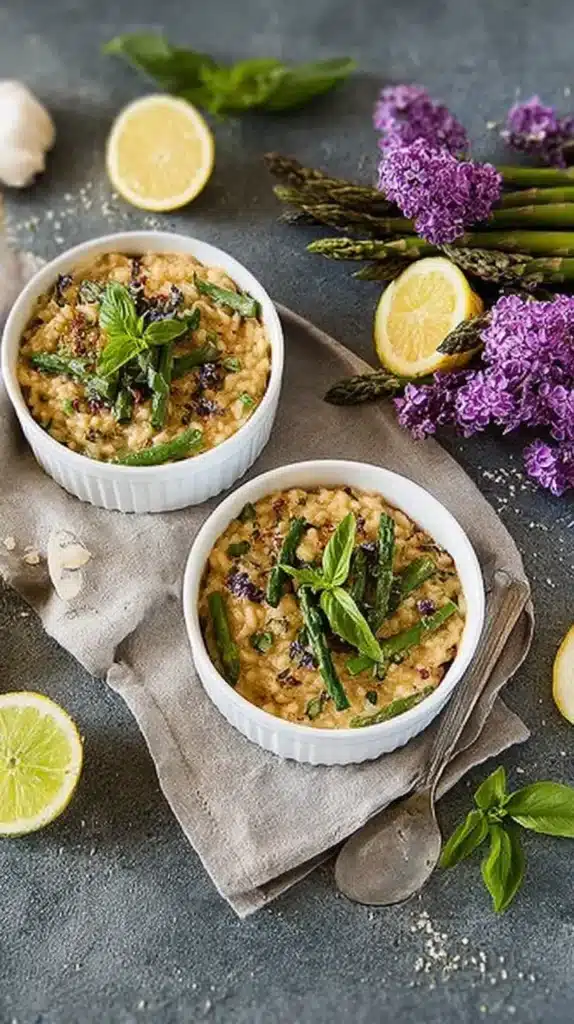
If you’ve been craving a fresh twist on comfort food, this lemongrass risotto delivers creamy satisfaction with bright, citrusy aromas and a garden-green finish. Imagine tender Arborio rice stirred to a glossy sheen while a fragrant broth—steeped with lemongrass, ginger, and garlic—soaks into every grain. Add crisp-tender asparagus, ribbons of Thai basil and mint, and a squeeze of lime, and you get a bowl that feels both cozy and refreshing. It’s weeknight-manageable, dinner-party worthy, and proudly plant-based.
Risotto often gets a fussy reputation, but the method here is intentionally approachable. You’ll simmer a quick aromatic stock, sauté a few vegetables, and then ladle warm broth into rice in steady intervals while stirring. The technique is easy to master, and the payoff is huge: a creamy, spoonable texture that tastes nuanced and clean. Because it’s built on bright herbs and citrus rather than heavy dairy, the final dish lands lighter on the palate—great for spring produce and equally welcome on cooler nights when you want something soothing without feeling weighed down.
Why You’ll Love This Lemongrass Risotto
Comfort with a lift. Classic risotto is beloved for its slow-stirred creaminess; lemongrass adds a breezy top note that keeps every bite lively. Instead of rich heaviness, you get perfume and freshness—ginger for warmth, basil and mint for green flair, lime for sparkle.
Simple steps, big flavor. There’s no need for complicated prep. A quick aromatic broth infuses the rice, while asparagus cooks in two textures: sliced stems folded into the rice for tenderness, and briefly sautéed tips laid on top for a crisp, elegant finish.
Flexible and forgiving. This risotto welcomes substitutions—swap Thai basil for sweet basil if that’s what you have; use tamari or soy sauce depending on your pantry; dial the heat up or down by adjusting the chili. As long as you keep the broth warm and the rice moving, you’ll reach that silky, wave-like texture.
Make-it-yours finishing. A squeeze of lime at the end is transformative. You can also add a drizzle of good olive oil, extra basil, or toasted nuts for crunch. Leftovers rewarm beautifully with a splash of hot broth or water.
Ingredients for Lemongrass Risotto
Aromatic Broth
- 6 cups low-sodium vegetable broth (plus up to 1 cup hot water, if needed)
- 2 large stalks lemongrass, trimmed and bruised (or 2 tablespoons dried lemongrass)
- 1-inch piece fresh ginger, sliced
- 3 garlic cloves, smashed
- 1–2 tablespoons tamari or soy sauce, to taste
- Pinch of sugar (optional, balances brightness)
Risotto Base
- 2 tablespoons olive oil, divided
- 1 small shallot, finely diced (or ½ small onion)
- 1 serrano or jalapeño, minced (optional, adjust to taste)
- 1½ cups Arborio rice (or Carnaroli)
- 1 bunch asparagus, woody ends trimmed
- Stems thinly sliced into coins
- Tips reserved whole for finishing
- ¼ cup chopped Thai basil (or sweet basil)
- 2 tablespoons chopped fresh mint
To Finish
- Zest of 1 lime
- 2–3 tablespoons fresh lime juice, to taste
- Salt and pepper to taste
- Extra basil or mint for garnish
- Drizzle of olive oil (optional)
Ingredient Notes and Substitutions
Lemongrass: Fresh stalks bring the most vivid aroma. To prep, trim the root, peel away tough outer layers, and bruise the pale core with the back of a knife. If using dried lemongrass, strain thoroughly and consider a tiny extra squeeze of lime at the end for lift.
Ginger and garlic: Both are steeped in the broth for warmth and depth without dominating. If you adore ginger, finely grate a little and stir it into the risotto with the herbs at the end for a brighter note.
Tamari vs. soy: Tamari is typically gluten-free and slightly richer; soy sauce is a fine substitute. Adjust salt carefully—both bring salinity.
Basil and mint: Thai basil has a gentle licorice perfume; sweet basil is softer and more familiar. Mint is optional but recommended for contrast.
Asparagus: Splitting stems and tips gives you two great textures in one bowl. If out of season, use broccolini florets, tender green beans, or peas.
Chili: Serrano or jalapeño adds a gentle hum. For mild risotto, omit or seed thoroughly. For more heat, include some seeds or add a pinch of red pepper flakes in the last few minutes.
Rice options: Arborio is widely available and reliable; Carnaroli holds its core a touch better and is prized for luxurious texture. Avoid long-grain rice—it won’t create the signature creaminess.
Step-by-Step Instructions
Step 1 – Build the Lemongrass Broth
Add the vegetable broth to a saucepan over medium heat. Stir in bruised lemongrass stalks (or dried lemongrass), sliced ginger, smashed garlic, tamari or soy sauce, and a tiny pinch of sugar if you like a slightly rounder finish. Bring just to a simmer, then lower the heat to keep it steaming—not boiling—for 10 to 15 minutes. Taste: it should be fragrant, savory, and softly citrusy. Strain, return to the pot, and keep it warm over the lowest heat. Warm broth maintains even cooking; cold liquid drops the rice temperature and tightens the grains.
Step 2 – Sauté the Asparagus Tips
Heat 1 tablespoon olive oil in a wide, heavy skillet over medium-high. Add the asparagus tips with a pinch of salt and cook 2–3 minutes, tossing occasionally, until crisp-tender and bright green. Transfer to a plate. This short sauté preserves their snap and turns them into a fresh garnish later.
Step 3 – Build the Risotto Base
Lower the heat to medium. Add the remaining 1 tablespoon olive oil. Sauté the shallot with a pinch of salt until translucent, 2–3 minutes. Stir in the minced chili (if using) and cook 30 seconds, just until aromatic. Add the Arborio rice and cook 1–2 minutes, stirring constantly, to coat the grains in oil and lightly toast them. You’ll see the edges turn translucent while the centers stay white.
Step 4 – Ladle and Stir
Begin adding the hot lemongrass broth one ladle at a time, stirring gently and frequently. When the liquid is mostly absorbed and the spoon leaves a faint trail, add another ladle. Keep the risotto at a steady, gentle simmer. After the second or third addition, stir in the sliced asparagus stems so they become tender alongside the rice. Aim for frequent, relaxed stirring—scrape the bottom and fold the rice over itself. You’re encouraging starch to emulsify with the broth, creating creaminess without heaviness.
Step 5 – Season as You Go
Taste the cooking liquid occasionally; adjust salt if needed. Because tamari or soy adds salinity, season bit by bit. If you run low on broth near the end, add up to 1 cup hot water to extend.
Step 6 – Check for Doneness
At the 15–18 minute mark, begin tasting the rice. You’re aiming for al dente: tender, with a dot of pleasant resistance in the center. If it’s still too firm, keep going with small ladles of broth, stirring and tasting every couple of minutes. The texture should look glossy and flow like a slow wave when you shake the pan.
Step 7 – Finish Bright
When the rice is perfect, turn the heat to low. Stir in the lime zest, 2 tablespoons lime juice, chopped Thai basil, and mint. Taste and add more lime juice if you want extra sparkle. Grind in black pepper. If you like an ultra-silky finish, stir in a small splash of olive oil. Plate the risotto and top each serving with the reserved asparagus tips and extra herbs. If it sits and thickens, loosen with a spoonful of hot broth or water.
Step-by-Step Instructions (Quick Reference)
- Simmer broth with lemongrass, ginger, garlic, and tamari; strain and keep hot.
- Sauté asparagus tips quickly; reserve.
- Sauté shallot and chili in oil; add rice and toast.
- Ladle hot broth into rice, stirring often; add sliced stems.
- Cook to al dente, seasoning as you go.
- Finish with lime zest and juice, basil, and mint; top with asparagus tips.
- Serve immediately, loose and glossy; adjust with a spoonful of hot liquid if needed.
Pro Tips for Success
Keep it hot. Warm broth is essential for even cooking and a stable emulsion.
Go wide. A wide, heavy pot encourages evaporation and makes stirring easier.
Stir with intention. Gentle, frequent stirring coaxes starch out without breaking grains.
Taste relentlessly. Check for seasoning and doneness; the last 3–4 minutes determine whether your texture is perfect or pasty.
Finish fresh. Herbs and lime go in at the end so their aromas stay bright.
Serve all’onda. Risotto should flow; if it mounds, loosen with a splash of hot liquid.
Flavor Variations
Coconut–lime creaminess: For a plusher texture, stir in ¼–⅓ cup light, unsweetened coconut milk with the herbs. The gentle sweetness complements lemongrass and ginger.
Mushroom umami: Brown sliced cremini or shiitake in olive oil first; set aside and stir into the risotto at the end for depth and savoriness.
Green garden mix: Fold in peas and baby spinach during the last 2–3 minutes for an extra-green bowl. Finish with extra mint for a cooling contrast.
Citrus trio: Add a whisper of orange zest along with lime for a layered citrus aroma. Keep the lime juice as your primary acid for clarity.
Herby crunch: Top with toasted cashews or slivered almonds and extra basil for contrasting texture.
Serving Suggestions
Crisp salad: Pair with a cucumber-radish salad dressed in lime and olive oil; the cool crunch offsets the creamy rice.
Roasted vegetables: Sheet-pan carrots, bell peppers, or cauliflower bring sweetness that partners well with the savory-citrus base.
Simple protein sides: Pan-seared tofu, crispy tempeh, or simply seasoned grilled seafood complement the herbs and lemongrass without overwhelming them.
Garnish smart: A final drizzle of olive oil, a grind of pepper, and a few basil leaves make the bowl look restaurant-ready with minimal effort.
Storage and Reheating
Refrigerate: Cool quickly and store in an airtight container for up to 3 days.
Reheat: Warm gently in a saucepan over low heat with a splash of hot water or broth, stirring until loose and creamy again.
Freeze: Risotto can be frozen for about 1 month. Thaw overnight in the refrigerator, then reheat slowly with additional liquid. The grains will soften, making a plush, comforting texture that’s great for weeknight leftovers.
Nutrition Facts (Per Serving)
Approximate values for 6 servings.
| Calories | Protein | Carbs | Fat | Fiber | Sodium |
|---|---|---|---|---|---|
| 340 | 8 g | 60 g | 8 g | 5 g | 620 mg |
Estimates will vary based on the broth, tamari or soy brand, and exact amounts used.
FAQ About Lemongrass Risotto
How do I prep fresh lemongrass correctly?
Trim the root end and any dry tops, peel away tough outer layers, and use the pale inner stalk. For maximum aroma, bruise it by tapping with the back of a knife. Simmer pieces in the broth and strain. If you only have dried lemongrass, steep and strain well, then finish the risotto with an extra squeeze of lime to brighten.
Can I make this gluten-free?
Yes. Use tamari labeled gluten-free and a vegetable broth that’s certified gluten-free. Everything else in the recipe is naturally gluten-free.
What’s the secret to creamy risotto without heavy ingredients?
Time and technique. Warm broth, consistent gentle stirring, and patient ladling are what create the silky emulsion. Starch released from the rice thickens the cooking liquid into a creamy sauce that clings to each grain.
My risotto feels too thick—how can I fix it?
Add a splash of hot broth or water and stir gently until the risotto loosens and flows. If you’re out of broth at the very end, hot water works perfectly for small adjustments.
Can I prepare any components ahead?
Yes. You can make the lemongrass broth a day in advance and keep it refrigerated; reheat before using. You can also blanch the asparagus stems for 1 minute and shock in ice water, then sauté the tips just before serving. Cook the risotto itself just before eating for best texture.
What herbs can I use if I can’t find Thai basil?
Sweet basil is the easiest substitute. Add a little extra mint or a few cilantro leaves for complexity. The key is finishing with fresh herbs—adding them at the end preserves aroma and color.
How spicy is this dish?
That’s up to you. Serrano or jalapeño provides a gentle hum. Omit for mild risotto or keep a few seeds for a bolder kick. The citrus and herbs balance heat nicely, so even a touch of spice feels bright, not overwhelming.
Is there a way to add protein directly into the risotto?
Absolutely. Stir in cooked chickpeas in the last few minutes for a hearty, plant-forward option. For a different direction, fold in cubes of pan-seared tofu right at the end so they stay crisp at the edges.
What’s the ideal texture I should look for?
Risotto should be all’onda—when you tip the pan, it should ripple like a wave. On the spoon, it’s creamy and spoonable but not soupy; each grain remains distinct. If it mounds rather than flows, loosen with a little hot liquid.
Can I double the recipe?
Yes. Use two wide pans or a single very wide Dutch oven to prevent crowding. Keep extra hot broth ready, and season gradually. With a bigger batch, the last few minutes matter most—taste frequently to avoid overshooting perfect doneness.
Final Thoughts
This lemongrass risotto brings together everything we love about creamy rice with the lively brightness of Southeast-leaning flavors. The aromatic broth perfumes the grains from the inside out, while asparagus, basil, and mint add freshness and color. A finish of lime zest and juice ties it all together so the dish feels complete but never heavy. Whether you’re cooking a relaxed weeknight dinner or hosting friends, this recipe strikes the ideal balance of comfort and lift—simple to make, beautiful to serve, and unforgettable to eat.
Once you master the rhythm—ladle, stir, taste—you’ll find this is the kind of risotto that slides effortlessly into your rotation. Change up the herbs, toss in seasonal vegetables, or add a creamy splash of coconut milk when you’re in the mood. However you adapt it, the core idea stays the same: warm broth, patient stirring, and fresh flavors. That’s the proven path to a bowl that’s both soothing and vibrant, bite after bite.
Easy Lemongrass Risotto with Asparagus & Basil

This vibrant lemongrass risotto with asparagus and basil combines creamy comfort with refreshing citrus and herbaceous notes. Built on a fragrant broth and finished with fresh lime, mint, and Thai basil, this plant-based risotto is springy, soothing, and surprisingly simple to prepare.
Aromatic Broth
- 6 cups low-sodium vegetable broth
- 2 stalks lemongrass (trimmed and bruised (or 2 tbsp dried))
- 1 inch fresh ginger (sliced)
- 3 garlic cloves (smashed)
- 2 tbsp tamari or soy sauce (to taste)
- 1 pinch sugar (optional)
Risotto Base
- 2 tbsp olive oil (divided)
- 1 small shallot (finely diced (or ½ small onion))
- 1 serrano or jalapeño (minced, optional)
- 1.5 cups Arborio rice (or Carnaroli)
- 1 bunch asparagus (stems sliced, tips reserved)
- 0.25 cup Thai basil (chopped (or sweet basil))
- 2 tbsp fresh mint (chopped)
To Finish
- 1 lime (zested and juiced (2–3 tbsp juice))
- 1 pinch salt and pepper (to taste)
- 1 drizzle olive oil (for garnish, optional)
Step 1 – Build the Lemongrass Broth: Simmer broth with lemongrass, ginger, garlic, tamari, and optional sugar for 10–15 minutes. Strain and keep warm.
Step 2 – Sauté Asparagus Tips: Sauté asparagus tips in 1 tbsp olive oil until crisp-tender. Set aside.
Step 3 – Sauté Aromatics: Add remaining oil, cook shallot and chili until translucent. Stir in rice to toast, 1–2 minutes.
Step 4 – Add Broth and Stir: Add hot broth one ladle at a time, stirring frequently. After 2–3 ladles, stir in asparagus stems.
Step 5 – Cook to Al Dente: Continue stirring and adding broth for 15–18 minutes, seasoning to taste and adjusting liquid if needed.
Step 6 – Finish: Turn off heat. Stir in lime zest, juice, Thai basil, and mint. Adjust seasoning. Add olive oil if desired.
Step 7 – Serve: Plate and top with asparagus tips and extra herbs. Loosen with broth if needed.
Keep broth hot to maintain creamy texture. Finish with herbs and citrus for brightness. Add coconut milk for a richer version or chickpeas for extra protein. Risotto thickens as it sits, so adjust with hot broth or water before serving leftovers.