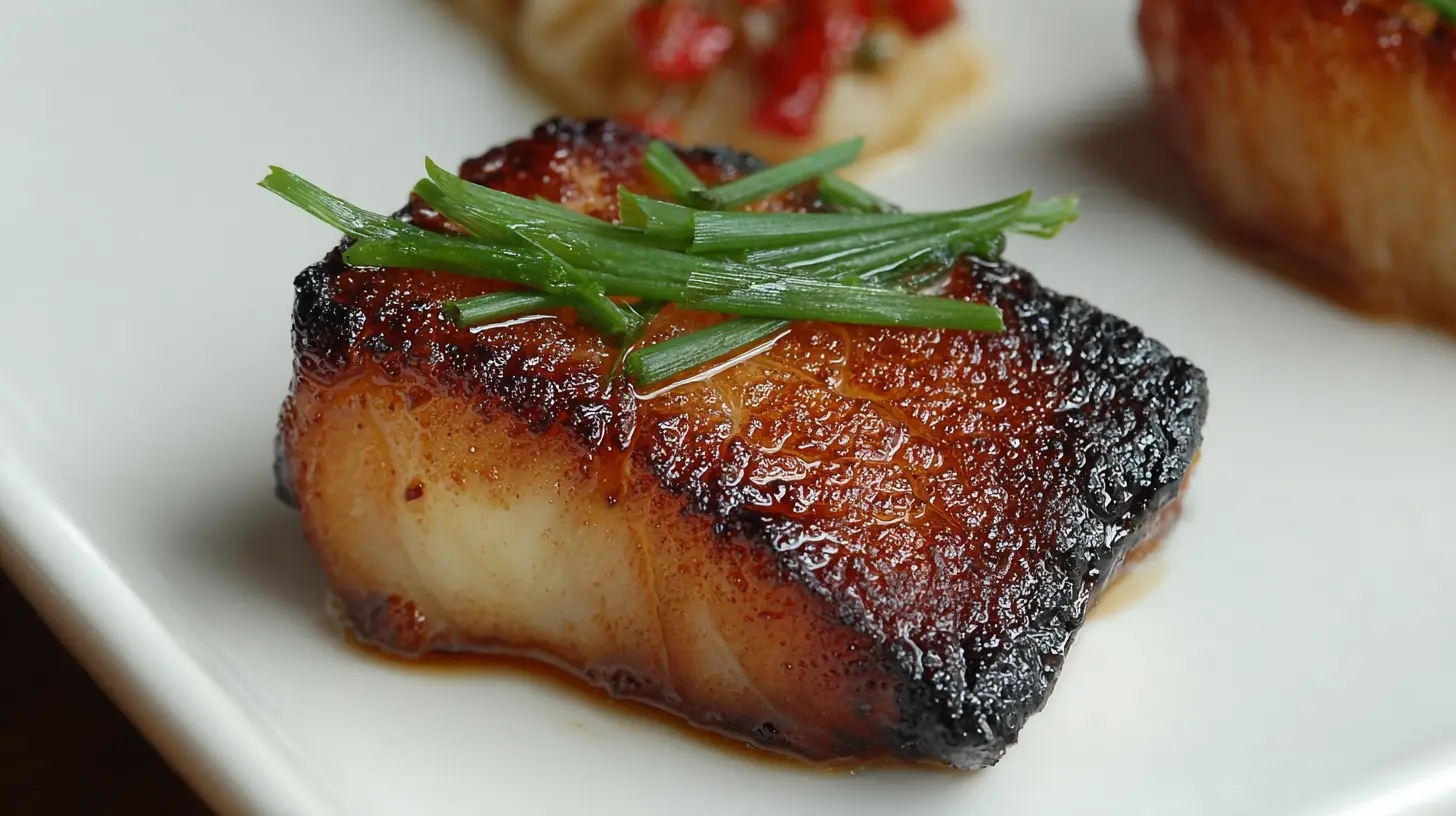
Creating a restaurant-worthy miso black cod recipe at home is simpler than it looks. With a silky marinade built on white miso, gentle sweetness, and a bright finishing note of citrus, you’ll transform buttery sablefish into a glossy, caramelized main course. This guide walks you through every detail—ingredient choices, exact steps, oven timing, pro techniques, and troubleshooting—so you can deliver that signature lacquered finish and tender, just-flaking interior every single time.
Why You’ll Love This Miso Black Cod Recipe
Miso black cod is a lesson in restraint: a short ingredient list, an unhurried marination, and a quick blast of high heat to finish. The flavors are sweet-savory with deep umami, and the texture is luxurious without any heavy sauce. It’s impressive enough for guests yet streamlined enough for a weeknight, and the method is forgiving because sablefish is naturally rich and moist. Even if you’ve never cooked this dish before, you’ll feel confident thanks to the step-by-step workflow, precise temperature cues, and simple plating ideas.
Highlights you’ll appreciate:
- Silky, foolproof texture. The gentle cure keeps the fish moist while encouraging a delicate flake.
- Glossy, caramelized finish. The glaze blisters under high heat, delivering that unmistakable restaurant look.
- Short hands-on time. Active prep is about 15 minutes; the rest is hands-off marinating.
- Flexible and family-friendly. Everyday ingredients, clean flavors, and simple sides.
- Make-ahead friendly. Mix the glaze days in advance and marinate on your schedule.
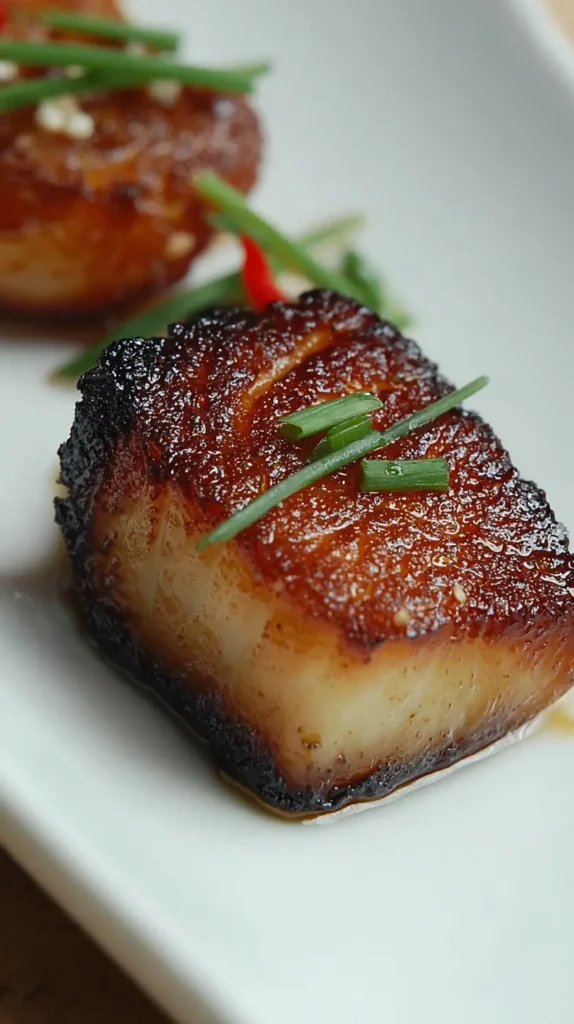
Ingredients for This Miso Black Cod Recipe
Core Ingredients (Serves 4)
- 4 black cod (sablefish) fillets, 4–6 ounces each, skin-on preferred
- ¼ cup white miso paste (shiro miso; mild and slightly sweet)
- ¼ cup apple juice
- ¼ cup low-sodium broth (vegetable or chicken)
- 1 teaspoon fresh lemon juice
- 3–4 tablespoons granulated sugar (3 Tbsp for balanced; 4 Tbsp for a glossier, sweeter finish)
- Neutral oil for the pan (canola, grapeseed, or avocado)
To serve (optional): steamed short-grain rice, lemon wedges, thinly sliced scallions, toasted sesame seeds, and a simple vegetable side such as sautéed bok choy, roasted asparagus, or cucumber salad.
Ingredient Notes (Smart Choices & Helpful Swaps)
- Fish selection: Black cod (sablefish) is prized for its buttery texture and high natural oil content, which keeps it moist and forgiving. If unavailable, salmon or Chilean sea bass offers a similarly rich mouthfeel; halibut or true cod will be leaner and cook a touch faster—watch doneness closely.
- Miso type: Shiro (white) miso delivers the classic mellow, gently sweet profile. If using awase (mixed) or aka (red) miso—which are often saltier and more robust—start with 2–3 tablespoons, taste, and balance with an extra ½–1 teaspoon sugar if needed.
- Sweeteners: Granulated sugar controls browning reliably. Light brown sugar adds a molasses hint; honey caramelizes quickly, so reduce by 1 teaspoon and watch the broiler closely.
- Sodium control: Choose a lower-sodium broth and miso if you’re sensitive to salt. You can also wipe the fillets a bit more aggressively before roasting so less glaze remains on the surface.
- Gluten-aware: Many miso brands are naturally gluten-free; always verify labels if needed. If serving soy sauce tableside, offer tamari for a gluten-free option.
Step-by-Step Instructions
Step 1 – Make the Miso Glaze (≈10 minutes)
- Warm the base: In a small saucepan over medium-low heat, combine apple juice and broth. Heat until just steaming—no vigorous boil needed.
- Build umami and sweetness: Remove from heat. Whisk in white miso, sugar, and lemon juice until completely smooth and glossy. Taste the glaze: it should be sweet-salty with a gentle citrus lift and round umami depth. Adjust sweetness by ½ teaspoon at a time if desired.
- Cool it down: Let the glaze sit until it reaches room temperature. A cooled glaze adheres better and won’t start cooking the fish prematurely.
Step 2 – Marinate the Fish (24–48 hours, hands-off)
- Dry the surface: Pat the fillets dry with paper towels. Moisture on the surface dilutes glaze and inhibits even browning.
- Coat evenly: Spread a thin, even layer of the cooled glaze on all sides of each fillet. Nestle them in a nonreactive glass or ceramic dish (or use a zipper bag and press out excess air).
- Chill and wait: Cover tightly and refrigerate at least 24 hours and up to 48 hours. The longer marination gently cures the fish, deepening flavor and producing a notably silkier texture. For thinner fillets, 24–36 hours is ideal.
Step 3 – Prep the Pan (≈5 minutes)
- Heat the oven: Set to 400°F (205°C) or preheat your broiler to high.
- Line and oil: Line a rimmed sheet pan with foil and very lightly oil the surface, or use an oiled, oven-safe skillet. A thin film of oil helps prevent sticking because the glaze contains sugar.
- Wipe to a thin coat: Using the back of a spoon or a silicone brush, wipe off excess glaze from each fillet so only a sheer, uniform coat remains. This is essential—too much surface sugar will scorch before the center cooks.
Step 4 – Roast, Then Broil (≈8–12 minutes total)
- Roast first: Place the fish in the center of the oven and roast for 6–8 minutes, depending on thickness.
- Finish under high heat: Switch to broil for 1–3 minutes to blister and caramelize the surface. Watch constantly; you’re aiming for a deep golden sheen with a few darker patches, not blackened sugar.
- Check doneness: At the thickest point, the fish should flake with gentle pressure and look just opaque. If using a thermometer, target 130–135°F (54–57°C) for a luscious, medium doneness. Pull a touch early if you prefer slightly under and rely on carryover heat.
Step 5 – Rest & Serve (2–3 minutes)
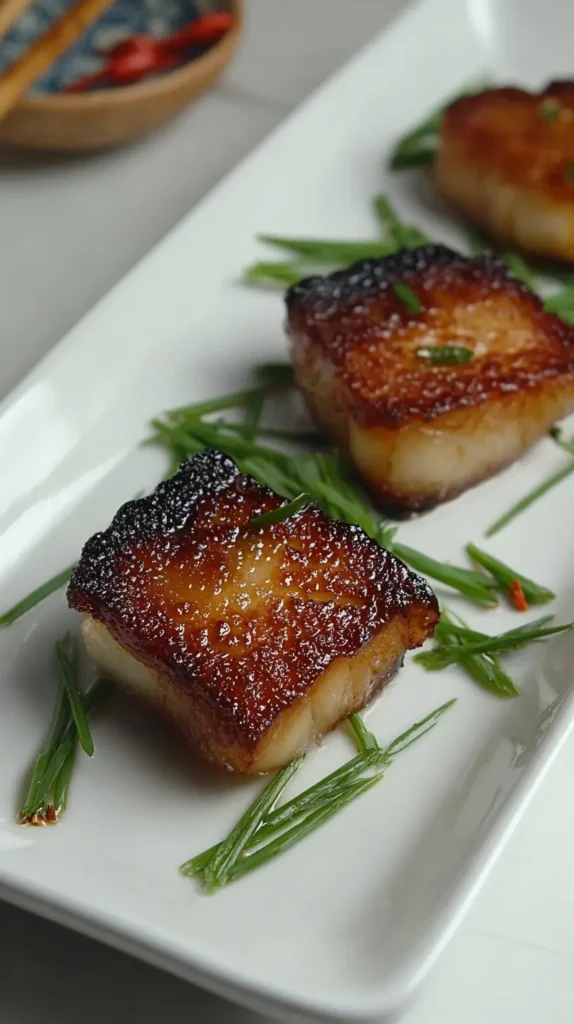
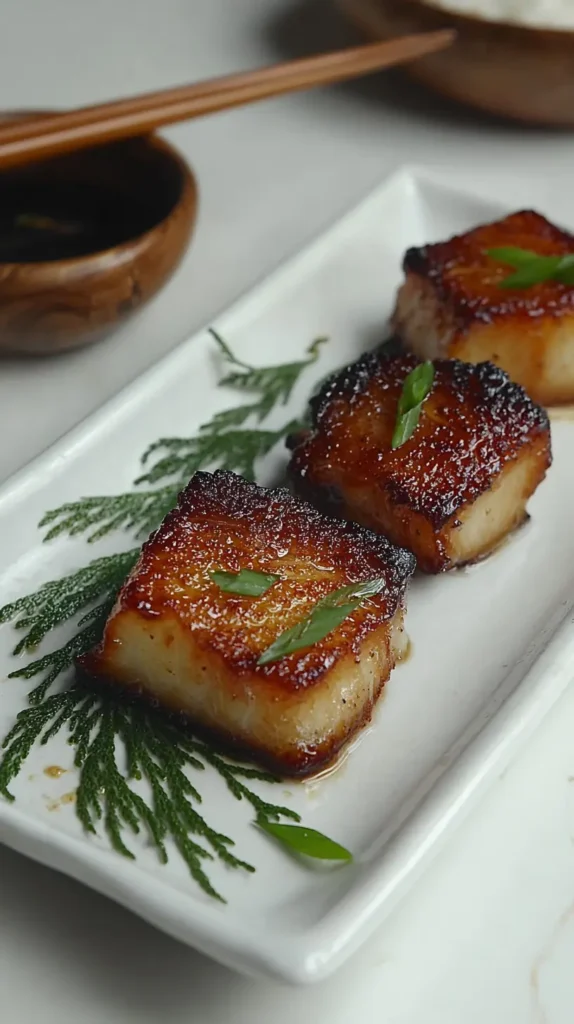
Let the fillets rest briefly so juices redistribute. Slide a thin spatula between fish and foil. If your fillets are skin-on, the skin will crisp and release beautifully; serve skin-side up to showcase the lacquered top. Finish with lemon wedges, scallions, and sesame seeds, and pair with a simple side to balance the richness.
Pro Tips for Success
- Aim for the 48-hour cure. While 24 hours works, a 48-hour window delivers a deeper, more even seasoning and that signature velvet texture.
- Thin, uniform glaze. Wiping to a sheer coat prevents scorching and promotes even caramelization.
- Rack positioning matters. When broiling, keep the fillets 6–8 inches from the element. Too close and the sugars may burn; too far and you won’t achieve the glossy blisters.
- Choose center-cut fillets. A consistent 1–1½-inch thickness cooks evenly and stays moist from edge to center.
- Control sweetness. If you prefer a drier, more savory profile, use 3 tablespoons sugar and skip any honey variations.
- Serve immediately. This dish peaks a few minutes after resting; prolonged holding can soften the lacquer and overcook the interior.
Flavor Variations
- Citrus Lift: Add 1–2 teaspoons additional lemon to the glaze and finish the dish with a whisper of zest. Bright, clean, and perfect with spring vegetables.
- Ginger-Garlic Glow: Whisk 1 teaspoon grated ginger and ½ teaspoon finely grated garlic into the cooled glaze for aromatic warmth.
- Sesame Umami: Stir 1 teaspoon toasted sesame oil into the glaze before marinating; garnish with toasted sesame seeds and slender nori strips for texture and aroma.
- Spicy Honey Miso: Replace 1 tablespoon sugar with honey and add ¼–½ teaspoon red pepper flakes for a lacquer that tingles. Watch your broiler—honey caramelizes fast.
- Savory-Forward: Reduce sugar to 2 tablespoons and add ½ teaspoon white pepper for a drier finish and a gentle bite.
Serving Suggestions
- Classic Rice Bowl: Spoon over steamed short-grain rice and scatter with scallions and sesame. Add a side of sautéed bok choy or spinach for contrast.
- Vegetable Forward: Pair with roasted asparagus, charred broccolini, or miso-glazed carrots to echo the glaze and add color to the plate.
- Cool & Crisp Contrast: A bright cucumber salad or quick pickled radish balances the fatty richness with refreshing crunch.
- Noodle Night: Serve alongside chilled buckwheat soba with a light dipping sauce for a pleasing hot-cold interplay.
- Entertaining Platter: Plate fillets on a warmed platter with lemon wedges, a sprinkle of sesame, and a bowl of rice so guests can build their own bowls.
Storage and Freezing Instructions
- Cooked leftovers: Refrigerate in an airtight container for up to 2 days. Reheat gently at 275°F (135°C) for 8–10 minutes, or flake cold onto rice bowls and salads.
- Marinated, uncooked: Keep refrigerated for up to 2 days from the start of the marination if your fish is very fresh.
- Freezing:
- Raw + Glaze: Freeze fillets already coated in glaze for up to 1 month. Thaw overnight in the refrigerator, wipe to a thin coat, then cook as directed.
- Cooked: Freeze for up to 1 month; the texture is best within 2 weeks. Reheat covered at low temperature with a few drops of water to preserve moisture.
- Food safety note: Always thaw in the refrigerator. Fish should smell clean and feel firm, not slimy.
Nutrition Facts (Per Serving)
| Calories | Protein | Carbs | Fat | Fiber | Sodium |
|---|---|---|---|---|---|
| ~340 | ~27g | ~12g | ~22g | 0g | ~620mg |
Estimates based on a 5-ounce sablefish fillet with a thin, wiped glaze; values vary by fillet size, miso brand, and how much glaze remains after wiping.
FAQ About This Miso Black Cod Recipe
What exactly is black cod, and can I use another fish?
Black cod is sablefish, found in cold Pacific waters. Though it’s called “cod,” it isn’t a true cod—its high natural oil content gives it a uniquely buttery mouthfeel and a forgiving cook. You can make this recipe with salmon or Chilean sea bass for a similarly rich result. Leaner fish like halibut or true cod work too, but you’ll need to watch the oven carefully and check for doneness early to avoid dryness.
How long should I marinate?
A window of 24–48 hours is ideal. At 24 hours, the flavor is clean and balanced; at 48 hours, expect deeper umami and a silkier texture. If your fillets are thin or you prefer a more delicate cure, aim for 24–36 hours. The key is to keep the glaze layer thin and even.
What oven temperature and timing should I use?
Roast at 400°F (205°C) for 6–8 minutes, then broil for 1–3 minutes to caramelize. The exact timing depends on fillet thickness and your oven’s strength. Start checking early; the glaze contains sugar that browns quickly under direct heat. If you see hotspots, shift the pan or lower the rack slightly.
How do I prevent the glaze from burning?
The biggest safeguard is wiping to a thin coat before cooking. Too much glaze equals too much sugar on the surface, which may scorch before the middle cooks. Use a lightly oiled foil-lined pan, keep the fish 6–8 inches from the broiler, and watch during the final minute. If browning races ahead, switch back to bake mode to finish gently.
Do I need a thermometer?
A thermometer is optional but useful, especially the first time you make this dish. Aim for 130–135°F (54–57°C) at the thickest point for a luscious, just-opaque interior. If you prefer slightly firmer flesh, cook to the upper end of that range.
Can I use frozen fish?
Yes—high-quality frozen sablefish performs beautifully. Thaw overnight in the refrigerator, pat dry thoroughly, then proceed. Because moisture can linger in previously frozen fillets, pay extra attention to drying the surface so the glaze adheres well and browns evenly.
Is the skin edible?
Absolutely. Crisped sablefish skin is delicious and helps protect the delicate flesh during cooking. If you prefer not to eat it, cook skin-on for moisture retention and remove the skin after resting, just before serving.
What sides pair best?
Keep sides light and crisp to balance the richness: steamed rice, bok choy, roasted asparagus, broccolini, or a cucumber salad. A wedge of lemon on the plate brightens the dish without competing with the miso.
Can I scale this recipe for a crowd?
Yes. Use multiple sheet pans and rotate them halfway through roasting if your oven runs unevenly. For the broil step, work in batches to maintain ideal distance from the heating element and prevent over-browning. Keep finished fillets on a warm platter and serve immediately.
What if I want a less sweet glaze?
Reduce sugar to 2 tablespoons and add ½ teaspoon white pepper for a drier, savory-forward finish. You’ll still get a gentle lacquer, just less pronounced sweetness.
Final Thoughts
This miso black cod recipe proves that elegance in the kitchen doesn’t require complexity. With a handful of thoughtful ingredients and a two-stage cook—roast then broil—you’ll achieve that coveted glossy top and custardy interior every time. The method is reliable, the flavors are balanced and satisfying, and the presentation is effortlessly impressive. Keep a tub of white miso in your fridge, stock a few simple staples, and this dish can become your go-to for both weeknight comfort and dinner-party showstoppers.
Whether you settle on the classic profile or one of the flavor variations, the essential technique remains the same: marinate patiently, wipe to a thin coat, and finish hot. Do that, and you’ll enjoy remarkable results—consistently.
Easy Miso Black Cod Recipe
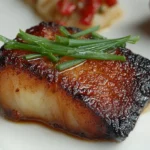
Creating a restaurant-worthy miso black cod recipe at home is simpler than it looks. With a silky marinade built on white miso, gentle sweetness, and a bright finishing note of citrus, you’ll transform buttery sablefish into a glossy, caramelized main course.
Core
- 4 black cod (sablefish) fillets, skin-on preferred (4–6 oz each)
- 0.25 cup white miso paste (shiro miso) (mild and slightly sweet)
- 0.25 cup apple juice
- 0.25 cup low-sodium broth (vegetable or chicken)
- 1 teaspoon fresh lemon juice
- 3.5 tablespoons granulated sugar (3 Tbsp for balanced; 4 Tbsp for glossier finish)
- neutral oil for the pan (canola, grapeseed, or avocado)
To Serve (Optional)
- steamed short-grain rice
- lemon wedges
- thinly sliced scallions
- toasted sesame seeds
- simple vegetable side (bok choy, asparagus, or cucumber salad)
For best results, marinate 48 hours. Wipe to a thin glaze layer to prevent burning. Use skin-on fillets for protection and crisping. This dish is ideal for make-ahead prep and quick finishing.