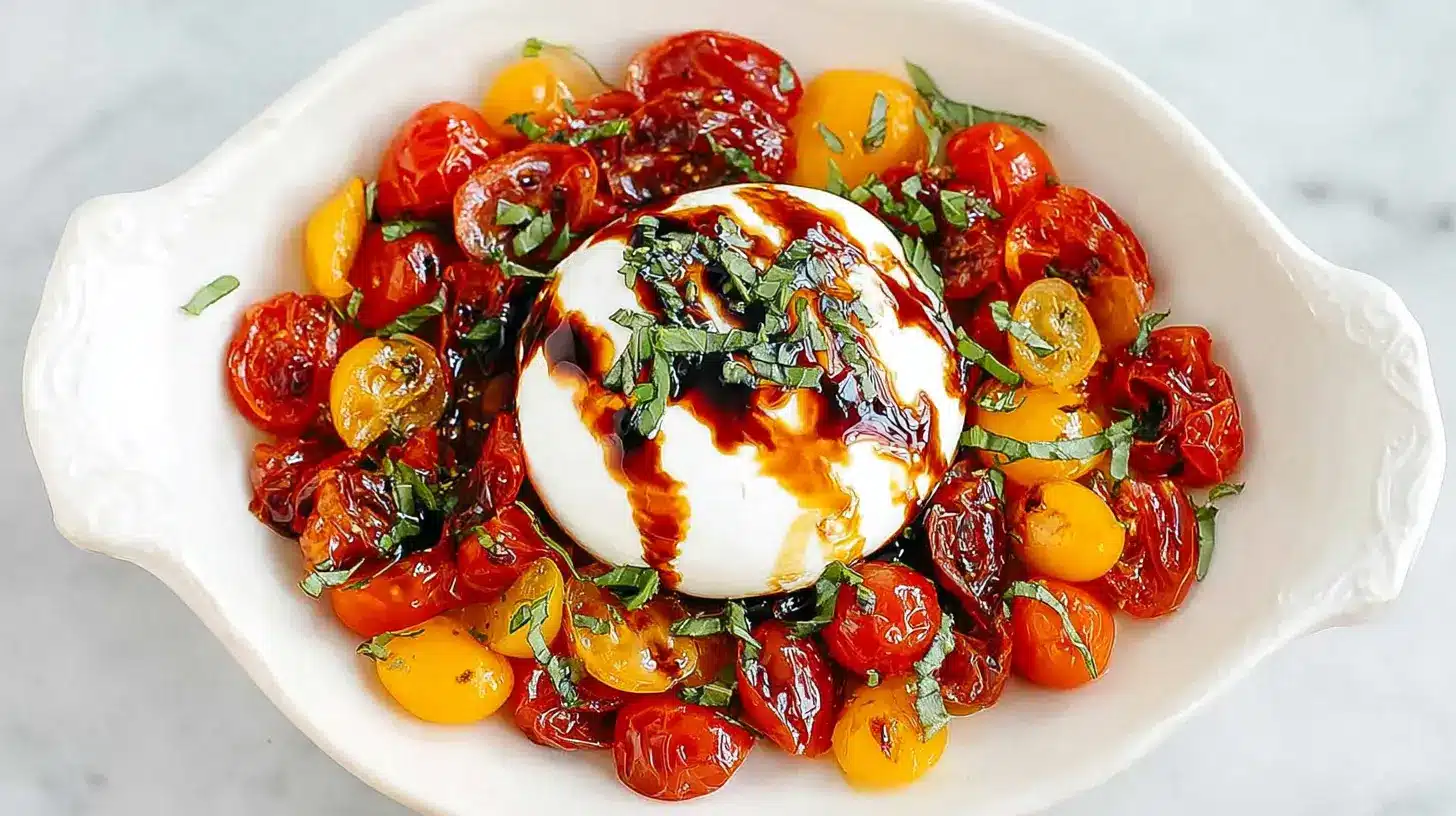
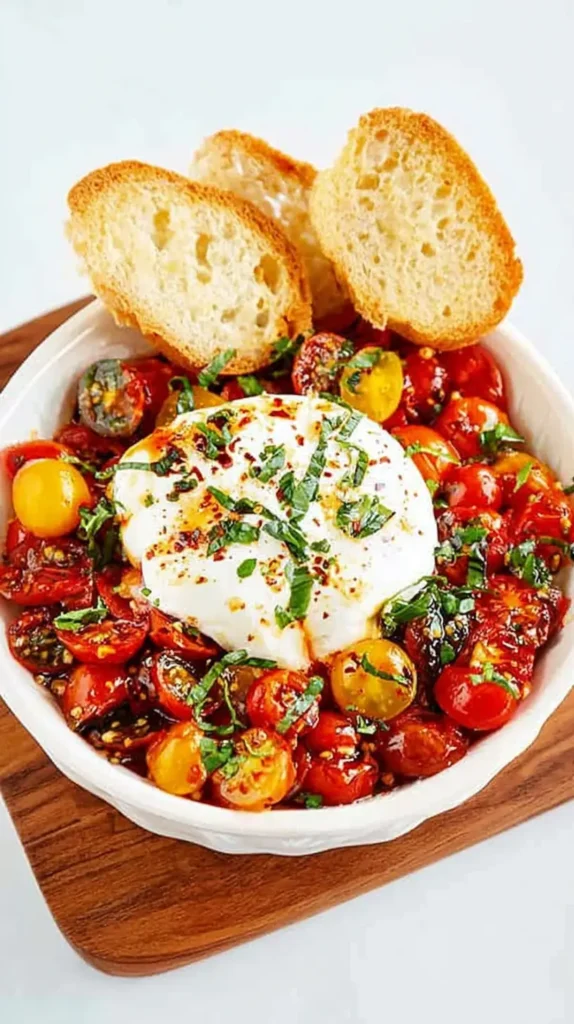
Baked burrata is the simplest way to turn a handful of pantry staples into a showstopping appetizer. Picture this: a creamy orb of burrata set into a warm bed of blistered cherry tomatoes, mellow garlic, and oregano, finished with fresh basil and a gentle drizzle of balsamic glaze. Scoop it up with crisp crostini, toasted pita, seeded crackers, or veggie dippers and watch it disappear—fast. In this guide, you’ll get precise ingredients, foolproof steps, chef-tested tips, flavor variations, serving ideas, storage directions, a nutrition snapshot, and an FAQ so you can confidently make it tonight (and for every gathering after).
Why You’ll Love This Baked Burrata
- Effortless, elegant, and fast: Ten minutes of prep and one baking dish deliver a restaurant-worthy appetizer without stress.
- Vibrant flavors: Roasting cherry tomatoes concentrates their natural sweetness and juices, creating a quick, spoonable “sauce” that lovingly coats every bite.
- Dreamy texture contrast: Cool, ultra-creamy burrata meets warm, jammy tomatoes and silky olive oil. It’s comfort and luxury in one spoonful.
- Crowd-pleasing and versatile: Perfect for parties, date nights, holiday spreads, and even a cozy at-home snack board.
- Flexible and forgiving: Swap in fresh mozzarella if burrata isn’t available, change the herbs, and alter the garnish to match the season.
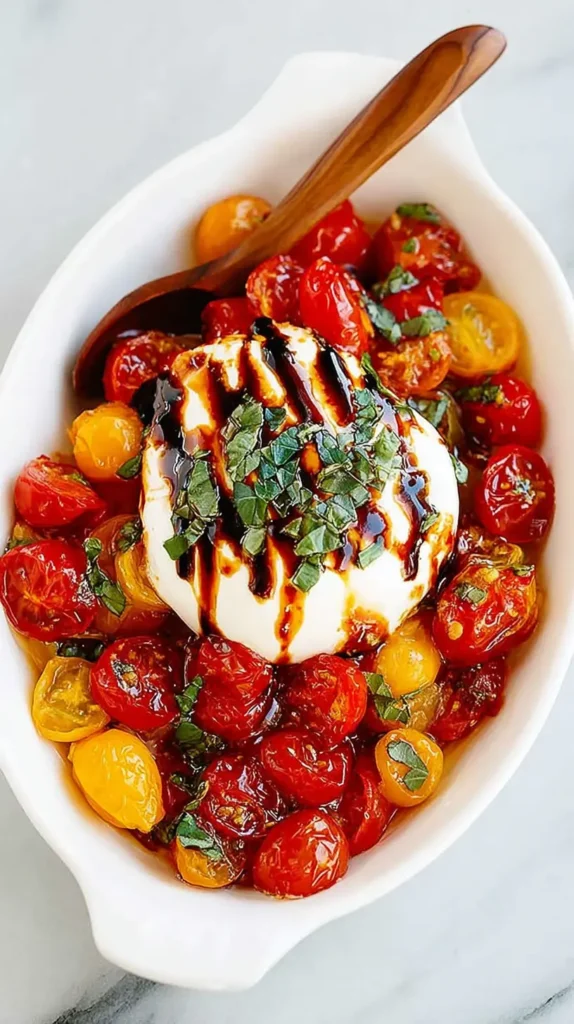
Ingredients for Baked Burrata
This version makes about 8 appetizer servings with generous scooping. Feel free to scale up for larger gatherings.
Tomatoes & Aromatics
- 2 pints (about 4 cups) cherry or grape tomatoes, halved
- 3 tablespoons extra-virgin olive oil
- 3 large garlic cloves, thinly sliced
- 1 tablespoon fresh oregano leaves (or 1 teaspoon dried)
- ½ teaspoon fine sea salt (or to taste)
- ¼ teaspoon freshly ground black pepper (or to taste)
Cheese & Garnish
- 8 ounces burrata (one large ball or two smaller)
- ¼ cup fresh basil leaves, torn
- 1–2 tablespoons balsamic glaze (drizzle to taste)
For Serving (choose your favorites)
- Lightly toasted baguette slices (crostini)
- Toasted pita wedges or naan strips
- Seeded crackers
- Raw veggie dippers (bell pepper strips, cucumber rounds, endive leaves, blanched green beans)
Pan size: A 9×9-inch ceramic or glass baking dish (or a similar small casserole) helps the tomatoes tuck in snugly and roast evenly.
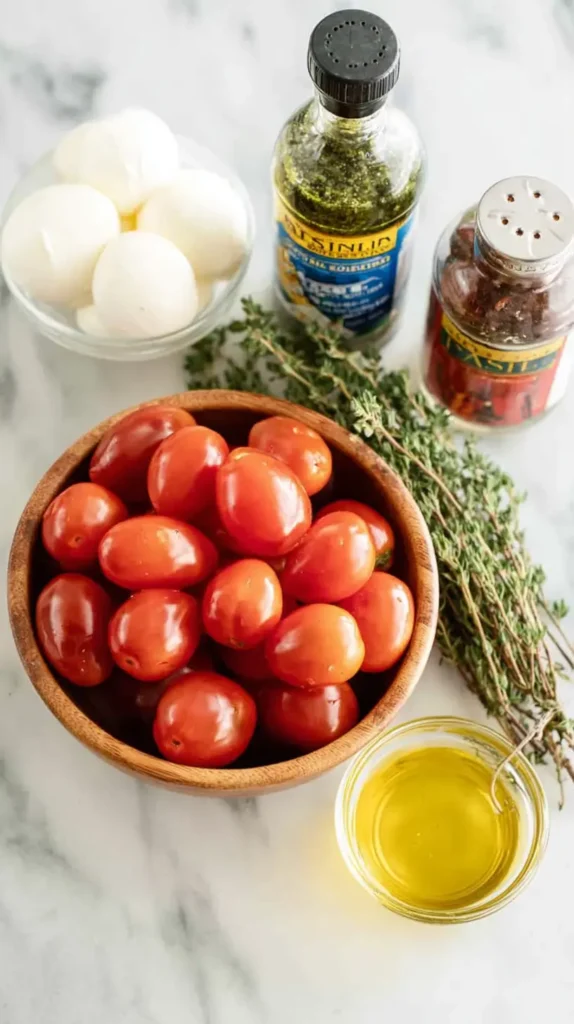
Ingredient Notes (Substitutions & Smart Tips)
- Burrata vs. fresh mozzarella: Burrata has a soft, creamy center that spills into the tomatoes—pure bliss. If you can’t find it, use an 8-ounce ball of fresh mozzarella. It won’t ooze, but it softens beautifully and still tastes fantastic.
- Tomatoes: Cherry and grape tomatoes are ideal; they’re sweet and hold texture. In peak summer, mix in a handful of chopped heirlooms for extra juiciness. Out of season, stick with cherry/grape—they’re consistently good.
- Garlic: Thin slices mellow with roasting; minced garlic cooks faster and can brown at the edges, becoming more assertive. Choose your preference.
- Herbs: Fresh oregano is bright and lemony; dried oregano is more earthy and concentrated. Basil is the finishing star—add it after baking so it stays vibrant. Parsley or chives work in a pinch.
- Olive oil: Use a tasty, everyday extra-virgin oil. It becomes part of the “sauce,” so a pleasant flavor matters.
- Balsamic glaze: Just a light drizzle adds tangy-sweet contrast. If your tomatoes are very sweet, start with less glaze, taste, and add more as needed.
- Heat level: Add a pinch of red pepper flakes to the tomato mix for gentle warmth, or keep it mellow for all-ages nibbling.
- Allergy-aware serving: Offer sturdy veggie dippers alongside bread and crackers to include gluten-free guests.
Step-by-Step Instructions
Step 1 – Prep and Heat
Preheat your oven to 350°F (175°C). Lightly oil your baking dish or line with parchment for easy cleanup (optional).
Why it matters: A moderate oven temperature gently collapses the tomatoes so they burst and release juices without shriveling or scorching.
Step 2 – Flavor the Tomatoes
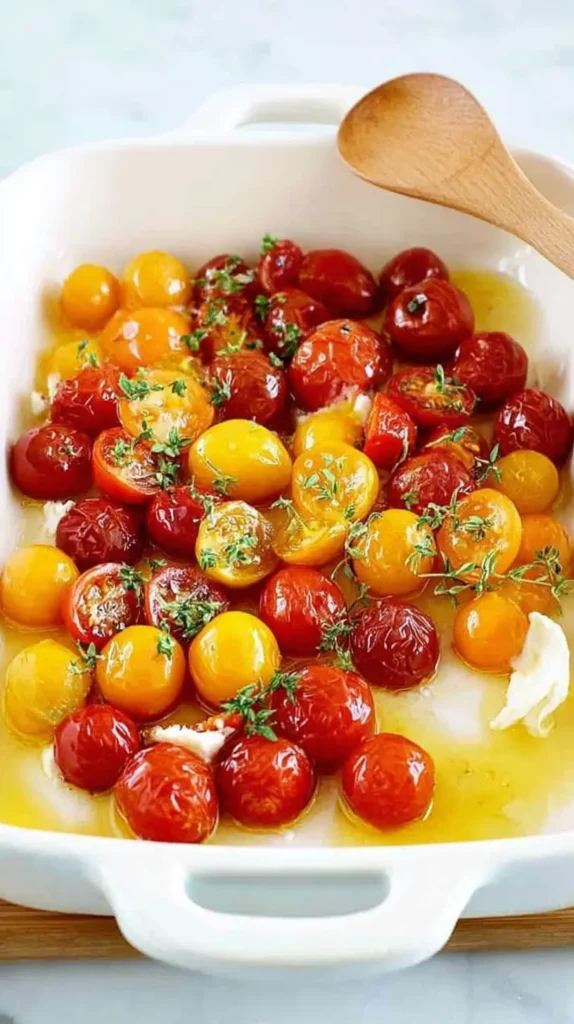
In the baking dish, toss the halved tomatoes with olive oil, sliced garlic, oregano, salt, and pepper. Arrange them in an even layer, cut sides mostly up to retain juices.
Pro tip: If your tomatoes are very watery, add 1 teaspoon tomato paste to the mix to intensify color and savoriness. It melts into the juices as they roast.
Step 3 – Roast to Jammy Perfection
Bake for 25 minutes, or until the tomatoes look glossy, collapsed, and saucy, with a few edges just beginning to caramelize. Stir gently once halfway through.
Doneness cues: You should see small pools of tomato juices mingling with oil, and the garlic should be tender, not dark.
Step 4 – Assemble with Burrata
Transfer the roasted tomatoes to a shallow serving bowl or leave them in the dish (cozy and rustic!). Nestle the burrata in the center. If you prefer it extra warm, you can set the burrata on top of the tomatoes and return to the oven for 2–3 minutes—just to soften the exterior; don’t overheat or it can split.
Texture note: Burrata’s magic is its cool, creamy center meeting warm tomatoes. A very short warm-up is optional, not required.
Step 5 – Finish and Serve
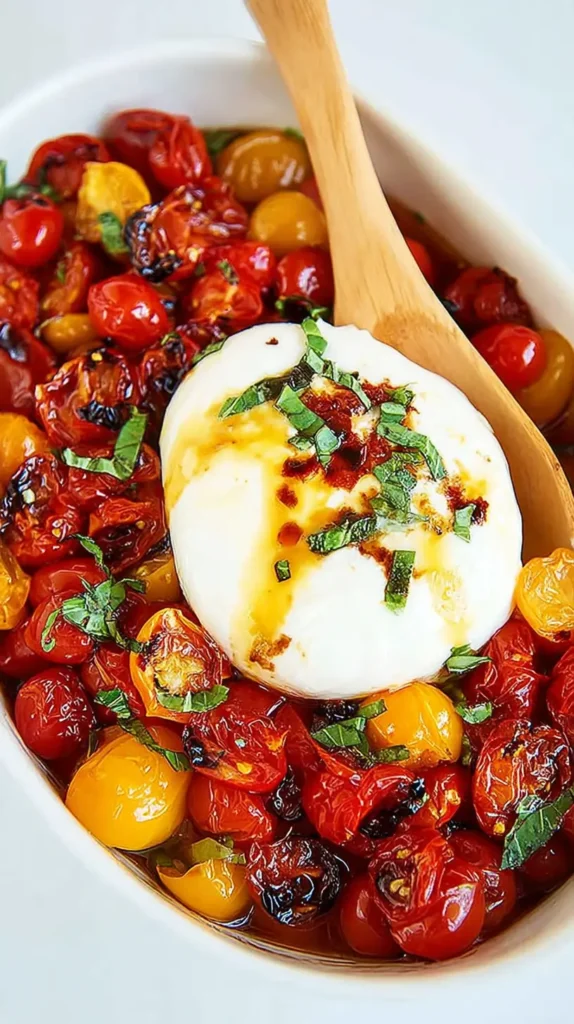
Scatter basil over the top and drizzle with balsamic glaze. Taste a spoonful of the tomato juices; add a pinch of salt or pepper if needed. Serve immediately with crostini, crackers, or veggies.
Serving flow: Place a small spoon or cheese knife next to the burrata so guests can break into the center and scoop generous bites with the tomatoes.
Pro Tips for Success
- Don’t crowd the pan too much: Tomatoes should snugly fill the dish but still have room to roast, not steam. If doubling the recipe, use two dishes.
- Slice garlic, don’t smash: Slices roast more evenly and release flavor slowly; smashed cloves can cook unevenly in a shallow layer.
- Season strategically: A small pinch of salt on the tomatoes upfront helps draw juices; a final pinch at the end lets you adjust to taste based on how sweet or tangy your tomatoes are.
- Add basil at the finish: Heat dulls basil’s color and fragrance. Scatter it right before serving for that fresh, peppery lift.
- Mind the glaze: Balsamic glaze is concentrated. Start with a modest drizzle, taste, and add more only if you want extra tangy-sweet contrast.
- Serve immediately: Warm tomatoes and cool burrata shine brightest within 10–15 minutes of assembling. If you need to hold it, keep the tomatoes warm and add the burrata and basil at the last minute.
- Keep it tidy: A shallow serving bowl helps corral the juices so every scoop includes tomato, oil, and burrata.
Flavor Variations
- Garlic-Herb Garden: Add 1 teaspoon finely chopped rosemary and 1 teaspoon chopped thyme to the tomatoes before roasting. Finish with basil as usual.
- Zesty Lemon-Basil: Stir 1 teaspoon finely grated lemon zest into the tomatoes after roasting. The citrus lift is especially great in winter when tomatoes are less sweet.
- Smoky Paprika: Add ½ teaspoon smoked paprika to the tomato mix before baking; it creates a deeper, cozy vibe that pairs beautifully with creamy cheese.
- Olive & Capers Twist: Fold in 2–3 tablespoons chopped pitted olives and 1 tablespoon capers with the roasted tomatoes before adding burrata for a briny pop (taste for salt before adding more).
- Roasted Pepper Swirl: Toss in a ½ cup of chopped roasted red peppers after baking for extra sweetness and color.
Serving Suggestions
- Classic Crostini Board: Serve baked burrata with warm crostini, marinated artichoke hearts, roasted carrots, and a bright arugula salad.
- Veggie Forward: Offer endive leaves, cucumber rounds, blanched green beans, and sweet pepper strips for dipping alongside the bread options.
- Light Lunch for Two: Spoon the tomato-burrata mix over toasted sourdough and add a simple mixed greens salad with lemon dressing.
- Pasta Night Starter: Pair with a big bowl of spaghetti tossed with olive oil, garlic, and crushed red pepper. Start the meal with the burrata, then carry those flavors into the main.
- Seasonal Touches: In summer, finish with extra basil and a handful of microgreens. In cooler months, add a pinch of crushed red pepper and fresh thyme.
Storage and Make-Ahead Instructions
- Make ahead (components): You can roast the tomato mixture up to 1 day ahead. Cool completely, store in an airtight container, and refrigerate. Reheat gently in the oven at 300°F until warm and jammy, then assemble with fresh burrata and basil right before serving.
- Leftovers: Baked burrata is best fresh. If you have leftovers, store the tomato mixture and burrata separately in airtight containers for up to 2 days. The tomato base reheats well; burrata can be enjoyed cold or room temperature.
- Reheating tomatoes: Warm in a small baking dish at 300°F for 8–10 minutes or gently in a skillet over low heat. Taste and refresh with a pinch of salt or a few torn basil leaves.
- Freezing: Not recommended for burrata or fresh basil. The tomato mixture can be frozen for up to 1 month; thaw, reheat gently, and finish with fresh herbs.
Nutrition Facts (Per Serving)
Approximate values for 1 of 8 appetizer servings, assuming all tomatoes, oil, and burrata are divided evenly.
| Calories | Protein | Carbs | Fat | Fiber | Sodium |
|---|---|---|---|---|---|
| 230 | 9 g | 9 g | 17 g | 2 g | 240 mg |
Note: Nutrition varies with burrata brand, the amount of glaze used, and serving choices (bread vs. veggies). For precise needs, calculate using your exact ingredients.
FAQ About Baked Burrata
What is burrata, and how is it different from fresh mozzarella?
Burrata is a delicate pouch of fresh mozzarella filled with stracciatella—soft shreds of mozzarella suspended in cream—so it’s extra creamy at the center. Fresh mozzarella is uniformly soft but doesn’t have that rich, flowing core. Both work in this recipe; burrata simply gives you a luxurious, oozy finish.
Can I bake the burrata directly with the tomatoes?
You can warm it briefly, but avoid fully baking burrata for long periods. High or prolonged heat can cause splitting or a rubbery exterior. The best approach is to roast the tomatoes first, then nestle the burrata on top and return to the oven for 2–3 minutes if you want it slightly warmed.
What if I can’t find burrata?
Use fresh mozzarella—choose a good-quality ball packed in water. Pat it dry, set it in the warm tomatoes, and finish with basil and glaze. The result is still creamy, stretchy, and utterly satisfying.
How can I keep the garlic from burning?
Slice the garlic rather than mincing, coat it well with oil, and roast at 350°F with the tomatoes. Stir once halfway through. If your oven runs hot, place the dish on a middle or lower rack to avoid direct top heat.
Can I scale this recipe for a crowd?
Absolutely. Double or triple everything, but use multiple baking dishes so the tomatoes roast instead of steam. Warm all the dishes, then transfer tomatoes to a large platter, add multiple burrata balls, shower with basil, and drizzle with glaze.
How do I make it dairy-free for guests?
For a dairy-free platter, serve the roasted tomato mixture as a standalone warm “dip” with basil and balsamic glaze, alongside crusty bread and veggie dippers. It’s bright and delicious on its own.
My tomatoes released a lot of liquid—what should I do?
That’s normal. The juices mingle with olive oil to form a luscious sauce. If it seems too loose, bake 3–5 minutes longer or stir in a teaspoon of tomato paste after roasting to tighten the body slightly. As the dish cools a touch, it thickens naturally.
Can I use other herbs besides basil and oregano?
Yes. Try thyme (fresh sprigs during roasting, remove before serving), rosemary (use sparingly; it’s potent), or a mix of parsley and chives at the finish for freshness. Always add delicate herbs after roasting to preserve color and fragrance.
What sides or mains pair well with baked burrata?
Keep it simple: crisp salads, roasted vegetables, grilled chicken, or grain bowls. Baked burrata also makes a great centerpiece for a snack board with marinated vegetables, olives, nuts, and seasonal fruit.
Any tips for perfect crostini?
Slice a baguette on the bias into ½-inch pieces. Brush lightly with olive oil and bake at 400°F for 6–8 minutes, flipping once, until crisp at the edges but still a bit tender in the center. Season with a pinch of salt while warm.
Final Thoughts
Baked burrata is proof that the best appetizers don’t need complicated steps or long ingredient lists. A single pan transforms tomatoes, olive oil, garlic, and herbs into a jammy, spoonable bed for the creamiest cheese. The contrast of temperatures, textures, and flavors makes every bite feel special—whether you’re hosting a party, assembling a snack board, or planning a simple dinner starter. With the variations above, you can adapt it through the seasons, scale for a crowd, and serve with just about any combination of breads and vegetables you like. It’s the kind of recipe you make once and instantly add to your permanent rotation: reliable, beautiful, and downright delicious.
Baked Burrata
Baked burrata turns simple pantry staples into a warm, crowd-pleasing appetizer. Creamy burrata rests in a bed of roasted cherry tomatoes, garlic, and herbs, finished with fresh basil and balsamic glaze. It’s elegant, effortless, and endlessly scoopable—perfect for gatherings or an indulgent snack board.
Tomatoes & Aromatics
- 2 pints cherry or grape tomatoes, halved (about 4 cups)
- 3 tbsp extra-virgin olive oil
- 3 large garlic cloves, thinly sliced
- 1 tbsp fresh oregano leaves (or 1 tsp dried oregano)
- 0.5 tsp fine sea salt (or to taste)
- 0.25 tsp freshly ground black pepper (or to taste)
Cheese & Garnish
- 8 oz burrata (one large ball or two smaller)
- 0.25 cup fresh basil leaves, torn
- 1–2 tbsp balsamic glaze (drizzle to taste)
Step 1 – Prep and Heat: Preheat your oven to 350°F (175°C). Lightly oil a 9×9-inch baking dish or line with parchment if desired.
Step 2 – Flavor the Tomatoes: In the baking dish, toss halved tomatoes with olive oil, sliced garlic, oregano, salt, and pepper. Arrange cut sides mostly up in a single layer.
Step 3 – Roast to Jammy Perfection: Bake for 25 minutes, stirring once halfway, until the tomatoes collapse, release juices, and the garlic is tender.
Step 4 – Assemble with Burrata: Transfer roasted tomatoes to a serving bowl or leave in the baking dish. Nestle the burrata into the center. For extra warmth, return to oven for 2–3 minutes, but do not overheat.
Step 5 – Finish and Serve: Scatter torn basil over top and drizzle with balsamic glaze. Taste and adjust seasoning. Serve immediately with crostini, crackers, or veggie dippers.
Swap burrata with fresh mozzarella if needed. Add red pepper flakes for heat or tomato paste for intensity. The tomato base can be made ahead and gently reheated. Add burrata and basil just before serving for best texture and color.