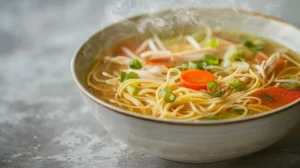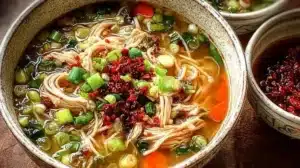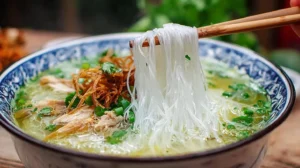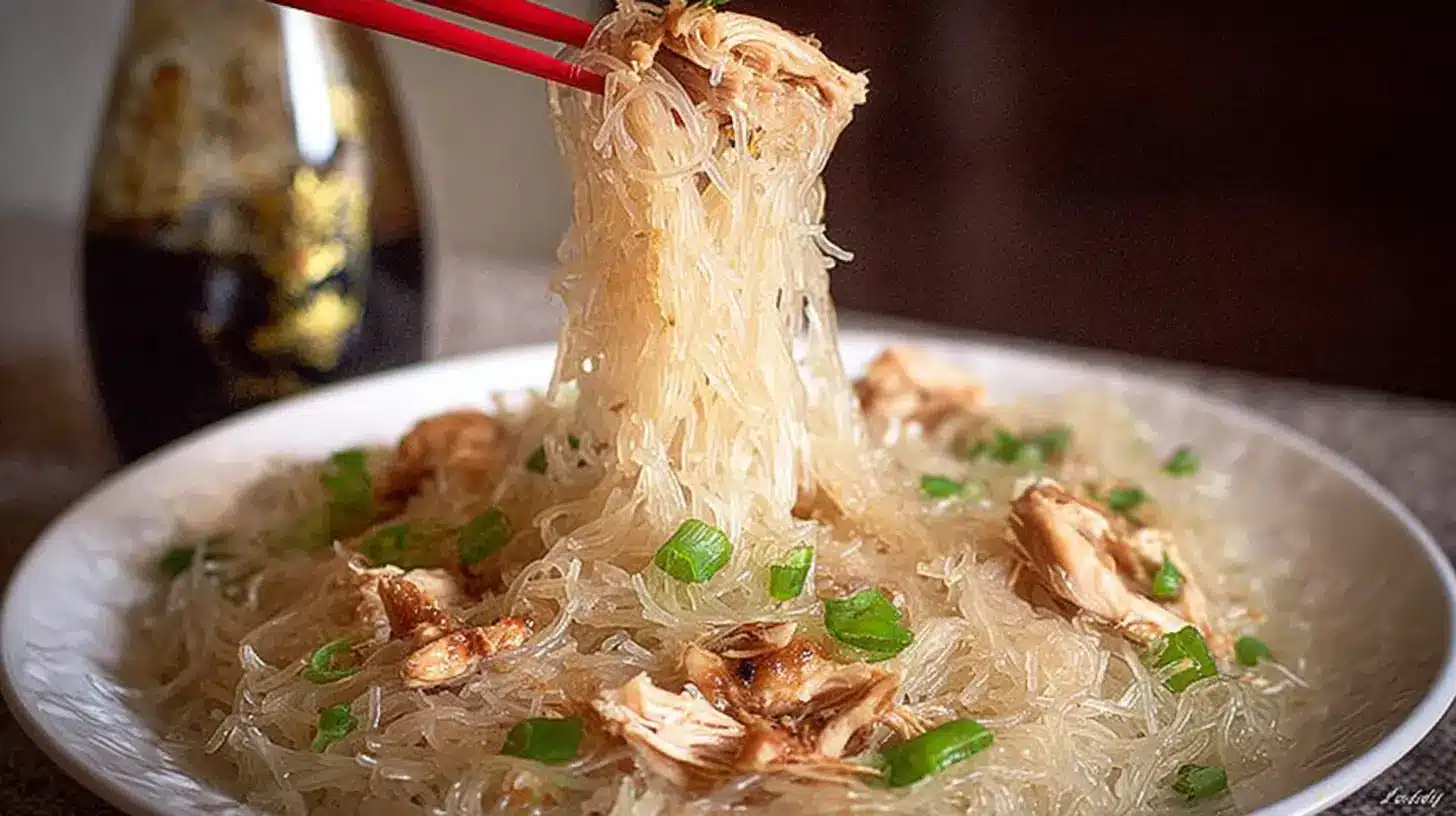
The chicken long rice recipe is a soothing Hawaiian-style noodle soup where tender shreds of chicken mingle with silky glass noodles in a clean, gingery broth. The flavor is simple and restorative—fresh ginger, garlic, and a splash of shoyu (soy sauce) do the heavy lifting—while the slippery bean-thread noodles soak up every drop. It’s cozy enough for sick days, light enough for warm weather, and fast enough for weeknights.
Why You’ll Love This Chicken Long Rice Recipe
- Light, clean comfort: Bright ginger and garlic deliver warmth without heaviness.
- Simple ingredients, big payoff: Chicken thighs, broth, shoyu, and glass noodles—nothing fussy.
- Fast and flexible: About an hour, start to finish, with easy swaps for different tastes.
- Kid- and crowd-friendly: Mild broth, familiar chicken, and fun, slurpable noodles.
- Perfect any time: Serve as a side at a luau spread or as a soothing main on a busy night.
What Is Chicken Long Rice?
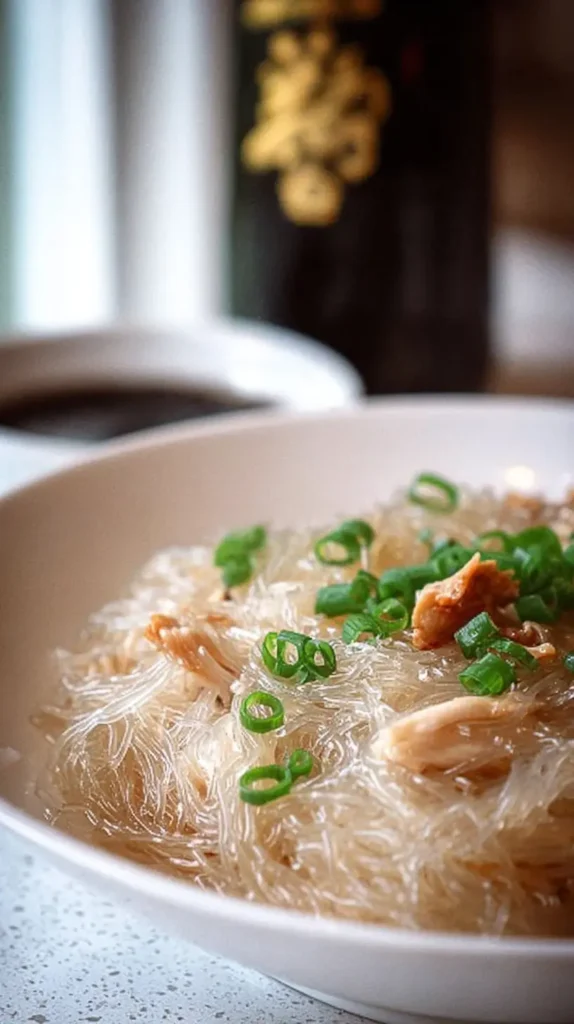
Chicken long rice is a beloved Hawai‘i dish that marries clear bean-thread noodles (also called cellophane or glass noodles) with a gingery chicken broth. Despite the name, it’s not rice in the usual sense—the “long rice” refers to translucent noodles made from mung bean starch. Traditionally, bone-in chicken is simmered with ginger, garlic, and shoyu to infuse the broth. The chicken is shredded, the soaked noodles are added to the hot broth until just clear and tender, and the bowl is finished with bright green onion. The result is clean, savory, and deeply satisfying in a gentle way, making it a go-to for potlucks, luaus, and comfort cravings.
Chicken Long Rice

This comforting Hawaiian-style noodle soup features tender chicken and slippery glass noodles in a clear, gingery broth. Light yet satisfying, it’s the perfect balance of warmth, ease, and flavor—ideal for weeknights, potlucks, or whenever you need a soothing bowl of something good.
Broth & Chicken
- 2 pounds bone-in, skin-on chicken thighs (or a mix of thighs and drumsticks)
- 8 cups low-sodium chicken broth
- 1 tablespoon neutral oil (only if searing first; optional)
Seasonings
- 2 tablespoons shoyu (soy sauce) (plus more to taste)
- 1.5 tablespoons fresh ginger (finely grated or matchsticked)
- 3 cloves garlic (minced)
- 1 teaspoon sugar (balances the savory depth)
- 0.5 teaspoon black pepper (plus more to taste)
- 1 to taste kosher salt
Noodles & Garnish
- 7 ounces bean-thread (glass) noodles
- 4 green onions (thinly sliced, white and green parts divided)
- 1 optional fresh cilantro (roughly chopped)
- 1 optional fresh lime (squeezed for brightness)
Soak bean-thread noodles in warm water for 15–20 minutes until pliable. Drain before using.
In a large pot, combine chicken broth, shoyu, ginger, garlic, sugar, and black pepper. Bring to a gentle boil and taste for seasoning.
Add chicken thighs to the broth. Lower heat to a steady simmer, partially cover, and cook for 25–30 minutes until tender. Skim foam as needed.
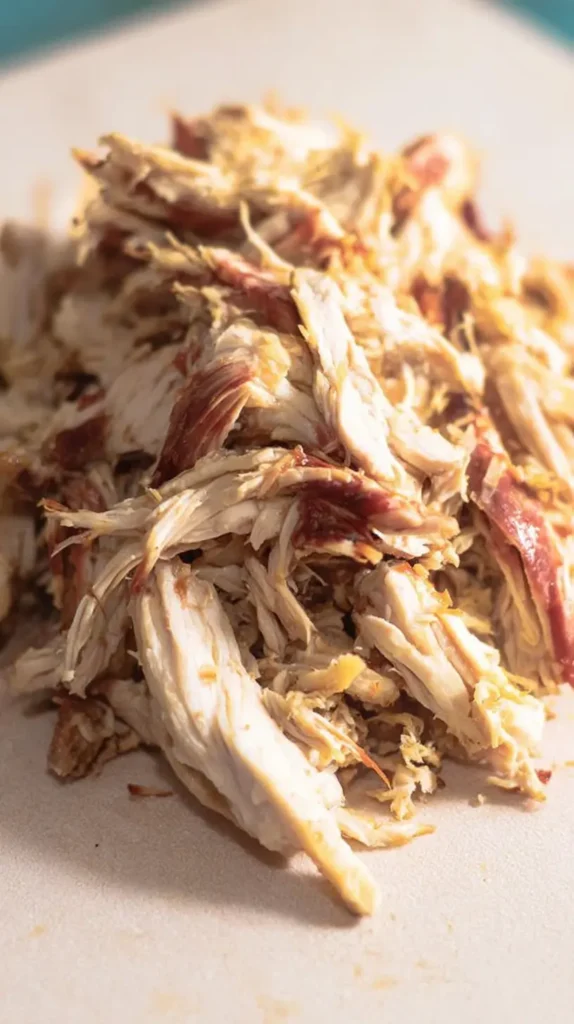
Remove chicken from pot, discard skin and bones, and shred meat with two forks. Return shredded chicken and juices to the pot. Adjust seasoning with shoyu or salt. Stir in most of the green onion whites.
Add drained noodles and simmer 3–5 minutes until translucent and springy. Turn off heat and stir in most of the green onion greens. Add cilantro or lime if desired.
Let soup rest 2–3 minutes. Ladle into bowls, garnish with remaining green onions, and serve immediately.
Use low-sodium broth and season at the end for balance. Add vegetables like bok choy or napa cabbage in the last few minutes for extra texture. Noodles continue absorbing broth—serve promptly for the best consistency.
Ingredients for Chicken Long Rice
Broth & Chicken
- 2 pounds (900 g) bone-in, skin-on chicken thighs (or a mix of thighs and drumsticks)
- 8 cups (1.9 L) low-sodium chicken broth
- 1 tablespoon neutral oil (only if searing first; optional)
Seasonings
- 2 tablespoons shoyu (soy sauce), plus more to taste
- 1½–2 tablespoons peeled fresh ginger, finely grated or matchsticked
- 3–4 garlic cloves, minced
- 1 teaspoon sugar (balances the savory depth)
- ½ teaspoon freshly ground black pepper, plus more to taste
- Kosher salt to taste (start modestly; shoyu adds saltiness)
Noodles & Garnish
- 6–8 ounces (170–225 g) bean-thread (cellophane/glass) noodles
- 4 green onions, thinly sliced (white and green parts, divided)
- Optional: a small handful of fresh cilantro, roughly chopped
- Optional: a squeeze of fresh lime for brightness
Smart Substitutions & Notes
- Chicken: Thighs stay juicy. Boneless thighs work; reduce simmer time slightly. Breast meat is fine but can dry out—shred gently and don’t overcook after returning to the pot.
- Shoyu vs. tamari: Either works. Choose low-sodium and season at the end.
- Broth: Homemade or store-bought is fine. If using regular sodium broth, hold back on salt and shoyu until you taste at the end.
- Ginger form: Grated ginger “melts” into the broth; matchsticks give tiny ginger bites. Use the version you prefer.
- Bean-thread noodles: Sometimes labeled “mung bean vermicelli” or “glass noodles.” Substituting rice noodles changes the dish—still tasty, but not the same silky texture.
- Aromatics: Add a few slices of sweet onion during the simmer for a mellow sweetness if you like.
Equipment You’ll Need
- Large pot or Dutch oven with lid
- Fine-mesh strainer or slotted spoon (for skimming and lifting chicken)
- Tongs and two forks (for shredding)
- Medium bowl for soaking noodles
- Ladle and tasting spoon
Step-by-Step Instructions
Step 1 – Soak the glass noodles
Place the bean-thread noodles in a bowl and cover with warm water. Let them soak while you start the soup—about 15–20 minutes—until pliable but not fully soft. This prevents them from overcooking later.
Step 2 – Build the gingery broth
In a large pot, combine chicken broth, shoyu, ginger, garlic, sugar, and black pepper. Bring to a gentle boil over medium-high heat. Taste the broth at this stage; it should be lightly seasoned with a clear ginger aroma.
Step 3 – Simmer the chicken
Add the chicken thighs to the simmering broth. Reduce heat to maintain a steady, gentle simmer. Cover partially and cook for 25–30 minutes, skimming any foam that rises. The chicken should be fully cooked and very tender.
Step 4 – Shred and season
Lift the chicken to a cutting board. When cool enough to handle, discard skin and bones, then shred the meat into bite-size pieces using two forks. Return the shredded chicken and any resting juices to the pot. Taste and adjust with more shoyu or a pinch of salt if needed. Stir in most of the white parts of the green onion for depth.
Step 5 – Finish with noodles
Drain the soaked noodles and add them to the simmering pot. Cook 3–5 minutes, stirring gently, until the strands turn translucent and tender but still springy. Turn off the heat. Fold in a handful of sliced green onions (reserve some for garnish). If using cilantro or a squeeze of lime, add right before serving.
Step 6 – Rest and serve
Let the soup sit for 2–3 minutes so noodles fully relax. Ladle into bowls and garnish with the remaining green onions. Serve immediately—glass noodles continue to absorb broth as they sit.
Ingredient Notes (Helpful Details & Substitutions)
Chicken Choices
Bone-in thighs are the sweet spot for flavor and tenderness. If you prefer boneless thighs, reduce the simmer time to about 18–22 minutes to prevent shreddy dryness. If using chicken breast, simmer only until just cooked through, shred gently, and avoid further boiling.
Broth Clarity
If a pristine, clear broth is important to you, simmer gently (not a rolling boil) and skim foam early. Ginger and garlic can be left loose or tied in a cheesecloth sachet for ultra-clear results.
Shoyu and Salt
Shoyu adds more than salt—it contributes savory depth. Start with the listed amount, taste after the chicken returns to the pot, and then adjust with pinches of salt or tiny splashes of shoyu until the flavor pops without becoming too dark or salty.
Noodles: Timing Is Everything
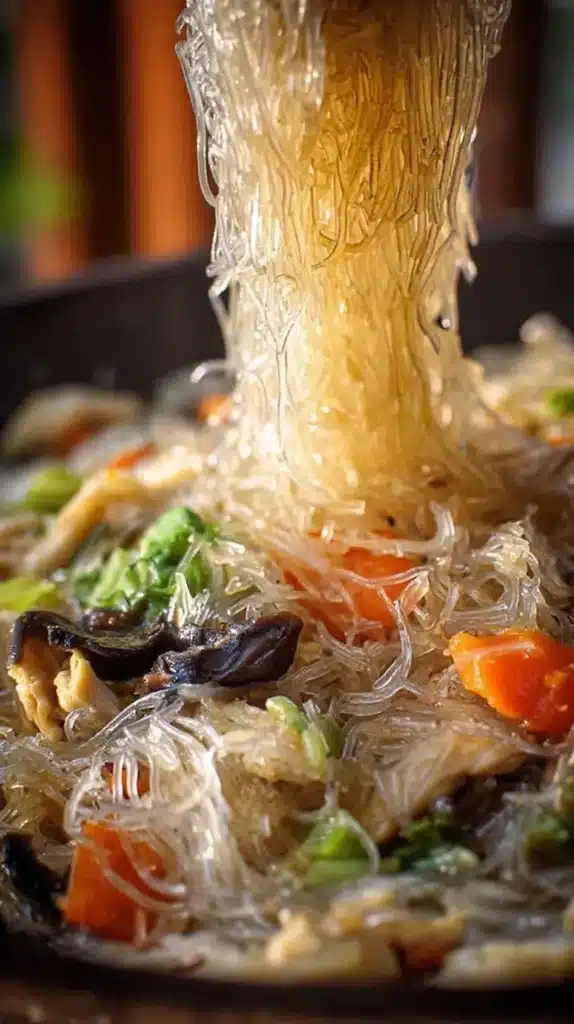
Bean-thread noodles cook fast. They go from firm to perfect to overly soft quickly. Taste a strand at the 3-minute mark. You’re aiming for translucent, slippery, and lightly springy.
Step-by-Step Photos in Words (Sensory Cues)
- When the broth is ready for the chicken, it should smell like warm ginger tea with a savory backdrop.
- Proper simmering looks like small, lazy bubbles around the edges—never turbulent.
- The chicken is ready to shred when a fork twist effortlessly pulls the fibers apart.
- Noodles are done when they are crystal-clear and curl easily around your spoon without breaking.
Pro Tips for Success
- Soak, don’t boil, the noodles first: This prevents them from drinking up too much broth later.
- Simmer gently: Boiling hard toughens chicken and clouds broth.
- Season late: Broth reduces slightly during simmering; adjust shoyu and salt at the end for perfect balance.
- Keep a little broth aside: If serving later, reserve a cup of hot broth to loosen the pot when noodles thicken the soup upon standing.
- Slice aromatics thin: Minced garlic and fine ginger threads disperse flavor evenly without harsh bites.
- Serve immediately after noodles turn clear: Wait too long and they soften more than you’d like.
- Use low-sodium ingredients: It’s easier to add than to take away.
- Garnish generously: Fresh green onion brings the signature fragrance and a clean finish.
Flavor Variations
- Garlicky Boost: Add 1 extra clove of garlic and finish with a tiny knob of grated ginger at the end for a fresh, bright hit.
- Ginger-Lemon Bright: Finish with a squeeze of lemon instead of lime for a citrusy lift that keeps the broth sparkling.
- Veggie Add-Ins: Baby bok choy, napa cabbage, or thin carrot matchsticks can simmer for the last 3–4 minutes. Keep quantities small so the broth stays clear and light.
- Protein Play: Stir in a handful of cooked shredded chicken from a previous roast to stretch servings; adjust seasoning to taste.
- Herb Accent: Cilantro, chives, or a few leaves of Thai basil change the aroma without overpowering the dish.
Serving Suggestions
- Luau-Style Plate: Serve as a side alongside huli-huli-style chicken, lomi-style tomatoes, and steamed greens.
- Weeknight Main: Pair with a cucumber salad or quick sautéed bok choy for a fast, balanced dinner.
- Comfort Lunch: Ladle into a thermos for a soothing midday meal; pack extra green onion separately for a fresh sprinkle.
- Noodle Bar: Offer lime wedges, extra shoyu, sliced chilies, and cilantro so everyone can customize.
Make-Ahead, Storage, and Reheating
Make-Ahead (Broth & Chicken):
Prepare the broth through Step 4 (shredded chicken returned to the pot). Cool quickly and refrigerate for up to 3 days. Reheat to a gentle simmer, then add soaked noodles and finish fresh right before serving for the best texture.
Refrigerate Leftovers:
Store cooled soup in airtight containers for 2–3 days. Noodles will continue to absorb broth, so plan to add a splash of water or broth during reheating.
Freeze (Broth & Chicken Only):
Freeze the soup without noodles for up to 2 months. Thaw in the fridge, reheat, then add fresh soaked noodles and finish as directed.
Reheating Tips:
Warm gently on the stovetop over low heat. If the noodles soaked up too much broth, loosen with water or stock, then re-season with a tiny splash of shoyu and a squeeze of citrus to brighten.
Nutrition Facts (Per Serving)
Estimated for 6 servings using chicken thighs, low-sodium broth, and 7 oz noodles; values vary by brand and exact amounts.
| Calories | Protein (g) | Carbs (g) | Fat (g) | Fiber (g) | Sodium (mg) |
|---|---|---|---|---|---|
| 310 | 24 | 38 | 7 | 1 | 690 |
FAQ About Chicken Long Rice Recipe
What kind of noodles do I need for chicken long rice?
Use bean-thread (cellophane/glass) noodles, often made from mung bean starch. They turn translucent when cooked and have a slippery, springy texture that defines the dish. Rice noodles can substitute, but the texture and appearance change.
Can I use chicken breast instead of thighs?
Yes, but watch the simmer time. Breast meat can dry out quickly. Poach gently until just cooked through, shred, and avoid further boiling. A small splash of broth when reheating helps keep it tender.
How do I keep the broth clear?
Maintain a gentle simmer rather than a rolling boil, skim foam during the first few minutes, and avoid vigorous stirring. If clarity is top priority, add ginger slices and garlic to a sachet and remove before finishing.
The noodles absorbed too much broth—how do I fix it?
Simply add a splash or two of hot broth or water to loosen, then taste and adjust shoyu and salt. Next time, soak noodles well and add them just before serving.
Can I make this gluten-free?
Choose a gluten-free tamari that fits your needs and verify that your noodles are mung-bean–based with no wheat-containing additives. Always check labels to confirm.
What vegetables work best without clouding the broth?
Tender, quick-cooking vegetables like baby bok choy, napa cabbage, sliced sugar snap peas, or thin carrot matchsticks. Add them during the last few minutes so they stay bright and crisp-tender.
How can I scale this for a crowd?
Use a wider pot to keep noodle strands from clumping. Hold the finished broth and chicken on the lowest simmer and cook noodles in small batches right before serving, transferring to the main pot to combine.
Is chicken long rice spicy?
Not by default. It’s mild and aromatic. If you enjoy heat at the table, offer thinly sliced chilies or a touch of chili-garlic sauce on the side so each person can customize.
TastyInspo Notes
- Ginger first: Let ginger’s aroma bloom in the hot broth for a few minutes before adding chicken. That early infusion pays off in every spoonful.
- Soak smart: Properly soaking glass noodles is the difference between silky and soggy. Start them early, then finish them in the hot broth for perfect texture.
- Gentle wins: A lively simmer toughens chicken and clouds broth. Keep bubbles small and steady for tenderness and clarity.
- Season last: Taste after the chicken is shredded and back in the pot. A few drops of shoyu or a pinch of salt at the end is more precise than salting early.
- Serve now, not later: Noodles continue to soften as they rest. Cook them right before ladling into bowls.
- Bright finish: A quick scatter of green onion (and, if you like, a whisper of cilantro or a squeeze of citrus) lifts the gentle broth without overpowering it.
- Leftover love: If storing, keep extra broth on hand. When reheating, add a splash, warm gently, and refresh with a tiny dash of shoyu.
Final Thoughts
This chicken long rice recipe is all about comfort you can feel good about—clean flavors, soothing broth, and silky noodles that invite lingering slurps. With a handful of pantry staples and a few fresh aromatics, you’ll have a nourishing bowl ready in about an hour. Make it for a luau-style spread, a quiet weeknight, or whenever you want something warm and uncomplicated. Keep the technique gentle, the noodles bouncy, and the garnishes fresh, and you’ll return to this recipe again and again.