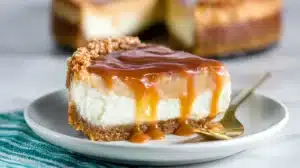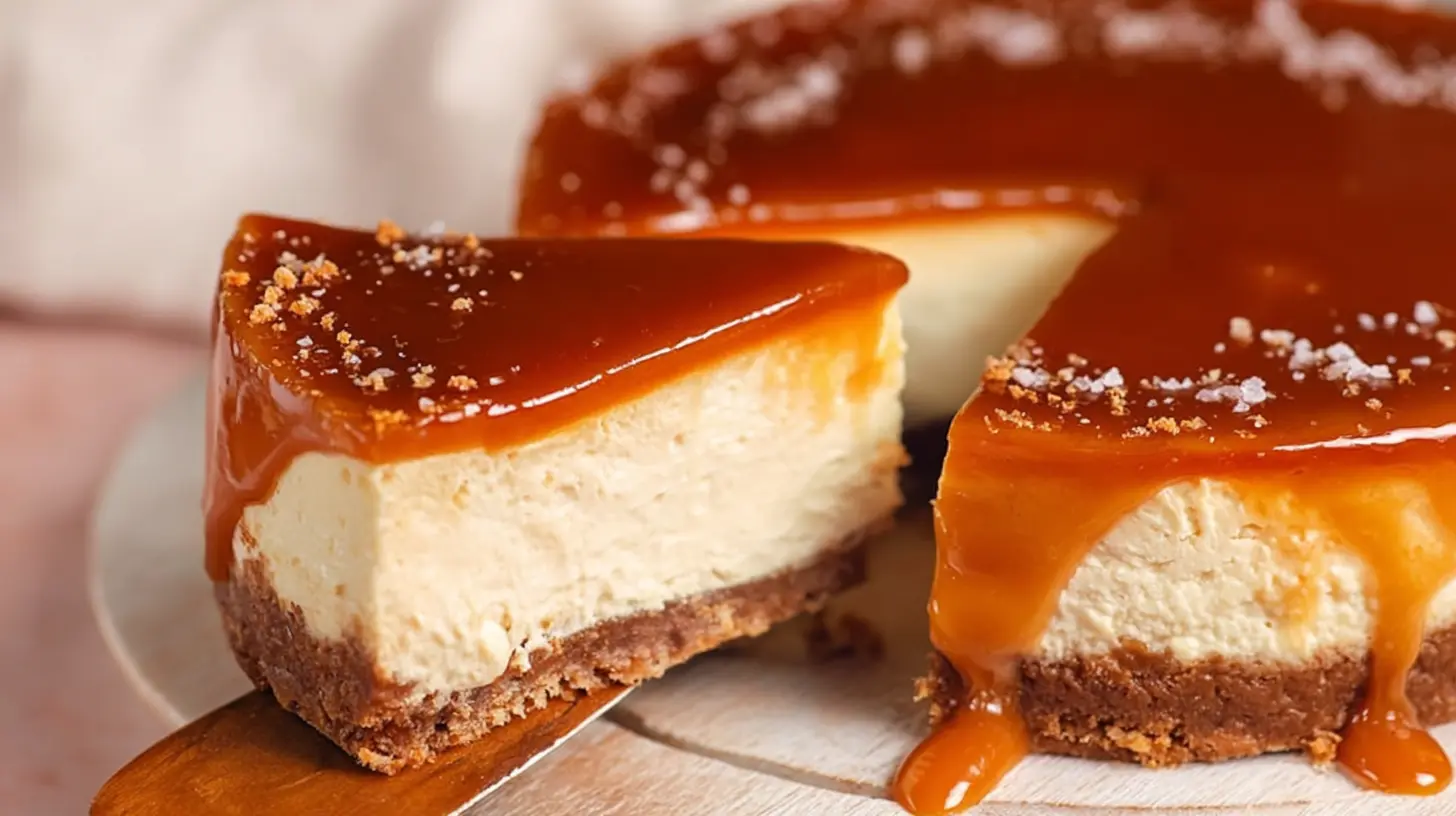
This Salted Caramel Cheesecake Recipe delivers a bakery-smooth, ultra-creamy cheesecake with a caramel-kissed filling, a toasty cookie crust, and a glossy salted caramel blanket that pools dreamily over each slice. The method is streamlined for home bakers—no guesswork about doneness, no crater cracks—thanks to gentle mixing, a steady low bake, and a simple water bath (or steam bath) that guarantees custardy texture. You’ll get clean slices, a balanced sweet–salty finish, and all the pro tips you need on timing, cooling, and topping so the cake turns out flawless on your very first try.
Why You’ll Love This Salted Caramel Cheesecake Recipe
- Restaurant-level texture: A low-and-slow water bath and smart batter ratios create a custardy, satin-smooth interior—never chalky, never dense.
- Balanced flavor: Homemade caramel in the batter + a pour-over topping + a whisper of sea salt = deep, complex caramel with a clean finish.
- Foolproof method: Clear visual cues, temperatures, and timings at every step—from crust to chill—to help you avoid cracks and leaks.
- Plan-ahead friendly: A cheesecake is at its peak the day after baking. Make it ahead for effortless entertaining.
- Customizable base: Biscoff, graham, or chocolate cookie crusts all work; each creates a distinct vibe without changing the method much.
- Elegant but sturdy: Slices hold beautifully for parties and plating; you get drama in the drips without a sticky mess.
What Is Salted Caramel Cheesecake Recipe?
Salted Caramel Cheesecake is a classic baked cheesecake infused with caramel and finished with a glossy, salted caramel topping. The base is a crisp cookie crust (often Biscoff for caramel echoes), the filling is a rich cream-cheese custard lightly sweetened and stabilized with a touch of starch and sour cream, and the star is caramel: some whisked into the batter for a toffee warmth, the rest poured on top after chilling for sheen and flavor contrast. A pinch of flaky salt brightens the sweetness, sharpening the caramel’s buttery edge and keeping each bite balanced. The result is a slice that tastes like caramel candy melted into silk.
Salted Caramel Cheesecake
This Salted Caramel Cheesecake delivers a bakery-smooth, ultra-creamy texture with caramel-infused filling and a glossy salted caramel topping. Balanced in sweetness and salt, it’s perfect for entertaining, with a foolproof method that guarantees silky, crack-free slices.
Homemade Salted Caramel
- 200 g granulated sugar
- 70 g unsalted butter (cut into pieces, room temperature)
- 120 g heavy cream (warmed)
- 1 tsp vanilla extract
- 0.75 tsp fine sea salt (to taste)
Cookie Crust
- 200 g Biscoff cookies (about 26, finely crushed)
- 85 g unsalted butter (melted)
- 1 pinch fine sea salt
Cheesecake Filling
- 907 g full-fat cream cheese (room temperature)
- 200 g granulated sugar
- 2 tsp vanilla extract
- 4 large eggs (room temperature)
- 80 g heavy cream (room temperature)
- 120 g sour cream (room temperature)
- 1 Tbsp cornstarch (or 1½ Tbsp all-purpose flour)
- 160 g salted caramel (from above, cooled to room temperature)
Finish
- remaining salted caramel (gently rewarmed to pourable)
- to taste flaky sea salt (for sprinkling)
Step 1 — Make the salted caramel: Melt sugar in a saucepan until amber. Whisk in butter, then cream, vanilla, and salt. Let cool.
Step 2 — Prepare the pan & crust: Line pan with parchment, triple-wrap with foil. Mix cookie crumbs, melted butter, and salt. Press into pan and bake at 350°F (175°C) for 8 minutes. Cool and reduce oven to 325°F (160°C).
Step 3 — Mix the cheesecake batter: Beat cream cheese and sugar until smooth. Mix in vanilla and starch, then eggs one at a time. Blend in cream, sour cream, and ⅔ cup cooled caramel.
Step 4 — Bake gently in a water bath: Pour batter into crust. Set pan in a roasting pan and add hot water halfway up sides. Bake at 325°F for 75–85 minutes until center jiggles slightly and edges are set.
Step 5 — Chill fully: Let cake rest in oven with door cracked for 45–60 minutes. Cool on rack until barely warm, then chill at least 8 hours or overnight.
Step 6 — Finish with caramel & salt: Remove ring and transfer to platter. Gently warm remaining caramel and pour over cake. Sprinkle flaky salt and chill 15–20 minutes before slicing.
Make the day before for best flavor and texture. For clean slices, warm knife between cuts. Use good-quality caramel and adjust salt to taste. Cheesecake freezes well—wrap tightly and thaw in fridge overnight.

Ingredients for Salted Caramel Cheesecake
Homemade Salted Caramel (makes ~1 cup; enough for batter + topping)
- 1 cup (200 g) granulated sugar
- 5 Tbsp (70 g) unsalted butter, cut into pieces, room temperature
- ½ cup (120 g) heavy cream, warmed
- 1 tsp vanilla extract
- ¾–1 tsp fine sea salt (to taste)
Cookie Crust
- 200 g Biscoff cookies (about 26), finely crushed
- 6 Tbsp (85 g) unsalted butter, melted
- Pinch fine sea salt
Cheesecake Filling
- 32 oz (907 g) full-fat cream cheese, room temperature
- 1 cup (200 g) granulated sugar
- 2 tsp vanilla extract
- 4 large eggs, room temperature
- ⅓ cup (80 g) heavy cream, room temperature
- ½ cup (120 g) sour cream, room temperature
- 1 Tbsp cornstarch (or 1½ Tbsp all-purpose flour)
- ⅔ cup (about 160 g) of the salted caramel from above, cooled to room temperature
Finish
- Remaining salted caramel, gently rewarmed to pourable
- Flaky sea salt, for sprinkling
Equipment: 9-inch springform pan; heavy-duty foil; roasting pan for water bath; instant-read thermometer (helpful), offset spatula, parchment circle.
Yield: 12–14 generous slices.
Ingredient Notes & Smart Substitutions
- Cream cheese: Full-fat blocks only. Tub-style or reduced-fat can lead to a looser set and weeping. Bring to room temperature for a silky batter.
- Sour cream & cream: These add tang and a custard-like softness. If you prefer a slightly firmer set, decrease heavy cream to ¼ cup.
- Starch: Cornstarch helps prevent cracking by gently binding excess moisture. Flour works in a pinch and yields a slightly denser bite.
- Sugar: White granulated sugar keeps caramel and cream cheese flavors clean; brown sugar will tilt the batter toward butterscotch.
- Crust options:
- Biscoff = deep caramel spice, buttery snap (house favorite).
- Graham crackers = classic, lightly honeyed.
- Chocolate wafers = bold contrast to the caramel top.
Keep the crumb total near 200 g and butter around 85 g.
- Salt: Use fine sea salt in caramel and a flaky finishing salt on top. Flakes read as sparkle and pop—you taste the salt, then it melts.
- Dairy-light tweaks: Keep cream cheese full-fat for structure. You can reduce heavy cream slightly or sub part with milk, but texture will be a touch less plush.
Step-by-Step Instructions
Step 1 — Make the salted caramel
- Dry melt the sugar: Add sugar to a heavy saucepan. Heat over medium, stirring occasionally as it melts. It will clump, then liquefy to amber.
- Add butter: When the sugar reaches a deep golden amber (not dark brown), whisk in butter. It will bubble vigorously—keep whisking.
- Stream in warm cream: Off heat for a moment if needed, then slowly pour in warmed cream, whisking constantly. Return to low heat and whisk smooth.
- Flavor & salt: Stir in vanilla and ¾–1 tsp fine sea salt to taste. Simmer 30–60 seconds to slightly thicken.
- Cool: Transfer to a heatproof bowl. Let cool to room temp; it will thicken as it cools. You’ll use ⅔ cup for the batter and the rest for topping.
Caramel cues: Aim for a medium-deep amber for full flavor without bitterness. If you overshoot and it smells acrid, start over—burnt caramel will carry through.
Step 2 — Prepare the pan & crust
- Prep pan: Line the bottom of a 9-inch springform with a parchment circle. Wrap the outside of the pan with three layers of heavy-duty foil (or use a silicone water-bath wrap) to prevent leaks.
- Crust: Pulse cookies to fine crumbs. Add melted butter and a pinch of salt; stir until the texture resembles wet sand.
- Press & pre-bake: Press firmly across the bottom and 1–1½ inches up the sides. Bake at 350°F (175°C) for 7–8 minutes. Cool slightly; reduce oven to 325°F (160°C).
Crust cue: A well-packed crust prevents crumbling. Use a flat-bottomed glass to compact evenly, especially up the sides.
Step 3 — Mix the cheesecake batter
- Smooth base: Beat cream cheese and sugar on medium-low until perfectly smooth, about 2 minutes—scrape bowl and paddle often.
- Flavor & starch: Add vanilla and cornstarch; mix just to combine.
- Eggs: Add eggs one at a time on low, mixing until each disappears. Avoid whipping in excess air.
- Dairy: Mix in heavy cream and sour cream on low until satiny.
- Caramel swirl-in: Add ⅔ cup cooled caramel and mix on low until uniform.
Batter cues: Silky, pourable, no lumps. Overmixing adds air, which can lead to a puffy rise and cracks—keep it gentle.
Step 4 — Bake gently in a water bath
- Set up bath: Place the foil-wrapped springform in a large roasting pan. Pour batter into the crust; tap the pan to release air bubbles.
- Add hot water: Pour hot water into the roasting pan to reach halfway up the springform sides.
- Bake: At 325°F (160°C) for 75–85 minutes, until edges are set and the 2–3-inch center still jiggles like Jell-O when nudged. An instant-read thermometer in the center should read 150–155°F (65–68°C) for perfect creaminess.
- Cool gradually: Turn the oven off, crack the door, and let the cheesecake rest inside 45–60 minutes. Remove from bath, unwrap foil, and cool on a rack until barely warm.
- Chill: Cover and refrigerate at least 8 hours, preferably overnight.
Doneness cues: The center wobble is your friend. If it’s liquid, keep baking in 5–8 minute increments. If it’s rigid, it’s overbaked—still tasty, but less silky.
Step 5 — Finish with caramel & salt
- Release & top: Run a thin knife around the edge to loosen, then unclasp the ring. Slide the cake onto a serving platter.
- Warm & pour: Gently warm the remaining caramel until pourable but not hot. Pour over the top, nudging to the edges so it drips slightly.
- Salt & set: Sprinkle flaky sea salt. Chill 15–20 minutes to lightly set the top before slicing.
Slice cleanly: Use a long, sharp knife warmed in hot water and wiped dry between cuts. An offset spatula lifts slices neatly.
Pro Tips for Success
- Room-temp dairy is non-negotiable: Cold cream cheese causes lumps; let everything warm on the counter.
- Mix low & slow: Air bubbles = puffing and cracks. Keep the mixer at low speed and scrape the bowl repeatedly.
- Triple-wrap the pan: A water bath that leaks means a soggy crust. Heavy-duty foil or a silicone wrap is cheap insurance.
- Thermometer advantage: Pulling at 150–155°F centers guarantees a silky set after chilling.
- Cool gradually: Sudden temperature shifts can crack the top. Gentle oven rest, then a slow cool on the counter, then the fridge.
- Caramel texture: If caramel is too thick to pour, warm it in 5-second bursts. If it’s thin, let it sit a few minutes; it firms as it cools.
- Plan-ahead: Cheesecakes taste best the next day. Bake the day before serving to relieve day-of pressure and to let flavors bloom.
Flavor Variations
- Brown-Sugar Caramel Batter: Swap ¼ cup of the white sugar in the filling for light brown sugar for a butterscotch tilt.
- Chocolate Cookie Crust: Use chocolate wafer crumbs for a striking contrast to the amber caramel top.
- Caramel Swirl Top: Instead of a full blanket, swirl ⅓–½ cup caramel over the chilled cake and finish with a lighter drizzle of the rest at the table.
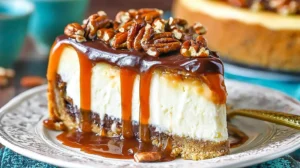
- Nutty Crunch Rim: Press very finely chopped toasted pecans or almonds around the top edge after adding caramel for texture.
- Espresso Caramel: Stir ½–1 tsp espresso powder into the caramel for mocha depth.
- Mini Cheesecakes: Line a muffin tin; bake crusts 5 minutes, fill, and bake at 300–315°F for 16–20 minutes (water bath optional). Cool and top as above.
Serving Suggestions
- Plate with contrast: A few fresh berries and a dollop of lightly sweetened whipped cream brighten richness.
- Warm knife ritual: For café-tier slices, warm and wipe the blade between every slice.
- Drizzle at the table: Bring a small pitcher of extra caramel so guests can add a ribbon to each plate.
- Texture topper: A tiny sprinkle of flaky salt and a few toasted crumbs on each slice add crunch and sparkle.
Make-Ahead, Storage & Freezing
- Make-Ahead: Best baked 1 day in advance; up to 2 days is fine. Add the caramel topping the day you plan to serve (or up to 6 hours before).
- Storage: Cover and refrigerate up to 5 days. If the caramel top is set, press parchment lightly on the surface before covering to protect shine.
- Freezing (whole): Chill the baked, cooled, untopped cheesecake overnight. Remove ring, wrap in plastic, then foil; freeze up to 2 months. Thaw in the fridge overnight, then top with caramel.
- Freezing (slices): Freeze slices on a sheet until firm, then wrap individually. Thaw in the fridge for neat, ready-to-serve desserts.
Troubleshooting
- Cracks on top: Overmixed batter or rapid temperature change. Next time, mix on low, avoid whipping, and cool gradually. Cosmetic cracks can be hidden under caramel.
- Runny center after chilling: Underdone bake. Slice outer portions and return the center (still in pan) to a 250–275°F oven for 10–15 minutes, or chill longer; it often firms by day two.
- Soggy crust: Water bath leak. Dry in a 300°F oven for 10–12 minutes after the bake (without water bath). Next time, triple-wrap or use a silicone wrap.
- Grainy caramel: Sugar crystallized. Start with an absolutely clean pot and avoid stirring once the sugar melts. A drop of lemon juice or a spoon of corn syrup (optional) can add insurance.
- Caramel slid off: Topping was too warm or cake too cold/slick. Warm caramel only until pourable and spread gently on a chilled-but-dry surface.
Nutrition Facts (Per Slice)
Estimated for 14 servings with Biscoff crust and full caramel topping; values vary by brand and garnish.
| Calories | Protein (g) | Carbs (g) | Fat (g) | Fiber (g) | Sodium (mg) |
|---|---|---|---|---|---|
| 480 | 7 | 45 | 32 | 0 | 430 |
Lighter ideas: Use a graham crust, reduce caramel topping slightly, and slice thinner; the flavor impact remains huge.
FAQ About Salted Caramel Cheesecake Recipe
Do I have to use a water bath?
It’s highly recommended. Moist heat keeps the edges from overcooking while the center sets gently. If you truly can’t, place a pan of hot water on a lower rack (steam bath). Reduce oven heat by 10–15°F and watch carefully.
Can I use store-bought caramel?
Yes. Choose a thick, good-quality sauce that sets when chilled. Warm slightly before mixing into the batter and again for topping. Taste for salt—you may need less flaky salt at the finish.
Why did my cheesecake crack even with a bath?
Most common causes are overmixing (too much air) or overbaking (center fully set in the oven). Keep mixer low, stop when just combined, and pull when the middle wobbles.
How do I know when it’s done?
Edges look set and matte; the middle jiggles in a tight circle when nudged. A thermometer reads 150–155°F in the center. It will finish setting as it cools and chills.
Can I make mini cheesecakes or bars?
Absolutely. For bars, use a parchment-lined 9×13 pan; bake the crust 8–10 minutes, then the filling at 300–315°F for 30–40 minutes until just set. Chill fully, then top with caramel and salt.
Which crust is best?
Biscoff amplifies caramel notes; graham is classic and a bit lighter; chocolate wafers add contrast. Keep the crumb-to-butter ratio similar so slices hold.
How salty should the topping be?
Salt should sparkle, not dominate. Start with a light sprinkle of flaky salt on top; guests can add more at the table.
Can I flavor the batter further?
A pinch of cinnamon, a little espresso powder, or vanilla bean paste are all lovely. Keep additions modest so caramel stays center stage.
TastyInspo Notes
- Two-day plan, zero stress: Day 1—caramel, crust, bake, chill. Day 2—gloss with caramel, sprinkle salt, slice, and shine.
- Warm the knife, wipe every cut: It’s the difference between café-smooth sides and ragged edges—tiny effort, huge payoff.
- Shine insurance: Spread a thin layer of caramel first, chill 10 minutes, then add a second drift—depth and sheen, no slide.
- Edge polish: After the cake is released, sweep an offset spatula around the sides for crisp lines before topping.
- Portion power: Mark the top lightly with a warm knife before slicing so every piece looks even and professional.
- Table theater: Set a tiny pinch bowl of flaky salt on the table. The sparkle and interactive “finish to taste” moment feel special.
Final Thoughts
A great Salted Caramel Cheesecake isn’t just sweet—it’s balanced. Buttery caramel depth, gentle tang from the dairy, a whisper of salt, and that soft custard interior come together when you respect the fundamentals: room-temperature ingredients, minimal mixing, a protective water bath, and a patient overnight chill. With this recipe and the techniques tucked into your apron pocket, you’ll pull a showstopper from the fridge that slices clean, gleams under the light, and tastes like a pro baked it—because you did.