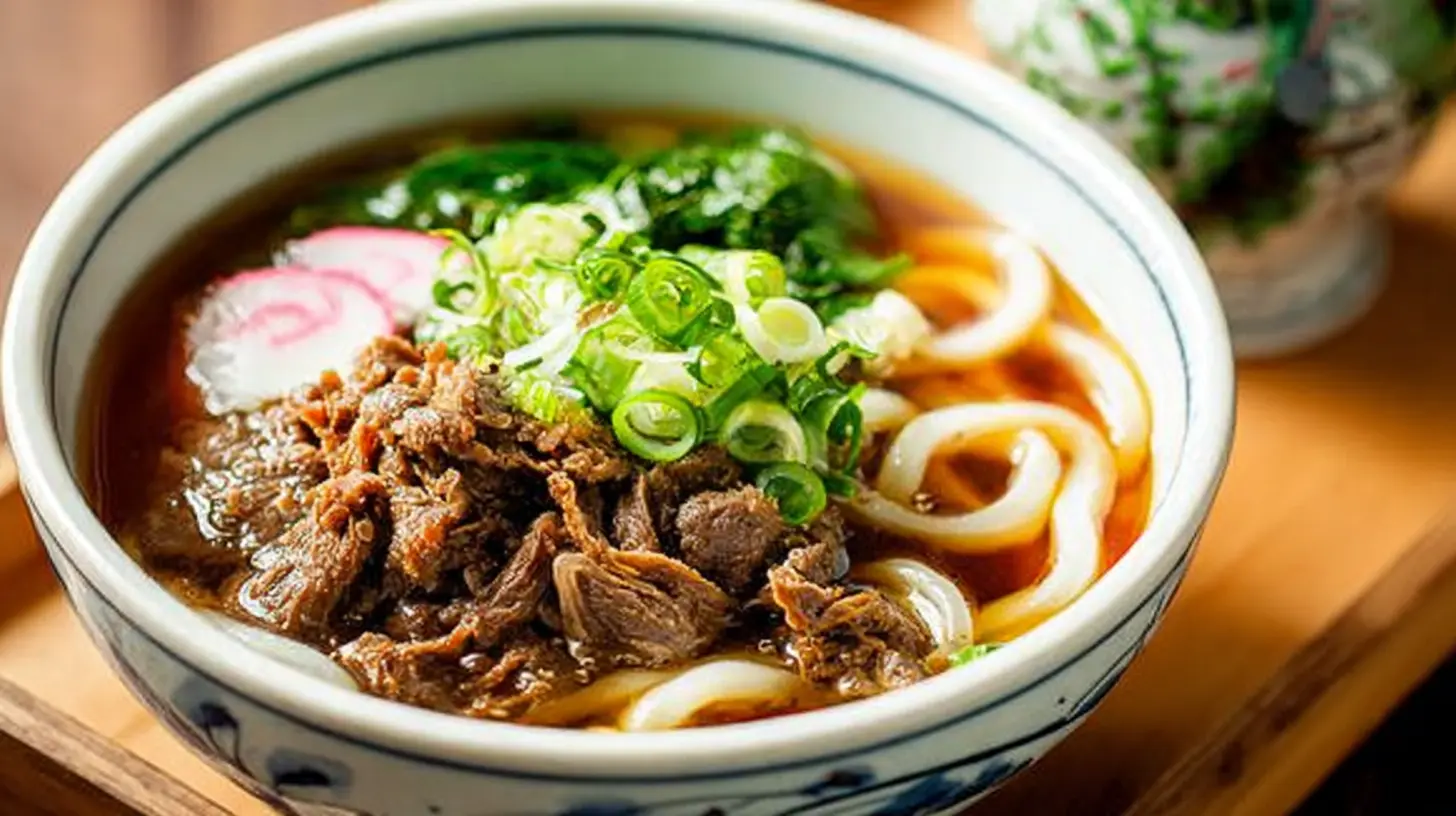
This cozy beef udon recipe (niku udon) brings together thick, bouncy udon noodles, a clear, gently seasoned dashi-style broth, and ribbons of sweet–savory beef that cook in minutes. If you’re craving Japanese comfort food with minimal fuss, this bowl checks every box: fast, filling, and deeply satisfying without feeling heavy. You’ll build a clean, umami-rich soup base, sear ultra-thin beef with scallions, then finish with classic toppings for a restaurant-worthy bowl at home.
Why You’ll Love This Beef Udon Recipe
- Weeknight-fast: From start to slurp in about 25 minutes, especially if you use frozen udon and a pre-made dashi or mentsuyu shortcut.
- Balanced umami: A clear broth seasoned with soy and mirin-style sweetness lets the beef shine without overwhelming the noodles.
- Dreamy noodle texture: Frozen udon delivers chewy, springy strands that don’t turn mushy when heated briefly.
- Flexible and family-friendly: Adjust the sweetness, saltiness, or heat. Add mushrooms or skip fish cake—your bowl, your rules.
- Scalable: Double the broth and noodle count for a crowd; keep the beef topping warm in a skillet and build bowls to order.
Ingredients for Beef Udon
For the Broth (Dashi-Style Soup Base)
- 4 cups (960 ml) dashi (homemade or from granules/packets) or low-sodium broth
- 2–3 tablespoons soy sauce, to taste
- 2 tablespoons mirin or alcohol-free mirin-style seasoning (see swaps)
- 1–2 teaspoons sugar, to taste (start small; adjust balance)
- Pinch of kosher salt, only if needed after tasting
For the Beef Topping
- 10–12 oz (280–340 g) thinly sliced beef (shabu-shabu style or paper-thin ribeye/sirloin)
- 1 tablespoon neutral oil (canola, grapeseed)
- 2–3 scallions (green onions) or 1 Tokyo negi, thinly sliced on the bias
- 1 tablespoon soy sauce
- 1–2 teaspoons sugar (for a gentle glaze)
- Optional: 1 teaspoon sake or splash of broth (see alcohol-free swaps)
Noodles & Toppings
- 2–3 packs frozen udon (7–9 oz / 200–250 g each), or fresh/dried udon per package instructions
- 4–6 slices narutomaki (fish cake), optional
- Extra sliced scallions or mitsuba, for garnish
- Shichimi togarashi (Japanese 7-spice), optional for heat
- Toasted nori strips or sesame seeds, optional
Yield: 2–3 large bowls (or 3–4 lighter bowls)
Total Time: about 25–30 minutes
Ingredient Notes (Substitutions, Healthy Swaps)
- Dashi: Traditional niku udon uses a light dashi. If you don’t have kombu/bonito or packets, use a quality low-sodium chicken or vegetable broth and add a splash of mushroom broth for umami.
- Mirin without alcohol: Mix 3 parts water or broth + 1 part sugar and add a tiny splash of rice vinegar or apple juice for gentle acidity. You can also use an alcohol-free mirin-style seasoning.
- No pork needed: This recipe is naturally pork-free; narutomaki (fish cake) can be omitted to keep it simple or pescatarian-friendly.
- Beef cut: Look for paper-thin slices labeled shabu-shabu/sukiyaki. If using a steak, partially freeze 20–30 minutes and slice as thin as possible against the grain.
- Sodium control: Use reduced-sodium soy, taste the broth before salting, and remember toppings like narutomaki can add saltiness.
- Add-ins: Mushrooms (shiitake or enoki), spinach, bok choy, or a soft-boiled egg turn the bowl into a fuller meal.
Step-by-Step Instructions
Step 1 – Make the Broth
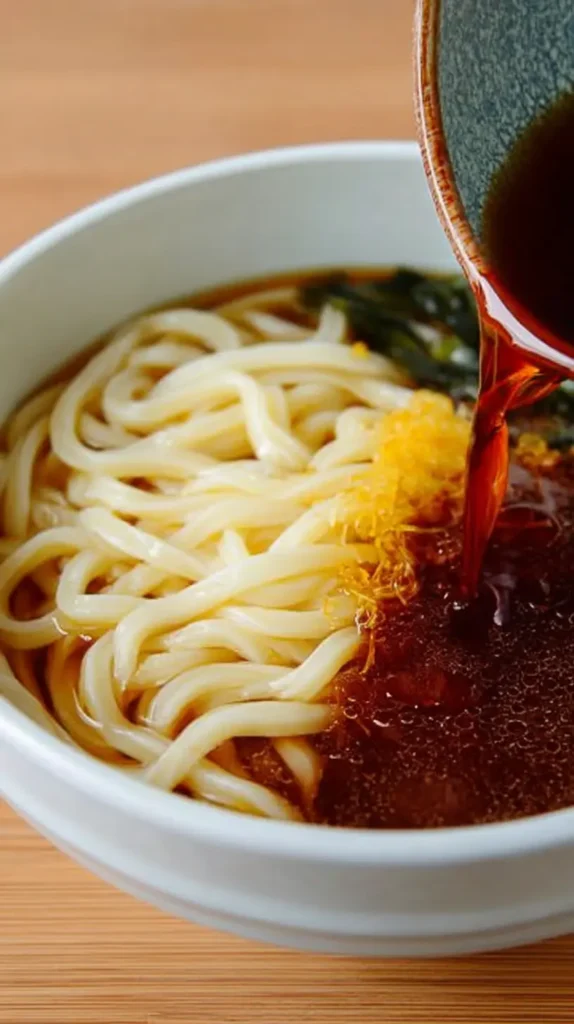
In a medium pot, bring 4 cups dashi to a gentle simmer. Stir in 2 tablespoons soy sauce, 2 tablespoons mirin (or your alcohol-free substitute), and 1 teaspoon sugar. Simmer 2–3 minutes, then taste and fine-tune: add up to 1 extra tablespoon soy for saltiness, another ½–1 teaspoon sugar for balance, or a small pinch of salt only if needed. Keep the broth steaming hot over low heat while you prepare the beef and noodles.
Pro tip: The broth should taste slightly stronger than you want in your final bowl—udon noodles and beef will dilute it slightly.
Step 2 – Sear the Beef and Scallions
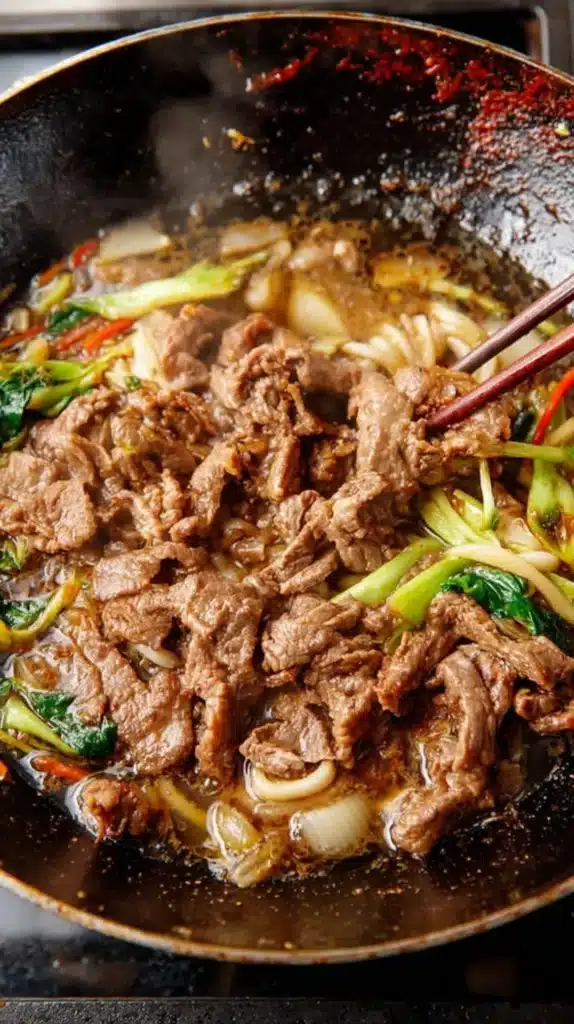
Heat a large skillet over medium-high heat. Add 1 tablespoon neutral oil. When shimmering, add the thinly sliced beef in a single layer and let it just lose its raw color (30–60 seconds), then add the sliced scallions. Sprinkle 1–2 teaspoons sugar and 1 tablespoon soy sauce over the beef and toss quickly. If using sake, a teaspoon adds aroma; for alcohol-free, splash a tablespoon of broth. Cook only until the beef is just tender and lightly glazed—avoid overcooking. Turn off heat and keep warm.
Why it works: A tiny bit of sugar helps the soy glaze cling to the beef, echoing classic sukiyaki-style sweetness without becoming sugary.
Step 3 – Cook or Reheat the Udon
- Frozen udon: Drop into boiling water for 30–60 seconds—just long enough to loosen.
- Fresh udon: Follow package but undercook by 30–60 seconds for extra bounce.
- Dried udon: Boil per package to al dente; rinse briefly to stop cooking and remove excess starch.
Drain well. Divide noodles among warmed bowls.
Step 4 – Build the Bowls
Ladle hot broth over the udon until nearly submerged. Mound the soy-glazed beef and scallions on top. Add narutomaki, extra scallions or mitsuba, and a light shake of shichimi togarashi if you like heat. Serve immediately.
Serving temperature matters: Udon is at its best piping hot. Warm your bowls with hot water beforehand for a longer-lasting, steamy finish.
Pro Tips for Success
- Keep the broth light and clean. Udon shines when the soup base is clear, balanced, and not too salty. Taste, adjust, taste again.
- Don’t overcook the beef. Thin slices toughen if left on heat. Cook just to tender, then turn off the burner.
- Use frozen udon for best chew. It’s quick and delivers a pleasantly bouncy texture; avoid prolonged boiling.
- Layer flavors thoughtfully. Mild broth + sweet–savory beef + fresh scallion garnish = harmony without heaviness.
- Garnish last minute. Shichimi, nori, or sesame should stay aromatic; add right before serving.
- Control sweetness. Start with less sugar, then nudge up. The goal is a gentle, sukiyaki-like balance—never a dessert-like soup.
Flavor Variations
- Mushroom Beef Udon: Sauté shiitake or cremini in the skillet before the beef; add a spoon of mushroom broth to the pot for an umami nudge.
- Ginger–Garlic Lift: Bloom 1 teaspoon grated ginger and a small clove of grated garlic in the skillet just before searing the beef for a brighter, homey aroma.
- Spicy Chili Udon: Stir a teaspoon of chili crisp or a drizzle of rayu (chili oil) into your broth; finish with extra shichimi togarashi.
- Vegetable Boost: Add blanched bok choy, spinach, or napa cabbage to the bowl for color, nutrients, and crunch.
- Egg Lovers’ Bowl: Top with a 7-minute jammy egg or whisk an egg into the hot broth off heat for a silky finish (oyako-style vibe).
Serving Suggestions
- Classic sidekicks: Quick cucumber sunomono, edamame, or a simple seaweed salad.
- Textural contrast: A small plate of tempura (shrimp, sweet potato) to dip and crunch between spoonfuls.
- At the table: Offer shichimi togarashi, extra scallions, and a small pitcher of warm broth so guests can top off as they eat.
- Make it a set: Pair with a crisp green tea or roasted barley tea (mugicha) for a clean, refreshing sip.
Storage and Freezing Instructions
- Refrigerate (best practice): Store components separately—broth, cooked beef, and cooked noodles—in airtight containers. Keeps up to 3 days.
- Reheat: Simmer the broth to steaming. Dip noodles briefly in boiling water to loosen, then warm the beef gently in the hot broth or skillet. Assemble and serve.
- Freeze: Freeze broth in containers up to 2 months. Beef topping can be frozen, but texture is best fresh; if freezing, undercook slightly before freezing and thaw overnight. Avoid freezing cooked udon—reheat fresh or frozen packs instead for the best bite.
Nutrition Facts (Per Serving)
Approximate values for 3 hearty servings using frozen udon, lean beef, and a light-sodium seasoning profile. Actual numbers will vary by brand and portion size.
| Calories | Protein | Carbs | Fat | Fiber | Sodium |
|---|---|---|---|---|---|
| ~520 | ~28 g | ~66 g | ~16 g | ~3 g | ~1,200 mg |
Notes: To lower sodium, use reduced-sodium soy, taste the broth before adding salt, and omit fish cake. For fewer calories, use 5–6 oz beef across 3 bowls and add extra mushrooms or leafy greens.
FAQ About Beef Udon Recipe
What’s the difference between beef udon and beef ramen?
Beef udon features thick, chewy udon noodles in a clear, lightly seasoned broth, topped with sweet–savory thin-sliced beef. Ramen uses thinner wheat noodles in a richer, often oilier broth (shoyu, miso, tonkotsu), with toppings like chashu pork or marinated eggs. Udon is typically gentler and cleaner on the palate.
Can I make beef udon without alcohol?
Yes. Replace mirin with 3 parts water or broth + 1 part sugar, plus a tiny splash of rice vinegar or apple juice for balance. If a recipe calls for sake, substitute with a splash of broth. Alcohol-free mirin-style seasonings are also widely available and work well.
Do I need dashi to make the broth?
Dashi delivers signature Japanese depth, but you can use low-sodium chicken or vegetable broth in a pinch. For extra umami, add a piece of soaked kombu while warming (remove before boiling) or stir in a little mushroom broth. Keep the broth light and balanced.
What’s the best type of udon to use?
Frozen udon is ideal—springy and hard to overcook. Fresh is great but can be delicate, and dried is dependable but needs precise timing for al dente chew. Whatever you choose, avoid overcooking and rinse dried noodles briefly to remove excess starch.
How thin should the beef be sliced?
Paper-thin. Look for shabu-shabu or sukiyaki beef at Asian grocers. If slicing at home, partially freeze the steak for 20–30 minutes and use a sharp knife to cut very thin slices against the grain. Thin beef cooks in seconds and stays tender.
How can I scale this for a family dinner?
Double the broth and noodles. Sear beef in two quick batches so it doesn’t steam. Keep the first batch warm while you cook the second, then combine briefly with the glaze before building bowls. Keep a kettle of hot water ready to refresh noodles if needed.
Final Thoughts
Beef udon is that rare bowl that feels both comforting and clear—a soothing broth, bouncy noodles, and tender, lightly glazed beef that comes together in minutes. With a smart balance of soy, gentle sweetness, and aromatic scallions, each sip and slurp is calm, savory, and immensely satisfying. Whether you stick to the classic or riff with mushrooms, extra greens, or a soft-boiled egg, this beef udon recipe is the kind of weeknight win you’ll return to again and again.