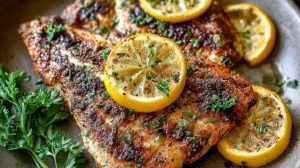
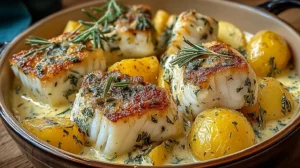
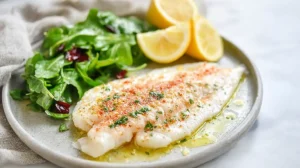
Crispy Parmesan-Crusted Cod is a fast, feel-good seafood dinner that delivers flaky cod under a golden, garlicky parmesan crust—big crunch on top, juicy in the center, and on the table in about 25 minutes.
Why You’ll Love This Crispy Parmesan-Crusted Cod
- Crunchy top, tender middle: Parmesan + panko gives shatteringly crisp crumbs that protect the fish.
- Speedy, low mess: One pan, basic tools, and weeknight timing.
- Bright and balanced: Lemon, garlic, and parsley keep the flavors lively.
- Flexible: Works with cod, haddock, or pollock; easy to scale for a crowd.
- Beginner-friendly: Clear cues, simple steps, reliable doneness.
- Kid-appealing: Mild fish flavor with a crunchy, cheesy crust.
What Is Crispy Parmesan-Crusted Cod?
Crispy Parmesan-Crusted Cod is a sheet-pan bake where seasoned cod fillets are topped with a “wet-sand” crumb: finely grated parmesan, panko, garlic, paprika, lemon zest, and a bit of butter or olive oil. Pressed on and baked hot, the crumb turns golden and crunchy while the fish stays moist and flaky. Think “oven-fried” feel without deep frying. It’s a smart technique to get texture, speed, and beautiful presentation with very little effort.
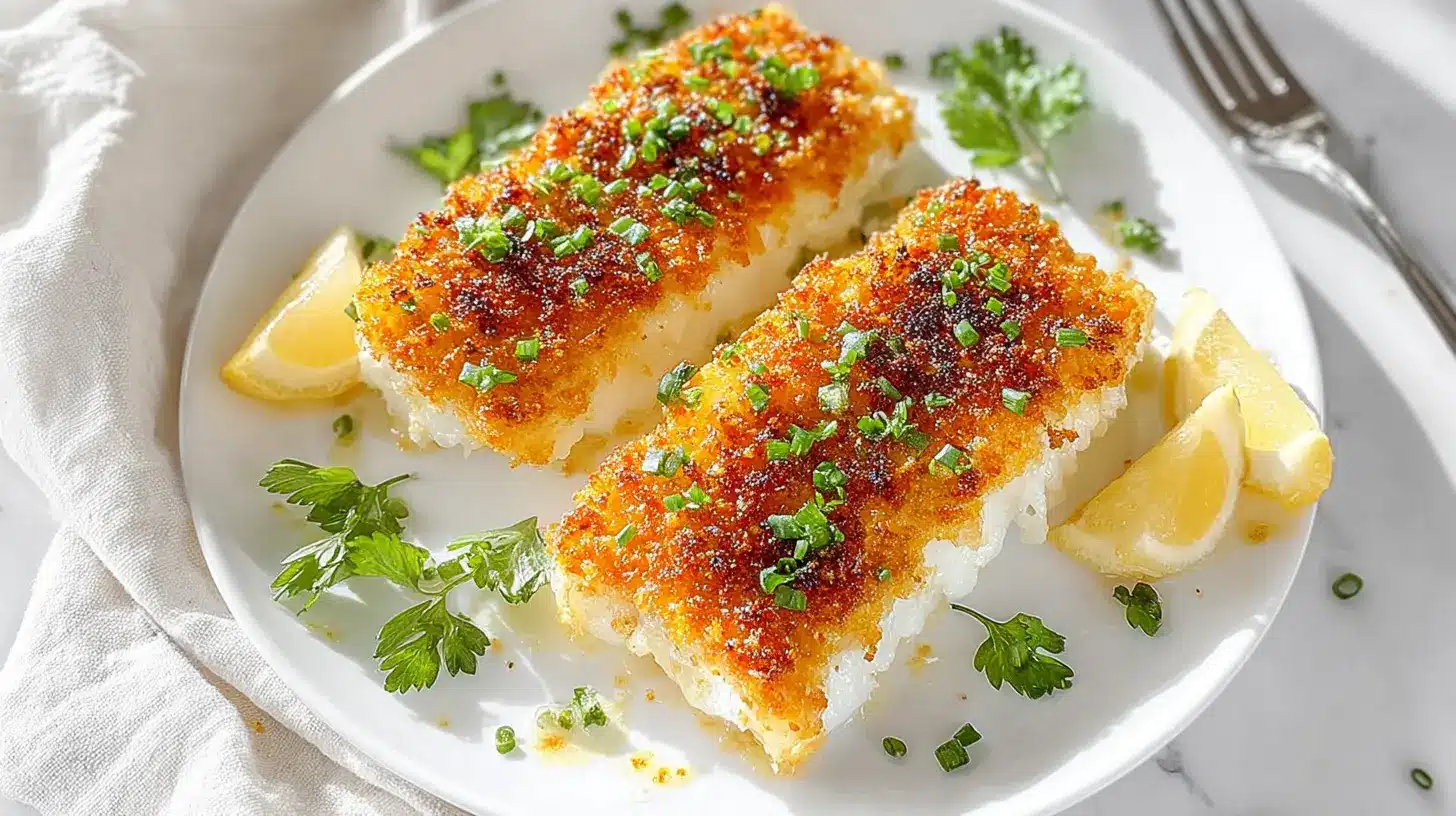
Crispy Parmesan‑Crusted Cod
Ingredients
Fish
- 4 cod fillets skinless, 5–6 oz (140–170 g) each, about 1–1¼” thick
- ¾–1 tsp fine salt divided, to taste
- ¼ tsp black pepper
Parmesan Crust
- ½ cup finely grated parmesan freshly grated is best
- ½ cup panko breadcrumbs or regular breadcrumbs
- 1 tsp garlic powder
- ½ tsp paprika sweet or smoked
- 1 tsp lemon zest
- 2 tbsp melted unsalted butter or olive oil
- 1–2 tsp lemon juice to moisten crumbs
To Finish
- 2 tbsp chopped parsley for garnish
- lemon wedges for serving
Instructions
- Step 1 – Heat the Oven and Prep the Pan: Preheat oven to 400°F (200°C). Line a sheet pan with parchment and mist or brush lightly with oil.
- Step 2 – Mix the Parmesan Crust: In a medium bowl, combine parmesan, panko, garlic powder, paprika, lemon zest, melted butter (or olive oil), and lemon juice. Stir until the mixture looks like wet sand—crumbly but cohesive when pressed. If dry, add a little more lemon juice or oil; if too wet, add a bit more panko.
- Step 3 – Season the Cod: Pat cod fillets very dry with paper towels. Season both sides with salt and pepper and place them spaced apart on the prepared sheet pan.
- Step 4 – Press on the Crust: Divide the crumb mixture among the fillets and press firmly on top in an even layer (⅛–¼ inch thick) so the crust adheres.
- Step 5 – Bake to Flaky Perfection: Bake 12–15 minutes until the crust is lightly golden and the fish is opaque and flakes easily with a fork (internal temperature ~130–135°F / 54–57°C). If needed, broil for 30–60 seconds for extra color—watch closely.
- Step 6 – Finish and Serve: Let rest 2 minutes. Sprinkle with parsley and serve with lemon wedges. Spoon pan juices over sides if desired.
Notes
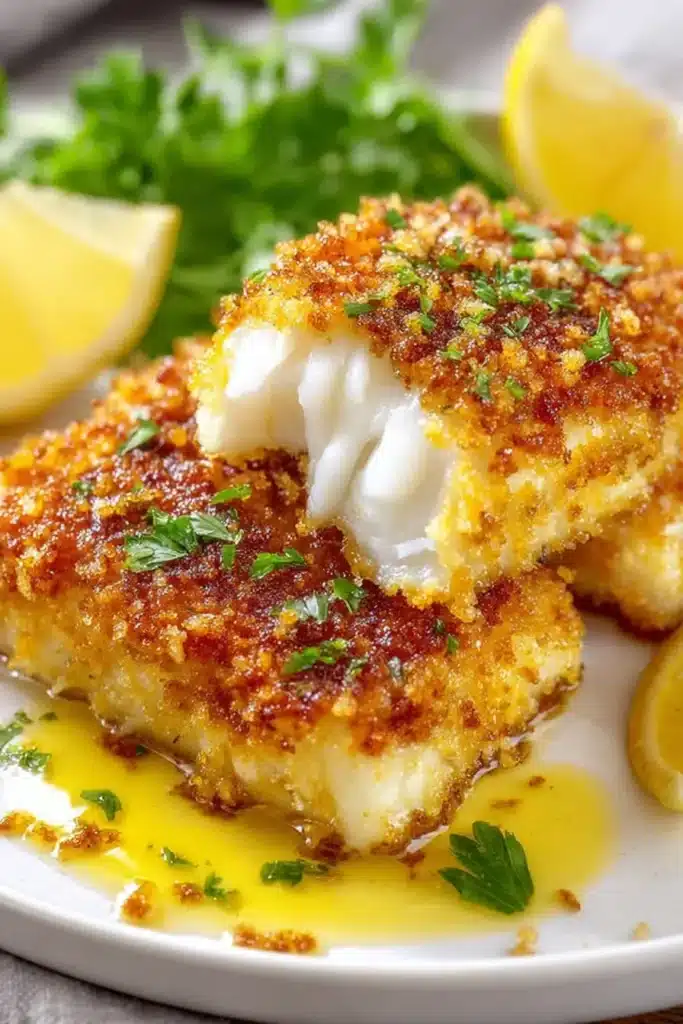
Ingredients for Crispy Parmesan-Crusted Cod
- 4 cod fillets, skinless, 5–6 oz (140–170 g) each, 1 to 1¼ inches thick
- ¾–1 tsp fine salt, divided, to taste
- ¼ tsp black pepper
- ½ cup finely grated parmesan
- ½ cup panko breadcrumbs (or regular breadcrumbs)
- 1 tsp garlic powder
- ½ tsp paprika (sweet or smoked)
- 1 tsp lemon zest
- 2 tbsp melted unsalted butter (or olive oil)
- 1–2 tsp lemon juice (to moisten crumbs)
- 2 tbsp chopped parsley, for garnish
- Lemon wedges, for serving
Ingredient Notes
- Parmesan: Finely grated parmesan melts and bonds the crumbs. Pre-shredded tends to be drier—grate fresh if you can.
- Panko vs. regular crumbs: Panko = airier, craggier crunch. Regular crumbs = tighter, even crust. Both are good; choose your texture.
- Butter or oil: Butter browns richly; oil tastes lighter. You can split the difference and use a little of both.
- Fish swaps: Haddock or pollock are perfect substitutes. Adjust the timing by thickness—thinner fillets need less time.
Ingredients for Crispy Parmesan-Crusted Cod (Subsections)
For the Fish
- Cod fillets
- Salt and pepper
For the Crust
- Parmesan
- Panko
- Garlic powder
- Paprika
- Lemon zest
- Melted butter or olive oil
- Lemon juice
To Finish
- Parsley
- Lemon wedges
Ingredient Notes (Substitutions & Healthy Swaps)
Gluten-Aware
Use gluten-free panko or finely crushed gluten-free crackers. Keep the “wet-sand” feel by adding a drizzle of olive oil if the mixture looks dusty.
Different Fish
Haddock and pollock behave like cod. If using a thicker fish (like halibut), add a minute or two and watch for flake and internal temperature.
Lighter Crust
Use olive oil instead of butter, and reduce the total fat by a teaspoon or two. Brighten with extra lemon zest so the flavor still pops.
Extra-Crunch Upgrade
Toast panko briefly in a dry skillet before mixing. It jump-starts browning and keeps the crust crisp even after resting.
Step-by-Step Instructions
Step 1 – Heat the Oven and Prep the Pan
Preheat to 400°F (200°C). Line a sturdy sheet pan with parchment and lightly brush or mist with oil. This promotes even browning and easy release.
Step 2 – Mix the Parmesan Crust
In a medium bowl, mix parmesan, panko, garlic powder, paprika, lemon zest, melted butter or olive oil, and lemon juice. Stir until the texture looks like wet sand—crumbly but cohesive when pressed. If it’s dry, add a few drops of oil or lemon juice. If it’s pasty, add a spoon of panko.
Step 3 – Season the Cod
Pat the cod very dry with paper towels—dry surface = better crust. Season both sides with salt and pepper. Lay fillets on the pan with a bit of space between pieces.
Step 4 – Press on the Crust
Divide the crumb among the fillets and press firmly into an even ⅛–¼ inch layer, edge-to-edge. Pressing well helps adhesion and a uniform golden color.
Step 5 – Bake to Flaky Perfection
Bake 12–15 minutes, depending on thickness. Target an internal temperature of 130–135°F (54–57°C) and check for easy flake with a fork. If the crust needs a touch more color, switch to broil for 30–60 seconds, watching closely.
Step 6 – Finish and Serve
Rest 2 minutes. Shower with parsley and serve with lemon wedges. Spoon any pan juices over your sides.
Pro Tips for Success
- Dry fish = crisp crust: Moisture makes crumbs steam and slide. Blot well.
- Keep crumbs crumbly: A paste won’t crisp. Aim for “wet sand.”
- Even thickness, even bake: Place thicker fillets toward the back of the oven; pull thin ones a minute early.
- Color insurance: Butter in the crumb and hot oven help browning. Broil briefly at the end if needed.
- Serve right away: The crust is at peak crispness fresh from the oven.
Flavor Variations
Herb-Lemon
Add 1 tsp chopped parsley and extra zest to the crumb; finish with more herbs.
Smoky-Paprika
Use smoked paprika and a pinch of ground cumin for warm depth.
Chili-Lime
Swap lemon for lime, add a pinch of chili flakes, and garnish with cilantro.
Garlic-Parsley
Double the garlic powder, then finish with a generous sprinkle of fresh parsley.
Mushroom Umami
Stir 1 tsp very finely ground dried mushroom powder into the crumbs for savory depth.
Serving Suggestions
- Classic plate: Roasted baby potatoes and green beans.
- Fresh & bright: Arugula or romaine salad with lemon vinaigrette and shaved veggies.
- Grain base: Lemony rice, couscous, or quinoa to catch buttery pan juices.
- Veg-forward: Steamed broccoli or asparagus with a squeeze of lemon.
- Sheet-pan supper: Roast asparagus on a second tray; everything finishes together.
Step-by-Step Instructions (Visual Cues & Timing)
Step 1 – Preheat and Pan Setup
- Oven at 400°F ensures quick browning without overcooking the fish.
- Parchment + light oil avoids sticking and encourages a tiny bit of pan sizzle.
Step 2 – Crumb Consistency
- Wet-sand look: Pinch it—if it holds briefly then falls apart, it’s perfect.
- Too dry? Add ½ tsp oil or lemon juice. Too wet? Add 1 tbsp panko.
Step 3 – Season and Space
- Season both sides; place fillets 1 inch apart so heat circulates.
- Tuck thinner tails under themselves to even thickness if needed.
Step 4 – Press, Don’t Sprinkle
- Pressing compacts crumbs so they adhere and brown evenly.
- Edge-to-edge coverage prevents burnt patches and pale centers.
Step 5 – Doneness and Color
- Check flake at 12 minutes. If it flakes but looks pale, broil briefly.
- Internal temp 130–135°F is juicy; carryover finishes the rest.
Ingredient Notes (Deeper Dive)
Parmesan Choice
Freshly grated melts and bonds crumbs. Powdery cans can be salty and dry; adjust salt if using them.
Panko Toasting
Toasting panko in a dry pan for 2–3 minutes adds color insurance. Let cool before mixing with parmesan so the cheese doesn’t clump.
Lemon Zest vs. Juice
Zest brings fragrant oils into the crust; juice loosens and brightens. Use both for aroma + tang.
Oil vs. Butter
Butter browns deeper and tastes richer; oil is lighter and helps crumbs stay crisp when reheated. A 1:1 blend is a great middle ground.
Step-by-Step Instructions (Air Fryer Option)
H3: Air Fry at 380°F (193°C)
- Preheat 3 minutes.
- Mist basket and the top of the crumbs lightly with oil.
- Cook 8–12 minutes, checking at 8.
- If crust browns before fish is done, lower to 350°F and continue 1–2 minutes.
Make-Ahead, Scaling, and Hosting
Make-Ahead
- Mix crumb up to 24 hours in advance; refrigerate in a sealed container.
- Pat and crust fish right before baking so crumbs stay crisp.
Scaling Up
- For 6–8 fillets, use two pans on separate racks; rotate halfway.
- Keep crust components in the same ratio; salt lightly and taste at the end.
Serving a Crowd
- Keep the first tray warm at 200°F (95°C) while the second bakes.
- Offer lemon wedges, chopped herbs, and extra flakes of parmesan at the table.
Troubleshooting
The Crust Slid Off
Fish was too wet or crumbs too pasty. Next time, blot very dry, keep crumbs crumbly, and press firmly. Let crusted fillets rest 3–5 minutes on the pan before baking.
The Crust Didn’t Brown
Oven wasn’t hot enough, or there wasn’t enough fat in the crumb. Bake at 400°F, include a bit of butter or oil, and broil briefly if needed.
The Fish Dried Out
Overbaked. Start checking at 10–12 minutes, especially if fillets are thin. Pull at 130–135°F and rest 2 minutes.
The Flavor Tastes Flat
Add a squeeze of lemon, a pinch of salt, and chopped parsley at the end. Fresh acid and herbs wake everything up.
Storage and Freezing Instructions
- Refrigerate: Store leftovers in an airtight container up to 2 days.
- Reheat: Warm on a wire rack in a 300–325°F (150–165°C) oven 8–10 minutes to re-crisp without overcooking.
- Freeze: Best texture is fresh. If you must freeze, wrap tightly and reheat gently in the oven; expect a softer crust.
Nutrition Facts (Per Serving)
Approximate values for 1 of 4 servings using 6-oz fillets; will vary by brands and amounts.
| Calories | Protein | Carbs | Fat | Fiber | Sodium |
|---|---|---|---|---|---|
| ~340 | ~36 g | ~9 g | ~16 g | ~0–1 g | ~600 mg |
FAQ About Crispy Parmesan-Crusted Cod
How do I stop the crust from sliding off?
Pat the fish very dry, then press the crumb on firmly so it bonds. Let crusted fillets rest 3–5 minutes before baking to hydrate the crumbs and help adhesion. Avoid moving the fish once it’s on the pan. After baking, slide a thin fish spatula under the fillet and lift in one confident motion.
Can I make this without panko?
Yes. Regular breadcrumbs, crushed gluten-free crackers, or very finely chopped nuts mixed with parmesan all work. You’re chasing the wet-sand texture—crumbly, not pasty—so adjust with a drizzle of oil (if dry) or an extra spoon of crumbs (if wet).
What if my crust won’t brown?
Ensure the oven is fully preheated to 400°F, the fish is dry, and the crumb includes some fat (butter or oil). Spread the crumb in an even layer; thick patches can steam. For a final push, broil 30–60 seconds at the end—watch closely for color.
How do I know the fish is cooked perfectly?
The flesh turns opaque and flakes with gentle pressure. An instant-read thermometer should read 130–135°F (54–57°C) in the thickest part. Pull promptly and rest 2 minutes. Overcooked cod becomes dry and stringy.
Can I air-fry this recipe?
Absolutely. Preheat to 380°F (193°C). Mist basket and crumbs lightly with oil, then cook 8–12 minutes depending on thickness. If the crust browns before the middle finishes, drop to 350°F for 1–2 minutes more.
What fish can replace cod?
Haddock or pollock are perfect substitutes; halibut also works (add time). Thinner fillets cook faster; start checking early and rely on flake/temperature.
How far ahead can I prep?
Make the crumb up to 24 hours ahead and refrigerate. Crust the fish just before baking so the crumbs stay crisp. If you must crust early, refrigerate the tray uncovered for 15 minutes to dry the surface, then bake.
Can I add more cheese?
Yes, but keep balance. Too much parmesan can make the crust salty and dense. For a cheesier vibe, add 2–3 tbsp extra parmesan and ½ tsp more oil to keep the texture crumbly.
How do I lower sodium?
Use unsalted butter, reduce added salt, and taste before finishing—parmesan is naturally salty. A squeeze of lemon at the end brightens flavor so you can use less salt.
What sides work best?
Anything bright and simple: crisp salad with lemon vinaigrette, roasted asparagus or green beans, steamed broccoli, lemon rice, or herbed couscous. A squeeze of lemon ties the plate together.
TastyInspo Notes
- Zest first, then juice: Capture aromatic oils in the crumbs; finish with fresh lemon at the table.
- Microplane magic: Finely grate parmesan so it blends and melts smoothly into the crust.
- Two-press method: Press crumbs on, wait 1 minute, press again—better adhesion.
- Rack reheating: Reheat leftovers on a wire rack so hot air hits both sides and the crust re-crisps.
- Even pieces: If one fillet is much thinner, fold the tail under for even cooking.
- Pan juices: Don’t waste them—spoon over potatoes, rice, or greens for extra flavor.
- Herb confetti: Add parsley and a few chives at the end for color and freshness.
Final Thoughts
Crispy Parmesan-Crusted Cod is the kind of recipe that proves simple techniques deliver big payoffs. Dry the fish, mix a properly balanced crumb, press it on, and bake hot. In minutes you get a golden, crunchy lid over tender, flaky cod with bright lemon and herbs. It’s budget-friendly, weeknight-easy, and dinner-party pretty—exactly the kind of seafood dish you’ll want in your regular rotation.