This anasazi beans recipe is a wonderful way to turn a bag of beautiful heirloom beans into a cozy pot of tender, creamy goodness. In this method, the beans are soaked, then simmered gently with onion, garlic, bay leaves, and warm spices until they are soft inside and surrounded by a rich, savory broth. It’s simple, hands-off cooking that gives you a big pot of beans perfect for bowls, tacos, salads, or just a rustic side dish.
Why You’ll Love This Anasazi Beans Recipe
Anasazi beans are naturally a little sweet, a bit nutty, and very easy to digest compared to many other beans. This recipe respects that natural flavor and boosts it with a few everyday ingredients. You don’t need fancy equipment or special techniques—just time and a gentle simmer.
You’ll love this recipe because:
- It uses simple, wholesome ingredients
- The beans turn out creamy but not mushy
- The cooking liquid becomes a flavorful broth you can eat with a spoon
- It’s easy to customize with your favorite herbs and spices
- Leftovers are even better the next day and freeze well
If you enjoy recipes that feel both old-fashioned and modern at the same time, this anasazi beans recipe will definitely become a favorite.
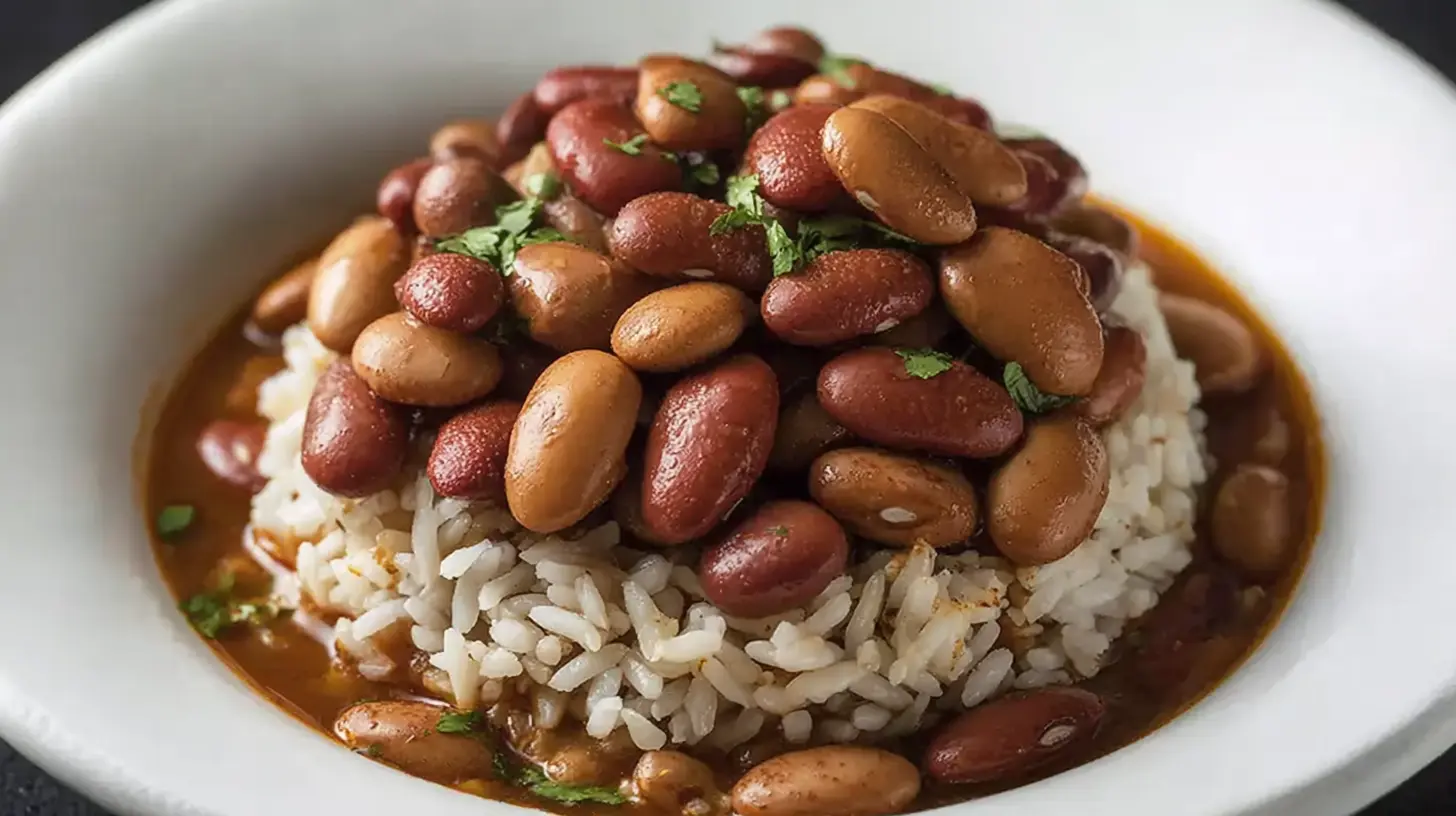
Easy Anasazi Beans Recipe
Ingredients
Main Ingredients
- 1 pound dried Anasazi beans
- 2 tablespoons olive oil
- 1 medium onion diced
- 4 cloves garlic minced
- 1 small jalapeño or mild chili finely chopped, optional
- 2 pieces bay leaves
- 1 teaspoon ground cumin
- 1 teaspoon smoked paprika
- 1.5 teaspoons fine sea salt
- 0.5 teaspoon ground black pepper
Optional Finishing and Garnish
- 1 piece lime or lemon cut into wedges
- 2 tablespoons chopped fresh cilantro or parsley
- 0.25 cup diced tomato or red onion
- 2 cups cooked rice or warm tortillas for serving
Instructions
- Soak Beans: Sort and rinse Anasazi beans. Soak in water overnight, covered by 3–4 inches of water. Drain and rinse before cooking.
- Sauté Aromatics: In a large pot, heat olive oil over medium. Cook onion for 5–7 minutes until soft. Add garlic and jalapeño, cook another minute until fragrant.
- Simmer Beans: Add soaked beans to pot. Cover with water (about 2 inches above beans). Add bay leaves. Bring to a boil, then reduce to a gentle simmer. Partially cover and cook 60–90 minutes, stirring occasionally and adding water as needed.
- Season: Once beans are nearly tender, stir in cumin, paprika, pepper, and salt. Simmer 10–15 minutes more, tasting and adjusting seasoning as needed. Remove bay leaves.
- Finish and Serve: For a thicker broth, mash some beans against the pot wall. For brightness, add a splash of lime or lemon juice. Garnish with herbs or diced tomatoes. Serve warm with rice or tortillas.
Notes
Ingredients for Anasazi Beans Recipe
This recipe makes about 6 servings as a side or 4 generous main-dish portions.
Main Ingredients
- 1 pound (about 450 g) dried Anasazi beans
- Water (for soaking and cooking; enough to cover beans by several inches)
- 2 tablespoons olive oil
- 1 medium onion, diced
- 3–4 cloves garlic, minced
- 1 small jalapeño or mild chili, finely chopped (optional, for gentle heat)
- 2 bay leaves
- 1 teaspoon ground cumin
- 1 teaspoon smoked paprika
- 1–1½ teaspoons fine sea salt, or to taste
- ½ teaspoon ground black pepper
Optional Finishing and Garnish
- Fresh lime or lemon wedges, for serving
- Chopped fresh cilantro or parsley
- Diced tomato or red onion for a fresh topping
- Cooked rice or warm tortillas to make it a full meal
Ingredient Notes
Anasazi Beans
Anasazi beans are a speckled, heirloom variety with a rich history. They cook a bit faster than many other beans and tend to hold their shape while becoming creamy inside. If you can’t find them locally, they are often available online or in natural food stores.
Aromatics: Onion, Garlic, and Chili
Onion and garlic build a flavorful base for the broth and beans. Cooking them in olive oil at the beginning brings out their sweetness. A chopped jalapeño or mild chili is optional but gives a soft warmth and a subtle kick. Remove the seeds for a milder dish.
Spices and Bay Leaves
Cumin and smoked paprika add warmth and a gentle smokiness that pair perfectly with the natural sweetness of anasazi beans. Bay leaves add depth and a background herbal note. Remember to remove the bay leaves before serving.
Olive Oil
Olive oil helps soften the aromatics, adds body to the broth, and makes the beans feel richer and more satisfying. You only need a small amount, but it makes a big difference in flavor.
Salt and Pepper
Salt is best added once the beans are tender or nearly tender. Adding too much salt early can sometimes keep beans from softening. Start with a smaller amount, taste the beans and broth once they’re cooked, then adjust the seasoning to your liking.
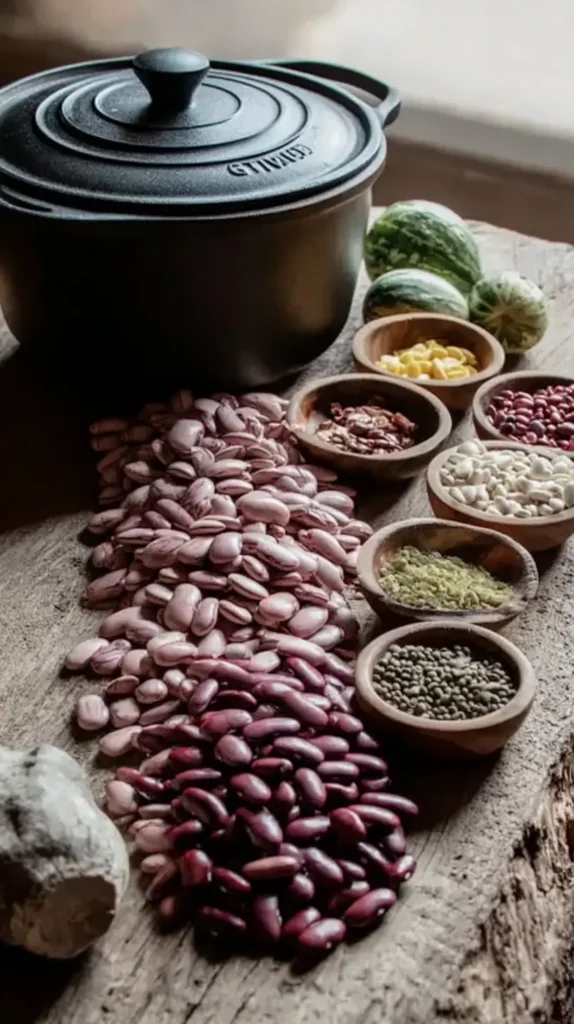
Step-by-Step Instructions
Step 1 – Sort, Rinse, and Soak the Beans
Pour the dried anasazi beans onto a rimmed tray or clean surface and quickly sort through them. Remove any small stones, damaged beans, or bits of debris.
Place the beans in a large bowl and rinse under cool running water until the water runs mostly clear. Drain.
Cover the beans with plenty of fresh water, at least 3–4 inches (7–10 cm) above the beans. They will expand as they soak. Let them soak for 8–12 hours or overnight at room temperature.
If your kitchen is very warm, you can soak them in the fridge to keep them fresh. When you are ready to cook, drain and rinse the soaked beans.
Step 2 – Sauté the Aromatics
In a large, heavy-bottomed pot or Dutch oven, heat 2 tablespoons of olive oil over medium heat.
Add the diced onion and cook, stirring occasionally, for about 5–7 minutes, until the onion is soft and translucent.
Stir in the minced garlic and the chopped jalapeño (if using). Cook for 1–2 more minutes, stirring often, until fragrant. Be careful not to let the garlic burn—it should smell aromatic, not harsh.
Step 3 – Add Beans, Water, and Bay Leaves
Add the drained, soaked anasazi beans to the pot with the aromatics and stir to coat the beans in the flavored oil.
Pour in enough fresh water to cover the beans by about 2 inches (5 cm). Add the bay leaves.
Turn the heat up to medium-high and bring the pot to a gentle boil.
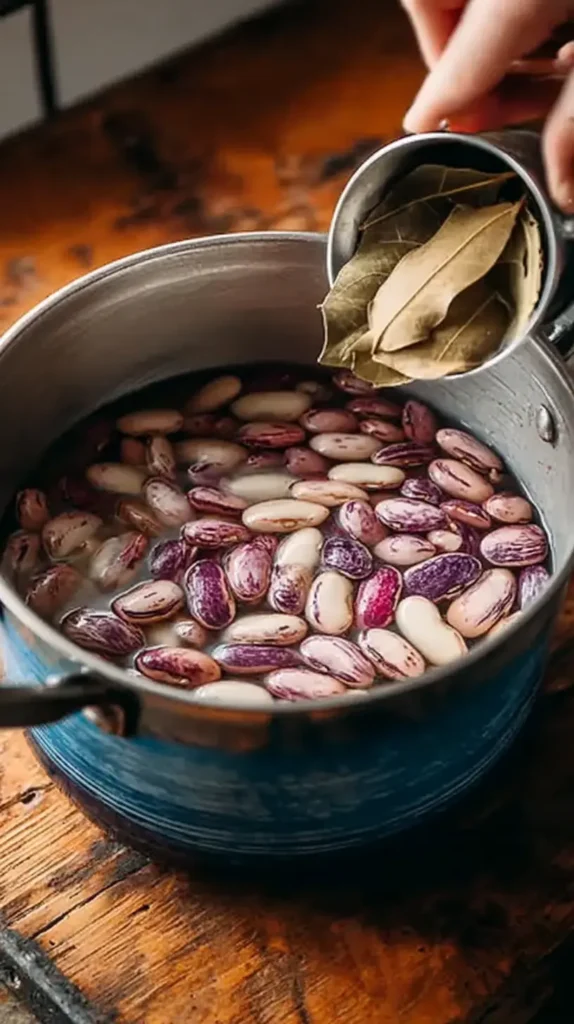
Step 4 – Simmer the Beans Slowly
Once the pot reaches a gentle boil, reduce the heat to low or medium-low so the beans are simmering, not rapidly boiling. A slow simmer helps the beans cook evenly and stay intact.
Partially cover the pot with a lid, leaving a small gap for steam to escape. Simmer for about 1–1½ hours, stirring occasionally.
Check the water level from time to time. The beans should stay submerged; if the water gets low, add more hot water, about ½ cup at a time.
After about an hour, start checking a bean or two by tasting them. They should be soft and creamy inside with no chalky center. Depending on the age of the beans and your stove, total cooking time can be anywhere from 60 to 90 minutes.
Step 5 – Season with Spices and Salt
When the beans are very close to tender, stir in the cumin, smoked paprika, black pepper, and 1 teaspoon of salt.
Simmer for another 10–15 minutes so the spices bloom and flavor the beans and broth. Taste a spoonful of beans and broth. Add more salt if needed, a little at a time, until the flavors pop.
Remove the bay leaves and discard them.
Step 6 – Adjust Consistency and Finish
Check the consistency of the beans and broth. You can leave them brothy, almost like a soup, or let them simmer uncovered for a few extra minutes to reduce and thicken.
For a creamier texture, gently mash a small handful of beans against the side of the pot with a spoon, then stir them back in. This thickens the liquid naturally.
Right before serving, squeeze in a bit of fresh lime or lemon juice if you like a brighter finish. Garnish with chopped cilantro or parsley for freshness and color.
Serve warm in bowls with some of the cooking liquid, over rice, or with warm tortillas.
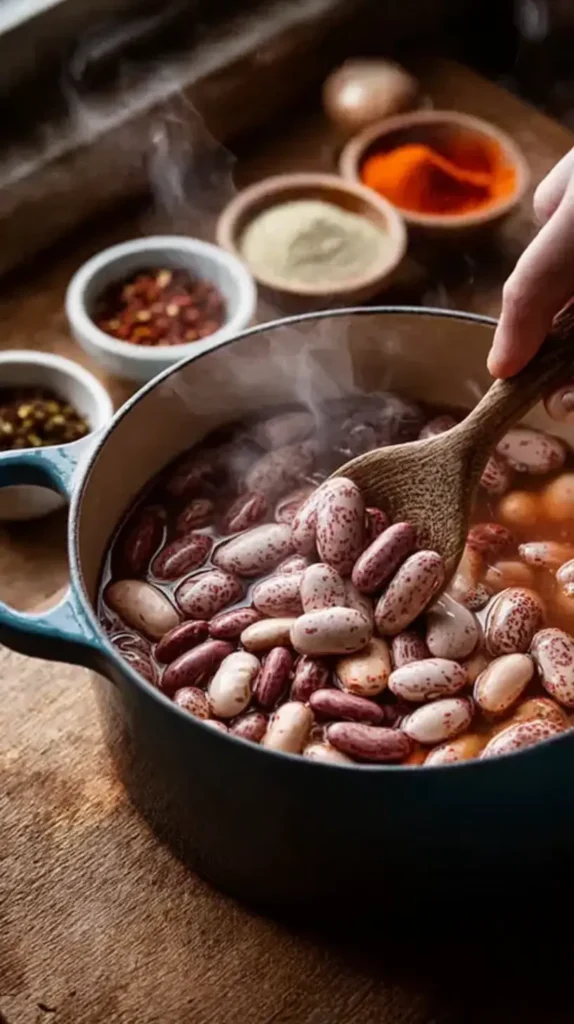
Pro Tips for Success
- Soak for even cooking
Soaking the beans helps them cook more evenly and reduces overall cooking time. If you forgot to soak, you can still cook them, but it may take longer and you’ll need to watch the water level more closely. - Keep the simmer gentle
A rapid boil can cause beans to split and the skins to peel off. A slow, steady simmer keeps them tender and intact, with a better texture in every bite. - Add salt at the right time
Add most of the salt near the end of cooking, once the beans are already soft or nearly soft. This helps avoid tough skins or beans that take forever to cook. - Taste as you go
The best guide is your taste buds. Taste the broth and beans several times as they cook. Adjust the salt, spices, and acidity (with citrus) until everything tastes balanced. - Use a heavy-bottomed pot
A sturdy pot or Dutch oven helps distribute heat evenly and reduces the chance of beans sticking or burning on the bottom. - Rest the beans before serving
Let the pot sit off the heat for 10–15 minutes before serving. The flavors meld, the beans settle, and the broth thickens a little more.
Flavor Variations
- Herb-Lover’s Anasazi Beans
Add a sprig or two of fresh thyme and a small piece of rosemary to the pot along with the bay leaves. Remove the stems before serving. Finish with extra chopped parsley. - Mildly Spiced Anasazi Beans
Add a small pinch of chili flakes or a mild chili powder along with the cumin and smoked paprika. This will create a gentle warmth without making the beans very spicy. - Tomato-Style Anasazi Beans
Stir in a small can of diced tomatoes (drained) during the last 20 minutes of cooking. The tomatoes add a tangy, rich base and turn the beans into more of a stew. - Citrus and Herb Beans
Finish the cooked beans with extra fresh lemon or lime juice and a big handful of chopped cilantro or parsley. This gives a bright, fresh twist that’s great for warm weather. - Creamier Anasazi Beans
Mash a larger portion of the beans—about 1 cup—into the broth and stir well. This gives a thicker, creamier consistency that is great for serving over rice or toast.
Serving Suggestions
There are many ways to enjoy this anasazi beans recipe:
- Spoon the beans and broth over a bowl of rice or quinoa for a complete, satisfying meal.
- Serve them alongside roasted vegetables or a simple salad for a balanced plate.
- Use them as a filling for tacos or burritos, topped with lettuce, tomato, and a squeeze of lime.
- Serve in a soup-style bowl topped with avocado slices, fresh herbs, and a drizzle of olive oil.
- Offer warm tortillas or crusty bread on the side to soak up the flavorful broth.
For a family dinner, set the pot on the table with bowls of toppings like chopped onions, herbs, citrus wedges, and diced tomatoes. Let everyone customize their own bowl.
Storage and Freezing Instructions
- Refrigerator: Let the beans cool to room temperature. Store them in an airtight container, making sure they are covered with their cooking liquid. They will keep in the fridge for up to 4–5 days.
- Reheating: Reheat gently on the stove over low-medium heat, adding a splash of water if the beans have thickened too much. You can also reheat individual portions in the microwave, stirring once or twice.
- Freezing: Anasazi beans freeze very well. Place cooled beans and their liquid in freezer-safe containers or bags, leaving a little space for expansion. Freeze for up to 2–3 months.
- Thawing: Thaw overnight in the refrigerator or reheat directly from frozen in a pot over low heat, adding a bit of water if needed.
Keeping the beans stored in their cooking liquid protects their texture and keeps them from drying out.
Nutrition Facts (Per Serving)
Approximate values for one serving out of six:
| Nutrient | Amount (Approx.) |
|---|---|
| Calories | 220 kcal |
| Protein | 12 g |
| Carbohydrates | 34 g |
| Fat | 5 g |
| Fiber | 10 g |
| Sodium | 320 mg |
These values will vary based on the exact ingredients and any toppings or sides you add.
FAQ About Anasazi Beans Recipe
Do I have to soak anasazi beans before cooking?
Soaking anasazi beans is not absolutely required, but it is highly recommended. Soaking helps the beans cook more evenly, reduces the overall cooking time, and can make them easier to digest. If you forget to soak, you can still cook them from dry, but you will need to simmer them longer and keep a closer eye on the water level.
How long does it take to cook anasazi beans?
After soaking, anasazi beans usually take about 60–90 minutes of gentle simmering to become tender. The exact time depends on the age of the beans, how long they soaked, and how hot your stove runs. Start checking for doneness after about 1 hour. A bean should be soft and creamy inside, with no chalky or hard center.
Can I cook anasazi beans in a pressure cooker or Instant Pot?
Yes, you can adapt this anasazi beans recipe to a pressure cooker or Instant Pot. After sautéing the onion, garlic, and jalapeño using the sauté function, add the soaked beans, water, bay leaves, and spices (except most of the salt), then cook on high pressure for around 20–25 minutes with a natural release. Always check a few beans after cooking and, if needed, cook for a few extra minutes. Finish with salt and citrus to taste.
What can I do if my beans are still hard after a long time?
If your beans are still firm after a long simmer, a few things might be happening. The beans could be quite old, which makes them slower to soften, or the cooking temperature might be too low. Try increasing the heat to a slightly stronger simmer and continue cooking, checking the water level often. Also, make sure you did not add too much salt too early, as that can sometimes slow down softening.
How can I use leftovers from this anasazi beans recipe?
Leftover anasazi beans are very versatile. You can mash some of them and use them as a spread for toast or a filling for wraps, add them to soups or chili, or spoon them over rice or roasted vegetables. They are also delicious cold or at room temperature in salads, mixed with chopped vegetables, herbs, and a simple vinaigrette.
Final Thoughts
This anasazi beans recipe is a simple, comforting way to connect with traditional flavors using ingredients you likely already have in your kitchen. With gentle simmering, a few aromatic vegetables, and warm spices, these heirloom beans turn into a satisfying dish that can stand on its own or play a supporting role in many meals.
Once you make a pot, you’ll see how easy it is to adjust the seasonings, change the toppings, and use the beans in different ways throughout the week. It’s a practical, budget-friendly recipe that still feels special every time you serve it.