Easy Bibimbap with Ground Beef is your vibrant, delicious shortcut to a nourishing Korean-style rice bowl—savory-sweet beef, colorful sautéed veggies, a sunny fried egg, and a tangy gochujang sauce all piled onto warm rice for a stunning, 35-minute dinner.
Why You’ll Love This Easy Bibimbap with Ground Beef
- Fast and approachable: Pantry seasonings and ground beef shave off prep time while keeping bold, satisfying flavor.
- Colorful & balanced: Protein, veggies, grains, and a runny yolk come together for a complete, craveable meal.
- Customizable: Swap vegetables, adjust heat, and choose your grain—everyone builds a bowl they love.
- Meal-prep friendly: Cook components ahead and assemble on demand for lunches or quick dinners.
- Budget-smart: Ground beef stretches flavor and feeds a crowd without special equipment.
- Restaurant quality at home: Tangy, glossy sauce and sesame aroma give true bibimbap vibes in a simpler format.
What Is Easy Bibimbap with Ground Beef?
Bibimbap (비빔밥) translates to “mixed rice.” Traditionally, it’s a warm bowl of rice topped with seasoned vegetables (namul), marinated meat, a fried egg, and a spoonful of gochujang sauce, mixed together right before eating. This easy version keeps the spirit—contrasting textures, bright colors, and layered savoriness—while using ground beef to speed things up and make the recipe weeknight-friendly. You’ll quickly sauté vegetables so they stay crisp-tender, cook the beef with a balanced savory-sweet seasoning, then crown the bowl with a sunny egg and a drizzle of gochujang sauce that ties it all together.
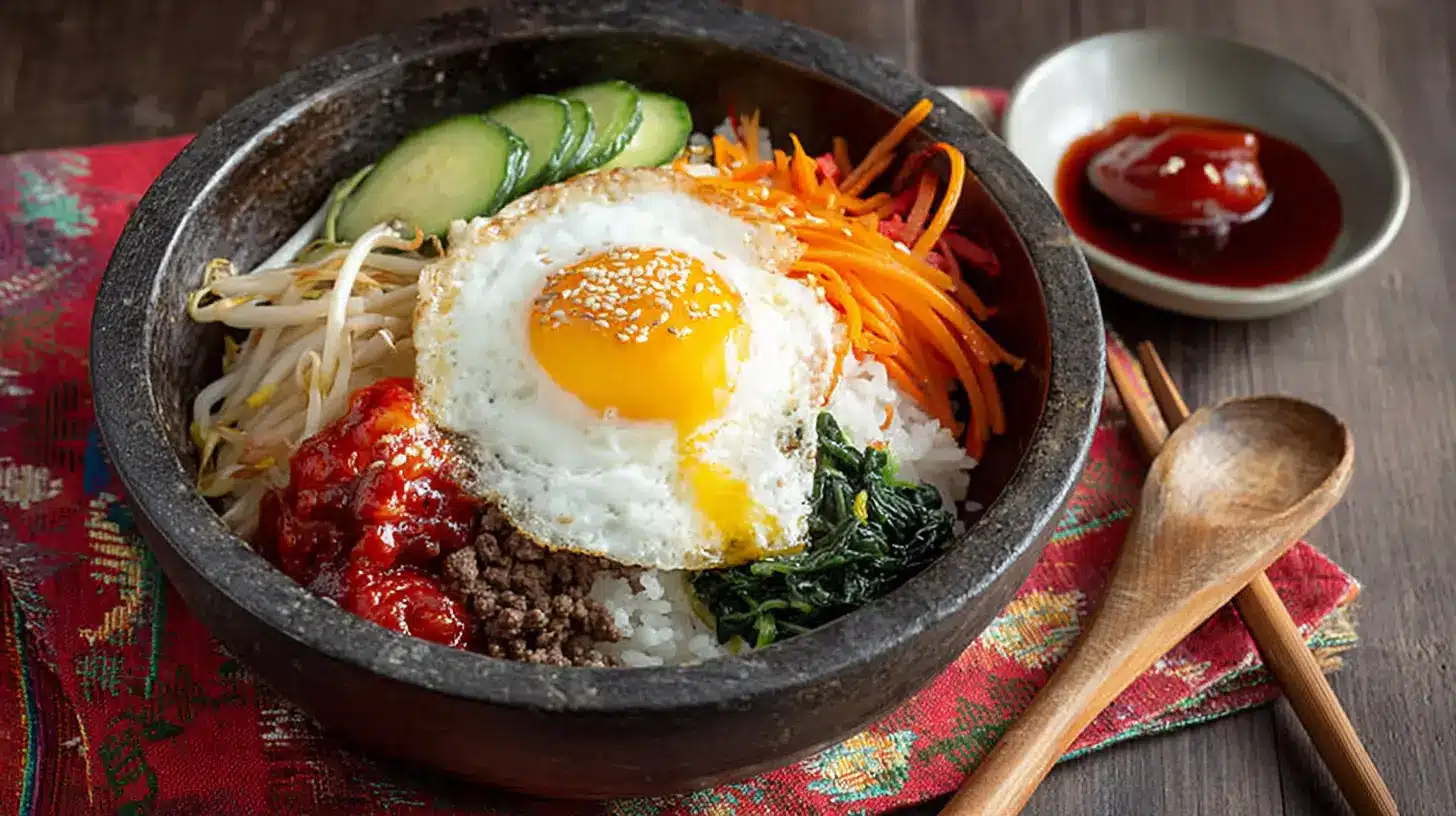
Bibimbap with Ground Beef
Ingredients
For the Beef
- 1 lb ground beef 90–93% lean recommended
- 2 tsp neutral oil avocado or canola
- 3 cloves garlic minced
- 1 tsp fresh ginger grated (optional)
- 2 tbsp low‑sodium soy sauce or tamari
- 1 tbsp brown sugar or honey
- 1 tsp toasted sesame oil
- 0.25 tsp black pepper
For the Vegetables
- 1 medium carrot cut into matchsticks
- 1 small zucchini cut into matchsticks or half‑moons
- 1 cup bean sprouts or extra spinach if unavailable
- 4 oz mushrooms thinly sliced
- 2 cups fresh spinach
- 0.5 small cucumber thinly sliced (raw, for topping)
- 2 tsp neutral oil split among sautéing steps
- Pinches fine salt to taste during sauté
For the Gochujang Sauce
- 2 tbsp gochujang Korean red pepper paste
- 1 tbsp low‑sodium soy sauce or tamari
- 1–2 tsp brown sugar or honey to taste
- 1 tsp toasted sesame oil
- 1–2 tsp rice vinegar or lemon juice to taste
- 1–3 tbsp warm water to thin until drizzleable
For the Eggs & Rice
- 4 cups hot cooked rice short‑grain or jasmine; brown rice works too
- 4 large eggs
- 1–2 tsp neutral oil for frying eggs
Garnishes
- sesame seeds for topping
- sliced scallions for topping
- lime or lemon wedges optional
Instructions
- Step 1 — Cook the Rice: Prepare rice according to package instructions so it’s hot when assembling bowls.
- Step 2 — Make the Sauce: In a small bowl, whisk gochujang, soy sauce, brown sugar or honey, toasted sesame oil, and rice vinegar or lemon juice. Thin with warm water until drizzleable; taste and adjust.
- Step 3 — Sauté the Vegetables: Heat a large skillet over medium‑high. Add neutral oil and cook each vegetable separately with a pinch of salt so they stay crisp‑tender: carrots 1–2 minutes; zucchini 1–2 minutes; mushrooms 3–4 minutes; spinach 30–60 seconds; bean sprouts 1 minute. Transfer each to a tray.
- Step 4 — Cook the Ground Beef: In the same skillet, add oil and brown beef 4–6 minutes until lightly caramelized. Stir in garlic and ginger and cook 30 seconds. Add soy sauce, brown sugar or honey, sesame oil, and black pepper; simmer 30–60 seconds to glaze.
- Step 5 — Fry the Eggs: Wipe or use a separate nonstick skillet. Heat a thin film of oil and fry eggs sunny‑side up until whites are set and yolks remain runny.
- Step 6 — Build the Bowls: Divide hot rice among bowls. Arrange sautéed veggies around the edges. Spoon glazed ground beef in the center. Top with a fried egg, cucumbers, scallions, and sesame seeds. Drizzle gochujang sauce over everything and mix at the table.
Notes

Ingredients for Easy Bibimbap with Ground Beef
For the Beef
- 1 lb (450 g) ground beef (90–93% lean recommended)
- 2 tsp neutral oil (avocado or canola)
- 3 cloves garlic, minced
- 1 tsp grated fresh ginger (optional but lovely)
- 2 tbsp low-sodium soy sauce (or tamari)
- 1 tbsp brown sugar or honey
- 1 tsp toasted sesame oil
- ¼ tsp black pepper
For the Vegetables (mix and match; ~5 cups total)
- 1 medium carrot, cut into matchsticks
- 1 small zucchini, cut into matchsticks or half-moons
- 1 cup bean sprouts (or extra spinach if unavailable)
- 4 oz (115 g) mushrooms, thinly sliced
- 2 cups fresh spinach
- ½ small cucumber, thinly sliced (raw, for topping)
- 2 tsp neutral oil (split among sautéing steps)
- Pinches of fine salt
For the Gochujang Sauce
- 2 tbsp gochujang (Korean red pepper paste)
- 1 tbsp low-sodium soy sauce (or tamari)
- 1–2 tsp brown sugar or honey, to taste
- 1 tsp toasted sesame oil
- 1–2 tsp rice vinegar (or lemon juice), to taste
- 1–3 tbsp warm water to thin until drizzleable
For the Eggs & Rice
- 4 cups hot cooked rice (short-grain or jasmine; brown rice works too)
- 4 large eggs
- 1–2 tsp neutral oil (for eggs)
Garnishes
- Sesame seeds
- Sliced scallions
- Lime or lemon wedges (optional)
Ingredient Notes
- Ground beef: A leaner grind keeps the bowl saucy without greasiness. If using a fattier grind, drain excess after browning.
- Vegetables: Classic bibimbap veggies are carrots, zucchini, spinach, mushrooms, and sprouts. Aim for a variety of colors and textures; slice thin so they cook quickly.
- Gochujang: This chili-bean paste brings gentle heat and deep umami. Start with less and add more to taste; thin with warm water so it drizzles.
- Rice choice: Short-grain rice offers classic cling; jasmine is fragrant; brown rice adds nutty chew and extra fiber.
- Sesame oil: Add it to beef and sauce off high heat to preserve its aroma.
- Eggs: Sunny-side up or over-easy gives you a rich, silky “sauce” when mixed in.
Ingredient Notes (Substitutions & Healthy Swaps)
- Different protein: Ground turkey or chicken also work; add a teaspoon of oil while browning to keep things juicy.
- Vegetable swaps: Bell peppers, snow peas, kale, or shredded cabbage sauté beautifully. Use what you have.
- Grain swaps: Try quinoa, farro, or cauliflower rice; keep the bowl structure the same.
- Gluten sensitivity: Use tamari in place of soy sauce.
- Lower heat: Cut gochujang to 1 tablespoon and add a dash more soy and sugar for balance.
- Extra protein boost: Add edamame or top with a few slices of tofu along with the beef.
Step-by-Step Instructions
Step 1 — Cook the Rice
Start your rice first so it’s hot when you assemble. Fluff and keep covered.
Step 2 — Make the Sauce
In a small bowl, whisk gochujang, soy, sugar, sesame oil, and vinegar. Thin with warm water until it drizzles in ribbons. Taste—aim for tangy, savory, gently sweet heat.
Step 3 — Sauté the Vegetables (Quick & Hot)
Use a large skillet over medium-high heat. Add a light film of oil and cook each vegetable separately with a pinch of salt so it stays vibrant and crisp-tender:
- Carrots: 1–2 minutes until just bendy.
- Zucchini: 1–2 minutes until glossy with a few golden spots.
- Mushrooms: 3–4 minutes until they release moisture and brown.
- Spinach: 30–60 seconds until just wilted; squeeze gently if watery.
- Bean sprouts: 1 minute, still snappy.
Transfer each to a tray; keep piles neat for easy assembly.
Step 4 — Cook the Ground Beef
Add 2 tsp oil to the same skillet. Brown beef over medium-high heat, breaking it up, 4–6 minutes until mostly cooked and lightly caramelized. Stir in garlic and ginger; cook 30 seconds. Add soy, sugar, sesame oil, and black pepper; simmer 30–60 seconds to glaze. Taste and adjust—add a splash of water if it’s very reduced.
Step 5 — Fry the Eggs
Wipe the skillet or use a nonstick. Heat a thin film of oil over medium. Crack in eggs; cook sunny-side up until whites set and yolks are still runny (cover briefly for set whites without flipping).
Step 6 — Build the Bowls
Divide hot rice among 4 bowls. Arrange neat mounds of carrots, zucchini, mushrooms, spinach, and sprouts around the edges. Spoon a generous portion of glazed ground beef in the center, top with a fried egg, add cucumbers, and shower with scallions and sesame seeds. Drizzle with gochujang sauce. Mix at the table so the yolk and sauce coat everything.
Pro Tips for Success
- Prep smart: Cut all vegetables before you turn on the heat. The cooking goes fast.
- Cook veg separately: Each vegetable keeps its ideal texture and flavor—this is a bibimbap hallmark.
- Brown the beef, don’t gray it: Let it sit undisturbed for a minute to develop flavorful fond before stirring.
- Sauce consistency matters: A pourable, glossy sauce spreads better than a paste—thin it gradually.
- Season the rice: A pinch of salt and a few drops of sesame oil in the rice make the whole bowl pop.
- Serve hot: Warm rice + hot toppings + cool cucumber = the magic contrast.
Flavor Variations
- Garlic-Sesame Beef: Double the garlic, finish beef with a light sprinkle of sesame seeds and extra sesame oil.
- Sweet-Heat: Add a teaspoon of honey to the gochujang sauce and a pinch of red pepper flakes to the beef.
- Kimchi-Inspired Veg: Sauté cabbage and carrots together with a little garlic and a splash of vinegar for a tangy side element.
- Miso-Ginger Spin: Whisk ½ teaspoon white miso into the gochujang sauce for extra umami and a silky finish.
- Veggie-Forward: Replace half the beef with diced mushrooms and edamame for a hearty, lighter mix.
- No-egg Option: Top with extra avocado slices or pan-crisped tofu cubes for creaminess and protein.
Serving Suggestions
- Table toppings bar: Set out extra cucumbers, scallions, sesame seeds, and lime/lemon wedges so everyone customizes their bowl.
- Greens on the side: Serve with a simple salad of romaine and cucumbers dressed in sesame-lime vinaigrette for crunch.
- Soup pairing: A light vegetable broth or miso-style soup alongside keeps things cozy and balanced.
- For kids: Keep the gochujang on the side and let them spoon to taste.
Storage and Freezing Instructions
- Refrigerate: Store rice, seasoned beef, vegetables, and sauce separately in airtight containers up to 4 days.
- Reheat: Warm rice and beef gently (microwave or skillet). Reheat sautéed veggies quickly so they stay crisp. Fry a fresh egg before serving.
- Freeze: Beef freezes well up to 2 months; thaw overnight. Rice freezes in portions, too. Vegetables are best fresh for texture.
Nutrition Facts (Per Serving)
Approximate values for 1 of 4 bowls with listed ingredients and 1 egg; values vary by brand and portions.
| Calories | Protein | Carbs | Fat | Fiber | Sodium |
|---|---|---|---|---|---|
| ~640 | ~33 g | ~74 g | ~24 g | ~7 g | ~890 mg |
FAQ About Easy Bibimbap with Ground Beef
What type of rice works best?
Short-grain white rice is classic and clings nicely when mixed. Jasmine is fragrant and fluffy. Brown rice adds nutty chew and extra fiber—just cook a bit longer and fluff well.
How spicy is the sauce?
Gochujang is a warm, rounded heat rather than fiery. Start with the lower amount and thin it; add more to taste. For very mild eaters, put the sauce on the side so each person can add a little.
Can I make it gluten-free?
Yes—use tamari instead of soy sauce and ensure your gochujang brand is gluten-free (many are; check labels). Everything else is naturally gluten-free when you use plain rice.
Do I have to cook each vegetable separately?
It’s traditional and gives superior texture. If you’re short on time, sauté firmer vegetables first (carrots, mushrooms), then add tender ones (zucchini, spinach) so nothing overcooks.
My beef tastes bland—what went wrong?
It likely didn’t brown enough or needs more seasoning. Let it sear before stirring, then taste after glazing and add a pinch more soy or a sprinkle of salt. A tiny splash of water can help distribute flavors evenly if it’s too dry.
Can I skip the egg?
Sure. The egg adds richness and a silky sauce feel, but you can leave it off or use avocado for creaminess. For extra protein, add tofu cubes or edamame.
How do I keep cucumbers crisp?
Slice them just before serving, or salt lightly and pat dry. Their cool crunch is a great contrast to warm toppings.
What’s the best way to pack for lunch?
Layer rice on the bottom, then beef and sautéed vegetables. Keep sauce and cucumbers in separate containers. Reheat the main container, then add sauce and cucumbers. A jammy boiled egg travels well if you can’t fry one at work.
TastyInspo Notes
- Knife work matters: Thin, even slices cook quickly and look beautiful in the bowl.
- Rice rinse: Rinse rice until the water runs mostly clear for distinct, glossy grains.
- Sesame bloom: Drizzle sesame oil off heat to preserve aroma.
- Contrast is king: Keep at least one raw, crisp element (like cucumber) to balance warm components.
- Sauce to scale: Double the gochujang sauce and keep it in the fridge—great for future bowls.
- Heat control: If your pan runs hot, lower the heat for spinach and sprouts so they don’t wilt to mush.
- Mix at the table: Encourage diners to stir thoroughly; the yolk and sauce should coat every grain.
Final Thoughts
Easy Bibimbap with Ground Beef proves that a colorful, nourishing, restaurant-style bowl can be calm to cook and quick to clean up. Browning the beef properly, sautéing vegetables just until crisp-tender, and mixing everything with a tangy gochujang drizzle delivers bold flavor and balanced comfort in every bite. Once you know this flow—rice, sauce, quick veg, glossy beef, sunny egg—you’ll have an endlessly adaptable blueprint for busy nights and meal-prep weeks alike.