If you’re craving a bright, spreadable preserve with incredible berry flavor, this black raspberry jam delivers a soft, glossy set and a classic, fruit-forward taste you’ll love from the very first spoonful.
Why You’ll Love This Black Raspberry Jam
- Pure berry flavor: Black raspberries have a naturally rich, winey taste with a pleasant tartness. This recipe keeps the ingredient list short so the berries shine.
- Foolproof texture: Using liquid pectin creates a soft, spoonable set—ideal for toast, desserts, and glazes—without overcooking the fruit.
- Beginner-friendly canning: You’ll use a simple boiling water bath, no special gear beyond jars and a large pot. Clear steps make it easy.
- Predictable yield: The batch fills about eight half-pint jars—perfect for gifting or stocking your pantry.
- Family-safe & flexible: No alcohol, no unusual additives. Options are included for lower-sugar pectin, small-batch testing, and flavor infusions.
Ingredients for Black Raspberry Jam
Main Jam
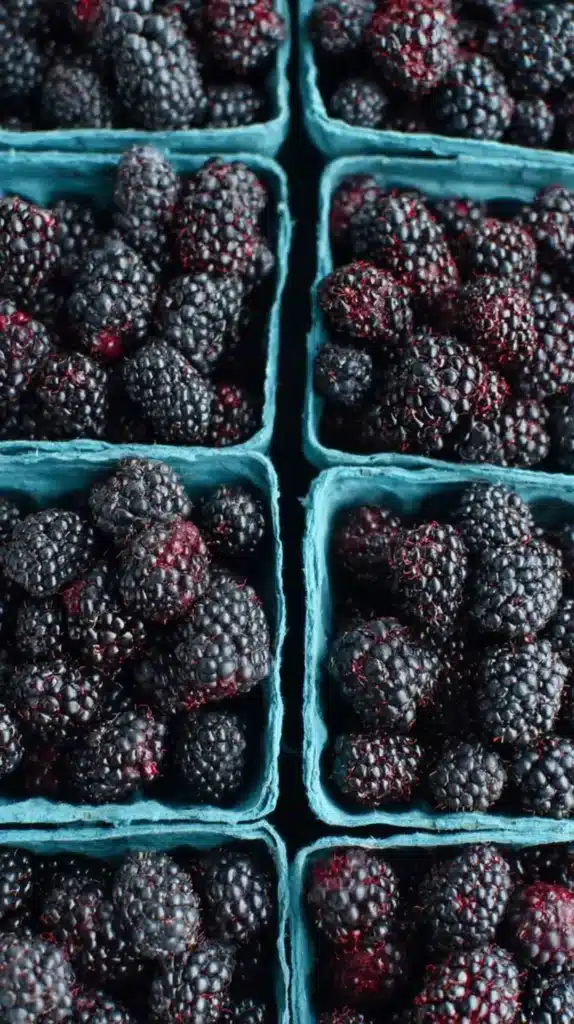
- 3½ cups crushed black raspberries (about 5 pints whole berries before crushing)
- 7 cups granulated sugar
- ¼ cup bottled lemon juice (for acidity and brightness)
- 1 (3-oz) pouch liquid pectin
- ½ teaspoon butter (optional, to reduce foaming)
Canning Gear
- 8 half-pint (8-oz) mason jars with new lids and rings
- Large water-bath canner or deep stockpot with rack
- Jar lifter, ladle, and canning funnel
- Clean towels and paper towels
Ingredient Notes (Substitutions, Healthy Swaps)
- Black raspberries: Fresh berries are ideal, but you can use frozen—thaw fully and drain excess liquid before crushing. If you’re short, you can blend with red raspberries or blackberries, but the flavor will be a touch milder.
- Sugar: Standard jam pectin is formulated for full sugar. If you want less sweetness, use a low- or no-sugar pectin (such as Pomona’s or a universal low-sugar pectin) and follow the package ratio for fruit-to-sweetener. You can sweeten with less sugar or even honey; texture and yield will vary.
- Bottled lemon juice: For canning safety and consistent acidity, bottled lemon juice is recommended. Fresh lemon can vary in pH.
- Liquid pectin vs. powdered: This recipe uses liquid pectin added after the first hard boil. If you only have powdered pectin, the technique changes (powdered pectin is whisked into the fruit before the sugar). Follow the specific directions on the pectin brand you use.
- Butter: Optional but helpful—just a dab reduces foam, which makes for clearer jars.
- Allergy & dietary notes: No alcohol or pork. For vegan jam, ensure your sugar is vegan-processed in your region.
Step-by-Step Instructions
Step 1 – Prep Jars and Set Up Your Canning Station
Wash jars, lids, and rings in hot soapy water and rinse well. Keep the jars hot (in a 180°F/82°C water bath, dishwasher heat cycle, or a warm oven at ~200°F/93°C) until ready to fill—hot jam into hot jars helps prevent thermal shock. Place a rack in your canning pot and fill with enough water to cover filled jars by at least 1 inch. Bring this water to a strong simmer while you cook the jam.
Step 2 – Crush the Berries
Rinse berries and let them drain. In a wide, nonreactive pot, lightly crush the berries with a potato masher or fork until you have 3½ cups of crushed fruit. Don’t purée completely; a little texture makes a better jam.
Tip: Measure the crushed fruit, not the whole berries. The ratio matters for set and yield.
Step 3 – Build the Base and Bring to a Hard Boil
Add the 7 cups sugar and ¼ cup bottled lemon juice to the pot with the crushed berries. If using, add ½ tsp butter. Stir over medium-high heat until the sugar dissolves, then increase heat to bring the mixture to a full rolling boil—a vigorous boil that doesn’t stop when you stir.
Step 4 – Add Liquid Pectin and Boil Hard for 1 Minute
While stirring, quickly squeeze in the entire 3-oz pouch of liquid pectin. Return to a hard rolling boil and boil exactly 1 minute, stirring constantly to prevent scorching. This brief, intense boil activates the pectin without dulling the berry flavor.
Step 5 – Skim Foam and Check the Set (Optional Tests)
Remove from heat. Skim off any remaining foam with a spoon for a clearer, jewel-like jam. If you like, do a quick set check: place a spoonful on a chilled plate, wait 30 seconds, then drag a finger through—if it slowly holds a line, you’re good. Keep in mind the jam thickens more as it cools.
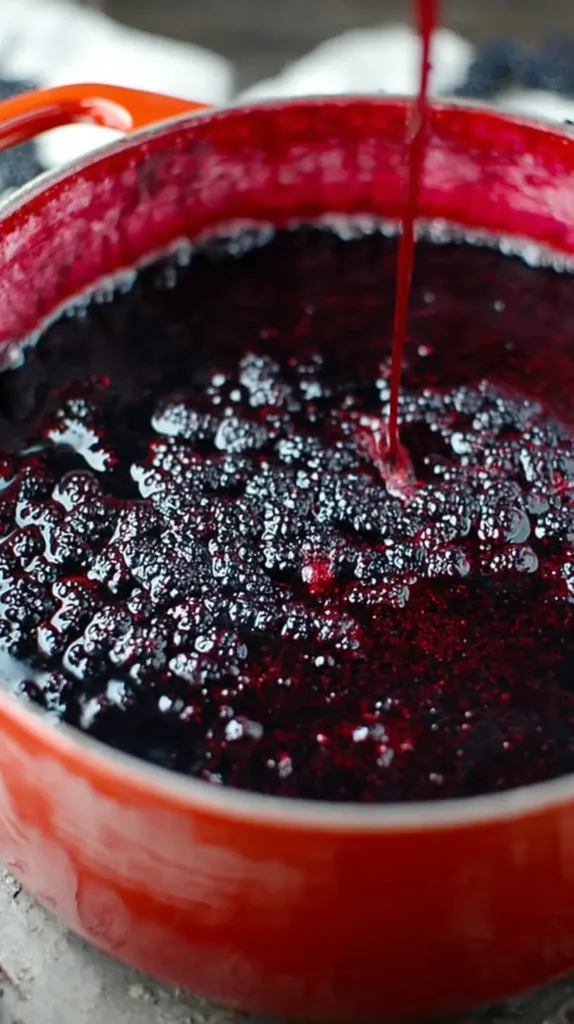
Step 6 – Ladle into Hot Jars
Working with hot jars, place a canning funnel on the first jar and ladle in jam, leaving ¼-inch headspace at the top. Wipe rims with a damp paper towel to remove any sticky residue—this ensures a good seal. Center a new lid on each jar and twist on the ring fingertip tight (snug but not over-tightened).
Step 7 – Water-Bath Process
Lower the filled jars onto the rack in the canner. Ensure they’re covered by at least 1 inch of water. Bring to a full boil, then process for 10 minutes (adjusting for altitude per your local guidelines). When time is up, turn off the heat and let the jars rest in the hot water for 5 minutes—this helps reduce siphoning (jam leaking out) and improves seal success.
Step 8 – Cool, Check Seals, and Label
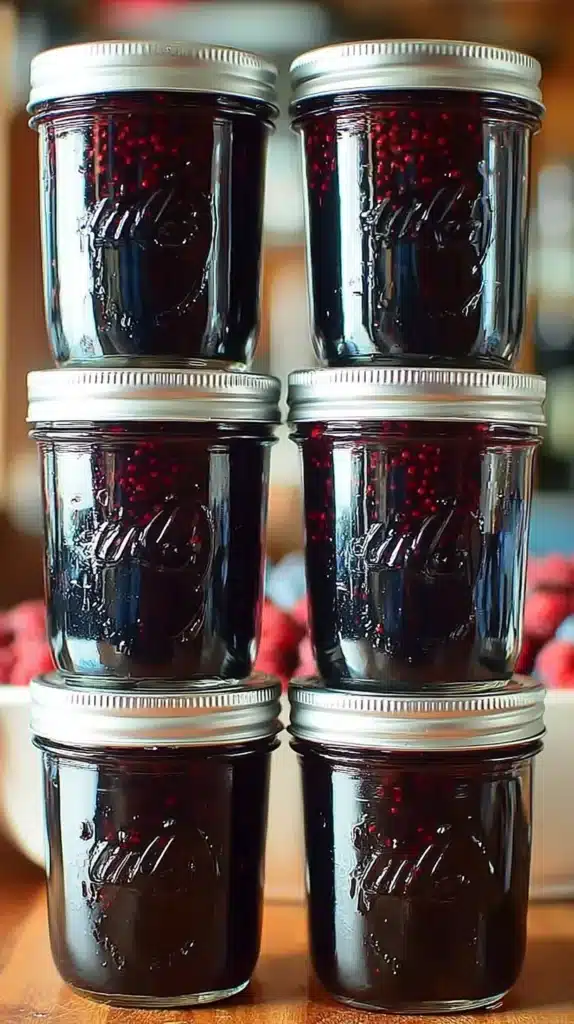
Lift jars out carefully and place on a towel, undisturbed, for 12–24 hours. You’ll hear the satisfying “ping” of sealing lids as they cool. After cooling, check seals: the center of each lid should be concave and not flex when pressed. Remove rings, wipe jars, and label with the jam name and date. Store sealed jars in a cool, dark place; refrigerate any unsealed jar and use first.
Pro Tips for Success
- Use a wide pot. A broader surface area encourages faster evaporation and reduces boil-over risk during the hard boil.
- Measure accurately. Jam chemistry is simple but finicky—measure crushed fruit and sugar after crushing, not before.
- Mind the boil. Liquid pectin needs a true hard boil for exactly 1 minute after adding. Under-boiling can lead to a loose set; over-boiling can make it stiff.
- Reduce foam early. Add the optional butter and use a wide pot; rapid, even boiling makes less foam to skim.
- Respect headspace. The ¼-inch headspace ensures proper vacuum formation—too little can cause seeping; too much can affect seals.
- Let jars rest 5 minutes in the canner after processing before lifting—this improves seal success and prevents siphoning.
- Be patient with set. Pectin jams often firm up fully within 12–48 hours. If your jam seems a bit loose the day you make it, give it time before judging.
Flavor Variations
- Vanilla Berry Jam: Stir ½ teaspoon vanilla extract into the pot after removing from heat. The vanilla lifts the berry aroma without overpowering it.
- Lemon-Zest Brightness: Add 1 teaspoon finely grated lemon zest with the sugar for a citrusy edge.
- Black Raspberry-Mint: Infuse 4–5 fresh mint sprigs in the jam off heat for 5 minutes, then remove before ladling into jars. Start light—mint gets strong quickly.
- Mixed Bramble Jam: Replace up to 1 cup of the crushed black raspberries with blackberries or red raspberries for layered flavor.
- Spiced Jam for Winter: Add a tiny pinch of cinnamon or cardamom. Keep it subtle; you want spice to support, not dominate.
Serving Suggestions
- Breakfast classic: Spread on buttered toast, English muffins, or warm scones.
- Yogurt swirl: Spoon into plain Greek yogurt with granola for a quick parfait.
- Cheeseboard hero: Pair with aged cheddar, creamy brie, or tangy goat cheese.
- Dessert glaze: Brush warm jam over fresh fruit tarts or cheesecake for sheen and flavor.
- BBQ accent: Melt with a splash of water and brush over grilled chicken or pork substitutes (e.g., smoked tofu) during the last minutes of cooking.
Storage and Freezing Instructions
- Pantry: Properly processed and sealed jars keep up to 12 months in a cool, dark place. Quality is best in the first year.
- Refrigerator (opened): After opening, refrigerate and use within 3–4 weeks for best flavor and texture.
- Freezer: Jam also freezes well. For a freezer-only method, cool jam completely, pack in freezer-safe containers with some headspace, and freeze for up to 6 months.
Nutrition Facts (Per 1 Tablespoon)
Approximate values. Actual numbers vary with brand of pectin and berry sweetness.
| Calories | Protein (g) | Carbs (g) | Sugars (g) | Fat (g) | Sodium (mg) | Fiber (g) |
|---|---|---|---|---|---|---|
| 45 | 0 | 12 | 11 | 0 | 0 | 0.2 |
FAQ About Black Raspberry Jam
Can I use powdered pectin instead of liquid pectin?
Yes, but the method changes. With powdered pectin, you typically stir the pectin into the fruit before adding sugar, then bring to a boil and add sugar. Follow your pectin brand’s exact directions to ensure a proper set.
What if my jam doesn’t set right away?
Give it 24–48 hours. Pectin jams often need time to fully gel. If it’s still loose after two days, you can rework the jam: simmer with a bit more pectin (or cook briefly to reduce), then reprocess in clean jars. Alternatively, enjoy it as a luscious black raspberry sauce for pancakes and ice cream.
Can I reduce the sugar?
With standard liquid pectin, sugar is essential to gel structure. To reduce sugar significantly, choose a low- or no-sugar pectin and follow its instructions. Expect a slightly different texture and possibly a smaller yield.
Is bottled lemon juice necessary?
For canning, bottled lemon juice offers consistent acidity, which supports safe processing and bright flavor. Fresh lemons vary in pH, so bottled is the reliable choice here.
Do I have to skim the foam?
Foam isn’t harmful, but skimming gives you prettier jars. A ½ teaspoon of butter reduces foam formation; a wide pot and steady boil help, too.
How long do I process the jars?
For standard half-pint jars at sea level, 10 minutes at a full rolling boil is typical. If you live at higher elevation, increase processing time per your local extension guidelines.
Can I double the batch?
It’s better not to. Larger batches take longer to reach a hard boil and can affect set. Make back-to-back single batches for the most reliable results.
Can I make this jam without canning?
Absolutely. Ladle hot jam into clean jars, cool, and refrigerate. It will keep about 3–4 weeks in the fridge. For longer storage without canning, freeze in freezer-safe containers.
Final Thoughts
Black raspberry jam is pure pantry treasure—simple ingredients, big payoff, and a spread you’ll reach for every morning. With carefully measured fruit and sugar, a quick one-minute hard boil after adding liquid pectin, and a straightforward water-bath process, you’ll get jars that seal beautifully and a texture that’s soft, glossy, and spoonable. Once you nail the basic method, the possibilities are endless: swirl it into yogurt, glaze a tart, gift a jar to a friend, or whisk a spoonful into vinaigrettes. This is the kind of classic preserve that makes home canning feel rewarding, approachable, and delicious.
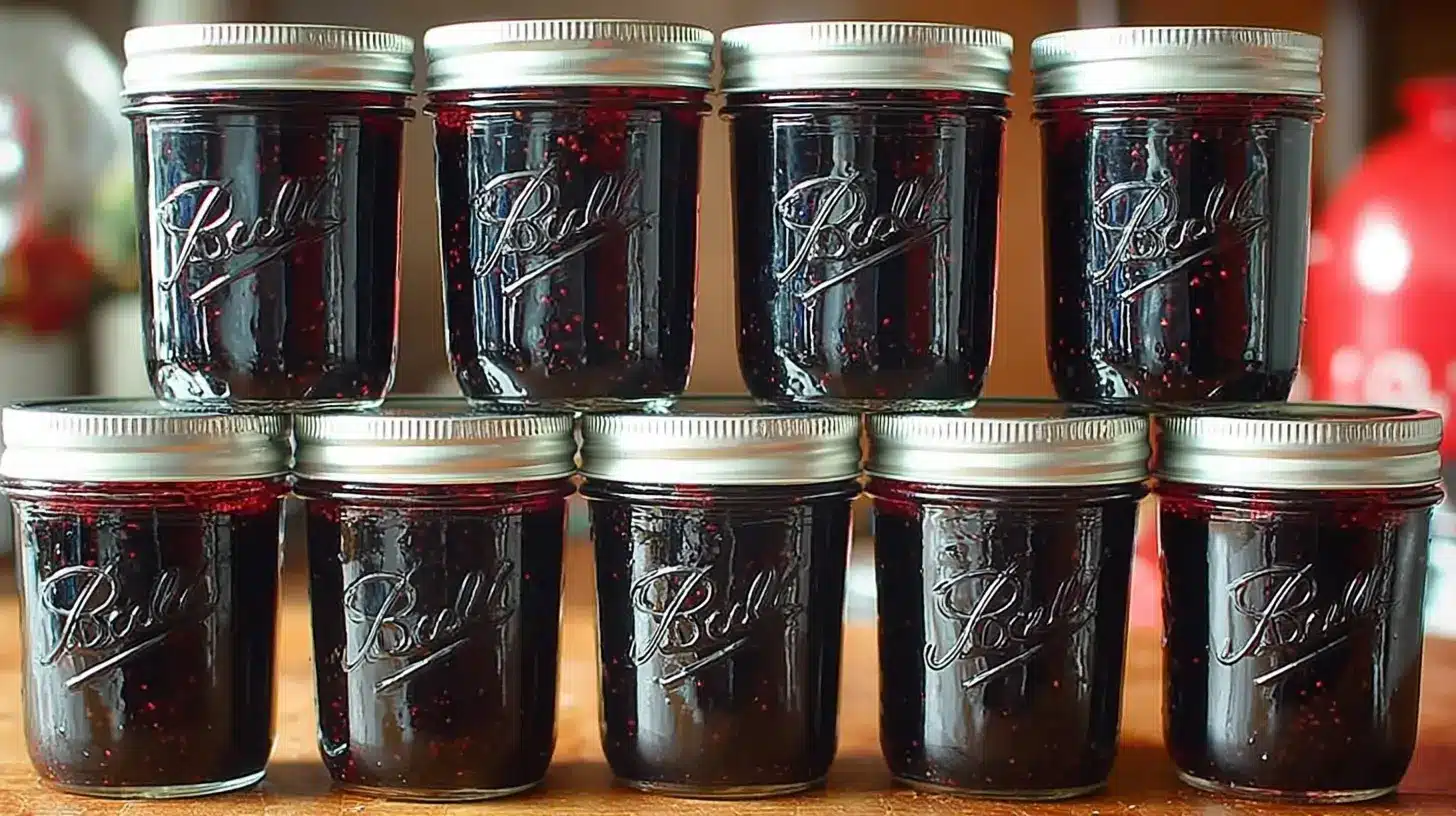
Easy Black Raspberry Jam: Proven, Beautiful Set
Ingredients
Main Jam
- 3.5 cups crushed black raspberries about 5 pints whole berries before crushing
- 7 cups granulated sugar
- 0.25 cup bottled lemon juice for acidity and brightness
- 1 pouch liquid pectin 3 oz (standard size)
- 0.5 teaspoon unsalted butter optional, to reduce foaming
Instructions
- Wash jars, lids, and rings. Keep jars hot until ready to fill. Fill canning pot with enough water to cover jars by 1 inch and bring to a simmer.
- Lightly crush rinsed black raspberries until you have 3½ cups. Do not purée completely.
- In a wide nonreactive pot, combine crushed berries, sugar, lemon juice, and optional butter. Stir and heat until sugar dissolves. Bring to a full rolling boil.
- Quickly add the entire pouch of liquid pectin. Return to a hard boil and boil exactly 1 minute, stirring constantly.
- Remove from heat. Skim foam. Optionally test set by placing a spoonful on a chilled plate and dragging a finger through after 30 seconds.
- Ladle hot jam into hot jars, leaving ¼-inch headspace. Wipe rims, apply lids, and secure rings fingertip-tight.
- Process jars in boiling water for 10 minutes (adjust for altitude). Turn off heat, let jars rest in water 5 minutes, then remove to cool undisturbed 12–24 hours.
- After cooling, check seals. Label and store sealed jars in a cool, dark place. Refrigerate any unsealed jars and use first.