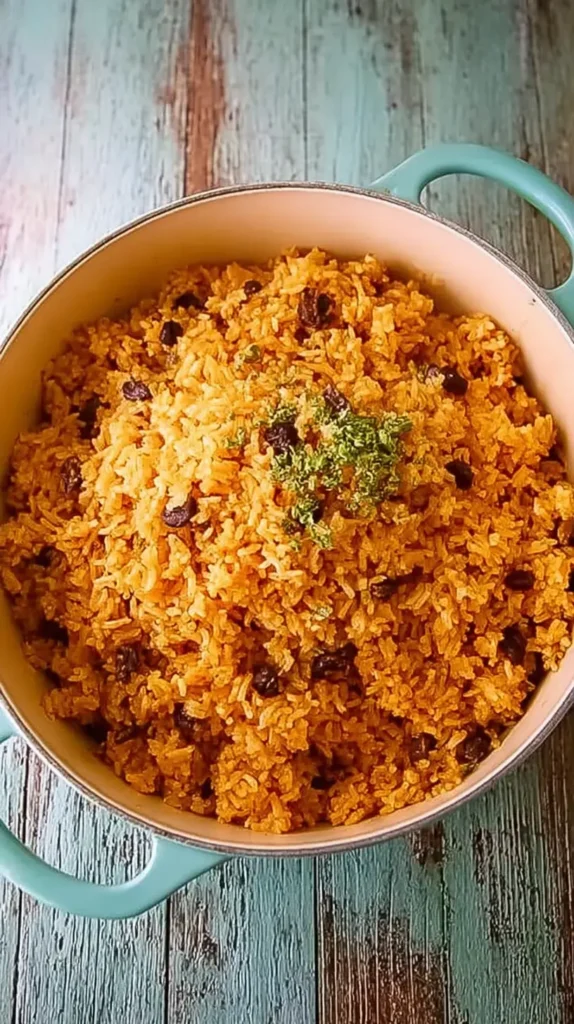
The Puerto Rican rice recipe is a beloved one-pot dish where fluffy rice cooks with sofrito, tomato sauce, pigeon peas, sazón with achiote, adobo, and briny alcaparrado (olives and capers). The rice steams until tender while a prized crispy layer—called pegao—gently forms on the bottom. It’s aromatic, colorful, and perfect for family dinners, holidays, and cookouts.
Why You’ll Love This Puerto Rican Rice Recipe
- Big flavor, simple method: Everyday pantry ingredients bloom into a fragrant, crowd-pleasing pot of rice.
- One pot, easy cleanup: Everything simmers in the same caldero or heavy pot.
- Perfect make-ahead side: Holds well on warm and tastes even better after a short rest.
- Flexible for guests: Naturally dairy-light, with straightforward swaps for different tastes.
- Scales up beautifully: Double the batch for parties without doubling your effort.
What Is Puerto Rican Rice?
Puerto Rican rice, commonly known as Arroz con Gandules, is the island’s signature party rice. Medium or long-grain white rice simmers with sofrito (a flavorful blend of onions, garlic, peppers, and herbs), tomato sauce, gandules (pigeon peas), and a seasoning combo of sazón with achiote and adobo. The achiote adds a warm golden hue while adobo layers salt, garlic, and pepper notes. Many home cooks also add alcaparrado, an olive-caper mix that brings gentle briny pops to the pot.
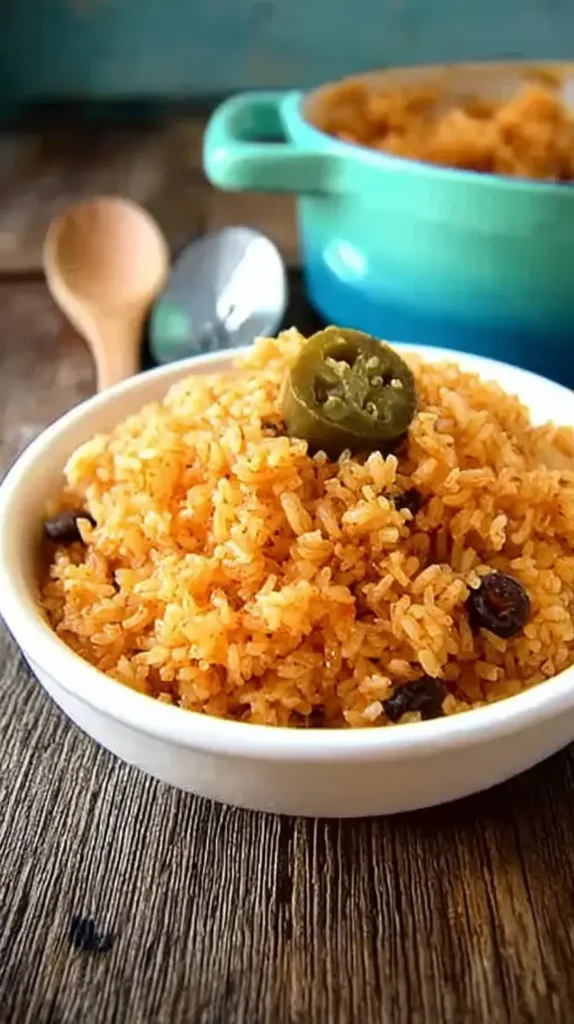
The result is a fluffy, savory rice with bites of peas and a whisper of tangy olive, plus that treasured, slightly toasty bottom crust. It’s a cornerstone of holiday tables and weekend gatherings, often served alongside roasted chicken, stewed beans, and fresh salads.
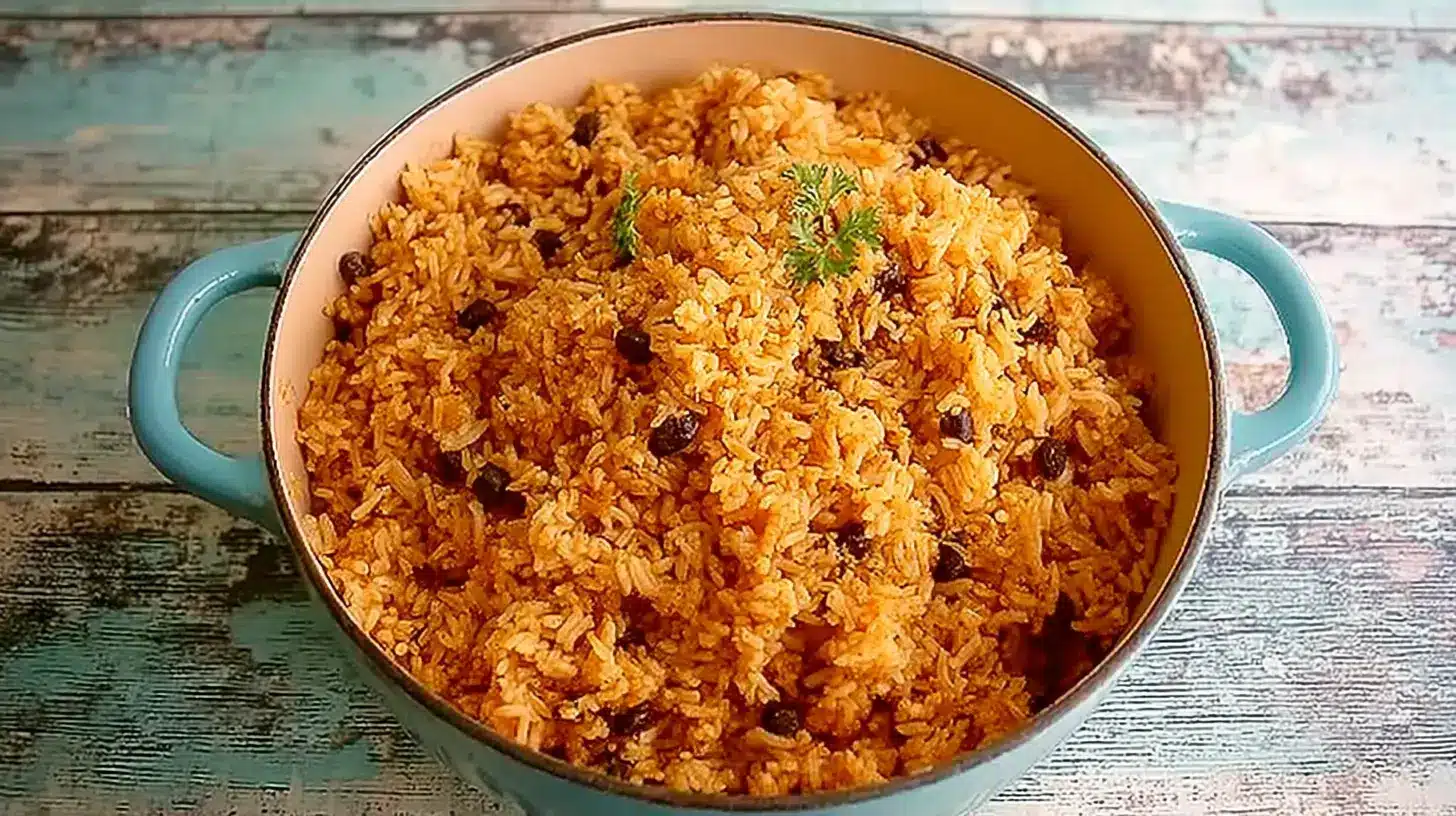
Puerto Rican Rice (Arroz con Gandules)
Ingredients
Rice Base
- 3 cups medium or long-grain white rice well rinsed
- 4.5 tablespoons vegetable oil enough to coat the base of the pot
Flavor Builders
- 0.5 cup sofrito store-bought or homemade
- 1 cup tomato sauce
- 2 packets sazón con achiote or 2 tsp homemade sazón with annatto
- 1 tablespoon adobo seasoning
- 1 teaspoon garlic powder
- 1 teaspoon onion powder
- 0.5 teaspoon ground cumin
- 0.5 teaspoon dried oregano
- 1 to taste black pepper
Peas and Briny Notes
- 1 can pigeon peas (gandules) 15 oz / 425 g, partially drained
- 0.5 cup alcaparrado roughly chopped
Liquid
- 4.25 cups hot water enough to cover the rice by 1 inch
- 1.5 teaspoons kosher salt to taste
Optional Garnish
- 2 tablespoons fresh cilantro or flat-leaf parsley chopped
- 1 to taste lime wedges
Instructions
- Rinse the rice thoroughly with cold water until mostly clear, drain well using a fine mesh strainer.
- Heat vegetable oil in a caldero or Dutch oven over medium heat. Add sofrito and sauté for 2–3 minutes. Stir in tomato sauce, sazón, adobo, garlic powder, onion powder, cumin, oregano, and black pepper. Cook 2 more minutes.
- Add partially drained pigeon peas and chopped alcaparrado. Sauté together for 1 minute to blend flavors.
- Add hot water to cover rice by 1 inch. Stir in kosher salt and taste to ensure broth is slightly saltier than desired final dish. Bring to a lively simmer.
- Add rinsed rice and stir once to distribute evenly. Boil gently, uncovered, until most liquid is absorbed and steam holes appear (6–10 minutes).
- Mound the rice toward the center with a spoon. Cover with a foil “cap” and secure lid tightly to trap steam.
- Reduce heat to low and steam for 20–25 minutes. Halfway through, gently fold from edge to center without scraping the bottom. Replace foil and lid promptly.
- Turn off heat and let rest, covered, 5–10 minutes. Remove lid and foil, fluff rice with a fork, and garnish with cilantro or parsley. Serve with lime wedges.
Notes
Ingredients for Puerto Rican Rice
Rice Base
- 3 cups medium or long-grain white rice, well rinsed
- 4–5 tablespoons vegetable oil (enough to coat the base of the pot)
Flavor Builders
- ½ cup sofrito (store-bought or homemade)
- 1 cup tomato sauce
- 2 packets sazón con achiote (or 2 teaspoons homemade sazón with annatto)
- 1 tablespoon adobo seasoning
- 1 teaspoon garlic powder
- 1 teaspoon onion powder
- ½ teaspoon ground cumin
- ½ teaspoon dried oregano
- Freshly ground black pepper to taste
Peas and Briny Notes
- 1 can (15 oz / 425 g) pigeon peas (gandules), partially drained
- ½ cup alcaparrado (pitted green olives with pimentos + capers), roughly chopped
Liquid
- Hot water to cover the rice by about 1 inch (about 4–4½ cups, as needed)
- 1–2 teaspoons kosher salt, to taste (broth should taste pleasantly seasoned)
Optional Garnish
- Fresh cilantro or flat-leaf parsley, chopped
- Lime wedges for brightness
Smart Substitutions and Notes
- Rice: Medium-grain is traditional and gets wonderfully fluffy, but long-grain is excellent and separates a bit more. Avoid short-grain here; it’s too sticky.
- Sofrito: Use jarred or frozen. If you’re making it fresh, blend onion, green bell pepper, culantro or cilantro, garlic, and sweet peppers (like ajíes dulces) until spoonable.
- Sazón with achiote: Provides color and depth. If you don’t have it, combine ground annatto (achiote), garlic powder, coriander, cumin, and salt to taste.
- Alcaparrado: If you can’t find the olive-caper mix, use pitted green olives plus a spoonful of capers. Rinse briefly if especially briny, then chop.
- Liquid: Hot water speeds the boil and helps the rice start cooking evenly. If you prefer, use low-sodium broth and adjust salt carefully.
Equipment You’ll Need
- Caldero (traditional aluminum pot) or heavy-bottomed Dutch oven with a tight lid
- Wooden spoon or heat-safe spatula
- Measuring cups and spoons
- Foil (to make a simple “cap” under the lid for better steam capture)
- Fine mesh strainer for rinsing rice
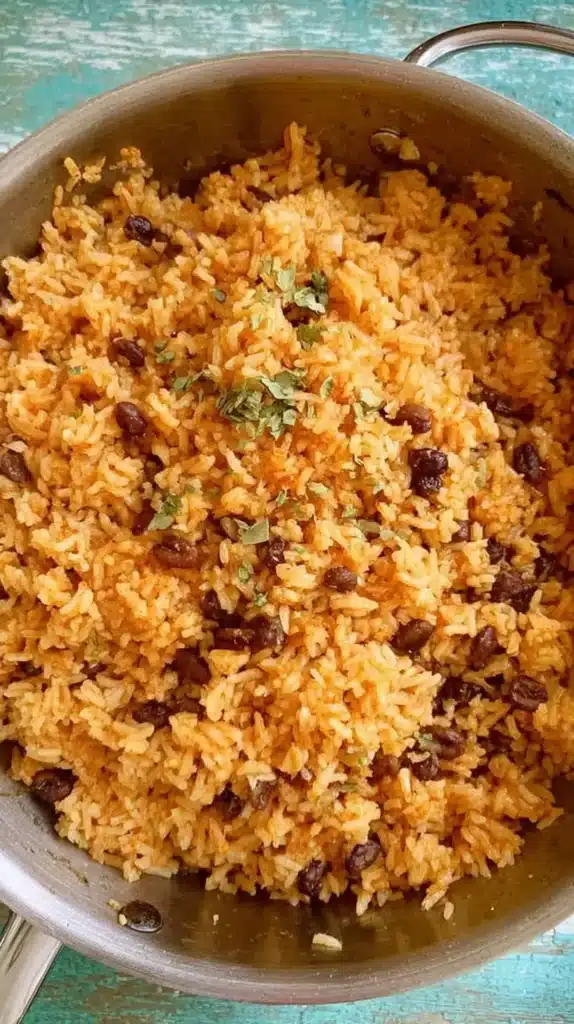
Step-by-Step Instructions
Step 1 – Rinse the rice
Place rice in a bowl and cover with cold water. Swirl with your hand, drain through a fine mesh strainer, and repeat 2–3 times until the water runs mostly clear. Rinsing removes excess starch, helping the grains cook fluffy and separate.
Step 2 – Bloom the sofrito and spices
Set the caldero over medium heat. Add the vegetable oil and warm until shimmering. Stir in the sofrito and cook 2–3 minutes, stirring often, until very fragrant. Add the tomato sauce, sazón with achiote, adobo, garlic powder, onion powder, cumin, oregano, and a few grinds of black pepper. Cook 2 more minutes to bloom the spices and reduce the tomato slightly. The mixture should darken a shade and smell deeply savory.
Step 3 – Add pigeon peas and alcaparrado
Stir in the partially drained pigeon peas and the chopped alcaparrado. Mix well so the briny notes distribute throughout the pot. Let everything sizzle together for 1 minute.
Step 4 – Season the cooking liquid
Pour in hot water to come up about 1 inch above where the rice will sit (you’ll fine-tune in the next step). Add 1 teaspoon kosher salt to start and taste the liquid—it should be a touch saltier than you want the finished rice, since the grains will absorb the seasoning. Adjust salt as needed. Bring the liquid to a lively simmer.
Step 5 – Add the rice and boil
Stir in the rinsed rice, smoothing it into an even layer. Check the liquid level: the water should cover the rice by roughly 1 inch. If it’s shy, add a little more hot water. Let the pot boil gently, uncovered, without stirring, until most of the visible liquid is absorbed and small steam holes form on the surface, 6–10 minutes depending on heat and pot width.
Step 6 – Mound, cap, and cover
Using a spoon, gently scoop the rice from the edges toward the center to form a low mound. This helps limit scorching at the sides while encouraging an even steam. Place a piece of foil directly over the rice like a loose “cap,” then set the lid on top to seal in moisture.
Step 7 – Steam on low
Reduce the heat to low and steam for 20–25 minutes. About halfway through, you can give the pot a light fold: slide the spoon along the edge, lifting some rice from the bottom toward the top to redistribute heat and moisture. Avoid scraping the very bottom—this is where pegao forms. Replace the foil and lid quickly to keep the steam in.
Step 8 – Rest and fluff
Turn off the heat and let the rice rest, covered, for 5–10 minutes. Remove the lid and foil. Fluff with a fork, folding from the edges toward the center. Taste and adjust salt and pepper if needed. Garnish with cilantro or parsley, and serve with lime wedges if you like a bright finish.
Timing and Yield
- Prep time: about 20 minutes
- Cook time: 35–45 minutes (including steam time)
- Total time: about 1 hour
- Yield: roughly 9–12 servings, depending on portion size
Pro Tips for Success
- Rinse, then drain well: Starting with rice that’s rinsed and well-drained reduces stickiness and improves texture.
- Taste the broth before rice goes in: Slightly saltier broth = perfectly seasoned finished rice.
- Use hot water: It maintains the simmer and prevents the pot from dropping below a boil when the rice is added.
- Don’t stir after the boil: Too much agitation breaks grains and turns the pot gluey.
- Foil “cap” under the lid: Traps steam close to the rice and helps cook evenly.
- Respect the bottom: Don’t scrape while folding; leave the base undisturbed so pegao can develop.
- Rest before serving: A brief rest lets moisture redistribute, so the top isn’t wet and the center isn’t dry.
- Know your pot: Calderos run hot. If you’re using a thick Dutch oven, you may need a minute or two more on the steam phase.
Flavor Variations
- Sofrito-forward: Add an extra 2 tablespoons sofrito in Step 2 for a greener, herb-rich profile.
- Tomato-rich: Stir in 1 tablespoon tomato paste during Step 2 for a deeper, slightly sweeter base.
- Cilantro-lime: Finish with chopped cilantro and a squeeze of lime for a brighter, cookout-ready vibe.
- Smoky twist: Add a small pinch of smoked paprika in Step 2 to hint at wood-kissed depth.
- Veggie boost: Fold in 1 cup diced carrots with the peas, or add 1 cup thawed frozen corn during the final 5 minutes of steaming.
Serving Suggestions
- Party platter: Pair with roasted chicken, stewed beans, and a crisp salad.
- Cookout favorite: Serve alongside grilled vegetables and citrusy slaw.
- Brunch spread: Spoon next to scrambled eggs and sliced avocado with lime.
- Weeknight bowl: Top with sautéed peppers and onions for a colorful, fast meal.
Make-Ahead, Reheating, and Scaling
- Make-ahead: Cook up to 2 hours before guests arrive. Keep covered on the lowest heat or in a warm oven (170–200°F / 75–95°C). Splash with a tablespoon of hot water if it dries on the surface.
- Reheating: Add a spoonful of water, cover, and warm gently on the stovetop over low heat, stirring once with a fork. For the microwave, cover loosely and heat in short bursts, fluffing between rounds.
- Scaling up: For a double batch, use a wider pot rather than a taller one to avoid a gummy center. Increase water gradually and watch the boil stage closely.
- Transporting: Wrap the lid with a clean towel to help retain heat and reduce condensation dripping back onto the surface.
Troubleshooting Guide
- Rice too wet: Uncover and cook over low heat for a few minutes to evaporate excess moisture, then rest covered 5 minutes.
- Rice too dry: Fold in 2–3 tablespoons hot water, cover, and steam on very low heat 3–5 minutes.
- Not enough color: Add a pinch more sazón with achiote or a few drops of annatto oil next time for a deeper hue.
- Too salty: Fold in a small portion of unsalted cooked rice or a handful of thawed peas to dilute saltiness.
- No pegao forming: Your heat may be too low or your pot too thick. Next time, let the boil stage go a minute longer and keep the steam phase slightly hotter at the start.
Nutrition Facts (Per Serving)
Estimated for 10 servings; values vary by brand and exact measurements.
| Calories | Protein (g) | Carbs (g) | Fat (g) | Fiber (g) | Sodium (mg) |
|---|---|---|---|---|---|
| 280 | 7 | 49 | 6 | 5 | 620 |
FAQ About Puerto Rican Rice Recipe
What kind of rice is best for Puerto Rican rice?
Medium-grain white rice is traditional and yields a tender, slightly plump texture. Long-grain is a great alternative if you prefer a looser, more separated grain. Avoid short-grain, which tends to be sticky and heavy.
Do I need a caldero to make this recipe?
A caldero is classic and heats quickly, helping form pegao, but a heavy Dutch oven works well. If using a thicker pot, give the steam phase an extra couple of minutes and listen for a gentle sizzle toward the end rather than a hard crackle.
How do I get fluffy rice without clumping?
Rinse the rice thoroughly, avoid stirring once the boil stage begins, and let the rice rest—covered—after steaming. Fluff with a fork, folding gently from the edges in.
Can I use brown rice?
Yes, but the method changes. Brown rice needs more liquid and time. Start with 3¾–4 cups hot water per 3 cups brown rice, boil until craters form, then steam 35–45 minutes on low, adding a few tablespoons more hot water if necessary.
What if I don’t like olives or capers?
You can omit alcaparrado and still have a delicious pot of rice. For a hint of brightness without brine, finish with a squeeze of lime and chopped cilantro.
How do I store leftovers?
Cool completely and refrigerate in an airtight container for 3–4 days. Reheat with a spoonful of water to restore steam and softness. For longer storage, freeze in quart bags up to 2 months; thaw overnight in the refrigerator and reheat gently.
Why is my rice pale instead of golden?
This usually means not enough achiote. Double-check your sazón packets or add a small pinch of ground annatto next time. Tomato paste in Step 2 can also deepen the color.
What should I serve with Puerto Rican rice?
Roasted chicken, stewed beans, grilled vegetables, and crisp salads are all terrific partners. For a casual lunch, spoon the rice into bowls and top with sliced avocado and a squeeze of lime.
TastyInspo Notes
- Sofrito first: Give sofrito time to sizzle and deepen; it’s the heart of the aroma.
- Season the liquid: The broth should taste a little saltier than you want the finished rice—those grains drink it in.
- Foil cheat: A loose foil cap under the lid creates a mini steam tent for even cooking.
- Hands off: After the initial stir, resist stirring. Fold once mid-steam if needed, but don’t scrape the bottom.
- Pegao pride: A gentle sizzle at the end is your sign; rest a few minutes before fluffing so the crust stays intact.
- Bright finish: A squeeze of lime and a sprinkle of cilantro wake up leftovers and party platters alike.
- Batch smart: For big gatherings, make two medium pots instead of one very tall pot for even texture throughout.
- Reheat like a pro: A spoonful of water + low heat + a quick fluff brings yesterday’s rice back to life.
Final Thoughts
This Puerto Rican rice recipe brings island comfort to your table with simple steps and reliable results. Sofrito perfumes the kitchen, sazón with achiote paints the grains a warm golden hue, and alcaparrado adds a gentle briny sparkle. Whether you’re feeding a crowd or planning make-ahead sides, this pot delivers fluffy rice, tender peas, and that irresistible pegao that everyone reaches for. Keep it classic, or play with the variations to match your menu. Either way, you’ll have a beautiful bowl of arroz con gandules ready to share.