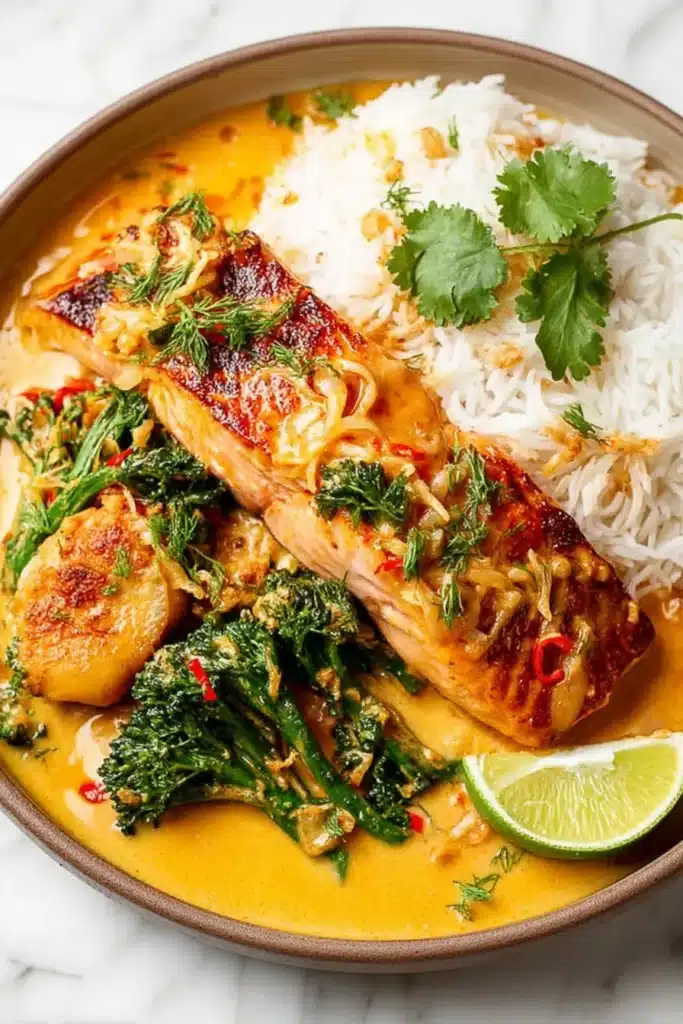
This Salmon Coconut Curry is a Thai-inspired weeknight hero: tender salmon nestled in a silky red curry–coconut sauce with ginger, garlic, onion, and a bright pop of lime. It’s ready in about 35 minutes, layered with cozy aromatics and fresh herbs, and easy to customize with your favorite vegetables. Spoon it over fluffy jasmine rice or pair with crisp veggies for a lighter bowl—the result is creamy, savory, gently spicy, and downright satisfying.
Why You’ll Love This Salmon Coconut Curry
- Fast but special: A restaurant-style curry in ~35 minutes using mostly pantry staples.
- Creamy, clingy sauce: Full-fat coconut milk simmers with red curry paste for a velvety, spoon-coating finish.
- Tender, never dry salmon: Brief sear for color, gentle finish in sauce—juicy flakes every time.
- Flexible veggies: Spinach wilts right in; bell peppers, snap peas, or zucchini all work.
- Balanced flavor: Aromatics and curry paste bring warmth; lime and herbs keep it bright.
- Weeknight-friendly cleanup: One skillet, one pot of rice, and dinner’s done.
What Is Salmon Coconut Curry?
Salmon Coconut Curry is a Thai-inspired stovetop dish where salmon fillets or chunks simmer briefly in a rich sauce made from red curry paste and coconut milk. The paste (a blend of chiles and aromatics) is bloomed in a little oil with onion, ginger, and garlic to unlock deeper flavor. Coconut milk adds body and natural sweetness, while small touches—like a pinch of sugar for roundness, a splash of fish sauce for savory backbone, and lime for lift—balance the heat. The fish finishes gently in the sauce so it stays tender and flakes with a fork. Served over jasmine rice, it’s comforting yet fresh, with flavors that feel complex without complicated steps.
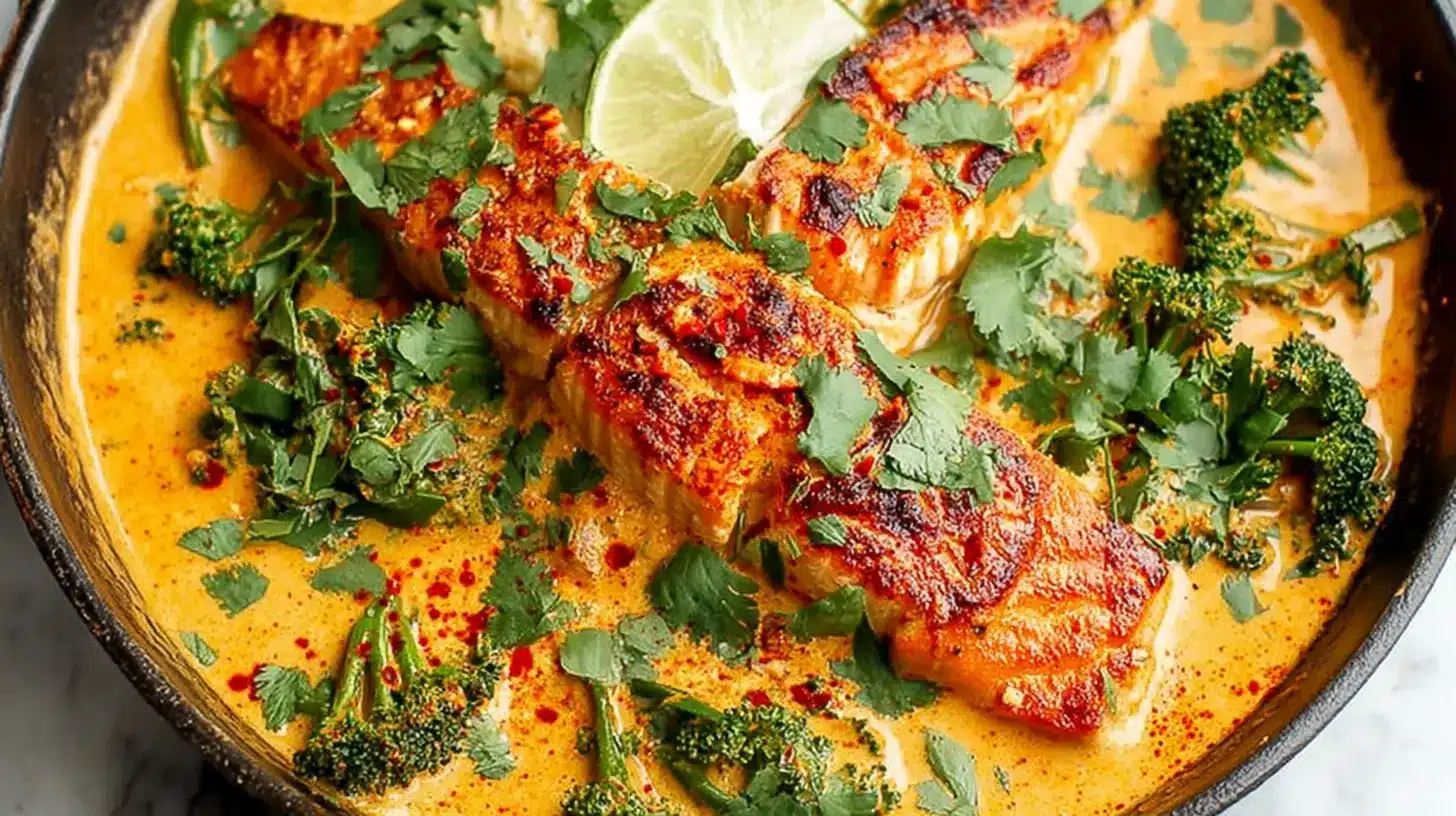
Salmon Coconut Curry
Ingredients
Salmon & Aromatics
- 4 fillets center-cut salmon fillets 5–6 oz each or a 1½–2 lb side cut into chunks
- 1 Tbsp neutral oil or light olive oil
- 0.5 medium onion, finely diced
- 1 Tbsp fresh ginger, grated
- 3 cloves garlic, minced
- 2 Tbsp Thai red curry paste adjust to taste
Sauce & Seasoning
- 13.5 oz full-fat coconut milk shake well
- 0.5 cup low-sodium chicken or vegetable broth
- 1 tsp fish sauce or tamari to taste
- 1 tsp brown sugar or maple syrup
- 1 whole lime, juiced zest optional
- 0.25 tsp fine sea salt
- 1 pinch black pepper
Vegetables & Finish
- 1 medium red bell pepper, thinly sliced
- 2 cups baby spinach
- 0.25 cup fresh cilantro leaves, chopped plus more for serving
- 0.25 cup Thai basil or sweet basil, torn optional
- 4 wedges lime for serving
Instructions
- Step 1 – Sear the salmon: Pat salmon dry and lightly season with salt and pepper. In a large skillet over medium-high, heat oil and sear salmon 1–2 minutes per side until golden. Transfer to a plate (it will finish cooking in the sauce).
- Step 2 – Cook the aromatics: Lower heat to medium. Add onion to the same skillet. Sauté 2–3 minutes until translucent. Stir in ginger and garlic; cook 30 seconds until fragrant.
- Step 3 – Bloom curry paste: Add red curry paste and stir 1–2 minutes to deepen flavor and color.
- Step 4 – Simmer the sauce: Stir in coconut milk and broth. Bring to a gentle simmer. Add fish sauce, brown sugar, salt, and pepper. Simmer 3–5 minutes to thicken slightly. Taste and adjust seasoning.
- Step 5 – Add vegetables: Stir in sliced red bell pepper. Simmer 2–3 minutes until tender-crisp.
- Step 6 – Finish salmon in sauce: Nestle salmon into sauce. Reduce heat to medium-low and cook 3–5 minutes, spooning sauce over fish, until it flakes easily. Stir in spinach to wilt. Turn off heat. Add lime juice and zest if using. Top with cilantro and basil.
- Step 7 – Serve: Spoon over jasmine rice or vegetables. Garnish with more herbs and serve with lime wedges.
Notes
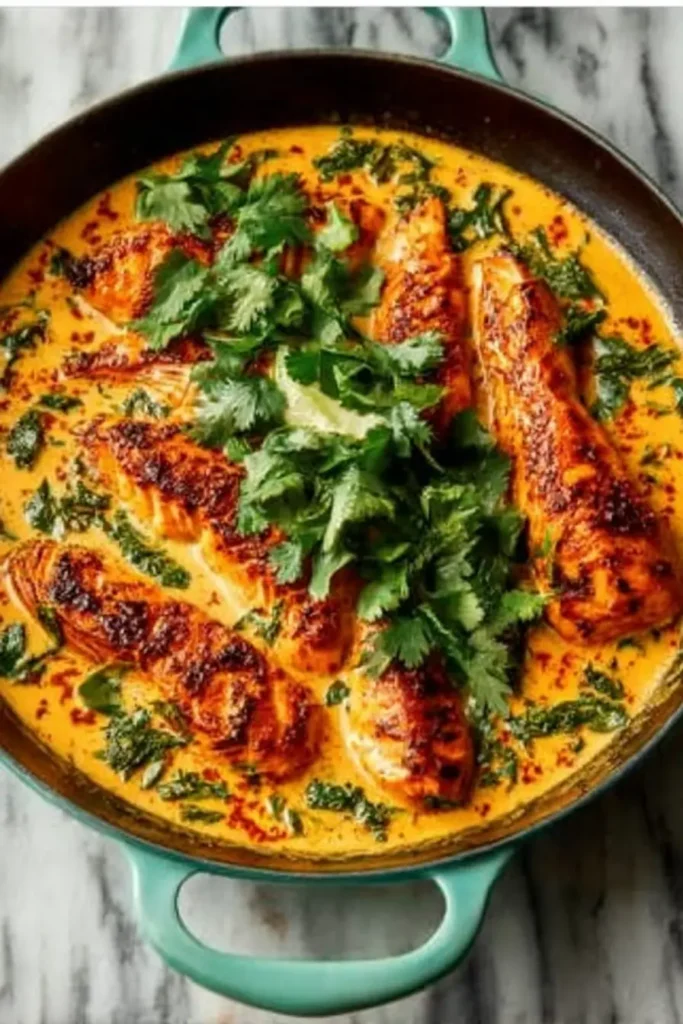
Ingredients for Salmon Coconut Curry
Salmon & Aromatics
- 4 center-cut salmon fillets, 5–6 oz each (or a 1½–2 lb side cut into 2-inch chunks)
- 1 Tbsp neutral oil (or light olive oil)
- ½ medium onion (or 1 small), finely diced
- 1 Tbsp fresh ginger, finely grated
- 3 garlic cloves, minced
- 2–3 Tbsp Thai red curry paste (mild to medium; adjust to taste)
Sauce & Seasoning
- 1 can (13.5–14 oz) full-fat coconut milk (shake well)
- ½ cup low-sodium chicken or vegetable broth (plus more as needed)
- 1–2 tsp fish sauce (start small; add more to taste)
- 1 tsp brown sugar or maple syrup (balances heat and acidity)
- 1 lime, juiced (zest optional for extra pop)
- ¼ tsp fine sea salt, to taste
- Freshly ground black pepper, to taste
Vegetables & Finish
- 1 red bell pepper, thinly sliced (or 1½ cups mixed sliced peppers)
- 2 cups baby spinach (or kale, finely shredded)
- ¼ cup fresh cilantro leaves, chopped (plus more for serving)
- ¼ cup Thai basil or sweet basil, torn (optional but lovely)
- Lime wedges for serving
To Serve
- Jasmine rice or basmati rice
- Optional: cucumber ribbons, steamed snap peas, or a quick carrot salad for crunch
Serves 4.
Ingredient Notes (Smart Substitutions & Tips)
- Salmon cut: Center-cut fillets cook evenly. If using a whole side, cut into uniform chunks so all pieces finish at the same time.
- Curry paste heat: Brands vary. Start with 2 Tbsp; add a little more for bigger flavor once the coconut milk is in. If you prefer very mild curry, begin with 1½ Tbsp and build up.
- Coconut milk: Full-fat gives the best body and shine. Light coconut milk works, but the sauce will be thinner; simmer a bit longer to reduce.
- Umami balance: Fish sauce adds depth. If you prefer to skip it, season with extra salt and a splash of soy-style tamari; adjust to taste.
- Sweetness: A small pinch of sugar rounds edges without making the dish sweet; don’t skip it unless your curry paste is already quite mellow.
- Vegetables: Bell peppers and spinach are weeknight-friendly. Try zucchini half-moons, green beans (blanched), broccoli florets (small), or snap peas; add firmer veg earlier and delicate greens near the end.
- Fresh herbs: Cilantro is classic for finishing; Thai basil brings a soft anise note that pairs beautifully with coconut.
- Gluten-aware: Use tamari if you replace fish sauce with a soy-style seasoning; check your curry paste label if needed.
- Rice: Rinse jasmine rice until the water runs mostly clear, then cook with a 1:1.25–1:1.33 rice-to-water ratio for fluffy grains.
Step-by-Step Instructions
Step 1 – Season and sear the salmon
Pat salmon dry. Lightly season both sides with a pinch of salt and pepper. Heat a large, deep skillet over medium-high with 1 Tbsp oil. Add salmon and sear 1–2 minutes per side until just golden. Transfer to a plate (it will finish in the sauce). Don’t cook through.
Step 2 – Build the aromatic base
Lower heat to medium. In the same skillet, add onion and a tiny splash of oil if the pan looks dry. Sauté 2–3 minutes until translucent. Stir in ginger and garlic; cook 30–45 seconds until fragrant.
Step 3 – Bloom the curry paste
Add red curry paste. Stir and mash it into the aromatics 1–2 minutes to bloom in the hot fat. You should smell it deepen and see it stain the onions a vivid red.
Step 4 – Simmer the sauce
Pour in coconut milk and broth, whisking to dissolve the paste. Bring to a gentle simmer. Stir in fish sauce (start with 1 tsp), brown sugar, a pinch of salt, and black pepper. Simmer 3–5 minutes to slightly thicken and meld. Taste and adjust: add a pinch of salt or another ½–1 tsp fish sauce if it tastes flat; add a splash of broth if too thick.
Step 5 – Add vegetables
Stir in the sliced bell pepper. Simmer 2–3 minutes until crisp-tender. If using heartier veg (e.g., zucchini or green beans), add them earlier so they soften; if using spinach or kale, add in Step 6.
Step 6 – Finish the salmon in the sauce
Nestle the seared salmon into the simmering sauce. Reduce heat to medium-low and cook 3–5 minutes, spooning sauce over the fish, until the salmon flakes easily with a fork (internal temp around 125–130°F / 52–54°C for medium). Gently fold in the spinach to wilt. Turn off heat. Stir in lime juice (and zest if using). Sprinkle with cilantro and basil.
Step 7 – Serve
Spoon hot rice into bowls, ladle curry over the top, and finish with extra herbs and lime wedges. Add crunchy veggies on the side for texture contrast.
Pro Tips for Success
- Bloom the paste: That minute of stirring in oil unlocks deeper flavor than dropping it straight into liquid.
- Two-stage salmon: A quick sear adds color and locks in moisture; finishing in the sauce keeps the texture tender.
- Simmer, don’t boil: A lively gentle simmer preserves coconut milk’s silkiness and prevents the sauce from breaking.
- Season in layers: Salt lightly up front; adjust fish sauce, salt, and lime at the end when flavors are concentrated.
- Control thickness: If the sauce tightens, whisk in a splash of broth; if too thin, simmer uncovered a minute or two.
- Add greens last: Spinach and basil keep their color and fragrance if you add them off heat.
- Serve immediately: Curry stays glossy and vibrant right after finishing; rice should be ready when the salmon is.
Flavor Variations
- Golden Turmeric Twist: Add ½ tsp ground turmeric with the paste for warm color; finish with extra lime.
- Pineapple & Pepper: Fold in 1 cup pineapple tidbits and a pinch of chili flakes for sweet-heat contrast.
- Green Curry Vibes: Swap the red curry paste for green; add zucchini and snap peas; garnish with extra basil.
- Vegetable-Forward: Use 1¼ lb salmon and increase peppers to 2, plus 1 cup broccoli florets. Add ¼ cup extra broth to keep the sauce balanced.
- Citrus-Herb Pop: Stir 1 tsp lime zest and a handful of cilantro stems (finely chopped) into the sauce right before the salmon goes in—the stems add big aroma.
- Creamier Finish: Stir 1–2 Tbsp coconut cream from the top of the can into the sauce at the end for extra gloss.
Serving Suggestions
- Classic bowl: Jasmine rice + salmon coconut curry + cilantro and basil + lime wedge.
- Light plate: Serve the salmon and sauce over steamed green beans or a bed of sautéed cabbage; add cucumber ribbons for crunch.
- Grain swap: Spoon over coconut-scented quinoa or brown rice for extra fiber.
- Fresh topper bar: Set out sliced scallions, chopped cilantro, lime wedges, and thin red chile so everyone can customize heat and brightness.
- Leftover rice cakes: Chill extra rice, then pan-sear into little cakes; top with warmed curry for lunch.
Storage and Freezing Instructions
- Store: Refrigerate curry in an airtight container for up to 3 days.
- Reheat: Warm gently on the stovetop over low heat until hot (avoid vigorous boiling). If sauce thickened in the fridge, loosen with a splash of broth or water.
- Freeze: Fish texture softens slightly after freezing; if you plan to freeze, consider cooking salmon just shy of done. Freeze curry in portions up to 2 months; thaw overnight and reheat gently, adding a squeeze of lime to refresh.
Nutrition Facts (Per Serving)
Estimated for 4 servings using 4 salmon fillets, full-fat coconut milk, peppers, spinach, and the seasonings listed. Values vary by brand and portion.
| Calories | Protein (g) | Carbs (g) | Fat (g) | Fiber (g) | Sodium (mg) |
|---|---|---|---|---|---|
| 480 | 35 | 10 | 33 | 2 | 610 |
Add ½ cup cooked jasmine rice per serving (~100–120 kcal, ~22–26 g carbs) if desired.
FAQ About Salmon Coconut Curry
Can I use skin-on salmon?
Yes. Sear skin-side down first until crisp, then flip briefly. You can finish with the skin on, or slide a spatula between flesh and skin to remove before nestling into the sauce.
How spicy is this curry?
Mild-medium as written (brand-dependent). For extra heat, add a little more curry paste or a pinch of crushed red pepper. For milder curry, start with less paste and add more coconut milk or a touch more sugar to soften the edges.
Can I make this with canned salmon?
You can. Drain well, add to the sauce during the last minute just to warm through, and be gentle when stirring—it flakes easily.
What if my sauce looks separated?
Keep the heat gentle. If you see slight separation, whisk in a tablespoon of cold coconut milk or a splash of broth off the heat to bring it back together.
Can I substitute another fish or protein?
Firm white fish (cod, halibut) or shrimp work well; adjust cook time (shrimp finish in 2–3 minutes). Tofu cubes can be simmered right in the sauce; press them briefly first for best texture.
Do I need lemongrass or specialty ingredients?
Not required for this quick version. If you have lemongrass, bruise a stalk and simmer it with the sauce (remove before serving) for extra citrusy aroma.
How do I keep the salmon from overcooking?
Pull it as soon as it flakes and feels just set in the center (125–130°F). Carryover heat will finish the job.
TastyInspo Notes
- Taste the paste first: Brands differ; a quick taste tells you if you’ll need more lime, sugar, or salt at the end.
- Zest, then juice: If using lime zest, add it with the aromatics for fragrance that blooms through the sauce.
- Spoon and baste: While the salmon finishes, spoon curry over the top so every bite is seasoned.
- Herbs at the end: Cilantro and basil wilt quickly—add off heat for bright color and aroma.
- Rice timing: Start the rice first; when it steams while you cook, both finish together.
- Leftover glow-up: Flake cold salmon and toss with a spoon of curry and a squeeze of lime, then pile onto greens for a quick next-day salad.
Final Thoughts
This Salmon Coconut Curry marries comfort and freshness in one skillet: a rich, silky coconut sauce, the gentle warmth of red curry, and perfectly tender salmon that flakes at the touch of a fork. With a short ingredient list and a streamlined method, it proves you don’t need hours—or complicated steps—to create deep flavor. Once you master the rhythm—sear, bloom, simmer, finish—you can riff endlessly with vegetables, herbs, and citrus. Keep curry paste and coconut milk in your pantry, and this will become a dependable, repeat-worthy dinner that’s as practical as it is delicious.