Tri Tip Steak is a West Coast classic that delivers a bold, beefy crust and a juicy, rosy interior with minimal effort—just a smart spice rub, confident heat, and a careful slice against the grain.
Why You’ll Love This Tri Tip Steak
- Tender, juicy results: A two-zone cook (hard sear, gentle finish) locks in moisture.
- Big flavor, simple pantry rub: Everyday spices create a steakhouse-worthy crust.
- Flexible methods: Grill or oven—both give you a gorgeous sear and tender center.
- Weeknight to weekend: Fast enough for a weeknight, special enough for guests.
- Make-ahead friendly: Rub and refrigerate to build flavor while you live your life.
- Reliable cues: Clear temps, timing, and slicing instructions take out the guesswork.
What Is Tri Tip Steak?
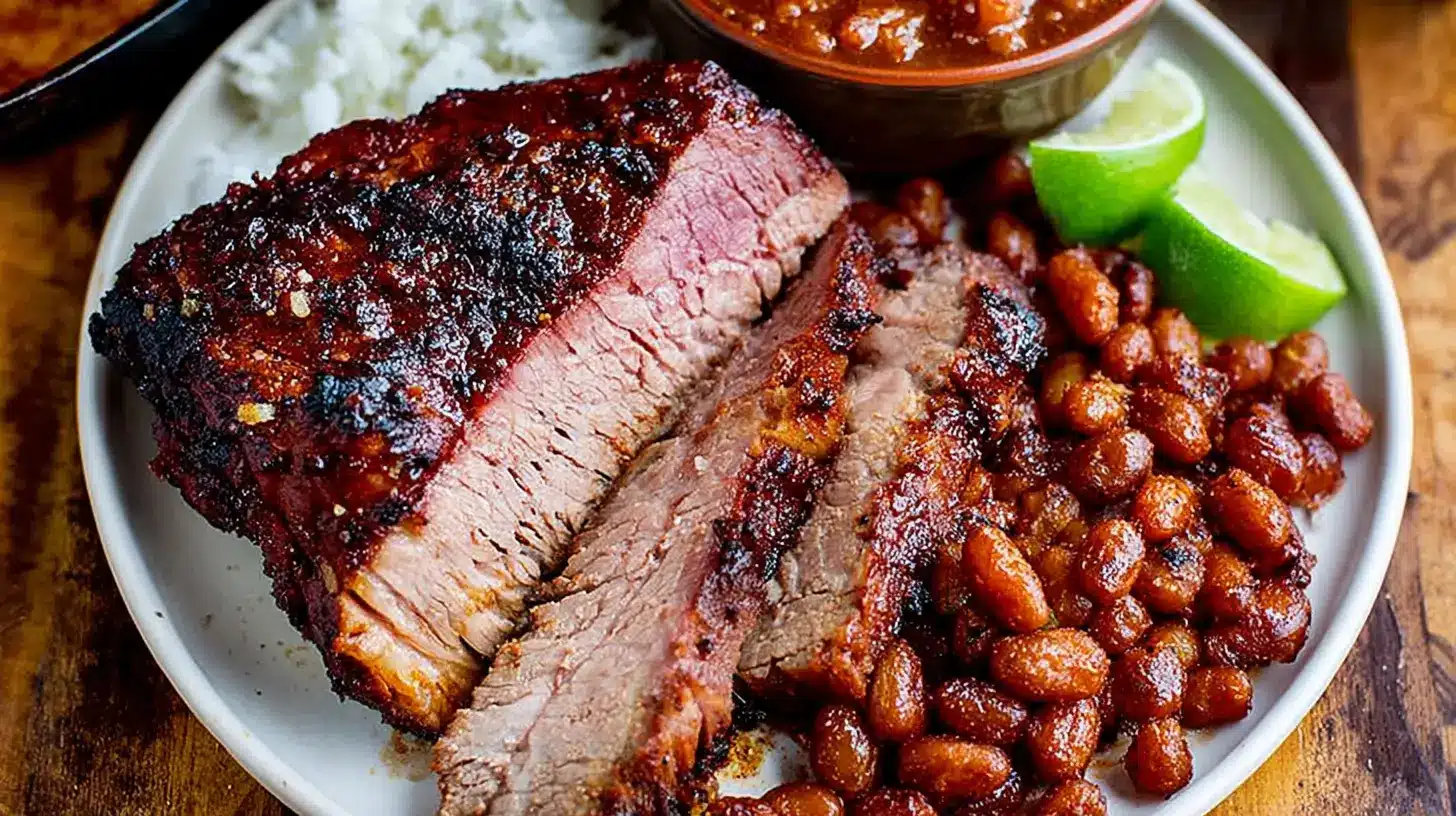
Tri tip is a triangular, moderately marbled cut from the bottom sirloin. It cooks quickly, slices beautifully, and offers a meaty, satisfying chew—especially when you hit the sweet spot between a smoky crust and a warm-pink center. In California’s Central Coast, it’s often cooked Santa Maria–style: a simple seasoning, a hot sear over live fire, and a gentle finish to medium-rare or medium.
Because the grain runs in different directions across the roast, how you slice matters as much as how you cook. We’ll walk through that step so every bite is tender.
Tri Tip Steak
Ingredients
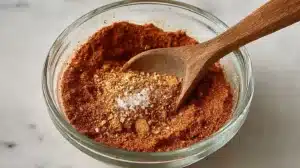
For the Rub
- 1 tbsp kosher salt Diamond Crystal; use 2 tsp for denser salts
- 2 tsp freshly ground black pepper
- 2 tsp garlic powder
- 1 tsp onion powder
- 1 tsp smoked paprika or sweet paprika
- 1 tsp brown sugar optional
- 0.5 tsp dried oregano or parsley
- 0.25 tsp cayenne or red pepper flakes optional
For the Roast
- 1 tri tip roast 2¼–2¾ lb (1.0–1.25 kg), trimmed
- 0.25 cup olive oil divided—some for rub, some for searing
Finishing
- flaky salt optional
- lemon wedges optional
- chopped parsley optional garnish
Instructions
- Step 1 – Trim, Pat Dry, and Rub: Pat the tri tip dry. Mix rub ingredients in a bowl. Drizzle 1–2 tbsp oil over meat and coat with rub. Tuck thin tail under for even thickness. Optional: wrap and refrigerate 2–24 hours.
- Step 2 – Choose Your Method: Grill or oven both work. Each starts with a hard sear followed by gentle cooking to finish.
- Grill Method: Preheat a two-zone grill to 450–500°F. Sear tri tip 3–5 minutes per side over direct heat. Move to indirect heat, close lid, and cook until desired internal temp is reached (start checking at 15 minutes). Rest 10–15 minutes before slicing.
- Oven Method: Preheat oven to 400°F (205°C). Heat oven-safe skillet over medium-high. Sear tri tip 3–4 minutes per side. Transfer to oven and roast 15–25 minutes until desired internal temp is reached. Rest 10–15 minutes before slicing.
- Step 3 – Slice Correctly: Identify the grain change, cut roast into two pieces at the seam, then slice each piece perpendicular to the grain into ¼–½ inch thick slices.
Notes

Ingredients for Tri Tip Steak
For the Rub
- 1 tbsp kosher salt (Diamond Crystal; use 2 tsp if using a denser brand)
- 2 tsp freshly ground black pepper
- 2 tsp garlic powder
- 1 tsp onion powder
- 1 tsp smoked paprika (or sweet paprika)
- 1 tsp brown sugar (optional, for balanced crust)
- ½ tsp dried oregano or parsley
- ¼ tsp cayenne or red pepper flakes (optional)
For the Roast
- 1 whole tri tip, about 2¼–2¾ lb (1.0–1.25 kg), trimmed of silver skin
- ¼ cup olive oil (or avocado oil), divided—some for rub, some for searing/grill grates
Finishing
- Flaky salt to finish (optional)
- Lemon wedges for brightness (optional)
- Chopped parsley for a fresh pop (optional)
Ingredient Notes
- Salt: If you’re using a denser kosher salt than Diamond Crystal, reduce the measure slightly; fine table salt is stronger and not recommended in the same quantity.
- Sugar: A touch of brown sugar encourages even browning and a balanced crust; it won’t make the roast sweet.
- Oil: Choose a neutral, high-heat oil for searing; olive oil works if you keep an eye on heat.
- Tri tip fat cap: Some roasts include a thin fat cap. For grilling, you can trim it down to ~⅛ inch to limit flare-ups; for roasting, it can stay on to self-baste.
Ingredient Notes (Substitutions & Variations)
- Herbs: Swap oregano for thyme or rosemary (finely chopped).
- Heat level: Adjust cayenne to taste; even a pinch wakes up the crust.
- No smoked paprika? Use sweet paprika plus a tiny pinch of ground cumin for a warm, smoky impression.
- Oil swap: Avocado or grapeseed oil handle high heat well if you’re grilling hot and fast.
Step-by-Step Instructions
Step 1 – Trim, Pat Dry, and Rub
Blot the tri tip very dry with paper towels. Mix the rub in a small bowl. Drizzle 1–2 tbsp oil over the roast and massage to coat lightly, then sprinkle the rub all over, pressing it in so it adheres. Tuck the thinner “tail” under if it’s very narrow to even out thickness.
Make-ahead: Wrap and refrigerate 2–24 hours. A longer rest deepens flavor. If you’re short on time, even 15–30 minutes helps.
Step 2 – Choose Your Method
You can achieve superb results on the grill or in the oven. Both use the same principle: strong initial sear, then a gentler finish to the exact temperature you want.
Method A: Grill (Two-Zone Fire)
Step 2A – Preheat & Set Zones
Preheat the grill for a two-zone setup: one side ripping hot (direct heat), the other cooler (indirect heat). Clean and oil grates. Aim for 450–500°F over direct heat.
Step 3A – Sear
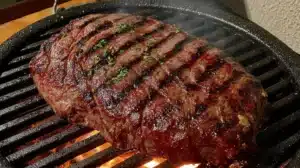
Place the tri tip over direct heat, fat side down if present. Sear 3–5 minutes per side, rotating once on each side to develop even browning. Manage flare-ups by moving briefly to indirect heat when needed.
Step 4A – Finish Over Indirect Heat
Move the roast to the indirect side. Close the lid and cook until an instant-read thermometer in the thickest part reads your target pull temperature (see “Doneness Guide” below). Start checking after about 15 minutes. Flip once midway for even cooking.
Step 5A – Rest
Transfer to a carving board, tent loosely with foil, and rest 10–15 minutes before slicing.
Method B: Oven (Sear-Then-Roast)
Step 2B – Preheat
Heat oven to 400°F (205°C). Set a large oven-safe skillet (cast iron is ideal) over medium-high heat on the stovetop.
Step 3B – Sear
Add a thin film of oil to the hot skillet. Sear the tri tip 3–4 minutes per side until deep brown. If it has a fat cap, render the edge for ~60 seconds.
Step 4B – Roast
Transfer the skillet to the oven and roast 15–25 minutes (time varies by thickness and starting temp), checking internal temperature early and often. Pull when the center hits your target pull temperature.
Step 5B – Rest
Move to a board, tent loosely, and rest 10–15 minutes.

Doneness Guide (Pull Temps vs. Final Temps)
Carryover heat will raise temperature 5–7°F (3–4°C) while resting.
- Rare: Pull at 120–123°F (49–51°C) → finishes around 125–128°F (52–53°C)
- Medium-rare (recommended): Pull at 128–130°F (53–54°C) → finishes around 133–135°F (56–57°C)
- Medium: Pull at 135–138°F (57–59°C) → finishes around 140–143°F (60–62°C)
Tri tip shines at medium-rare to medium—juicy, tender, and still robustly beefy.
How to Slice Tri Tip (Critical!)
Tri tip’s grain changes direction. Slicing correctly is the key to tenderness.
- Place the rested roast on the board with the point of the triangle facing you.
- Identify the natural seam where the grain shifts (often about two-thirds of the way across).
- Cut the roast into two pieces along that seam.
- Rotate each piece and slice perpendicular to the grain, ¼–½ inch thick.
- Keep your knife angled slightly to create wider, steakhouse-style slices.
If you see long stringy fibers in a slice, you likely cut with the grain—rotate the piece and try again.
Pro Tips for Success
- Dry surface = better browning: Moisture fights crust. Pat dry before rubbing and again before searing if needed.
- Mind hot spots: On the grill, rotate the roast to avoid scorching thin edges. In the oven, use the center rack and a heavy pan for even heat.
- Thermometer = confidence: Tri tip goes from perfect to over in minutes. Check early; trust the numbers.
- Rest is non-negotiable: Juices redistribute into the fibers during rest, giving you moist, glistening slices instead of a juice-soaked board.
- Finish bright: A tiny squeeze of lemon or a pinch of flaky salt when slicing wakes up the rich beefiness.
- Plan for leftovers: Cold tri tip slices are phenomenal in salads, sandwiches, and grain bowls.
Flavor Variations
- Herb-Garlic Boost: Add 1 tsp finely chopped fresh rosemary and 1 tsp thyme to the rub; finish with chopped parsley.
- Smoky-Chile: Swap smoked paprika for chipotle powder and add ½ tsp ground cumin.
- Citrus Pepper: Add 1 tsp lemon zest to the rub and more fresh-cracked pepper; finish with a lemon squeeze.
- Coffee Crust: Add 1 tsp very finely ground coffee to the rub for a subtle roasty edge (use sparingly).
- Mushroom Umami: Stir 1 tsp mushroom powder into the rub for a savory lift.
- Gentle Heat: Add a pinch of cayenne or red pepper flakes for a quiet warmth without overwhelming the beef.
Serving Suggestions
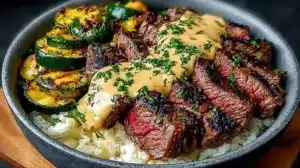
- Classic plate: Slices of tri tip with roasted potatoes, grilled asparagus, and a crisp salad.
- Veg-forward: Pile onto a platter with charred broccolini, tomatoes, and herb-dressed greens.
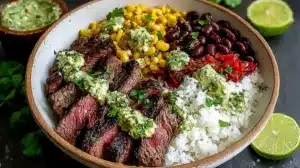
- Grain bowl: Serve over quinoa or rice with quick-pickled onions, cucumbers, and a drizzle of pan juices.
- Steak tacos: Thin slices with warm tortillas, shredded lettuce, salsa, and a squeeze of lemon for brightness.
- Leftover lunch: Cold slices layered on toasted bread with mustard, lettuce, and tomatoes.
Storage and Reheating Instructions
- Refrigerate: Store cooled leftovers in an airtight container up to 4 days.
- Reheat gently: Warm slices in a covered skillet over low heat with a splash of broth, just until heated through. Avoid high heat, which can toughen the meat.
- Freeze: Wrap sliced tri tip tightly and freeze up to 1 month. Thaw overnight in the fridge and rewarm briefly.
Nutrition Facts (Per Serving)
Approximate values for 1 of 6 servings from a 2½ lb roast; values vary by trim and rub.
| Calories | Protein | Carbs | Fat | Fiber | Sodium |
|---|---|---|---|---|---|
| ~360 | ~34 g | ~2 g | ~24 g | ~0 g | ~480 mg |
FAQ About Tri Tip Steak
What’s the best way to season tri tip?
Keep it simple: kosher salt, black pepper, garlic powder, and paprika form a backbone that highlights the beef’s natural flavor. Add small accents like dried herbs or a pinch of cayenne if you want. Season at least 20–30 minutes before cooking; longer is better.
Do I need to marinate tri tip?
A dry rub is usually enough. Marinating can be helpful if you prefer strong herbal notes, but it isn’t required for tenderness—proper cooking and slicing do more for texture than most marinades.
How do I avoid flare-ups on the grill?
Trim any loose exterior fat, keep a cool zone ready, and sear with the lid open so you can manage flames. If flare-ups occur, move the roast to indirect heat until they subside, then return to direct briefly if you still want more crust.
Can I cook tri tip to well-done?
You can, but this cut shines at medium-rare to medium. Beyond that, it becomes firmer. If you prefer a higher doneness, slice thinner and serve with plenty of juices to keep it enjoyable.
Why did my tri tip turn out tough?
Most likely it was overcooked or sliced with the grain. Pull at the correct temperature and respect the rest. Then cut the roast into two pieces along the grain change and slice each piece across the grain for tenderness.
Should I leave the fat cap on?
For oven roasting, a thin cap helps baste the meat. For grilling, trimming the cap to about ⅛ inch reduces flare-ups while still rendering flavor. Either way, remove only what’s loose or overly thick.
Can I reverse sear tri tip?
Absolutely. For a thicker roast, cook indirectly at 250–275°F until 10–15°F shy of your target temperature, then sear over high heat for 1–2 minutes per side to finish the crust. This method yields excellent edge-to-edge doneness.
How long should I rest the meat?
Rest 10–15 minutes. This allows juices to redistribute so slices stay moist. Tent loosely with foil; don’t wrap tightly or you’ll trap steam and soften the crust.
What sides pair best?
Roasted or grilled vegetables, a crisp salad with lemony dressing, herbed potatoes, or a simple rice pilaf all complement tri tip’s richness without overpowering it.
Can I make a quick pan sauce?
Yes—especially with the oven method. After searing and roasting, pour off excess fat, add a splash of broth to the hot skillet, and scrape up the browned bits. Simmer briefly to reduce and spoon over slices for a light, savory finish.
TastyInspo Notes
- Dry-brine overnight: Salt the roast and refrigerate uncovered on a rack to dry the surface for next-level browning.
- Even shape hack: If the “tail” is very thin, tuck and tie it so the roast cooks more evenly.
- Thermal stair-step: If the center stalls below your target temp, shift the roast closer to the hot zone rather than back to full direct heat.
- Finish bright: A few drops of lemon make flavors pop and keep the richness lively.
- Slice station: Warm your cutting board with hot water, dry it, then slice—warm boards keep meat juices more fluid and help presentation.
- Leftovers glow-up: Re-crisp slices quickly in a hot skillet for steak-and-veg bowls or fold into warm tortillas with crunchy slaw.
Final Thoughts
Tri Tip Steak rewards simple, thoughtful technique. With a straightforward rub, a confident sear, and a gentle finish, you’ll capture the cut’s signature balance: bold, smoky crust outside; tender, juicy slices within. Respect the grain when you carve, let the thermometer lead, and you’ll have a fail-safe centerpiece that turns ordinary dinners into memorable meals—California spirit, any night of the week.