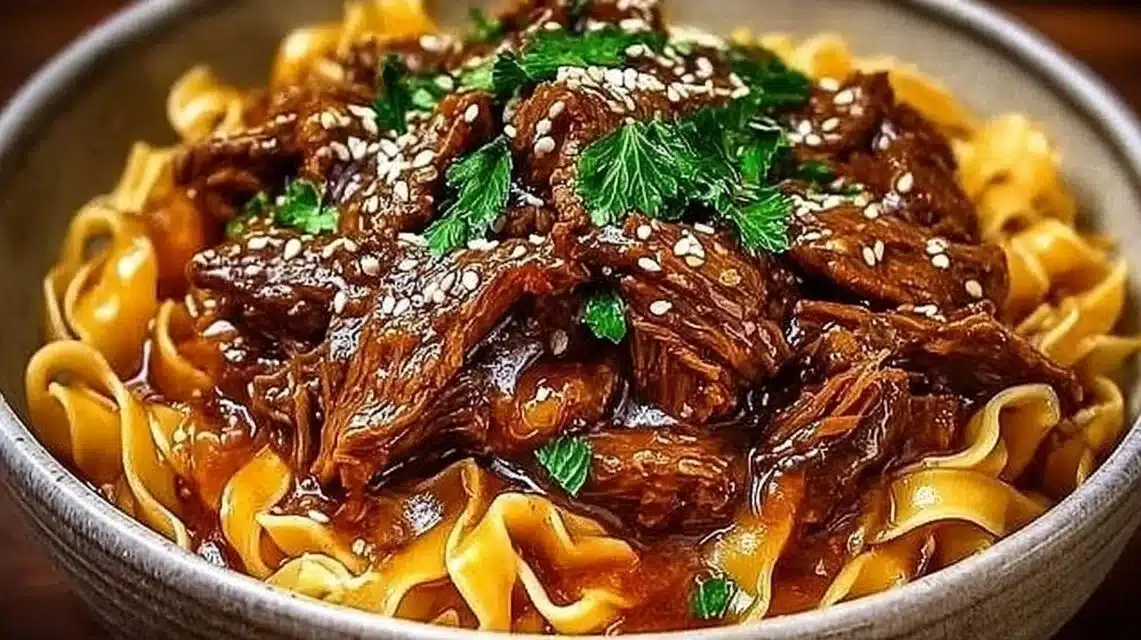
This Korean Beef Noodles dish brings warm, savory comfort in every bowl. Rich, tender beef simmers in a simple soy-ginger broth and sits on a bed of springy egg noodles, with sweet carrots and crisp bell peppers for texture. The sesame oil and garlic add a gentle toasted note while green onions give a fresh finish. It’s easy because it uses one pot for the beef base and quick-cooked noodles on the side, so the effort is small and the payoff is big. Serve it in deep bowls with extra green onions and a squeeze of lime for brightness, or try it with a light kimchi on the side for contrast. If you liked a quick weeknight take on Korean flavors, check this similar Korean Ground Beef Bowl recipe for another fast option.
Why You’ll Love This Korean Beef Noodles
- Hands-off simmer: the beef softens with long, low heat so you can relax while it cooks.
- Deep, savory flavor: soy sauce, ginger, and garlic build a classic umami base.
- Easy texture contrast: tender beef with springy egg noodles and crisp vegetables.
- Weeknight friendly: mostly hands-off simmering and quick noodle cook time.
- Flexible to what you have: use chuck or brisket and whatever bell pepper color you like.
- One main pot for the beef keeps cleanup low; noodles cook separately for perfect texture.
- Crowd-pleaser: hearty enough for dinner, cozy enough for comfort food nights.
What Is Korean Beef Noodles?
Korean Beef Noodles here is a simple, homestyle bowl of braised beef served over egg noodles, inspired by Korean flavors rather than a strict traditional dish. The beef is browned, then simmered in beef broth with soy sauce and ginger until tender. The result is juicy beef in a savory, lightly seasoned broth that soaks into the noodles. Texture plays a big role: soft meat, tender noodles, and crisp vegetables create balance. Think cozy weeknight comfort with a Korean flavor profile—garlic-forward, lightly seasoned soy richness, and a finish of sesame aroma. It’s great for family dinners, meal prepping, or serving when you want warm and satisfying without fuss.
Ingredients for Korean Beef Noodles
For the Base
- 1 pound beef (chuck or brisket), cut into bite-sized pieces
- 4 cups beef broth
- 2 tablespoons soy sauce
- 1 tablespoon sesame oil
- 1 teaspoon ginger, minced
- Salt and pepper to taste
For the Aromatics & Veg
- 4 cloves garlic, minced
- 1 onion, chopped
- 1 cup carrots, sliced
- 1 cup bell peppers, sliced
For the Noodles & Garnish
- 2 cups egg noodles
- Green onions for garnish
Ingredient Notes (Substitutions, Healthy Swaps)
- Beef cut: Chuck or brisket are recommended for flavor and tenderness. For leaner meat, use sirloin—but cook less time to avoid drying.
- Broth: Use low-sodium beef broth to better control salt. If you only have bouillon, dilute it to taste.
- Soy sauce: Tamari works for gluten-free needs; reduce added salt if using regular soy sauce.
- Sesame oil: Adds toasty flavor; if you don’t have it, a teaspoon of toasted sesame seeds can help as a garnish (optional).
- Noodles: Egg noodles give rich texture. You can swap to udon or ramen noodles (same cook method) but cooking times may differ.
- Veggies: Use whatever you have—zucchini or snap peas work as optional additions, added in the final 10 minutes of simmering.
Step-by-Step Instructions
Step 1 – Sauté the aromatics
Heat 1 tablespoon of sesame oil in a large pot over medium heat. Add the chopped onion and minced garlic. Sauté until fragrant and the onion starts to soften, about 3–4 minutes.
Visual cue: The onion should look translucent and the garlic should smell aromatic but not browned.
Step 2 – Brown the beef
Add the bite-sized beef pieces to the pot. Brown the beef on all sides, stirring so the edges get color. This builds flavor for the broth. Season lightly with salt and pepper.
Pro cue: Work in batches if needed so the beef browns instead of steams.
Step 3 – Add liquids and simmer
Stir in 2 tablespoons soy sauce, 1 teaspoon minced ginger, and 4 cups beef broth. Bring the pot to a boil, then reduce heat to low. Cover and simmer for about 1 hour, or until the beef is tender and pulls apart easily with a fork.
Step 4 – Add vegetables
After the beef is tender, stir in the sliced carrots and bell peppers. Cook uncovered for an additional 15 minutes so the vegetables stay slightly crisp while blending with the broth.
Step 5 – Cook the noodles
Meanwhile, cook 2 cups egg noodles according to package instructions in a separate pot. Drain and set aside. Toss with a tiny drizzle of sesame oil to keep them from sticking, if you like.
Step 6 – Plate and garnish
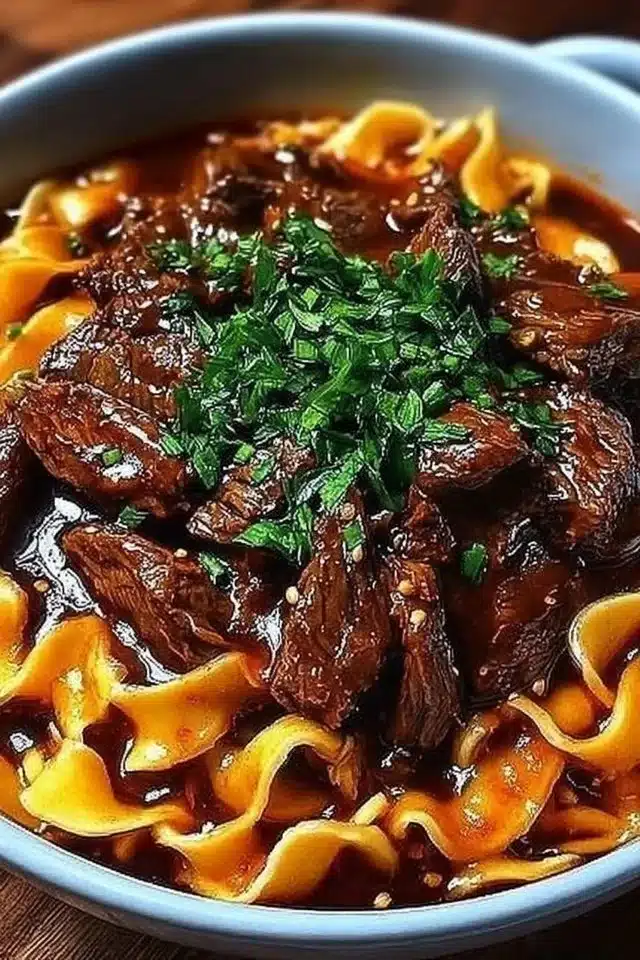
Serve the beef and vegetable mixture over the drained egg noodles. Garnish with sliced green onions. Season with extra salt and pepper if needed and offer extra soy sauce at the table for stronger umami.
Visual cue: A good bowl will show glossy beef in broth pooling around noodles with bright green onion on top.
Pro Tips for Success
- Brown the beef well: Browning adds deep flavor. Don’t rush this step.
- Low-and-slow simmer: Simmer the beef gently for about an hour for tender results. High heat makes the meat tough.
- Control salt: Use low-sodium broth or taste before adding more salt—soy sauce adds saltiness.
- Noodle timing: Cook noodles just before serving for the best texture; they will soak up broth if left too long.
- Keep veggies crisp: Add carrots and peppers late to retain color and bite.
- Rest flavors: If you have time, let the beef sit off heat for 10–15 minutes before serving to let flavors settle.
Flavor Variations
- Spicy Kick (optional): Stir in 1–2 teaspoons of gochujang or a pinch of red pepper flakes when you add the soy sauce for a spicy, gochujang-forward broth.
- Garlic Boost (optional): Add an extra clove or two of garlic if you love garlic-forward dishes.
- Citrus Brightness (optional): Finish each bowl with a small squeeze of lime or lemon to lift the flavors.
- Mushroom Umami (optional): Add 1 cup sliced shiitake or cremini mushrooms with the carrots for extra depth.
- Veg-Forward (optional): Increase carrots and bell peppers and add snap peas for a lighter, vegetable-heavy bowl.
- Less Broth, More Sauce (optional): Reduce broth to 3 cups for a thicker, more concentrated sauce that clings to the noodles.
Serving Suggestions
- Classic bowl: Beef mixture ladled over noodles, topped with green onions.
- Side pairings: Kimchi, pickled cucumbers, or a simple cabbage slaw add contrast.
- Light beverage: Serve with iced green tea or a citrus soda to cleanse the palate.
- Family dinner: Place bowls on the table and let guests add extra soy sauce or chili paste.
- Leftovers repurpose: Toss cooled beef and veggies into a wrap or use over rice for lunch the next day.
- Casual entertaining: Serve buffet-style with noodles in a warmed dish and a ladle of beef and broth on the side.
Make-Ahead, Storage & Reheating
- Make-ahead: You can brown the beef and simmer it fully up to 2 days in advance. Cool and store in the fridge. Cook noodles fresh before serving.
- Storage duration: Keep the cooked beef and broth in a covered container in the refrigerator for up to 3–4 days. Noodles stored with broth will soften over time.
- Reheating: Reheat the beef and broth gently on the stove over low heat until just simmering. Reheat noodles separately and assemble bowls to keep noodle texture.
- Texture changes: Noodles will absorb broth and become softer over time; store them separately if you want to preserve springiness.
Storage and Freezing Instructions
- Freezing: You can freeze the beef and broth mixture in airtight containers for up to 3 months. Thaw overnight in the refrigerator before reheating.
- Noodles and veg: Do not freeze cooked egg noodles with the broth; they get mushy. Freeze only the beef and broth. Store vegetables cooked in the broth if you don’t mind softer texture after thaw.
- If you prefer not to freeze: Refrigerate and use within 3–4 days. For best texture, prepare fresh noodles when ready to eat.
Nutrition Facts (Per Serving)
Calories | Protein | Carbs | Fat | Fiber | Sodium
—|—:|—:|—:|—:|—:
Approx. 520 kcal | 36 g | 42 g | 20 g | 3 g | 950 mg
Estimates vary by brands and portions.
FAQ About Korean Beef Noodles
Q: My broth is too thin. How do I thicken it?
A: Simmer uncovered until it reduces and concentrates, or mix 1 teaspoon cornstarch with 1 tablespoon cold water and stir into simmering broth until it thickens.
Q: How do I keep the beef from getting tough?
A: Cook low and slow covered until fork-tender. High heat and short cooking time can make tough cuts chewy.
Q: Can I use ground beef instead of chunks?
A: You can, but cooking and texture change—brown ground beef and shorten simmer time. This becomes a different, quicker dish.
Q: The flavor is bland. What should I add?
A: Add a splash of soy sauce, a pinch of salt, or a small squeeze of lime. Fresh green onions and a touch of sesame oil boost flavor too.
Q: How long do I cook the egg noodles?
A: Follow package instructions. Cook until al dente for best texture since they will sit under the broth briefly.
Q: Can I make it vegetarian?
A: To keep similar flavor, use a hearty mushroom or soy-based substitute and vegetable broth, but the recipe calls for beef broth and beef as listed.
TastyInspo Notes
- Finish with fresh green onions just before serving for a bright hit.
- A tiny drizzle of sesame oil at the end brings back toasted aroma lost in long simmering.
- For a glossy look, skim fat from the surface and return a teaspoon of sesame oil for shine.
- Serve in deep bowls so the broth and noodles mix easily with each bite.
- Use wide egg noodles for better sauce cling and a fuller mouthfeel.
Troubleshooting
- Bland soup: Taste and adjust with soy sauce or a pinch of salt and a squeeze of citrus to brighten.
- Overcooked beef: If beef becomes stringy, slice thinly across the grain to improve mouthfeel.
- Watery broth: Simmer uncovered for 10–20 minutes to reduce, or thicken with a cornstarch slurry.
- Burned onion or garlic: Remove pot from heat and start the step again; burnt aromatics will make the broth bitter.
- Mushy noodles: Cook noodles al dente and keep them separate until serving.
Conclusion
This Korean Beef Noodles recipe is a reliable, flavorful bowl for weeknights and easy entertaining—tender beef, savory broth, and quick-cooked noodles combine for comfort without fuss. For another quick take on Korean-style beef noodles with a sesame twist, see Half Baked Harvest’s 20 Minute Korean Beef Sesame Noodles for ideas you can borrow. 
Korean Beef Noodles
A hearty and comforting dish featuring tender beef simmered in a savory soy-ginger broth, served over egg noodles with vibrant vegetables.
For the Beef Base
- 1 pound beef (chuck or brisket), cut into bite-sized pieces (For best flavor and tenderness.)
- 4 cups beef broth (Use low-sodium for better salt control.)
- 2 tablespoons soy sauce (Tamari can be used for gluten-free.)
- 1 tablespoon sesame oil (Adds a toasty flavor.)
- 1 teaspoon ginger, minced
- Salt and pepper to taste (Adjust based on your broth’s sodium content.)
For the Aromatics & Veg
- 4 cloves garlic, minced
- 1 medium onion, chopped
- 1 cup carrots, sliced
- 1 cup bell peppers, sliced (Any color bell pepper.)
For the Noodles & Garnish
- 2 cups egg noodles (Can substitute with udon or ramen.)
- Green onions for garnish (Slice for topping.)
Preparation
- Heat 1 tablespoon of sesame oil in a large pot over medium heat.
- Add the chopped onion and minced garlic. Sauté until fragrant and the onion starts to soften, about 3–4 minutes.
- Add the bite-sized beef pieces to the pot. Brown the beef on all sides, stirring so the edges get color. Season lightly with salt and pepper.
- Stir in 2 tablespoons soy sauce, 1 teaspoon minced ginger, and 4 cups beef broth. Bring the pot to a boil, then reduce heat to low. Cover and simmer for about 1 hour, or until the beef is tender and pulls apart easily with a fork.
- After the beef is tender, stir in the sliced carrots and bell peppers. Cook uncovered for an additional 15 minutes.
Noodles Cooking
- Meanwhile, cook 2 cups egg noodles according to package instructions in a separate pot. Drain and set aside.
Serving
- Serve the beef and vegetable mixture over the drained egg noodles.
- Garnish with sliced green onions and season with extra salt and pepper if needed.
For a spicy version, add gochujang or red pepper flakes. Adjust salt and broth to your liking. Noodles should be cooked fresh to maintain texture, and leftovers should be stored separately from noodles.