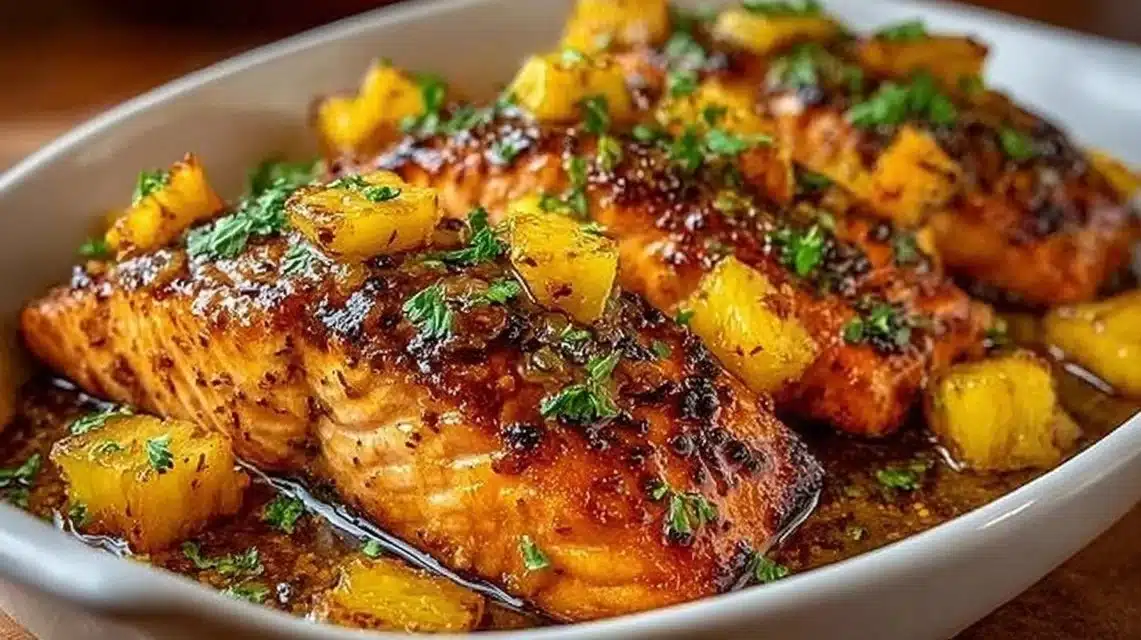
This Pineapple Glazed Salmon balances bright tropical sweetness with rich, flaky salmon in an easy, hands-off bake. The pineapple and brown sugar caramelize into a sticky glaze while soy sauce and rice vinegar add salty, tangy depth. The fish stays moist thanks to a quick roast at 400°F (200°C) and a short rest before serving. This recipe feels special but cooks fast enough for weeknights and can also shine at casual dinner parties. For a quick pairing, serve over steamed rice or a simple green salad to let the glaze stand out. If you enjoy sweet-savory glazes, try the air-fryer maple glazed chicken breast recipe for another quick, glazed-protein idea.
Why You’ll Love This Pineapple Glazed Salmon
- Sweet pineapple and packed brown sugar give a caramelized top without fuss.
- Soy sauce and rice vinegar add umami and bright balance to the sweetness.
- Fast to make: preheat, mix a quick glaze, bake 12–15 minutes.
- Moist, flaky salmon every time thanks to a moderate oven temperature and resting time.
- Works with fresh or canned pineapple, making it flexible and budget-friendly.
- Easy to scale up for a crowd or down for two people.
- Minimal cleanup: one baking dish holds everything.
- Garnish with parsley for color and fresh bite.
What Is Pineapple Glazed Salmon?
Pineapple Glazed Salmon is a baked salmon fillet topped with a sweet and tangy pineapple-brown sugar glaze that caramelizes in the oven. The flavor is bright and tropical from pineapple, rounded by the caramel notes of brown sugar, and balanced with soy sauce and rice vinegar for depth. The texture is flaky and tender inside with a slightly sticky, glossy glaze on top. This dish sits between comfort food and light, vibrant weeknight fare. It’s relaxed enough for family dinners and pretty enough for casual entertaining.
Ingredients for Pineapple Glazed Salmon
For the Base
- 4 salmon fillets, approximately 6 ounces each
- 1 tablespoon olive oil
- 1/2 teaspoon salt
- 1/4 teaspoon black pepper
For the Sauce
- 1 cup fresh or canned pineapple, diced and well drained
- 1/4 cup packed light brown sugar
- 2 tablespoons soy sauce
- 1 tablespoon rice vinegar
- 1 teaspoon minced garlic
- 1/2 teaspoon grated fresh ginger (optional)
To Serve
- 1 tablespoon fresh parsley, chopped (for garnish)
Ingredient Notes (Substitutions, Healthy Swaps)
- Salmon: Use wild or farmed fillets—both work. Skin-on fillets help protect the flesh in the oven; place them skin-side down as directed.
- Pineapple: Fresh offers a brighter flavor, but canned drained pineapple works well and is more budget friendly. Drain well so the glaze isn’t watery.
- Brown sugar: Light brown sugar gives a mild molasses note. You can use dark brown sugar for a deeper flavor (optional).
- Soy sauce: Use low-sodium soy sauce to cut salt if desired. Adjust added salt accordingly.
- Rice vinegar: White wine vinegar or apple cider vinegar can work, but rice vinegar is milder and blends better with pineapple.
- Ginger: Optional but recommended for a fresh, slightly spicy lift. Use ground ginger only if necessary and reduce the amount (start with 1/4 tsp).
- Olive oil: Neutral oils like avocado or canola work if you prefer.
Step-by-Step Instructions
Step 1 – Preheat and prep
Preheat your oven to 400°F (200°C). Lightly grease a baking dish large enough for the 4 fillets so they sit without crowding.
Visual cue: The oven should be fully heated before the salmon goes in so the glaze starts to caramelize right away.
Step 2 – Make the pineapple glaze
In a small bowl, whisk together 1/4 cup packed light brown sugar, 2 tablespoons soy sauce, 1 tablespoon rice vinegar, 1 teaspoon minced garlic, and 1/2 teaspoon grated fresh ginger (optional) until smooth. Stir in 1 cup diced, well-drained pineapple.
Step 3 – Season the salmon
Pat the salmon fillets dry with paper towels. Rub each fillet with 1 tablespoon olive oil (spread across all fillets) and season evenly with 1/2 teaspoon salt and 1/4 teaspoon black pepper.
Step 4 – Arrange and glaze
Place the fillets skin-side down in the prepared baking dish. Spoon about two-thirds of the pineapple glaze over each fillet, spreading gently so it adheres. Scatter the remaining diced pineapple around the dish for extra flavor.
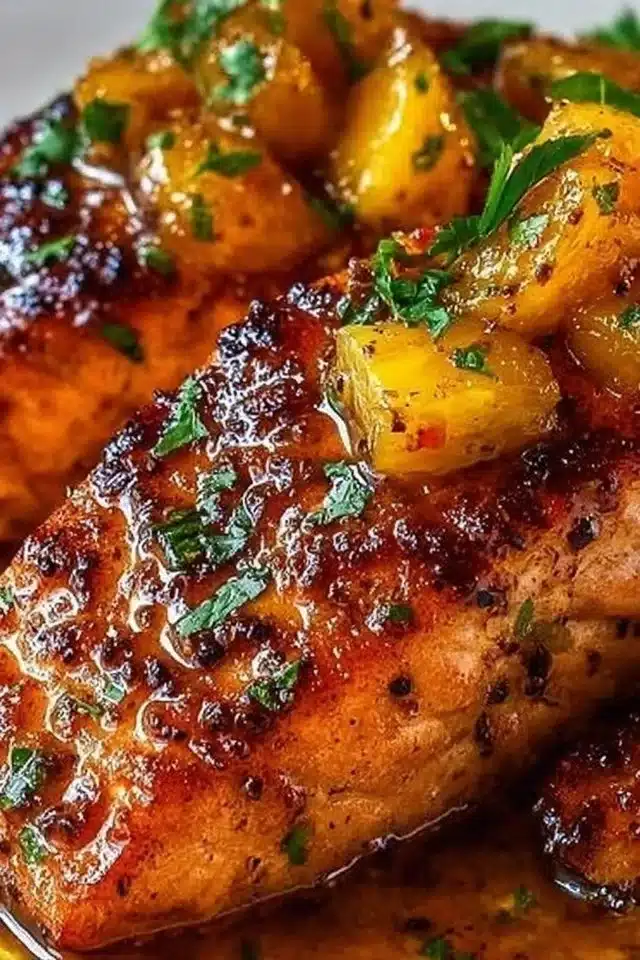
Visual cue: The fillets should have a glossy coat of glaze but not be swimming in liquid.
Step 5 – Bake, then optionally broil
Bake for 12 to 15 minutes, or until the salmon is cooked through and flakes easily with a fork. For a caramelized finish, broil for 1 to 2 minutes—watch closely to prevent burning.
Pro cue: Check the thickest part of a fillet for doneness—salmon should flake and be opaque but still moist. Broil only if your glaze needs color.
Step 6 – Rest and serve
Let the salmon rest in the baking dish for 5 minutes before serving. Spoon any pan juices over the top and garnish with 1 tablespoon chopped fresh parsley.
Pro Tips for Success
- Drain pineapple well: Excess liquid will thin the glaze and prevent good caramelization. Pat canned pineapple dry with paper towels.
- Room temp fillets: Let salmon sit at room temperature for 10–15 minutes before baking so it cooks evenly.
- Even thickness: If fillets are uneven, fold thinner portion under or cut thicker pieces to match for uniform cooking.
- Watch the broiler: Broiling caramelizes quickly; stay by the oven for the final minute.
- Low-sodium option: Use low-sodium soy sauce and skip extra salt if you are watching sodium.
- Don’t overbake: Start checking at 12 minutes for standard 6-ounce fillets; overbaking dries the fish.
- Use the pan juices: Spoon them back over the fish for extra flavor and moisture at serving.
Flavor Variations
- Hawaiian-style (optional): Add a few slices of red onion and a sprinkle of toasted macadamia nuts after baking for crunch.
- Spicy-sweet (optional): Stir 1/2 teaspoon crushed red pepper flakes or a teaspoon of sriracha into the glaze for heat.
- Citrus lift (optional): Add 1 teaspoon grated lime zest to the glaze before baking for a brighter finish.
- Herb-forward (optional): Fold chopped cilantro into the parsley garnish for a fresher, herbal note.
- Teriyaki twist (optional): Substitute 1 tablespoon honey for some brown sugar and increase soy sauce by 1/2 tablespoon for a deeper glaze.
- Low-sugar (optional): Use 2 tablespoons brown sugar and add 1 tablespoon unsweetened pineapple juice concentrate if you want less sugar but keep the glaze texture.
Serving Suggestions
- Over steamed white or brown rice to soak up the glaze.
- With coconut rice for a tropical plate.
- Simple green salad with a lime vinaigrette for a lighter meal.
- Roasted or steamed vegetables such as broccoli, green beans, or asparagus.
- With quinoa or farro for a heartier grain option.
- On top of mixed greens and sliced avocado for a protein-packed lunch.
- For a casual dinner party, plate fillets with a spoonful of glaze, a parsley sprinkle, and a wedge of lime.
Make-Ahead, Storage & Reheating
- Make-ahead: Prepare the glaze up to 1 day ahead and store it covered in the fridge. Pat the salmon dry and season right before baking. Do not glaze the fish more than 30 minutes ahead to avoid drawing out moisture.
- Refrigerator storage: Store leftover salmon in an airtight container for up to 3 days. Keep the glaze and fish together to retain flavor.
- Reheating: Reheat gently in a 300°F (150°C) oven for 8–12 minutes until warmed through. You can also reheat in a skillet over low heat with a splash of water to steam gently. Avoid the microwave when possible to reduce dryness.
- Texture notes: Reheated salmon will be firmer and less silky than freshly baked fish. Reheat slowly to preserve moisture.
Storage and Freezing Instructions
- Freezing cooked salmon: You can freeze cooked, glazed salmon, but the texture will change after thawing (it may be drier). Wrap tightly in plastic wrap and place in a freezer bag for up to 2 months. Thaw overnight in the refrigerator and reheat gently.
- Freezing raw salmon with glaze: Not recommended because the sugar and pineapple can break down the fish texture during freezing and thawing. Instead, freeze raw fillets plain and make the glaze fresh when ready to cook.
- Best practice: If you plan to freeze, freeze plain fillets and store the glaze separately in the fridge for up to 24 hours.
Nutrition Facts (Per Serving)
Calories | Protein | Carbs | Fat | Fiber | Sodium
—|—:|—:|—:|—:|—:
360 | 40g | 19g | 15g | 1g | 850mg
Estimates vary by brands and portions.
FAQ About Pineapple Glazed Salmon
Q: My glaze is too thin. What did I do wrong?
A: Most likely the pineapple wasn’t drained well. Drain and pat pineapple dry. You can also simmer the glaze briefly on the stove to reduce and thicken before adding to the salmon.
Q: How do I know when the salmon is done?
A: The flesh should flake easily with a fork and appear opaque through the thickest part. Start checking at 12 minutes for 6-ounce fillets.
Q: Can I use frozen salmon?
A: Yes, but thaw completely in the refrigerator and pat dry before seasoning and glazing so excess water doesn’t make the glaze runny.
Q: Can I skip the sugar?
A: You can reduce sugar, but the brown sugar helps caramelize the glaze. Try 2 tablespoons if you want lower sugar; the glaze will be less sticky.
Q: Is it safe to broil with the glaze?
A: Yes, but watch closely—sugars can burn quickly under high heat. Broil 1–2 minutes only and stand by.
Q: Can I make this spicy?
A: Yes, add red pepper flakes or a small amount of chili paste to the glaze for heat (optional).
TastyInspo Notes
- Finish with a squeeze of lime at the table to brighten the glaze before serving.
- For a cleaner plate, wipe the rim and place a small pool of glaze under each fillet for presentation.
- Toasted sesame seeds add a subtle crunch and visual contrast—sprinkle right before serving.
- If serving to guests, rest the salmon on a warm platter and spoon glaze over at the last minute to keep the sheen.
- Use the leftover glaze as a dipping sauce for vegetables or drizzle on rice bowls.
Troubleshooting
- Bland flavor: Check salt levels and soy sauce; add a touch more soy or a pinch of salt. A squeeze of rice vinegar or lime can lift flavors.
- Salmon dry or overcooked: Reduce bake time and check at 12 minutes. Use the flake test and remove while slightly underdone—the carryover heat will finish it.
- Glaze too sweet: Add a splash more rice vinegar or a small pinch of salt to balance the sugar.
- Burning glaze during broil: Broil on a low shelf or skip broiling; increase oven temp by 25°F for a few minutes if you want color without broiling.
- Watery pan: Drain pineapple well and pat dry; you can spoon glaze over fillets sparingly so excess liquid collects around, not on top.
- Fillets stick to the pan: Grease the baking dish well or use a piece of parchment to lift fillets cleanly.
Final Thoughts
This Pineapple Glazed Salmon is a simple, reliable way to get a bright, sticky glaze and tender salmon with minimal effort. It’s flexible, quick, and excellent for weeknights or easy entertaining—small steps like draining the pineapple and watching the broiler make a big difference.
Conclusion
For another approachable glazed-protein idea with similar sweet-savory appeal, check out Well Plated’s Pineapple Glazed Salmon for extra inspiration and plating tips.
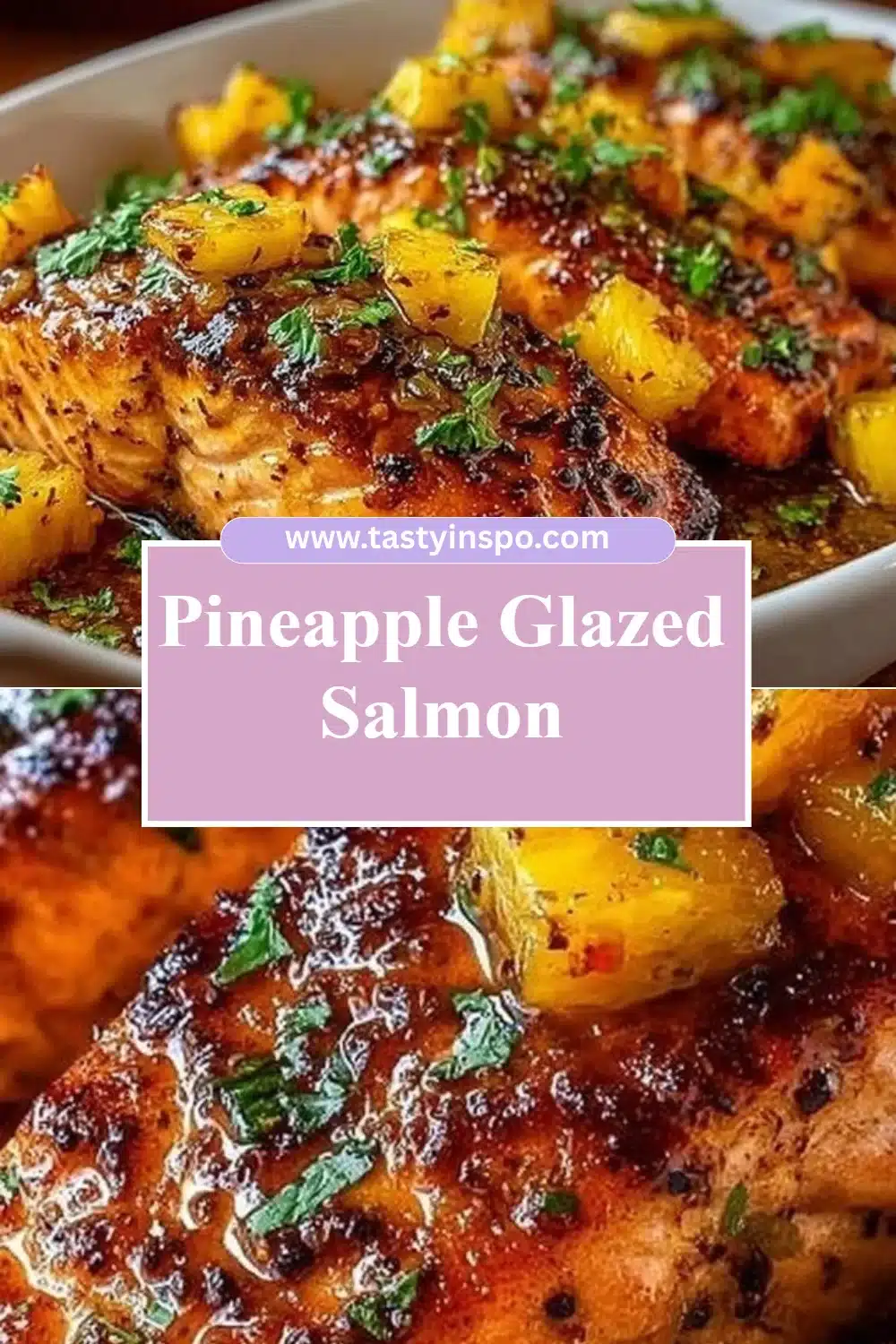
Pineapple Glazed Salmon

This dish features flaky salmon topped with a sweet and tangy pineapple-brown sugar glaze that caramelizes beautifully in the oven, balancing tropical sweetness with savory depth.
For the Base
- 4 pieces salmon fillets, approximately 6 ounces each (Use wild or farmed fillets—skin-on helps protect the flesh.)
- 1 tablespoon olive oil (Can use neutral oils like avocado or canola.)
- 1/2 teaspoon salt (Adjust according to taste.)
- 1/4 teaspoon black pepper (To season the salmon.)
For the Sauce
- 1 cup fresh or canned pineapple, diced and well drained (Drain well to avoid watery glaze.)
- 1/4 cup packed light brown sugar (Use dark brown for deeper flavor if desired.)
- 2 tablespoons soy sauce (Use low-sodium soy sauce to reduce salt intake.)
- 1 tablespoon rice vinegar (Can substitute with white wine vinegar or apple cider vinegar.)
- 1 teaspoon minced garlic (Fresh garlic preferred.)
- 1/2 teaspoon grated fresh ginger (optional) (For a fresh lift; reduce using ground ginger.)
To Serve
- 1 tablespoon fresh parsley, chopped (For garnish.)
Preparation
- Preheat your oven to 400°F (200°C). Lightly grease a baking dish large enough for the 4 fillets to sit without crowding.
- In a small bowl, whisk together light brown sugar, soy sauce, rice vinegar, minced garlic, and optional ginger until smooth. Stir in the diced pineapple.
- Pat the salmon fillets dry with paper towels, rub with olive oil, and season with salt and black pepper.
Baking
- Place the fillets skin-side down in the greased baking dish. Spoon two-thirds of the pineapple glaze over each fillet. Scatter any remaining pineapple around the dish.
- Bake for 12 to 15 minutes, until the salmon is cooked through and flakes easily. Optionally, broil for 1 to 2 minutes for caramelization.
Serving
- Allow the salmon to rest in the baking dish for 5 minutes. Spoon any pan juices over the top and garnish with chopped fresh parsley before serving.
Ensure pineapple is drained well to prevent watery glaze. Let salmon sit at room temperature prior to cooking for even doneness.