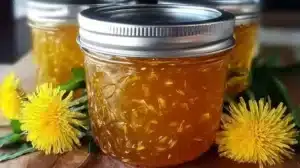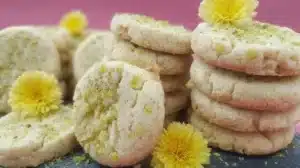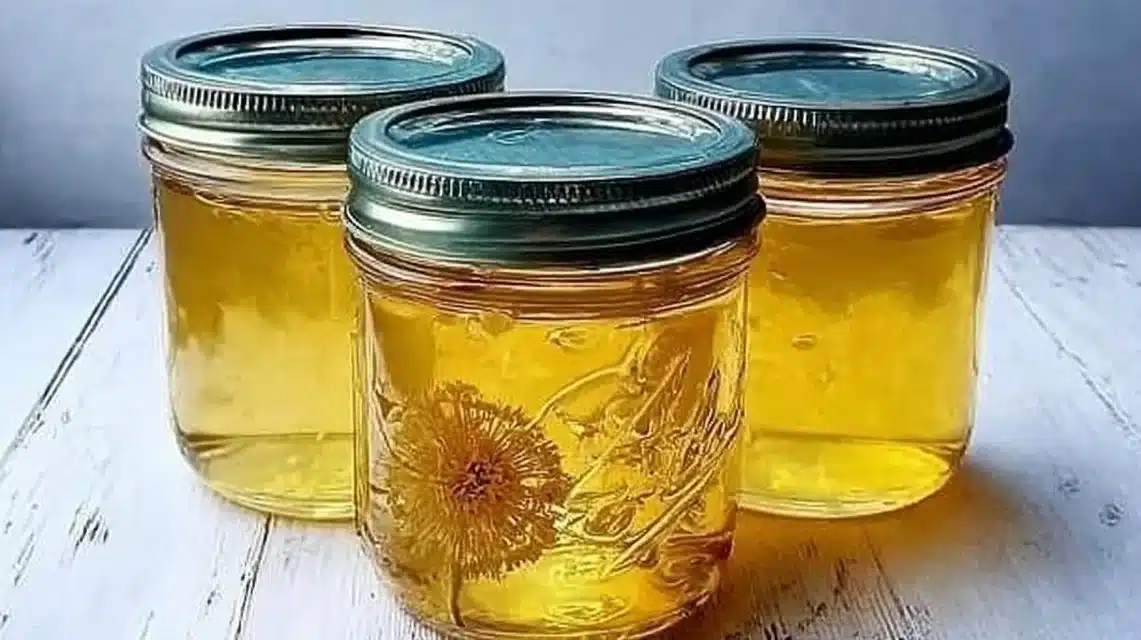
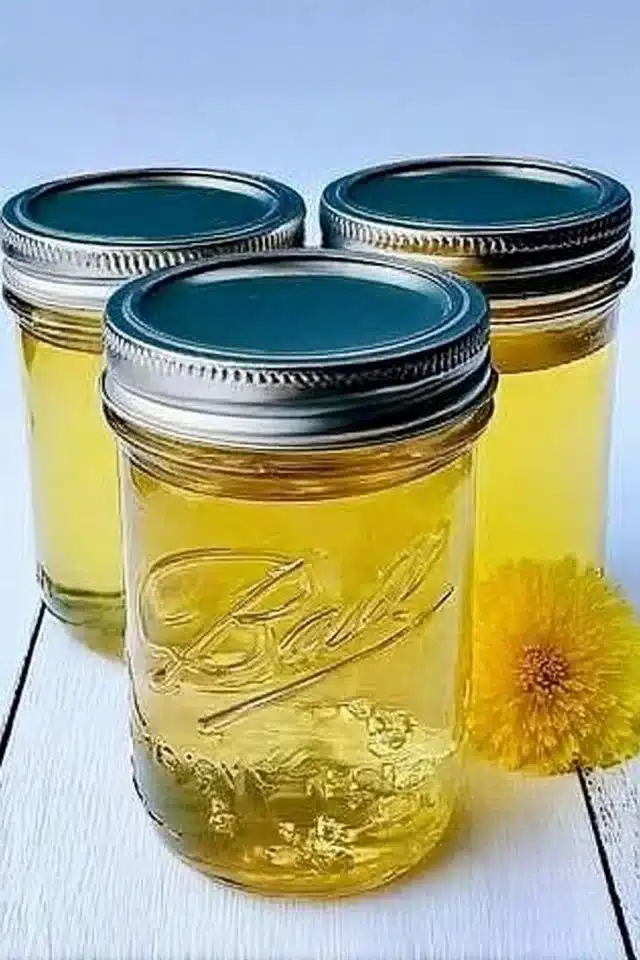
Dandelion jelly is a bright, fragrant spread with a mild floral honey-like taste and a smooth, spoonable texture. It sets like a clear jelly, not too firm, and shows a warm gold color that looks lovely on the table. This recipe is simple and almost hands-off: steep petals, strain, add pectin and sugar, then jar. It feels special because it turns abundant spring flowers into a pantry-stable treat. Try it on toast, stirred into yogurt, or served with a soft cheese for a quick, pretty bite.
Why You’ll Love This Dandelion Jelly
- Uses common dandelion flowers to make a unique, budget-friendly jelly.
- Clean, floral flavor with a touch of lemon brightness that pairs with many foods.
- Simple steps and pantry-friendly ingredients; no fancy tools required.
- Steeping is mostly hands-off — you simmer, strain, then finish on the stove.
- Makes a lovely gift or a special addition to brunch and cheese boards.
- Can be refrigerated for short use or processed for long-term storage.
- Flexible: you can tweak sweetness or add small flavor notes as optional steps.
- Great way to use seasonal foraged ingredients in a reliable, repeatable recipe.
What Is Dandelion Jelly?
Dandelion jelly is a fruit-jelly style preserve made by infusing dandelion petals in water, then combining the clear infusion with lemon juice, pectin, and sugar to make a set jelly. The taste is floral and lightly honeyed, with a lemon lift that keeps the flavor bright. Texture is smooth and spreadable — not a firm gelatin block but a soft, spoonable jelly that holds its shape on a spoon and spreads easily on bread.
This recipe uses a stovetop infusion and a quick cook with commercial fruit pectin to ensure a reliable set. The vibe is homestyle and seasonal — comfort food for spring brunches, casual gifts, or a creative pantry staple. It’s simple enough for a weekday project yet pretty enough for weekend entertaining.
Ingredients for Dandelion Jelly
For the Jelly
- 2 cups dandelion flowers (petals only, loosely packed)
- 4 cups water
- 1/4 cup lemon juice (fresh is best)
- 1 package (1.75 oz) fruit pectin
- 5 cups sugar
Ingredient Notes (Substitutions, Healthy Swaps)
- Dandelion flowers: Use only the yellow petals (discard the green base). If you can’t forage, look for organic blooms or flowers from a trusted source to avoid pesticide exposure.
- Lemon juice: Fresh is best for bright flavor and acidity. Bottled lemon juice can be used if needed, but fresh is recommended.
- Fruit pectin: This recipe is written for standard powdered pectin (1.75 oz package). If you switch to low-sugar or liquid pectin, follow the package directions carefully — results and sugar needs will differ. (Optional)
- Sugar: Granulated white sugar is used to ensure proper set with the pectin. You can cut back slightly, but a big reduction may prevent the jelly from setting unless you use low-sugar pectin designed for reduced-sugar recipes. (Optional)
- Water: Regular tap water is fine if it tastes good. If your tap water has strong flavors, use filtered water for a cleaner infusion.
Step-by-Step Instructions
Step 1 – Clean the flowers
Rinse the dandelion flowers gently in cold water to remove dirt and small insects. Drain well and pat lightly to remove excess water.
Visual cue: Petals should look bright yellow and free of grit before you start.
Step 2 – Make the dandelion infusion
Bring 4 cups of water to a boil in a medium pot. Add the cleaned dandelion petals, reduce the heat, and simmer gently for about 30 minutes to extract color and flavor.
Pro cue: Simmer on low so the liquid stays at a gentle simmer — not a hard boil — to avoid breaking down delicate flavors.
Step 3 – Strain the liquid
Strain the mixture through a fine mesh sieve or cheesecloth into a clean pot, pressing lightly on petals to extract liquid. Discard the spent petals. Return the clear liquid to the pot for the next step.
Visual cue: The liquid will be a golden, slightly herbal broth — clear enough for jelly once strained.
Step 4 – Add lemon juice and pectin
Stir in 1/4 cup fresh lemon juice. Sprinkle in the package of fruit pectin and stir until fully dissolved. Heat the pot to a full, rolling boil (a boil that cannot be stirred down).
Pro cue: Make sure the pectin is fully dissolved before adding sugar so it activates correctly.
Step 5 – Add sugar and cook
Once you have a rolling boil, add all 5 cups of sugar. Stir continuously until the sugar fully dissolves, then return to a rolling boil and boil for an additional 1–2 minutes while stirring.
Visual cue: The mixture should look glossy and start to thicken slightly; bubbles will be vigorous during the rolling boil.
Step 6 – Jar and finish
Remove from heat and skim any foam if desired. Ladle the hot jelly into sterilized jars, leaving about 1/4 inch headspace. Seal jars with lids and either refrigerate for short-term use or process in a water bath for long-term storage following standard canning times for your altitude.
Visual cue: Jelly will still be hot and fluid; it will thicken as it cools.
Pro Tips for Success
- Use only the yellow petals; remove the green base (receptacle) to avoid bitterness.
- Measure sugar accurately — too little sugar can prevent a proper set with standard pectin.
- Dissolve pectin completely in the warm liquid before adding sugar to avoid lumps.
- Bring to a true rolling boil after adding sugar for the full time recommended (1–2 minutes) to activate the pectin.
- Sterilize jars and lids properly if you plan to shelf-store the jelly.
- Work quickly when filling jars: hot jelly seals better and reduces bubble formation.
- If foam forms on the top after boiling, skim it off with a spoon for a clear finish.
- Test set with a chilled plate: spoon a bit of hot jelly onto a chilled plate, cool for a minute, and drag a finger through to check for a wrinkle (optional check).
Flavor Variations
- Lemon-boost (optional): Add an extra teaspoon of lemon zest in Step 4 for a brighter citrus note. Keep lemon juice the same.
- Vanilla touch (optional): Stir in 1/2 to 1 teaspoon pure vanilla extract off the heat after you remove the jelly from the stove for a warm, rounded flavor.
- Ginger lift (optional): Add 1–2 teaspoons of finely grated fresh ginger to the infusion in Step 2 for a spicy edge; taste so it doesn’t overpower the flowers.
- Honey finish (optional): Stir a tablespoon of good honey into the cooled jelly before jarring for added depth — add off heat and mix well.
- Herb hint (optional): Add a small sprig of thyme to the simmering petals and remove before straining for a subtle herbal twist.
Serving Suggestions
- Spread on warm toast, English muffins, or scones for breakfast or tea.
- Spoon over plain yogurt or ricotta and top with nuts for a quick dessert.
- Pair with soft cheeses like brie or goat cheese on a cheese board.
- Use as a glaze for roasted carrots or sweet potatoes for a floral-sweet finish.
- Stir a spoonful into cocktails or iced tea for a floral-sweet note (non-alcoholic drinks work great).
- Gift homemade jars tied with a ribbon and a note about the foraged flowers.
Make-Ahead, Storage & Reheating
- Make-ahead: You can make the dandelion infusion a day ahead and keep it chilled in the fridge; reheat gently before adding pectin and sugar. Do not leave infused liquid at room temperature more than a few hours.
- Refrigerator storage: Unprocessed jars stored in the fridge will keep for up to 3–4 weeks.
- If you process jars in a water bath, shelf-stable storage can last up to 12–18 months in a cool, dark place. Once opened, refrigerate and use within 3–4 weeks.
- Reheating: If you want a pourable sauce or glaze, warm small amounts gently in a saucepan or microwave until fluid. Do not overheat — short gentle heating preserves flavor and color.
- Texture changes: Refrigeration will make the jelly firmer; room temperature softens it. Freezing (see next section) may alter texture but is possible.
Storage and Freezing Instructions
- Water bath canning: Process filled jars in a boiling water bath for the time recommended for your jar size and altitude. Properly sealed jars can be stored on the shelf for up to 12–18 months.
- Refrigerator: Store unopened or opened jars in the fridge for 3–4 weeks if not processed.
- Freezing: Jelly can be frozen in freezer-safe containers, leaving 1/2 inch headspace for expansion. Thaw in the fridge. Expect a slight texture change — the jelly may be a bit softer or slightly grainy after freezing, but it will still taste good.
- If you do not want texture changes from freezing, consider processing jars in a water bath for long-term storage instead.
Nutrition Facts (Per Serving)
Calories | Protein | Carbs | Fat | Fiber | Sodium
— | —: | —: | —: | —: | —:
50 kcal | 0 g | 13 g | 0 g | 0 g | 1 mg
Estimates vary by brands and portions.
FAQ About Dandelion Jelly
Q: My jelly is too runny. What went wrong?
A: Likely not boiled long enough at a full rolling boil after adding sugar or pectin didn’t fully dissolve. Return to the stove, bring to a full rolling boil, stir for another 1–2 minutes, then cool a small test portion.
Q: My jelly set too firm or is rubbery. How can I fix it?
A: Overcooking at high heat or boiling too long after adding sugar can cause a very firm set. For future batches, reduce boil time to the low end (1 minute) after adding sugar.
Q: Can I use bottled lemon juice instead of fresh?
A: Yes, but fresh lemon juice gives brighter flavor and reliable acidity. If using bottled lemon juice, the flavor may be less fresh but the acidity will still help the pectin set.
Q: Can I reduce the sugar?
A: Not with this standard powdered pectin, unless you use a low-sugar pectin made for reduced sugar recipes. Cutting sugar without changing pectin can prevent setting.
Q: Do I need to remove the green base of the dandelion flower?
A: Yes. Removing the green base reduces bitterness and helps keep the jelly clear and clean tasting.
Q: How long will processed jars keep?
A: Properly processed and sealed jars can keep 12–18 months stored in a cool, dark place. Once opened, refrigerate and use within 3–4 weeks.
TastyInspo Notes
- For a clear, jewel-like jar, skim any foam off the surface before filling jars.
- Use small half-pint jars to create pretty gifts and make smaller batches easier to use.
- Label jars with the date and notes (e.g., “dandelion jelly — mild lemon”) so you know freshness and flavor later.
- Serve with a slice of crusty bread and a smear of ricotta for a simple, pretty snack.
- Try a taste test as the jelly cools: a spoonful warmed slightly will give the most accurate sense of final flavor.
- If you planted a small herb in your kitchen, a tiny sprig garnish on the jar adds a homemade look.
Troubleshooting
- Bland flavor: Add a little more lemon juice next batch, or try adding a teaspoon of lemon zest to the infusion for brightness.
- Bitter aftertaste: Make sure to remove the green base of each flower; bitterness often comes from that part.
- Cloudy jelly: Fine particles from petals can cloud the jelly; strain through a double layer of cheesecloth or a very fine sieve.
- Crystallization or grainy texture: Over-boiling sugar can cause graininess. Use a steady stirring motion and avoid prolonged boiling once sugar dissolves.
- Jars won’t seal after water bath: Check rims for nicks or food residue and re-warm lids before sealing. If still unsealed, refrigerate and use within weeks or reprocess with new lids.
- Burnt bottom flavor: Use a heavy-bottom pot and keep heat moderate; stir often during the sugar boil to prevent scorching.
Conclusion
Dandelion jelly is a simple, rewarding way to turn seasonal flowers into a bright, floral spread that lifts toast, cheese boards, and desserts. The method is straightforward: steep petals, strain, add lemon and pectin, then sweeten and jar. If you want another clear step-by-step reference with photos, see How to Make Dandelion Jelly – Lonely Pines Farm for more visual guidance and tips. Try a small batch first; once you get the hang of it, this jelly becomes an easy seasonal staple.
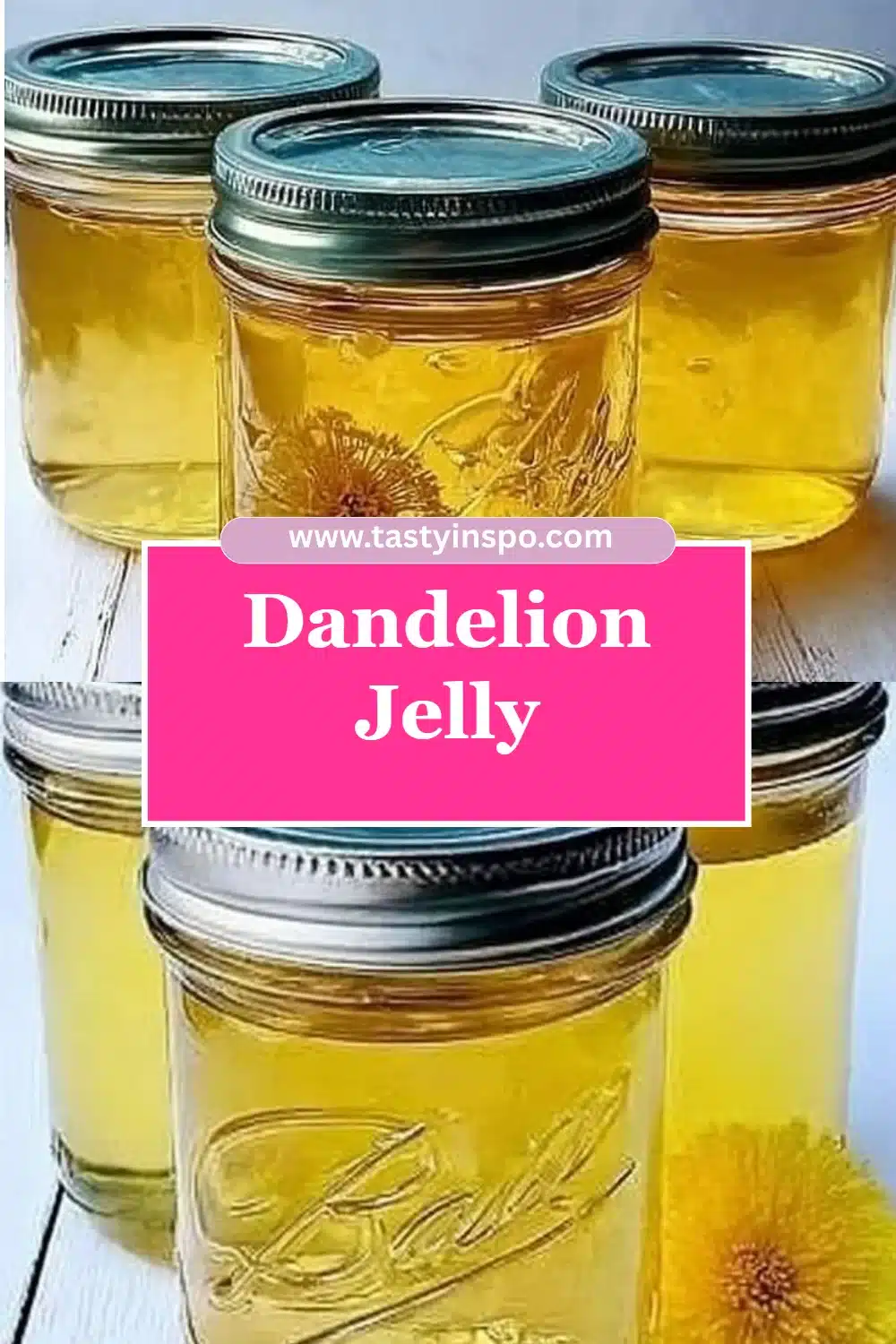
Dandelion Jelly
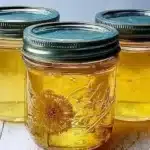
A bright and fragrant spread made from dandelion petals with a mild floral taste, perfect for toast, yogurt, or cheese.
For the Jelly
- 2 cups dandelion flowers (petals only, loosely packed) (Use only the yellow petals; discard the green base.)
- 4 cups water (Regular tap water is fine if it tastes good.)
- 1/4 cup lemon juice (Fresh is best for bright flavor and acidity.)
- 1 package fruit pectin (1.75 oz) (Standard powdered pectin recommended.)
- 5 cups sugar (Granulated white sugar ensures proper jelly set.)
Preparation
- Rinse the dandelion flowers gently in cold water to remove dirt and small insects. Drain well and pat lightly to remove excess water.
- Bring 4 cups of water to a boil in a medium pot. Add the cleaned dandelion petals, reduce the heat, and simmer gently for about 30 minutes.
- Strain the mixture through a fine mesh sieve or cheesecloth into a clean pot, pressing lightly on petals to extract liquid. Discard the spent petals.
- Stir in 1/4 cup fresh lemon juice and sprinkle in the fruit pectin, stirring until fully dissolved.
- Bring the pot to a full, rolling boil.
Cooking
- Once at a rolling boil, add all 5 cups of sugar and stir continuously until fully dissolved.
- Return to a rolling boil and boil for an additional 1–2 minutes while stirring.
Jarring
- Remove from heat and skim any foam if desired. Ladle the hot jelly into sterilized jars, leaving about 1/4 inch headspace.
- Seal jars with lids and refrigerate for short-term use or process in a water bath for long-term storage.
Jelly keeps well in the fridge for 3-4 weeks if unprocessed, or up to 12-18 months if processed. Test for set using a chilled plate.