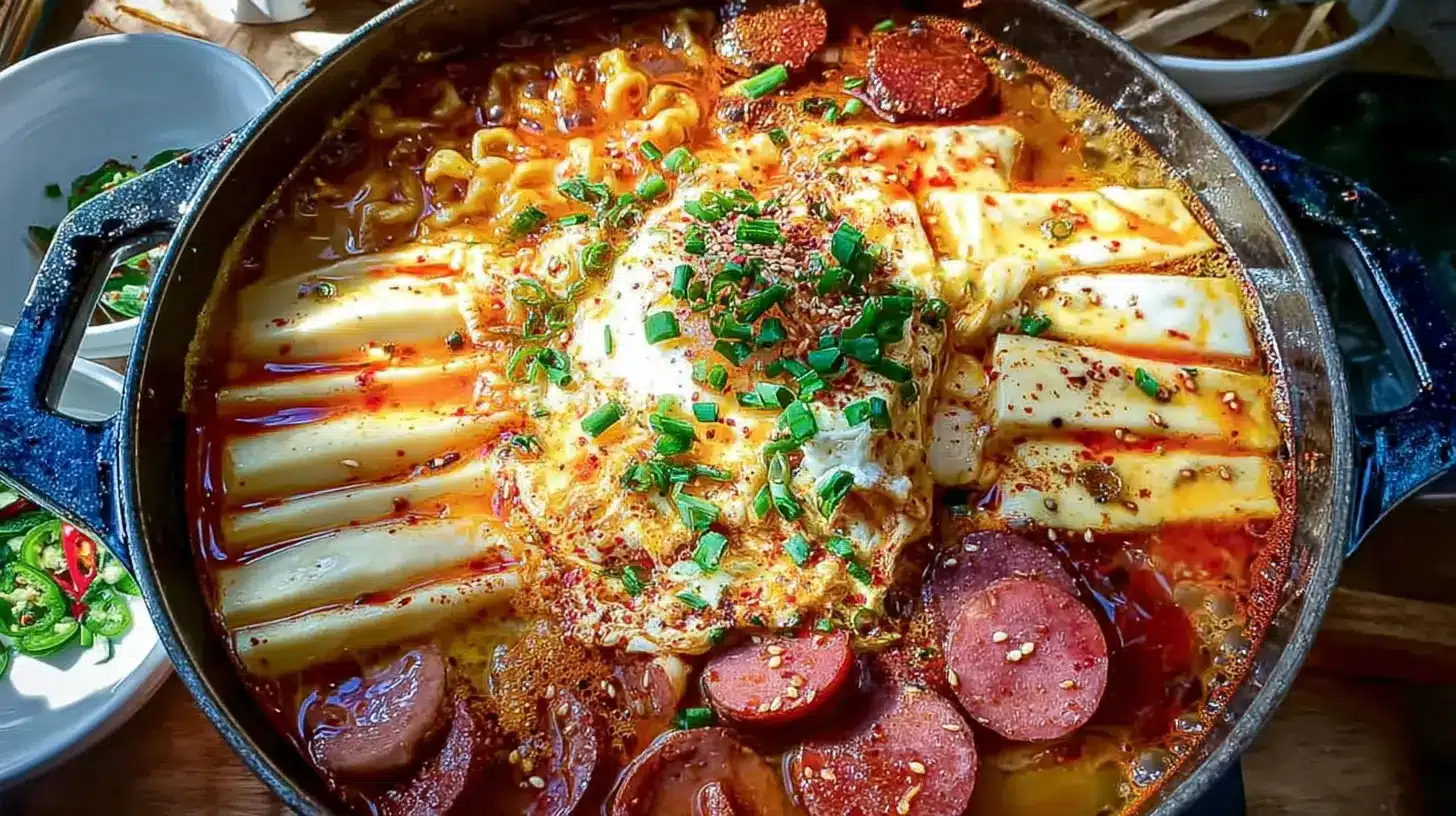
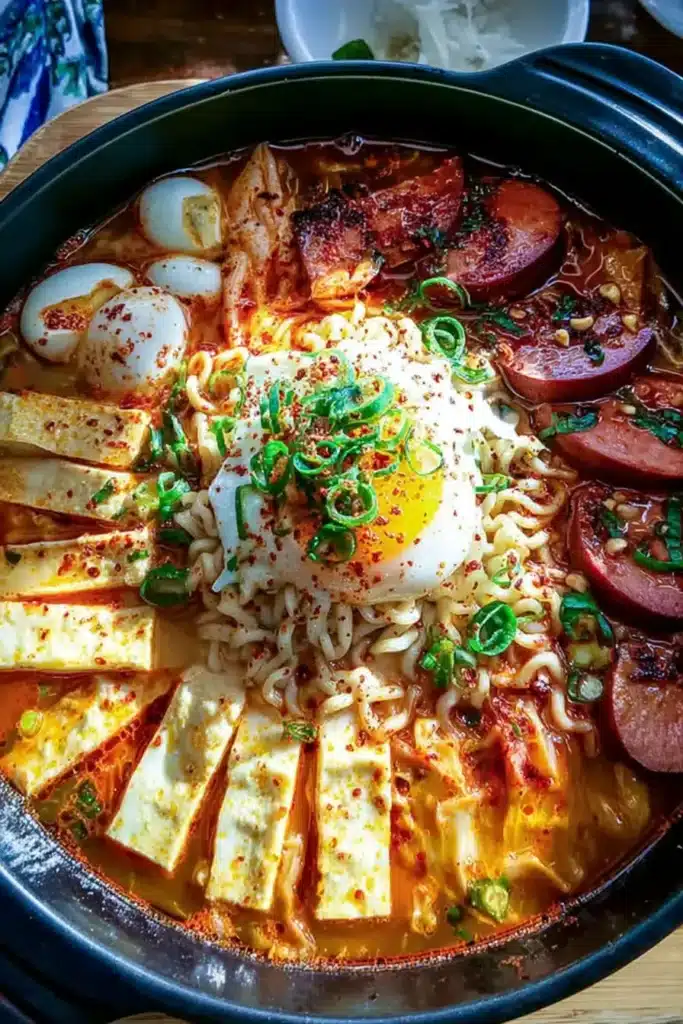
Budae Jjigae is the cozy, all-in-one hotpot you build right at the table: a bright red gochujang broth loaded with kimchi, noodles, tofu, mushrooms, and savory sliced meats, finished with a melty cheese cap and plenty of scallions. It’s fast, flexible, and perfect for chilly nights or casual gatherings where everyone dips in and eats together.
Why You’ll Love This Budae Jjigae
- Weeknight-fast: The broth and toppings come together in about 25–30 minutes.
- Fun, communal cooking: Assemble ingredients in a shallow pot and simmer at the table for a DIY hotpot vibe.
- Balanced heat: Gochujang brings gentle warmth, gochugaru adds depth, and kimchi delivers tangy brightness.
- Flexible pantry add-ins: Use the meats and noodles you have; swap veggies freely.
- Cozy and comforting: A cheesy finish melts into the spicy broth for a velvety, slurpable bowl.
- One pot, easy cleanup: Build, simmer, and serve in the same pot.
What Is Budae Jjigae?
Budae Jjigae (부대찌개), often translated as “army stew,” blends Korean jjigae technique with convenient, shelf-stable ingredients. A savory base—typically stock, gochujang, gochugaru, soy, garlic, and kimchi—simmers with a colorful assortment of meats, tofu, and vegetables. Instant noodles go in near the end so they stay bouncy, and a slice or two of cheese finishes the pot for that unmistakably cozy, ramen-shop feel. The result is a hearty, shareable stew that’s spicy, tangy, and deeply satisfying, with just enough richness to feel indulgent.
Budae Jjigae (Korean Army Stew)

Budae Jjigae is a comforting, communal Korean hotpot featuring a deeply savory gochujang broth simmered with kimchi, vegetables, tofu, sliced meats, and noodles, finished with melty cheese and scallions. Ready in about 30 minutes, it delivers cozy, bold flavor ideal for sharing.
Broth & Flavor Base
- 3.5 cups low‑sodium chicken or vegetable stock (or water)
- 2 tbsp low‑sodium soy sauce (or tamari)
- 1 tbsp gochujang (Korean red pepper paste)
- 1–2 tbsp gochugaru (Korean red pepper flakes) (to taste)
- 1–1.5 tbsp sugar (to balance flavor)
- 4 cloves garlic (minced)
- 0.25 cup kimchi juice (optional, for tang)
Core Add‑Ins
- 0.33–0.5 cup well‑fermented kimchi (chopped)
- 0.5 medium yellow onion (sliced)
- 2 green onions (cut into 1½‑inch pieces)
- 1 cup mushrooms (enoki, shiitake, oyster, or button, trimmed)
- 0.5 block firm or extra‑firm tofu (sliced or cubed (7–8 oz / 200–225 g))
- 0.5 can chicken or turkey luncheon meat (sliced (6–7 oz / 170–200 g))
- 2–3 chicken or turkey sausages (sliced on a bias)
- 1 cake instant noodles (or 6–7 oz (170–200 g) fresh/frozen udon)
Finish & Garnish
- 1–2 slices mild melty cheese
- 1 tsp toasted sesame oil
- 1–2 tsp sesame seeds (for topping)
- Extra thinly sliced green onions (for garnish)
Step 1 — Prep the Base and Arrange the Pot: In a small bowl, whisk stock, soy sauce, gochujang, gochugaru, sugar, garlic, and kimchi juice (if using) until smooth. In a wide, shallow pot or deep skillet, arrange kimchi, onion, green onions, mushrooms, tofu, luncheon meat, and sausages around the edges, leaving the center open for broth.
Step 2 — Add Broth and Simmer: Pour the flavor base into the center. Set over medium heat and bring to a brisk simmer. Cover and cook 6–8 minutes, until onions and mushrooms soften and meats heat through. Taste and adjust seasoning to preference.
Step 3 — Cook the Noodles: Nestle the noodle cake into the simmering stew, turning as it softens so strands separate. Cook 2–4 minutes until noodles are tender and bouncy (add a bit longer for udon).
Step 4 — Finish with Cheese and Aroma: Lay cheese slices on top and allow to melt for 30–60 seconds. Turn off heat, drizzle toasted sesame oil around the pot, and sprinkle with sesame seeds and extra green onions.
Step 5 — Serve Hot, Family‑Style: Ladle into bowls, ensuring each serving gets broth, noodles, meats, tofu, and vegetables. Serve with hot rice on the side if desired and enjoy right away.
Arrange solids first and pour broth in last so ingredients cook evenly. Adjust heat gently; brisk simmer is ideal. Add noodles at the end so they remain springy. Cheese added at the finish melts lusciously into the spicy broth.
Ingredients for Budae Jjigae
Broth & Flavor Base
- 3½ cups (830 ml) low-sodium chicken or vegetable stock (or water)
- 2 tbsp low-sodium soy sauce (or tamari)
- 1 tbsp gochujang (Korean red pepper paste)
- 1–2 tbsp gochugaru (Korean red pepper flakes), to taste
- 1–1½ tbsp sugar (balance to taste)
- 4 cloves garlic, minced
- ¼ cup kimchi juice (from the jar), optional but great for tang
Core Add-Ins
- ⅓–½ cup well-fermented kimchi, chopped
- ½ medium yellow onion, sliced
- 2 green onions, cut into 1½-inch pieces (plus more for topping)
- 1 cup mushrooms (enoki, shiitake, oyster, or button), trimmed
- ½ block (7–8 oz / 200–225 g) firm or extra-firm tofu, sliced or cubed
- ½ can (about 6–7 oz / 170–200 g) chicken or turkey luncheon meat, sliced
- 2–3 chicken or turkey sausages, sliced on a bias
- 1 instant noodle cake (ramen-style), or 6–7 oz (170–200 g) fresh/frozen udon
Finish & Garnish
- 1–2 slices mild melty cheese
- 1 tsp toasted sesame oil
- 1–2 tsp sesame seeds
- Extra green onions, thinly sliced
Optional Extras (Mix & Match)
- Napa cabbage or green cabbage, bite-size pieces
- Rice cakes (tteok), soaked if needed
- Corn kernels or sliced zucchini for sweetness
- Extra tofu or an egg cracked into the simmering broth
Ingredient Notes
- Stock vs. water: Stock gives the quickest depth, but water works. If using water, lean on kimchi juice and garlic for backbone.
- Gochujang & gochugaru: Start modestly and adjust heat at the table with more flakes if desired.
- Kimchi: Older, well-fermented kimchi is best—its tangy depth powers the broth.
- Tofu: Firm or extra-firm holds shape. Pat dry before adding if very wet.
- Noodles: Instant ramen cooks fastest; udon gives chewier bites. Cook them in the stew so they drink up flavor.
- Cheese: A single slice melts into the broth and tames heat while adding body; use more for extra creaminess.
- Meats: Sliced chicken/turkey luncheon meat and poultry sausages give classic texture with weeknight convenience.
Ingredient Notes (Substitutions & Healthy Swaps)
- Protein swaps: Thinly sliced chicken thigh or breast works well; simmer just until cooked. Firm tofu or tempeh makes a lovely plant-forward version.
- Gluten awareness: Use tamari and gluten-free noodles if needed. Always check gochujang labels.
- Lighter broth: Use vegetable stock and reduce cheese to ½ slice or skip it entirely; finish with extra scallions for freshness.
- Extra veggies: Add spinach, kale, or bok choy in the last minute for a green boost.
Step-by-Step Instructions
Step 1 — Prep the Base and Arrange the Pot
In a small bowl, whisk stock, soy, gochujang, gochugaru, sugar, garlic, and kimchi juice (if using) until smooth. In a wide, shallow pot or a 10–11 inch skillet with high sides, neatly arrange the solids: kimchi, onion, green onion pieces, mushrooms, tofu, sliced luncheon meat, and sausages around the edges, leaving the center open for broth. This makes a pretty “hotpot” presentation and ensures even cooking.
Step 2 — Add Broth and Simmer
Pour the flavor base into the center. Set the pot over medium heat and bring to a brisk simmer. Cover and cook 6–8 minutes, or until onions and mushrooms soften and the meats are heated through. Taste the broth—adjust salt (via soy), heat (gochugaru), or sweetness (a pinch more sugar) to your liking.
Step 3 — Cook the Noodles
Nestle the noodle cake into the bubbling stew, turning as it softens so strands separate. Cook 2–4 minutes, just until noodles are tender and bouncy. If using udon, add a minute or two as needed.
Step 4 — Finish with Cheese and Aroma
Lay the cheese slice(s) on top. Let it melt for 30–60 seconds into the stew. Turn heat off, drizzle sesame oil around the pot, and shower with sesame seeds and thinly sliced green onions.
Step 5 — Serve Hot, Family-Style
Ladle into bowls, making sure each gets broth, noodles, meats, tofu, and veggies. Serve with hot rice on the side if you like. Encourage everyone to taste, then tweak at the table—extra gochugaru, scallions, or a splash of stock if you want it soupier.
Step-by-Step Instructions
- Simmer speed: You’re aiming for lively bubbles, not a rolling boil. Too vigorous will toughen proteins and break tofu.
- Noodle timing: Pull noodles while still springy; they’ll continue to soften in the bowl.
- Cheese window: Add cheese at the very end so it melts into silky strands without breaking.
- Broth balance: If the stew tastes flat, add a spoon of kimchi or a pinch of sugar. If it’s too bold, add a splash of stock or water.
Pro Tips for Success
- Build in layers: Arrange solids first; pour broth in last to avoid splashes and ensure even simmering.
- Use a shallow pot: Wide surface = faster simmer and better presentation.
- Control the heat: Keep it steady; big boils scatter ingredients and cloud the broth.
- Mind the salt: Soy, gochujang, and kimchi are salty; taste before adding more.
- Tabletop fun: If you have a portable burner, set the pot on the table and let guests watch the stew come to life.
- Leftover magic: The broth deepens overnight. Add a fresh noodle cake the next day for a quick encore meal.
Flavor Variations
- Mushroom Lover’s Budae: Double the mushrooms (shiitake + enoki) for an earthy, umami-rich pot; finish with extra scallions.
- Veggie-Forward: Add napa cabbage chunks and a handful of spinach at the end. Use tofu as the main protein.
- Sweet-Corn Twist: Add corn kernels and thick zucchini half-moons for pops of sweetness.
- Kimchi-Extra: Stir in an additional ½ cup chopped kimchi for bolder tang.
- Gochugaru Heat-Up: Spoon more gochugaru at the table for spice-lovers; keep the base moderate so everyone’s happy.
Serving Suggestions
- With rice: A small bowl of hot rice on the side turns this into a hearty, complete meal.
- Crunchy sides: Serve with cucumber salad or lightly dressed greens to cool the palate.
- Pickles for contrast: Pickled radish or quick-pickled cucumbers add snap and brightness.
- Egg option: Crack an egg into the simmering stew during the last minute; let it poach to your preferred doneness.
Storage and Freezing Instructions
- Refrigerate: Cool leftovers and store in an airtight container for up to 3 days. Noodles will continue to soften; for best texture, cook fresh noodles when reheating.
- Reheat: Warm gently over medium heat. Add a splash of stock or water to loosen the broth.
- Freeze: The broth and solid add-ins (except noodles) freeze reasonably well for 1 month. Thaw overnight in the fridge and reheat; add fresh noodles and toppings.
Nutrition Facts (Per Serving)
Approximate values for 1 of 2 hearty servings, including noodles and cheese; your values will vary with brands and add-ins.
| Calories | Protein | Carbs | Fat | Fiber | Sodium |
|---|---|---|---|---|---|
| ~690 | ~36 g | ~67 g | ~30 g | ~5 g | ~2200 mg |
Tip: To lower sodium, use low-sodium stock, reduce soy slightly, and rely on kimchi for brightness rather than extra salt.
FAQ About Budae Jjigae
How spicy is Budae Jjigae?
It’s warmly spicy but adaptable. Gochujang brings rounded heat; gochugaru sets intensity. Start with 1 tablespoon gochujang and 1 tablespoon gochugaru, then add more at the table to keep it family-friendly.
Can I make it milder without losing flavor?
Yes. Reduce gochugaru, keep gochujang for depth, and lean on kimchi and garlic. A bit more sugar balances the broth, and the cheese softens the edges of the spice.
Do I need a special pot?
Any shallow, wide pot or deep skillet works. Korean tabletop pots are great for presentation, but not required. The key is surface area for even simmering and easy serving.
Why are my noodles mushy?
They likely cooked too long. Add noodles near the end and pull them while still springy. With leftovers, reheat broth and add fresh noodles for best texture.
Can I cook the stew ahead?
You can prep the broth and arrange solids ahead, but simmer and add noodles right before serving. If making in advance, stop before the noodle step, chill, then reheat and finish with noodles and cheese.
What if my broth tastes flat?
First check salt—broth, soy, and kimchi vary. Then balance: a splash of kimchi juice for tang, a pinch of sugar for roundness, or a little more gochujang for body. A final drizzle of sesame oil also lifts aroma.
Any tips for a lighter version?
Use more vegetables and tofu, fewer processed meats, and skip or halve the cheese. Choose vegetable stock and add extra mushrooms for umami.
Can I use different noodles?
Absolutely. Udon and fresh wheat noodles give hearty chew; sweet potato glass noodles are also tasty (cook separately and add to bowls to prevent over-softening).
TastyInspo Notes
- Arrange artfully: Build a colorful ring of ingredients for a restaurant look—guests eat with their eyes first.
- Simmer, not boil: Gentle bubbles keep tofu intact and meats tender.
- Cheese timing: Add at the very end so it melts lusciously instead of breaking into bits.
- Garnish generously: A handful of scallions and sesame seeds make each bowl pop.
- Second-day upgrade: Reheat broth, add fresh noodles, and squeeze in a little kimchi juice to revive brightness.
- Balance meter: Salty? Add water/stock. Flat? A touch of sugar and kimchi. Too spicy? More cheese and a splash of stock.
Final Thoughts
Budae Jjigae is the kind of stew that invites you to gather, simmer, and share. With a bold yet balanced broth, bouncy noodles, and a playful mix of add-ins, it’s weeknight-easy but festive enough for friends. Keep the heat gentle, add noodles at the end, and finish with cheese and sesame for a pot that’s as comforting as it is fun. Once you master this flow—arrange, simmer, noodle, finish—you’ll have a reliable, irresistibly cozy hotpot ready to warm any evening.