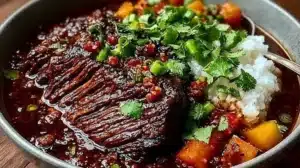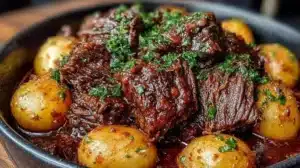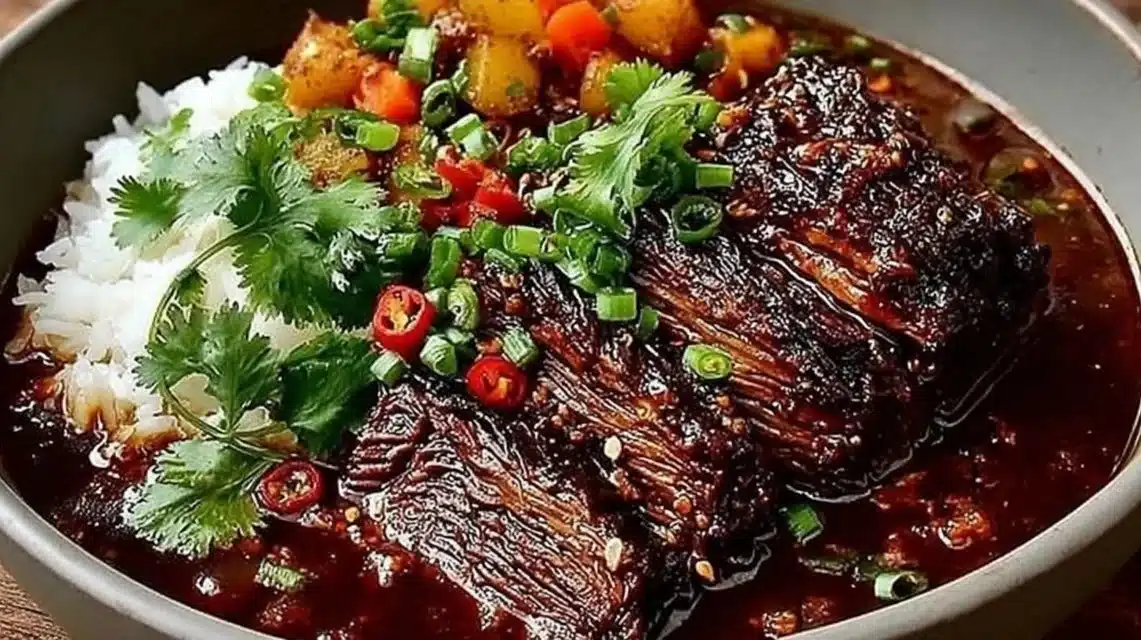
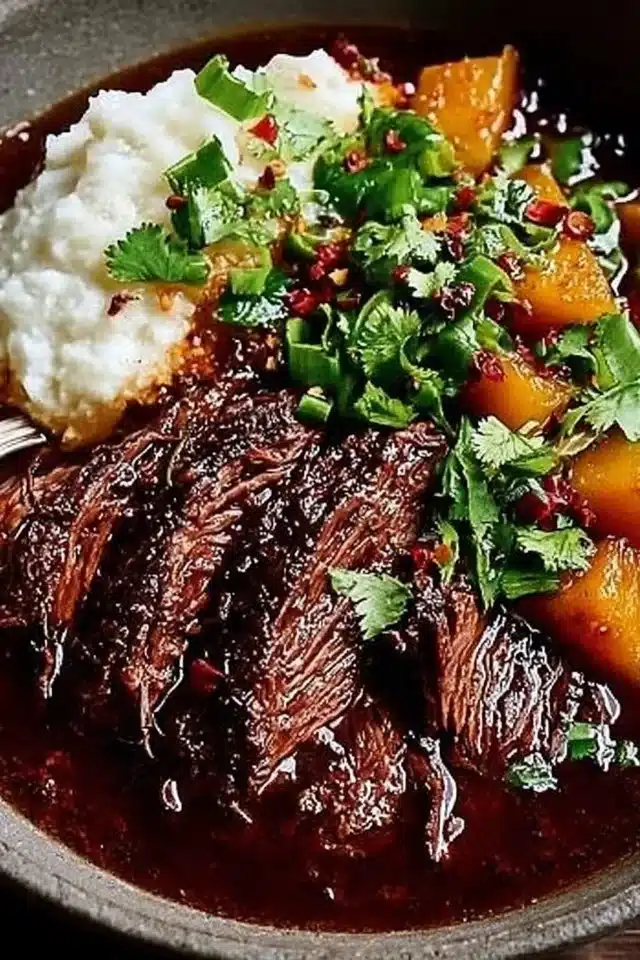
This Korean Style Pot Roast delivers deep, savory beef with a bright, spicy-sweet Korean twist. The chuck roast becomes fall-apart tender with a glossy sauce made from gochujang, soy, brown sugar, and rice vinegar, while carrots and onion soak up the same rich flavor. The texture is silky braised beef with soft chunks of carrot and a touch of fresh green onion and cilantro on top. It’s easy because most of the work is hands-off braising in a Dutch oven for 3 to 3.5 hours. Serve it over steamed rice, mashed potatoes, or wrapped in lettuce for a quick, satisfying meal. If you want another slow-cooker Korean idea, check this slow-cooker Korean BBQ chicken thighs for a similar flavor profile.
Why You’ll Love This Korean Style Pot Roast
- Hands-off braising: brown the roast, then cover and let low heat do the work for 3–3.5 hours.
- Deep umami flavor from soy sauce and beef broth balanced by sweet brown sugar and tangy rice vinegar.
- A clean spicy note from gochujang that adds color and complexity without overwhelming heat.
- Simple pantry ingredients and a single pot make cleanup easy.
- Versatile serving options: rice, mashed potatoes, wraps, or in sandwiches.
- Great for meal prep: makes enough to feed a crowd and tastes even better the next day.
- Fresh garnish of green onion and cilantro brightens the rich braise.
- Works for weeknights or a special weekend dinner with minimal active time.
What Is Korean Style Pot Roast?
Korean Style Pot Roast is a slow-braised chuck roast flavored with classic Korean seasonings. It combines gochujang (Korean chili paste) with soy sauce, brown sugar, rice vinegar, garlic, and ginger to create a sauce that is savory, slightly sweet, tangy, and mildly spicy. The cooking method is braising in a covered Dutch oven at low heat, which breaks down the connective tissue in chuck roast and yields fork-tender meat. The overall vibe is comforting, slightly spicy comfort food—perfect for a family dinner, a cozy weekend meal, or serve-it-up-for-guests entertaining. The finished dish has rich, silky beef and softened carrots, accented by fresh green onion and optional cilantro for brightness.
Ingredients for Korean Style Pot Roast
For the Base
- 3–4 lbs chuck roast
- 3 carrots peeled and cut into chunks
- 1 large onion sliced
- 5 garlic cloves minced
- 1 tablespoon fresh ginger minced
For the Sauce
- 1/4 cup soy sauce
- 2 tablespoons gochujang Korean chili paste
- 2 tablespoons brown sugar
- 2 tablespoons rice vinegar
- 1 tablespoon sesame oil
- 1 cup beef broth
To Serve
- 2 green onions chopped (for garnish)
- 2 tablespoons chopped cilantro optional
Ingredient Notes (Substitutions, Healthy Swaps)
- Gochujang: Use less if you prefer mild heat. A mild chili paste or a teaspoon of mild chili garlic sauce can work as an optional substitute, but the distinctive fermented flavor of gochujang is best.
- Soy sauce: Use low-sodium soy sauce to cut salt. If gluten-free is needed, swap for tamari.
- Brown sugar: Coconut sugar or maple syrup can replace brown sugar for a different sweetness profile. Reduce slightly if you prefer less sweet.
- Sesame oil: Adds toasted flavor; omit if allergic, or garnish with toasted sesame seeds instead.
- Beef broth: Use low-sodium broth or homemade stock for better control of salt and flavor. Water can be used in a pinch but reduce salt later.
- Chuck roast size: 3–4 lbs works well; for a smaller roast, reduce braise time and check tenderness earlier.
- Cilantro: Optional—omit if you don’t like cilantro or swap with parsley for a milder herb finish.
Step-by-Step Instructions
Step 1 – Prep and season the roast
Pat the 3–4 lbs chuck roast dry and season generously with salt and pepper. Let it sit at room temperature for 15–20 minutes if you have time. This helps the roast brown better.
Step 2 – Sear the roast
Heat a Dutch oven over medium-high heat. Sear the roast on all sides until nicely browned, about 3–4 minutes per side. Remove and set aside.
Visual cue: Look for a deep brown crust on all sides — that caramelization builds flavor.
Step 3 – Sauté aromatics
In the same pot, add the sliced onion, minced garlic, and minced ginger. Sauté for 3–4 minutes until the onion softens and the garlic is fragrant. Stir often so nothing burns.
Step 4 – Build the sauce
Stir in 2 tablespoons gochujang, 1/4 cup soy sauce, 2 tablespoons brown sugar, and 2 tablespoons rice vinegar. Mix until the paste dissolves into the aromatics and the mixture becomes shiny.
Step 5 – Deglaze and add broth
Pour in 1 cup beef broth and stir, scraping up browned bits from the bottom of the pot to deglaze. This lifts extra flavor into the sauce.
Step 6 – Return roast and add carrots
Return the seared roast to the pot. Arrange the 3 peeled and chunked carrots around the roast. Tuck onions under and around the meat so everything braises together.
Step 7 – Braise low and slow
Cover the pot and braise in a 325°F oven for 3 to 3.5 hours, or until the meat is fork-tender. Check at 3 hours — the roast should pull apart easily with a fork.
Pro cue: If the roast resists, return to the oven and test every 20–30 minutes. The connective tissue will break down into tender meat at the right temperature.
Step 8 – Finish and garnish
Remove the roast and carrots. Skim any excess fat from the surface, then drizzle 1 tablespoon sesame oil over the sauce and meat. Garnish with 2 chopped green onions and 2 tablespoons chopped cilantro, if using. Slice or shred the roast and serve hot over rice, mashed potatoes, or in wraps.
Pro Tips for Success
- Dry the roast well before searing; moisture prevents a good crust.
- Use a heavy Dutch oven for even heat and better braising.
- Don’t rush the braise—low and slow is what makes chuck roast tender.
- Lift and scrape browned bits during deglazing; this is where much of the flavor lives.
- Taste the sauce after braising and adjust salt, acid, or sweetness as needed. If too salty, add a splash more rice vinegar or a teaspoon of sugar.
- Skim fat after braising for a cleaner sauce and better presentation.
- Rest the roast 10 minutes before slicing to keep juices in the meat.
- If the sauce is too thin, reduce it on the stovetop over medium heat until it coats the back of a spoon.
Flavor Variations
- Optional: Add a tablespoon of toasted sesame seeds when serving for texture and nutty flavor.
- Optional: Stir in a splash of soy and honey at the end for a sweeter glaze.
- Optional: Add 1–2 chopped potatoes to the pot with the carrots for a heartier one-pot meal.
- Optional: Make it smokier by stirring in a teaspoon of smoked paprika (not traditional but tasty).
- Optional: For extra heat, add a teaspoon of gochugaru (Korean chili flakes) or a small chopped fresh chili with the aromatics.
- Optional: Finish with a squeeze of lime or lemon if you want a bright citrus lift before serving.
Serving Suggestions
- Serve over steamed white rice to soak up the sauce.
- Spoon over creamy mashed potatoes for a classic comfort pairing.
- Shred the meat and serve in lettuce wraps with extra green onion and cilantro.
- Make sandwiches: layer shredded roast on toasted rolls with pickled cucumber.
- Plate with simple steamed greens (bok choy, spinach, or green beans) for balance.
- Serve at family dinners, meal-prep lunches, or casual dinner parties.
Make-Ahead, Storage & Reheating
- Make-ahead: Fully cook the roast, cool to room temperature, then refrigerate in the pot or an airtight container. Sauced meat actually develops deeper flavor after a day.
- Prep ahead: Chop the carrots, slice the onion, and mix the sauce the day before to cut active time on cooking day.
- Refrigerator storage: Keep leftovers in an airtight container for up to 4 days. The sauce will gel slightly when cold—this is normal.
- Reheating: Reheat gently on the stovetop over low heat with a splash of beef broth or water to loosen the sauce, or microwave in short intervals, stirring between each. Avoid high heat to prevent drying the meat.
- Texture note: Braised beef may firm slightly when chilled. A gentle reheat returns it to tender status.
Storage and Freezing Instructions
- To freeze: Cool the roast completely, then pack into airtight containers or heavy-duty freezer bags with sauce. Freeze for up to 3 months.
- Thawing: Thaw overnight in the refrigerator. Reheat slowly on the stove with a little broth to refresh the sauce.
- If you prefer not to freeze whole, shred the meat and freeze in portioned bags with sauce. This helps thawing faster.
- Freezing is recommended if you want long-term storage; the texture holds up well when properly reheated.
Nutrition Facts (Per Serving)
Calories | Protein | Carbs | Fat | Fiber | Sodium
480 | 34 g | 12 g | 32 g | 1.5 g | 700 mg
Estimates vary by brands and portions.
FAQ About Korean Style Pot Roast
Q: Why is my sauce too thin?
A: Simmer it uncovered on the stove until it reduces and coats the back of a spoon. You can also remove the roast and reduce the sauce more quickly.
Q: How do I know when the roast is done?
A: The roast is done when it is fork-tender and pulls apart easily. Check at 3 hours and test every 20–30 minutes if needed.
Q: Can I use a slow cooker instead of a Dutch oven?
A: Yes. Brown the roast first, then transfer everything to a slow cooker and cook on low for 6–8 hours or until tender.
Q: My roast tastes too salty—what can I do?
A: Add a splash of rice vinegar or a small amount of water/broth and a touch of brown sugar to balance the salt. Starchy sides like mashed potatoes also help absorb salt.
Q: Can I skip the cilantro?
A: Yes—cilantro is optional. Parsley or extra green onion also work for a fresh finish.
Q: Can I make this with a different cut of beef?
A: Chuck roast is ideal for braising. Brisket or short ribs also work but adjust cooking time based on thickness and cut.
TastyInspo Notes
- Finish with thinly sliced green onion on top for color and a mild bite.
- Spoon a little extra sauce over the sliced or shredded meat at serving for a glossy plate.
- Use a wide shallow bowl to present the meat and vegetables so the sauce pools around them.
- Keep pickled cucumber or kimchi on the side to cut through the richness.
- For an elevated look, sprinkle finely chopped cilantro and a few toasted sesame seeds right before serving.
- Serve warmed bowls so the sauce stays fluid and the roast feels freshly braised.
Troubleshooting
- Bland flavor: Ensure you seared the roast well and deglazed the pot to lift browned bits. Taste and adjust salt, vinegar, or sugar at the end.
- Overcooked or mushy vegetables: Add carrots later in the braise or cut them into larger chunks if you prefer firmer texture.
- Meat not tender after time listed: Continue braising; some roasts need more time. Check oven temperature and ensure it’s steady at 325°F.
- Burning during sauté: Keep the heat medium and stir aromatics often; if they stick, add a splash of broth to loosen bits.
- Sauce too thick after cooling: Warm gently and add a small amount of broth to thin.
- Sauce too salty: Dilute with low-sodium broth and add a bit more brown sugar or vinegar to rebalance.
Conclusion
This Korean Style Pot Roast is a simple, hands-off way to get bold Korean flavors into a classic braised beef. It’s forgiving, feeds a crowd, and adapts easily to your preferred sides and heat level. For another take on Korean-inspired slow-cooked protein, see this thoughtful recipe from Korean Style Pot Roast | The Modern Proper for ideas and presentation tips.
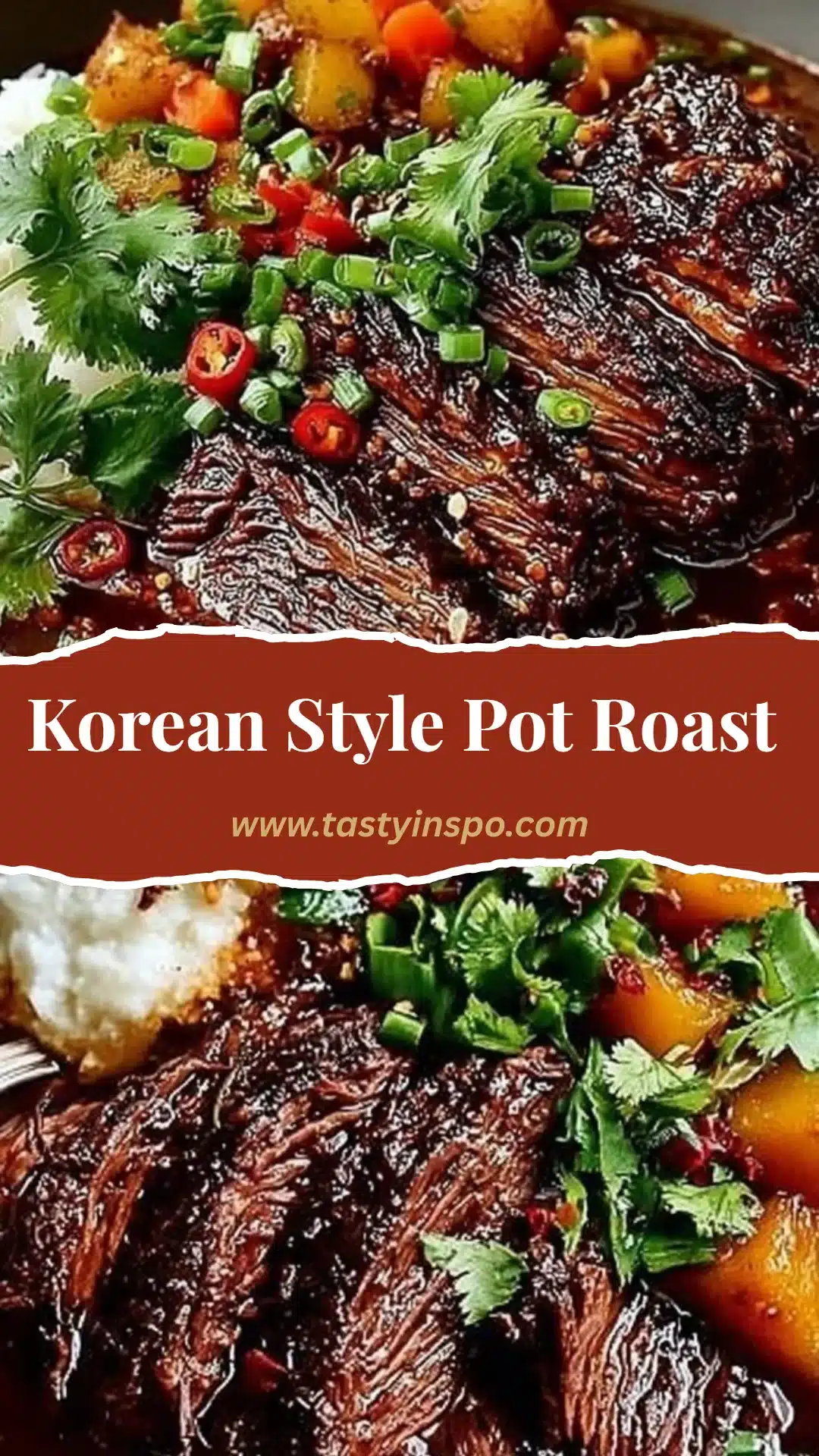
Korean Style Pot Roast
This Korean Style Pot Roast delivers deep, savory beef with a bright, spicy-sweet Korean twist, resulting in fall-apart tender meat in a glossy sauce.
For the Base
- 3-4 lbs chuck roast (Ideal for braising.)
- 3 pieces carrots, peeled and cut into chunks
- 1 large onion, sliced
- 5 cloves garlic, minced
- 1 tablespoon fresh ginger, minced
For the Sauce
- 1/4 cup soy sauce (Use low-sodium for less salt.)
- 2 tablespoons gochujang Korean chili paste (Adjust quantity for milder heat.)
- 2 tablespoons brown sugar (Can be substituted with coconut sugar or maple syrup.)
- 2 tablespoons rice vinegar
- 1 tablespoon sesame oil (Omit if allergic.)
- 1 cup beef broth (Use low-sodium or homemade.)
To Serve
- 2 pieces green onions, chopped (for garnish)
- 2 tablespoons chopped cilantro, optional (Can be substituted with parsley.)
Preparation
- Pat the chuck roast dry and season generously with salt and pepper. Let it sit at room temperature for 15-20 minutes.
- Heat a Dutch oven over medium-high heat and sear the roast on all sides until nicely browned, about 3-4 minutes per side. Remove and set aside.
- In the same pot, add the sliced onion, minced garlic, and minced ginger. Sauté for 3-4 minutes until the onion softens.
- Stir in gochujang, soy sauce, brown sugar, and rice vinegar. Mix until combined.
- Pour in beef broth and deglaze the pot, scraping up any browned bits.
Braising
- Return the seared roast to the pot. Arrange the carrots around the roast and tuck onions under.
- Cover the pot and braise in a 325°F oven for 3 to 3.5 hours, or until the meat is fork-tender.
Finishing Touches
- Remove the roast and carrots. Skim excess fat from the surface. Drizzle sesame oil over meat.
- Garnish with green onions and cilantro, then slice or shred the roast and serve.
Great for meal prep and can be served over rice, potatoes, or in wraps. The flavors improve the next day.