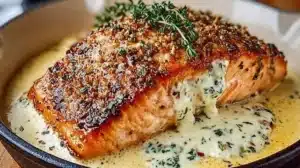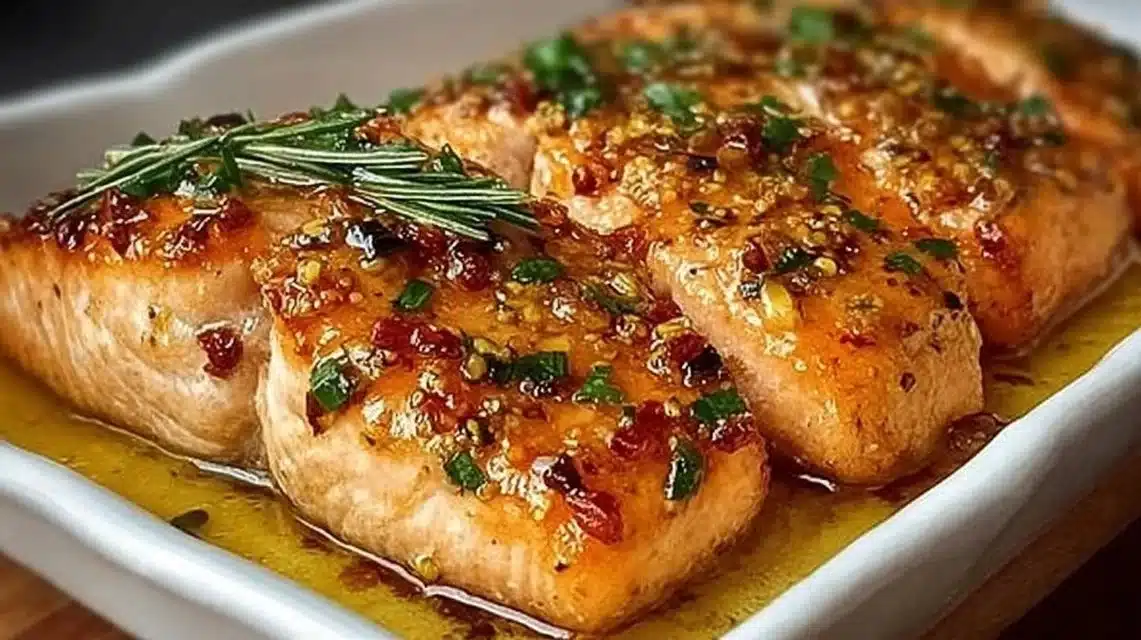
This baked salmon is bright, flaky, and lightly smoky with a simple lemon-garlic olive oil glaze that gives each bite a tender, juicy texture and a warm, savory finish. The crust is soft, not crunchy, so the salmon flakes easily while staying moist—perfect for weeknights or a casual dinner. It’s quick to put together, uses pantry staples, and cooks in about 15 minutes, so you get restaurant-style flavor without fuss. Serve it over rice, with a crisp salad, or alongside roasted vegetables for a complete meal. For another easy, elegant dish to pair with this kind of simple plating, try this baked burrata with roasted tomatoes as a starter.
Why You’ll Love This Texas Roadhouse-Inspired Baked Salmon
- Hands-off cooking: brush, bake, and rest—most of the time is oven time.
- Bright lemon and garlic lift the rich salmon without overpowering it.
- Mild paprika adds color and a gentle smoky note, comfortable for picky eaters.
- Fast: total active time under 10 minutes, ready in 12–15 minutes.
- Flexible: works on thicker or thinner fillets with small timing tweaks.
- Easy pantry ingredients you likely already have on hand.
- Light enough for a healthy weeknight dinner, but tasty enough for guests.
- Garnish options let you dress it up quickly for special occasions.
What Is Texas Roadhouse-Inspired Baked Salmon?
Texas Roadhouse-Inspired Baked Salmon is a simple oven-roasted salmon fillet dressed with a lemon-garlic olive oil mix and a touch of paprika. It mimics the bright, straightforward flavors you might expect at a steakhouse-style chain—clean citrus, warm garlic, and a hint of spice—while keeping the texture tender and flaky. The cooking method is quick baking at a high temperature so the outside sets while the inside stays moist. The vibe is relaxed comfort food: easy enough for a weeknight, but pretty enough for a casual dinner party or family meal.
Ingredients for Texas Roadhouse-Inspired Baked Salmon
For the Salmon
- 4 salmon fillets
- 2 tablespoons olive oil
- 2 tablespoons lemon juice
- 2 cloves garlic, minced
- 1 teaspoon paprika
- Salt and pepper to taste
To Serve (Optional)
- Fresh parsley for garnish (optional)
- Lemon wedges for serving (optional)
Ingredient Notes (Substitutions, Healthy Swaps)
- Salmon fillets: Use center-cut portions if possible for even cooking. Skin-on or skinless both work. If skin-on, place skin-side down on the baking sheet.
- Olive oil: Can swap for avocado oil or melted light butter if you want a richer flavor. Keep the same amount.
- Lemon juice: Fresh is best for bright flavor; bottled lemon juice will work in a pinch but is less fresh.
- Garlic: Use 1/2 teaspoon garlic powder if you don’t have fresh garlic, but fresh gives the best aroma.
- Paprika: Use smoked paprika for more smoky depth (optional). If you don’t have paprika, a pinch of chili powder or cayenne will add heat—use sparingly.
- Salt and pepper: Adjust to taste. If using salted butter instead of oil, reduce added salt.
- Parsley and lemon wedges are optional but add freshness and brightness.
Step-by-Step Instructions
Step 1 – Preheat and prep
Preheat your oven to 400°F (200°C). Line a baking sheet with parchment paper for easy cleanup. Pat salmon fillets dry with a paper towel so the oil mixture sticks well.
Step 2 – Make the lemon-garlic mix
In a small bowl, combine 2 tablespoons olive oil, 2 tablespoons lemon juice, 2 cloves minced garlic, 1 teaspoon paprika, and salt and pepper to taste. Whisk until blended.
Step 3 – Arrange the salmon
Place the 4 salmon fillets on the prepared baking sheet, spaced apart so heat circulates evenly.
Step 4 – Brush both sides
Brush the salmon fillets with the olive oil mixture on both sides so each fillet is well coated.
Step 5 – Bake
Bake in the preheated oven for 12–15 minutes or until the salmon flakes easily with a fork.
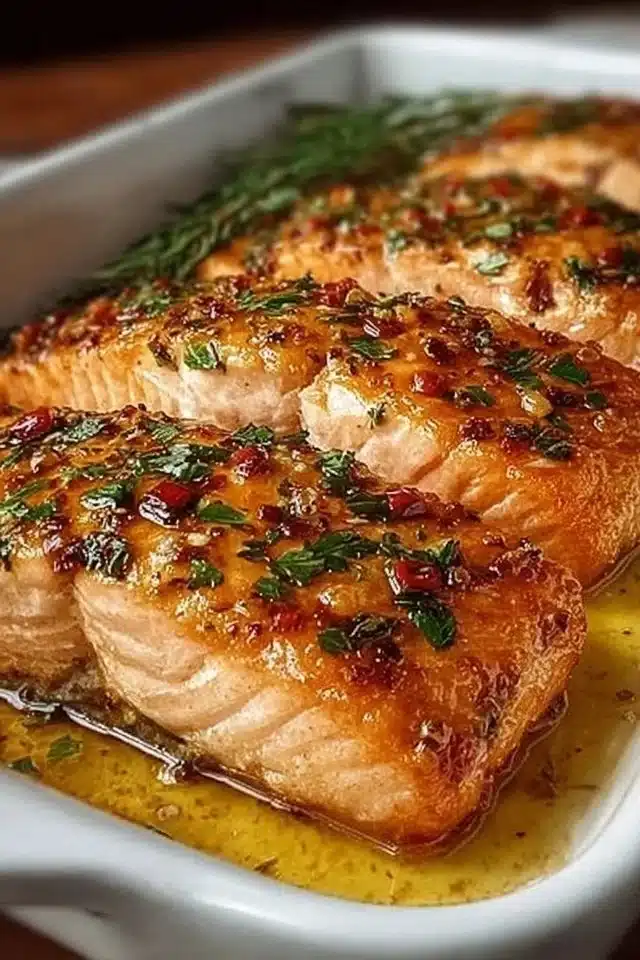
Visual cue: The surface will look set and slightly opaque, and a fork should separate the flesh into flakes without resistance.
Pro cue: For medium doneness aim for the shorter time on 12 minutes; for well-done, use 14–15 minutes. Thickness affects time.
Step 6 – Garnish and serve
Remove the salmon from the oven. Garnish with fresh parsley, if desired, and serve with lemon wedges.
Pro Tips for Success
- Pat the salmon dry: removes excess moisture so the glaze adheres and the surface cooks evenly.
- Room temperature fillets: let the salmon sit 10–15 minutes out of the fridge before baking for even cooking.
- Even thickness: if fillets vary, fold the thin end under or cut thick pieces in half so all cook evenly.
- Brush twice: coat before baking and once more halfway if you want a brighter flavor on the surface.
- Use a meat thermometer: 125–130°F for medium-rare, 145°F for well-done per USDA (but many prefer slightly lower for texture).
- Rest briefly: let salmon rest 2–3 minutes after baking to let juices settle.
- Don’t overcrowd: give space on the pan so steam can escape and the edges don’t get soggy.
Flavor Variations
- Optional: Smoked paprika swap — use smoked paprika instead of regular paprika for a deeper, smoky flavor.
- Optional: Honey-lemon glaze — add 1 teaspoon honey to the lemon-olive oil mix for a sweet-bright finish.
- Optional: Herb boost — stir 1 teaspoon finely chopped dill or chives into the oil mixture before brushing.
- Optional: Spicy kick — add 1/8 teaspoon cayenne pepper or red pepper flakes to the mix for heat.
- Optional: Mustard brush — mix 1 teaspoon Dijon mustard into the oil mixture for tang and a slight crust.
- Optional: Citrus mix — replace half the lemon juice with orange juice for a milder citrus note.
Serving Suggestions
- Serve over steamed rice or garlic mashed potatoes for a hearty plate.
- Plate alongside roasted or steamed vegetables like asparagus, broccoli, or green beans.
- Make a simple salad with mixed greens, cucumber, and a light vinaigrette for a lighter meal.
- Serve with crusty bread or dinner rolls to soak up any juices.
- Use flaked leftovers atop a grain bowl with quinoa, avocado, and cherry tomatoes.
- For a casual family meal, pair with oven-roasted potato wedges and a green salad.
Make-Ahead, Storage & Reheating
- Make-ahead: Mix the olive oil, lemon juice, garlic, paprika, salt, and pepper up to 24 hours ahead. Store in the fridge in a sealed container. Brush onto salmon just before baking.
- Prep ahead: Salmon fillets can be trimmed and patted dry a few hours before cooking and kept covered in the fridge.
- Storage duration: Store cooked salmon in an airtight container in the fridge for up to 3 days.
- Reheating: Reheat gently in a 275°F oven covered with foil for 8–12 minutes until warmed through. Microwave on low power in short bursts if in a hurry, but expect some texture change.
- Texture changes: Reheated salmon will be slightly drier and flakier than fresh-baked. Use with sauces or in salads to add moisture back.
Storage and Freezing Instructions
- Fridge: Keep cooked salmon in an airtight container for up to 3 days. Label with date.
- Freeze: You can freeze cooked salmon, but texture will change. Wrap tightly in plastic wrap and foil or use a vacuum sealer. Freeze up to 2 months. Thaw overnight in the fridge before reheating gently.
- Raw salmon: To freeze raw fillets, wrap tightly and use within 2–3 months for best quality. Thaw in the fridge before cooking.
- If you want to avoid texture loss, freeze raw fillets and bake fresh when ready rather than freezing cooked pieces.
Nutrition Facts (Per Serving)
Calories | Protein | Carbs | Fat | Fiber | Sodium
—|—:|—:|—:|—:|—:
Approx. 350 kcal | 34 g | 1 g | 22 g | 0 g | Varies by added salt
Estimates vary by brands and portions.
FAQ About Texas Roadhouse-Inspired Baked Salmon
Q: My fillet is thick—do I need to change the time?
A: Yes. Add 3–6 extra minutes for thicker fillets. Check doneness with a fork or thermometer.Q: How do I know when the salmon is done without a thermometer?
A: Look for opaque flesh that flakes easily with a fork. The center should be slightly firm and not raw.Q: Can I use frozen salmon?
A: Thaw fully in the fridge before baking for even cooking. Baking from frozen will take longer and may be uneven.Q: The salmon tastes watery after baking—why?
A: Excess water on the fillets prevents browning. Pat dry before brushing with the oil mix.Q: Can I skip the lemon?
A: You can, but lemon brightens the flavor. If skipping, consider a splash of vinegar or a tiny extra pinch of salt.Q: Is it safe to eat salmon slightly pink in the center?
A: Many people prefer salmon cooked to medium (about 125–130°F) where the center stays slightly pink. Use a thermometer if you are concerned about doneness.
TastyInspo Notes
- Finish with zest: A small amount of lemon zest over the top adds a fresh, aromatic lift.
- Plate warm dishes: Warm plates slightly to keep the salmon hot longer when serving.
- Presentation: Slice a lemon wedge and fan parsley sprigs on the plate for a neat look.
- Sauce idea: Serve with a small spoon of Greek yogurt mixed with lemon and dill for guests who want creaminess.
- Texture contrast: Add toasted almonds or pepitas on a side salad for crunch to contrast the soft salmon.
Troubleshooting
- Bland flavor: Increase salt slightly, add a final squeeze of lemon, or sprinkle a pinch of flaky sea salt before serving.
- Overcooked and dry: Reduce oven time, check at 10–12 minutes, and remove when fork flakes easily. Consider a lower temp 375°F and slightly longer bake for thicker pieces.
- Undercooked center: Return to oven for 2–4 minutes or finish on a hot skillet for a minute to gently firm the center.
- Garlic burns: Mince garlic finely and mix with oil so it disperses; if garlic is browning too fast, lower oven temperature slightly.
- Soggy skin: Bake on a wire rack set over a sheet pan or pat skin dry and air-dry in the fridge briefly before cooking.
- Sauce sliding off: Pat fish dry and brush evenly; excess liquid will cause the mixture to slide off.
Final Thoughts
This Texas Roadhouse-inspired baked salmon is an easy, tasty way to get a restaurant feel at home with minimal effort—bright lemon, warm garlic, and a hint of paprika deliver a crowd-pleasing flavor that’s fast and flexible. Try the small variations and serving ideas to make it your own, and enjoy a simple, reliable salmon recipe any night of the week.
Conclusion
For a similar styled take on salmon at home or to compare flavor ideas, see this helpful write-up on Texas Roadhouse Salmon – The Food Hussy for inspiration and ingredient notes.

Texas Roadhouse-Inspired Baked Salmon

This baked salmon is bright, flaky, and lightly smoky with a simple lemon-garlic olive oil glaze, perfect for weeknights or casual dinners.
For the Salmon
- 4 fillets salmon fillets (Use center-cut portions for even cooking.)
- 2 tablespoons olive oil (Can swap for avocado oil or melted light butter.)
- 2 tablespoons lemon juice (Fresh is best; bottled will work but less fresh.)
- 2 cloves garlic, minced (Use 1/2 teaspoon garlic powder if fresh is unavailable.)
- 1 teaspoon paprika (Use smoked paprika for deeper flavor, if desired.)
- to taste Salt and pepper (Adjust to taste.)
To Serve (Optional)
- to taste Fresh parsley for garnish (Optional but adds freshness.)
- to taste Lemon wedges for serving (Optional, enhances the dish.)
Preparation
- Preheat your oven to 400°F (200°C) and line a baking sheet with parchment paper.
- Pat salmon fillets dry with a paper towel.
Make the Lemon-Garlic Mix
- In a small bowl, combine olive oil, lemon juice, minced garlic, paprika, salt, and pepper. Whisk until blended.
Arrange the Salmon
- Place salmon fillets on the prepared baking sheet, spaced apart.
Brush and Bake
- Brush both sides of the salmon with the olive oil mixture.
- Bake for 12-15 minutes, or until the salmon flakes easily with a fork.
Garnish and Serve
- Remove the salmon from the oven, garnish with parsley if desired, and serve with lemon wedges.
Pat the salmon dry for better glaze adhesion and ensure even cooking. Various garnishes and serving options enhance the dish.