The crab brulee recipe takes everything you love about crème brûlée—the satin-smooth custard and the glassy sugar crackle—and turns it into a luxurious savory appetizer layered with sweet, delicate crab. Instead of vanilla, we lean on gentle aromatics like nutmeg, lemon zest, and fresh herbs to highlight the crab’s briny sweetness. A quick pass with a kitchen torch creates the signature shatter on top while keeping the custard cool and creamy beneath. It’s refined, memorable, and surprisingly simple when you follow a few smart steps.
Why You’ll Love This Crab Brulee Recipe
- Elegant with minimal effort: Tempered yolks and a water bath are classic techniques that produce restaurant-level results at home.
- Crab-forward flavor: Light, balanced seasoning lets real crab shine—no heavy mix-ins to distract.
- Make-ahead friendly: Bake and chill the custards hours (or a day) ahead; brûlée the tops right before serving.
- Texture contrast: Silky custard + crisp, wafer-thin sugar cap = irresistible spoon crackle.
- Flexible portions: Bake in small ramekins for tasting portions or in slightly larger ones for a showy first course.
What Is Crab Brulee?
Crab brulee is a savory riff on dessert crème brûlée. Instead of a sweet vanilla custard, this version features a seasoned custard that’s poured over or layered with tender crab meat, then gently baked in a water bath until just set. After chilling, a thin sprinkle of sugar on the surface is torched (or broiled briefly) to form a brittle caramel shell. The experience echoes dessert brûlée—the spoon taps through a glassy lid into a plush custard—but the flavor is all savory elegance: sweet crab, mild dairy richness, a whisper of nutmeg, and citrus-herb brightness.

Crab Brulee
Ingredients
Custard & Crab
- 480 ml heavy cream
- 5 large egg yolks room temperature
- 0.75 tsp fine sea salt to taste
- 0.25 tsp freshly ground white or black pepper
- 0.125 tsp ground nutmeg a scant pinch
- 1 tsp lemon zest finely grated, no white pith
- 1 tbsp fresh chives or parsley finely chopped, plus more for garnish
- 170 g lump crab meat picked over for shells and well-drained
For the Brûlée Top
- 2.5 tbsp granulated sugar about ½–¾ tsp per ramekin
To Serve (optional)
- 1 handful microgreens or extra chopped herbs for garnish
- 6 wedges lemon for serving
- 12 pieces thin toasts or cucumber slices for serving
Instructions
- Step 1 – Heat and season the cream: Warm cream with salt, pepper, and nutmeg over medium heat until steamy. Remove from heat, stir in lemon zest and herbs, and let infuse 3–5 minutes.
- Step 2 – Temper the yolks: Whisk yolks until smooth. Gradually whisk in about 1 cup of the warm cream, then pour the yolk mixture back into the saucepan and whisk gently.
- Step 3 – Strain the custard: Pour the custard through a fine-mesh strainer into a heatproof pitcher to remove zest and any solids. Taste and adjust salt if needed.
- Step 4 – Assemble ramekins: Evenly divide crab into ramekins. Sprinkle with fresh herbs. Pour warm custard over crab, leaving ¼ inch space at top.
- Step 5 – Water bath setup: Place ramekins in a deep baking dish on the oven rack. Pour hot water around them to come one-third up the sides.
- Step 6 – Bake: Bake at 160°C (320°F) for 30–40 minutes, rotating once. Custards are ready when edges are set and centers jiggle slightly.
- Step 7 – Chill: Cool ramekins on a rack, then cover and refrigerate 3–4 hours or overnight.
- Step 8 – Brûlée: Before serving, blot surface moisture. Sprinkle a thin sugar layer. Torch or broil until glassy and amber. Let sit 1–2 minutes.
Notes
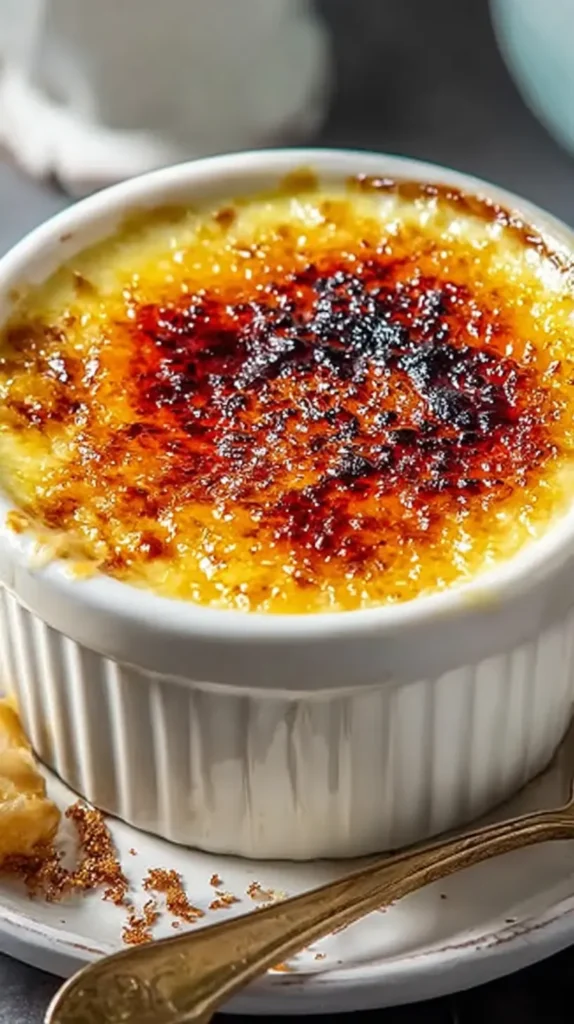
Ingredients for Crab Brulee
Custard & Crab
- 2 cups (480 ml) heavy cream
- 5 large egg yolks (room temperature)
- ¾–1 teaspoon fine sea salt (to taste)
- ¼ teaspoon freshly ground white or black pepper
- ⅛ teaspoon ground nutmeg (a scant pinch)
- 1 teaspoon finely grated lemon zest (no white pith)
- 1 tablespoon finely chopped fresh chives or parsley (plus more for garnish)
- 1 cup (about 170 g) lump crab meat, picked over for shells and well-drained
For the Brûlée Top
- 2–3 tablespoons granulated sugar (about ½–¾ teaspoon per ramekin)
To Serve (optional)
- Microgreens or extra chopped herbs
- Lemon wedges
- Thin toasts or cucumber slices
Equipment
- 4–6 small ramekins (4-ounce/120 ml capacity is ideal)
- 1 deep baking dish for the water bath
- Fine-mesh strainer
- Small saucepan
- Heatproof pitcher or measuring cup (for clean pouring)
- Kitchen torch (preferred) or oven broiler
- Kettle for hot water
Ingredient Notes & Smart Substitutions
- Crab meat: Fresh picked lump crab delivers the most delicate texture, but high-quality canned or pasteurized crab works well. Drain thoroughly and pat dry to prevent watery custard.
- Cream: Heavy cream gives the most luxurious mouthfeel. For a slightly lighter custard, you can use half-and-half—just bake a few minutes longer and expect a softer set.
- Egg yolks: Room-temperature yolks whisk more easily and temper more smoothly.
- Seasoning balance: Crab is subtle; use nutmeg and pepper sparingly. lemon zest and chives add lift without overpowering.
- Salt sense: Different crab meats vary in salinity. Start with ¾ teaspoon salt in the custard base, then taste the warm mixture before baking and adjust by a pinch if needed.
- Sugar for brûlée: A very thin layer is key. Too much sugar creates a thick, sticky crust that dominates the bite.
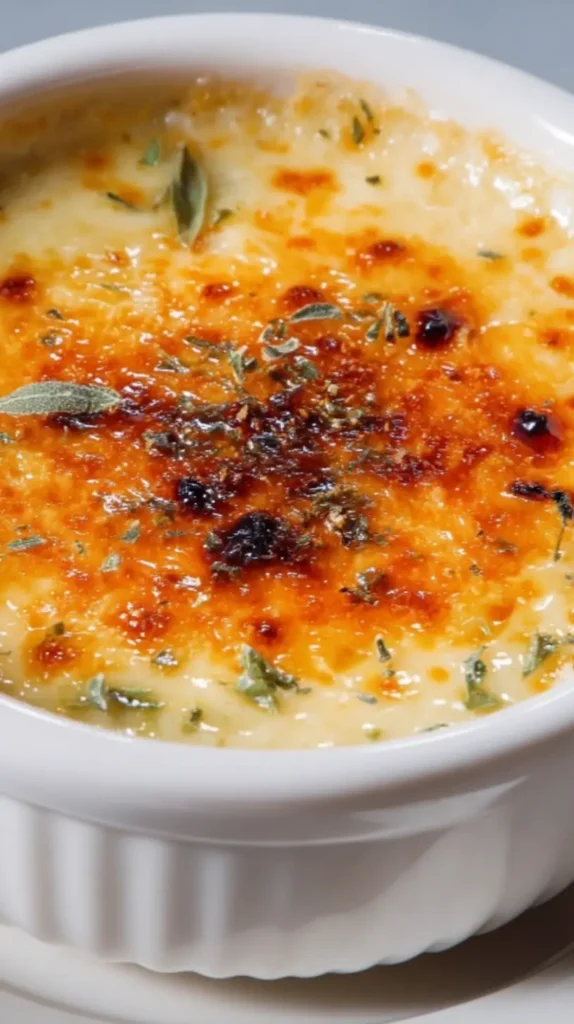
Step-by-Step Instructions
Step 1 – Heat and season the cream
In a small saucepan, combine heavy cream, salt, pepper, and nutmeg. Warm over medium heat until you see wisps of steam and tiny bubbles at the edges—do not boil. Remove from heat, stir in lemon zest and chopped chives/parsley, and let it stand 3–5 minutes to gently infuse.
Step 2 – Temper the yolks
In a mixing bowl, whisk egg yolks until smooth and slightly thickened. While whisking constantly, slowly ladle in about ½ cup of the warm cream to temper. Continue with another ½ cup, whisking, then pour the tempered yolks back into the saucepan with the remaining cream, whisking gently to combine.
Step 3 – Strain for perfect silkiness
Set a fine-mesh strainer over a heatproof pitcher or measuring cup and pour the custard through to catch any zest fibers or cooked egg bits. Taste a tiny spoonful (it will be warm) and adjust salt by a pinch if needed.
Step 4 – Assemble the ramekins
Divide the crab meat among the ramekins, spreading evenly but without packing tight. Sprinkle a few fresh herb bits over the crab. Pour the warm custard over the crab, leaving ¼ inch at the top.
Step 5 – Prepare the water bath
Place the filled ramekins in a deep baking dish. Set the dish on the middle oven rack (so you don’t slosh). Carefully pour hot water into the baking dish to come about one-third of the way up the sides of the ramekins.
Step 6 – Bake gently
Bake at 320°F (160°C) for 30–40 minutes, rotating once. Start checking at 28 minutes. The custards are done when the edges are set but the centers still wobble like soft gelatin when nudged. Don’t overbake—carryover heat will finish the set.
Step 7 – Cool and chill
Use tongs to lift each ramekin to a cooling rack. When they reach room temperature, cover and refrigerate at least 3–4 hours (overnight is best). The chill firms the custard and allows flavors to meld.
Step 8 – Brûlée the tops
Just before serving, blot any surface moisture gently with a paper towel. Sprinkle a very thin, even layer of sugar over each custard—aim for translucent coverage.
- Torch method (best): Pass a kitchen torch over the surface in slow circles until the sugar melts, bubbles, and turns glassy amber. Let it stand 1–2 minutes to harden.
- Broiler method: Set ramekins on a chilled sheet pan under a hot broiler and watch closely—30–90 seconds—moving and rotating as needed. Remove as soon as the sugar is amber and glassy.

Doneness & Texture Cues
- Right after baking: The center should jiggle more than the edges but not slosh.
- After chilling: The custard feels plush yet sliceable with a spoon; the crab layer is tender and distinct.
- After brûlée: A light tap sounds hollow and crisp; the spoon should crack through and meet silk.
Pro Tips for Success
- Temper patiently: Slow mixing prevents curdled or grainy custard.
- Strain every time: Guarantees a satin finish and removes zest threads that can mar the surface.
- Mind the water bath: Hot water cushions heat and protects against curdling. If you see vigorous bubbling at the edges, reduce oven temp by 10–15°F.
- Go thin on sugar: The hallmark crackle should be delicate. Heavy caps overshadow crab.
- Blot before sugar: Moisture prevents crisp caramel. A quick blot makes the top caramelize evenly.
- Serve promptly: The sugar shell is best within 10 minutes—it will soften as it absorbs moisture from the custard.
- Scale smart: For smaller tasting spoons (2–3 oz ramekins), reduce bake time by a few minutes. For larger ramekins, add a few minutes and test jiggle.
Flavor Variations
- Herb Garden: Swap chives for tarragon or dill (use lightly—both are assertive).
- Citrus Lift: Add a whisper of orange zest with the lemon for a rounder aroma.
- Peppery Edge: Finish the custards with a faint dusting of white pepper right after torching for contrast.
- Sweet-Corn Twist: Fold 2–3 tablespoons of finely puréed sweet corn into the custard before straining for a gentle, natural sweetness that complements crab.
- Chive Oil Drizzle: Serve with a few drops of vivid green chive oil on the plate so each bite passes through brightness.
Serving Suggestions
- Present as a first course on chilled plates with microgreens and a lemon wedge—let guests adjust brightness to taste.
- Offer thin toasts or cucumber slices on the side for texture without heaviness.
- Pair with a simple salad: baby greens, shaved fennel, and a citrusy vinaigrette.
- For a tasting menu, spoon into demitasse cups and brûlée a tiny cap—adorable and manageable.
Make-Ahead, Storage & Reheating
- Make-ahead: Bake and chill the custards up to 24 hours in advance. Keep covered to prevent odors and condensation.
- Brûlée to order: Caramelize sugar right before serving for best crackle.
- Leftovers: Once brûléed, the tops will soften in the fridge. The custard still tastes great, but the texture won’t have the signature crack.
- Storage: Un-torched custards keep 2 days refrigerated. For food safety, avoid leaving custards at room temp beyond serving time.
Troubleshooting Guide
- Custard looks grainy or weepy: Usually from overheating. Next time, lower oven temp slightly and ensure the water bath reaches at least one-third up the ramekins. Always temper and strain.
- Tops won’t crisp: Surface may be damp, sugar layer too thick, or torch too far away. Blot, use a thin sugar coat, and move the flame in small circles 1–2 inches from the surface.
- Crab seems watery: Drain and blot crab well before assembling. If using canned/pasteurized crab, squeeze gently in paper towels.
- Overly sweet shell: Use less sugar and caramelize to light amber—savory brûlées only need a whisper of caramel.
Nutrition Facts (Per Ramekin, 1 of 6)
Estimated with heavy cream and lump crab; values vary by brand and portion.
| Calories | Protein (g) | Carbs (g) | Fat (g) | Fiber (g) | Sodium (mg) |
|---|---|---|---|---|---|
| 280 | 10 | 6 | 22 | 0 | 420 |
FAQ About Crab Brulee Recipe
Can I use half-and-half instead of heavy cream?
Yes, but expect a softer set and slightly less richness. Bake a few minutes longer and watch the jiggle carefully. Heavy cream delivers the most stable, velvety texture.
Is the sugar cap necessary in a savory version?
It completes the brûlée experience—texture and aroma—while adding only a thin layer of sweetness that highlights the crab. If you truly prefer no sweetness, skip the sugar and finish with a whisper of flaky salt and a tiny drizzle of olive oil.
What type of crab is best?
Lump crab has the ideal large flakes and tender bite. Claw meat is slightly stronger in flavor and can work if you enjoy a more pronounced crab note. Whichever you choose, drain thoroughly.
How do I avoid overbaking?
Pull custards when edges are set and centers wobble. They’ll continue to firm as they cool. If you see bubbling around the ramekin edges, it’s too hot—lower the oven temperature.
Can I make this without a torch?
Yes. Chill the custards well, sprinkle a thin layer of sugar, and broil on a chilled sheet pan, watching constantly. Rotate the pan for even caramelization and pull as soon as the sugar is amber.
Could I add cheese to the custard?
Rich cheeses can overwhelm the crab and make the custard dense. If you want a subtle savory boost, keep it minimal (a teaspoon or two of finely grated Parmesan per ramekin sprinkled under the crab), but the cleanest profile comes without cheese.
How far in advance can I assemble?
You can bake and chill up to 24 hours ahead. Add sugar and brûlée just before serving. If condensation forms, blot gently before sugaring.
TastyInspo Notes
- Light hand, big payoff: Use seasonings like nutmeg and lemon zest sparingly. The goal is supporting the crab, not masking it.
- Strain like a pro: A quick pass through a fine sieve turns good custard into great custard—no exceptions.
- Thin sugar, strong crack: Aim for a dusting so thin you can still see custard peeking through. That’s the sweet spot for a clean shatter that doesn’t steal the show.
- Serve cold under hot: Keep custards chilled until the moment you brûlée. The contrast of cool custard and warm, glassy top is the magic.
- Texture pairing matters: Offer something crisp and light on the side (cucumber rounds, thin toasts) to reset the palate between bites.
- Practice with one: If you’re new to brûlée, test on a single ramekin first to calibrate torch distance and sugar thickness, then finish the rest with confidence.
Final Thoughts
This crab brulee recipe proves that sophistication can be simple. With classic custard technique, a careful water bath, and a featherweight sugar crust, you’ll deliver a refined, crab-forward appetizer that feels special but won’t keep you in the kitchen all night. The method is reliable, the ingredients are straightforward, and the results are striking—silky custard beneath a crisp, amber canopy. Serve it for date night, holidays, or any dinner where you want a quiet “wow.”