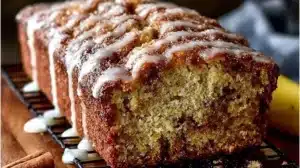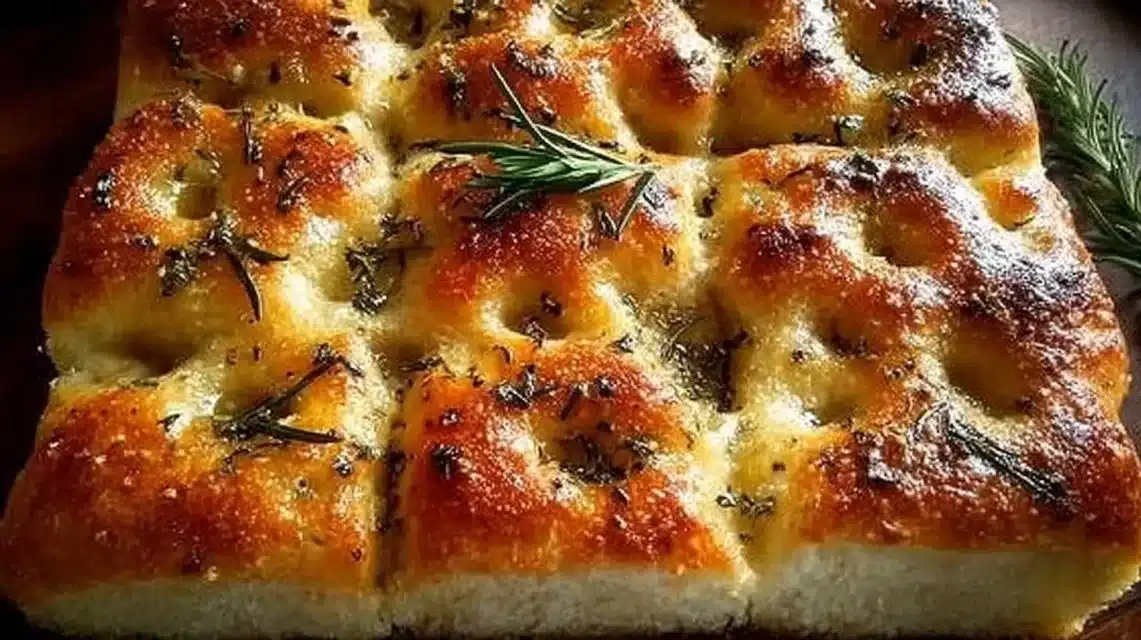
This focaccia is soft inside with a crisp, golden crust and a fragrant olive oil aroma. The crumb is open and pillowy, studded with dimples that hold pools of oil and rosemary flavor. It’s an easy, forgiving loaf that comes together with simple ingredients and a little patience — perfect for a weeknight or a casual weekend bake. Serve warm with olive oil for dipping, use slices for sandwiches, or tear it alongside soups and salads. For another simple, comforting loaf to try, see this moist cinnamon swirl banana bread that uses a similar hands-on approach.
Why You’ll Love This Homemade Focaccia Bread
- Simple pantry ingredients: bread flour, yeast, salt, water, olive oil, and rosemary. No eggs or dairy needed.
- Soft, open crumb with a chewy bite and a golden, slightly crisp top.
- Plenty of hands-off time: most of the work is waiting for the dough to rise.
- Flexible: serve plain, with herbs, or use as sandwich bread.
- Great for beginners — forgiving dough that tolerates slight variations.
- Works as both a main (sandwich base) and a side (soup, salad, charcuterie).
- Uses easy tools: a large bowl and a baking sheet, no fancy equipment.
- Quick bake: about 25 minutes in a hot oven gives great color and texture.
What Is Homemade Focaccia Bread?
Focaccia is an Italian flatbread that’s loved for its airy inside and olive oil–kissed crust. It tastes mildly salty and herbaceous when topped with rosemary, with a rich, slightly fruity note from the olive oil. The cooking method is simple: a yeasted dough is mixed, left to rise, spread into a pan, dimpled by hand to trap oil, and baked at high heat until golden. The vibe is casual comfort food — a weeknight staple, a picnic loaf, or a cozy brunch item. It’s rustic, shareable, and endlessly adaptable.
Ingredients for Homemade Focaccia Bread
For the Base
- 4 cups bread flour (about 480 g)
- 2 tsp active dry yeast
- 2 tsp salt
- 1/4 cup olive oil (60 ml), plus more for drizzling
- 1 1/2 cups warm water (about 350 ml)
- 1 tbsp fresh rosemary (finely chopped or whole sprigs to taste)
Ingredient Notes (Substitutions, Healthy Swaps)
- Bread flour: Use all-purpose flour if that’s all you have. The loaf will be slightly less chewy but still tasty.
- Active dry yeast: Instant yeast can be used at the same amount; skip the 5-minute proof and add it directly to the flour and water.
- Olive oil: Use a good extra-virgin olive oil for flavor. For a lighter flavor, use a mild olive oil.
- Warm water: Aim for 100–110°F (38–43°C). Too hot will kill yeast; too cool will slow the rise.
- Rosemary: Optional; substitute with thyme, oregano, sliced olives, or thinly sliced onions for different flavors. Keep toppings optional so the base recipe remains the same.
Step-by-Step Instructions
Step 1 – Activate the yeast and mix liquids
In a large bowl, pour the warm water and sprinkle the active dry yeast over the surface. Let sit 5 minutes until frothy and slightly bubbly. Stir in 1/4 cup olive oil and the salt. This gives flavor and helps form the dough.
Visual cue: Frothy, slightly domed surface on the water after about 5 minutes.
Step 2 – Add the flour and form the dough
Gradually add the bread flour, stirring until a sticky dough forms. The dough should hold together but feel tacky. Use a wooden spoon or your hand to bring the dough into one mass.
Step 3 – Knead until smooth
Turn the dough onto a lightly floured surface and knead about 10 minutes until smooth and elastic. If the dough is very sticky, dust hands lightly with flour, but avoid adding too much — the dough should remain soft and slightly tacky.
Step 4 – First rise
Place the dough in a greased bowl, turn once to coat with oil, cover with a clean cloth, and let rise in a warm area for about 2 hours, or until doubled in size. The dough should feel airy and soft when ready.
Step 5 – Shape and top
Preheat the oven to 425°F (220°C). Punch down the dough gently and spread it onto a greased baking sheet, stretching it to fit the pan. Use your fingers to dimple the surface all over. Drizzle with olive oil and sprinkle the fresh rosemary evenly across the top.
Step 6 – Second rise
Let the prepared dough rise for another 30 minutes on the baking sheet. This short second rise adds lift and creates the classic focaccia texture.
Pro cue: The dough should puff a bit during this rest and feel slightly springy to the touch before baking.
Step 7 – Bake until golden
Bake in the preheated 425°F (220°C) oven for about 25 minutes, or until golden brown on top and cooked through. Remove from the oven and cool slightly on a rack before slicing.

Pro Tips for Success
- Measure flour by weight or spoon-and-level the cup: too much flour makes dry bread.
- Keep water temperature between 100–110°F (38–43°C) for best yeast activation. Use a thermometer if unsure.
- Use olive oil liberally on the pan and in the dimples; it gives flavor and a crisp edge.
- Don’t skip the second rise; it keeps the crumb open and light.
- For even browning, place the sheet on the center rack and rotate once if your oven has hot spots.
- Taste the oil: good-quality olive oil makes a noticeable difference.
- If the top browns too fast, tent loosely with foil for the last 5–10 minutes.
Flavor Variations
All of these are optional and keep the base recipe the same:
- Rosemary & Sea Salt: Increase rosemary slightly and finish with a pinch of flaked sea salt after baking.
- Garlic & Herb: Mix 1–2 minced garlic cloves with the olive oil and brush over the dough before baking.
- Olive & Thyme: Scatter sliced kalamata or green olives and fresh thyme on top.
- Caramelized Onion: Top with thinly sliced onions sautéed until soft and golden (drain before using).
- Cherry Tomato & Basil: Halve cherry tomatoes and press them into the dough with basil leaves for a summer twist.
- Za’atar: Sprinkle a light dusting of za’atar spice blend in place of rosemary for a Middle Eastern flavor.
Serving Suggestions
- Tear and dip in extra virgin olive oil with a pinch of salt and pepper.
- Slice thin for sandwiches filled with roasted vegetables, mozzarella, or deli meats.
- Serve warm alongside a bowl of tomato soup or minestrone.
- Cut into strips and serve with hummus and spreads on a party platter.
- Use as a base for flatbread-style pizzas — add sauce and toppings after a brief prebake.
- Pair with a simple salad and grilled chicken for a light weeknight meal.
- Bring to a picnic: it travels well and tastes great at room temperature.
Make-Ahead, Storage & Reheating
- Make-ahead: You can prepare the dough and do the first rise, then cover and refrigerate for up to 24 hours. Bring to room temperature, shape, and continue with the recipe.
- Storage: Store baked focaccia wrapped tightly in plastic wrap or in an airtight container at room temperature for up to 2 days. In the refrigerator, it will keep 4–5 days but may dry out faster.
- Reheating: Warm slices in a 350°F (175°C) oven for 8–10 minutes to refresh the crust. For a quick reheat, toast slices in a skillet with a drizzle of olive oil until warm and crisp.
- Texture changes: Refrigeration makes the crumb firmer and the crust less crisp. Reheating restores some crunch and softness.
Storage and Freezing Instructions
- To freeze: Cool the focaccia completely, then wrap tightly in plastic wrap and a layer of foil. Freeze for up to 3 months.
- To thaw and reheat: Thaw overnight in the refrigerator or at room temperature for a few hours, then reheat in a 350°F (175°C) oven for 10–15 minutes until warmed through and crisped.
- If you prefer not to freeze: Slice and store refrigerated for a few days, then refresh in a hot oven or skillet when ready to eat. Freezing preserves texture better than refrigeration for more than a couple of days.
Nutrition Facts (Per Serving)
Calories | Protein | Carbs | Fat | Fiber | Sodium
— | — | — | — | — | —
≈ 280 kcal | 8 g | 46 g | 7 g | 2 g | 575 mg
Estimates vary by brands and portions.
FAQ About Homemade Focaccia Bread
Q: Why is my focaccia too dense?
A: Likely under-kneaded or under-proofed. Knead until smooth and allow the full first rise until doubled.
Q: Why is the dough too sticky to handle?
A: A tacky dough is normal. Lightly flour your hands and surface, but avoid adding too much flour or the bread will be dry.
Q: How do I know when it’s baked through?
A: The top should be golden brown and the bottom should sound hollow when tapped. Internal temperature around 200°F (93°C) is done.
Q: Can I use instant yeast instead of active dry yeast?
A: Yes. Use the same amount and add directly to the flour; reduce or skip the proof step.
Q: My focaccia is too salty. How can I fix it next time?
A: Reduce the salt slightly in the dough and finish with light sea salt after baking instead of mixing all salt in.
Q: Can I make this gluten-free?
A: Not directly. Gluten-free flours require different ratios and often a binder like xanthan gum. Try a tested gluten-free focaccia recipe instead.
TastyInspo Notes
- Finish with a sprinkle of flaky sea salt right after baking for a bright, crunchy contrast.
- For a chewier crust, brush the top with olive oil while it’s hot from the oven.
- Slice hot or warm; cold slices are firmer and less aromatic.
- Use a rimmed baking sheet for even edges and easy handling.
- If you want deep dimples, press firmly with fingertips while shaping and before the second rise.
- Try leaving some rosemary whole and some chopped for both aroma and texture.
Troubleshooting
Issue: Bread is pale on top.
Fix: Oven may be too cool — increase heat to 425°F (220°C) and bake until golden. Check oven temperature with an oven thermometer.
Issue: Overly oily top puddles.
Fix: Too much oil in dimples or added too early. Drain excess oil before baking or reduce drizzle.
Issue: Bread is gummy inside.
Fix: Under-baked or too dense. Bake longer and check for a hollow sound at the bottom. Ensure adequate rise time.
Issue: Dough won’t rise.
Fix: Yeast may be old or water too hot/cold. Test yeast beforehand in warm water; replace if it doesn’t froth.
Issue: Tough crust.
Fix: Over-kneading or over-baking can cause toughness. Knead until elastic but not stiff; remove from oven as soon as golden.
Issue: Uneven browning.
Fix: Rotate the pan halfway through baking or move to a different rack to avoid oven hot spots.
Final Thoughts
This homemade focaccia is simple, flexible, and reliably delicious — a great starter recipe for anyone learning to bake yeasted breads. The combination of soft crumb, olive oil richness, and rosemary fragrance makes it a crowd-pleaser every time. Try the basic recipe first, then experiment with optional toppings to make it your own.
Conclusion
For another easy take on herb-forward focaccia and to compare techniques, see this Easy Focaccia Bread Recipe – Inspired Taste which offers a helpful parallel method and topping ideas. 

Focaccia Bread
Ingredients
For the Dough
- 4 cups bread flour Use all-purpose flour as a substitute if needed.
- 2 tsp active dry yeast Instant yeast can also be used.
- 2 tsp salt Adjust to taste if needed.
- 1/4 cup olive oil Use good quality extra-virgin olive oil for flavor.
- 1 1/2 cups warm water Aim for a temperature of 100–110°F (38–43°C).
- 1 tbsp fresh rosemary Can be substituted with thyme or other herbs.
Instructions
Preparation
- In a large bowl, pour the warm water and sprinkle the active dry yeast over the surface. Let sit for 5 minutes until frothy and bubbly.
- Stir in 1/4 cup olive oil and the salt.
- Gradually add the bread flour, stirring until a sticky dough forms.
- Turn the dough onto a lightly floured surface and knead for about 10 minutes until smooth and elastic.
Rising
- Place the dough in a greased bowl, cover, and let rise in a warm area for about 2 hours or until doubled in size.
- Preheat the oven to 425°F (220°C).
- Punch down the dough and spread it onto a greased baking sheet. Dimple the surface with your fingers.
- Drizzle with olive oil and sprinkle fresh rosemary on top.
- Let the prepared dough rise for another 30 minutes on the baking sheet.
Baking
- Bake in the preheated oven for about 25 minutes or until golden brown on top.
- Remove from the oven and cool slightly on a rack before slicing.