Korean Spicy Rice Cake Skewers are the street-food favorite you can make at home in minutes—chewy rice cakes threaded on sticks, pan-seared until crisp-edged, and lacquered with a glossy, sweet-spicy gochujang glaze that clings to every bite.
Why You’ll Love This Korean Spicy Rice Cake Skewers
- Chewy outside, tender inside, with a light, crispy edge
- 5 core ingredients and one pan—simple weeknight snack or party bite
- Sweet-spicy glaze you can dial up or down in heat
- Budget-friendly and easy to scale for a crowd
- Kid-appealing on skewers; adult-worthy flavor depth
- Customizable toppings: sesame, scallions, nori, and more
What Is Korean Spicy Rice Cake Skewers?
Korean Spicy Rice Cake Skewers (tteok-kkochi) are a popular street snack made from cylinder-shaped rice cakes (tteok) that are skewered, griddled or pan-fried, and brushed with a thick gochujang-based sauce. The magic lies in contrast: the crisped surface holds the glaze, while the interior stays bouncy and chewy. They’re fast, satisfying, and endlessly riffable—perfect for game day, movie night, or a fun appetizer platter.
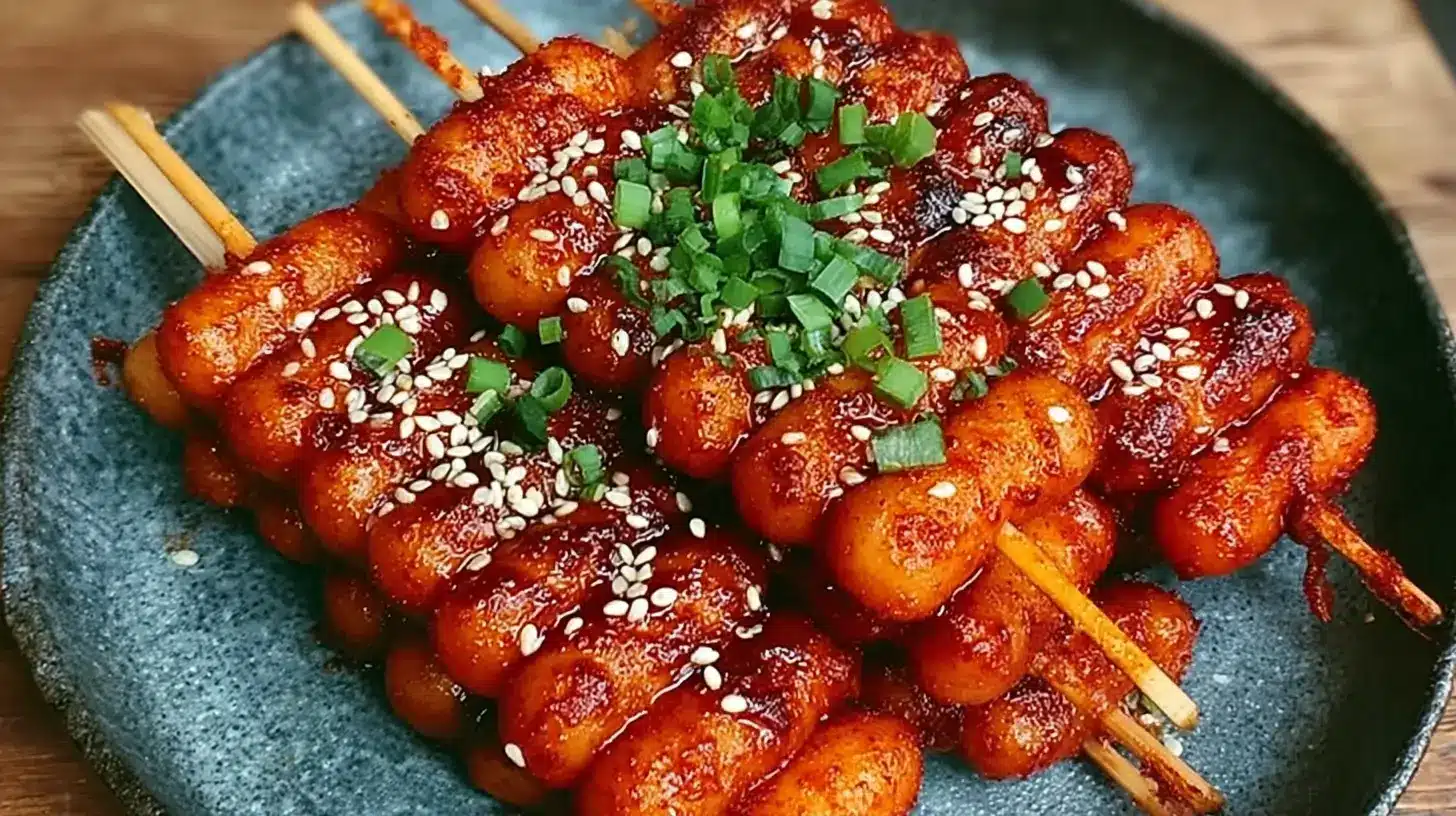
Korean Spicy Rice Cake Skewers (Tteok‑kkochi)
Ingredients
Main Ingredients
- 1–1¼ lb small cylindrical rice cakes (tteok) fresh or vacuum‑packed
- 3 tbsp gochujang (Korean red pepper paste)
- 1.5 tbsp low‑sodium soy sauce or tamari
- 1.5 tbsp honey or sugar/maple syrup
- 1 tbsp neutral oil for searing
Garnish
- 1 tbsp sesame seeds
- 2 scallions thinly sliced
Optional Add‑Ins
- 1 tsp rice vinegar or lemon juice for brightness
- 1 tsp toasted sesame oil for aroma
- 0.5–1 tsp brown sugar for extra sheen (optional)
- Pinch garlic powder or 1 small minced clove (optional)
Instructions
- Step 1 – Soften the Rice Cakes: If using vacuum‑packed rice cakes, blanch in simmering water 1–2 minutes until supple. Drain, rinse cool, and pat dry. Fresh tteok usually skip this, or blanch 30 seconds if very firm.
- Step 2 – Skewer: Thread 7–8 rice cakes onto each skewer, snug but not jammed for even cooking.
- Step 3 – Make the Glaze: In a small saucepan over medium‑low, whisk gochujang, soy sauce, and honey until smooth. Simmer 1–2 minutes until glossy and slightly thickened. Off heat, add optional rice vinegar, sesame oil, brown sugar, and/or garlic powder. Set aside to cool slightly.
- Step 4 – Pan‑Sear the Skewers: Heat a skillet over medium‑high and add neutral oil. Lay in skewers without crowding. Cook 2–3 minutes per side, turning with tongs, until pale golden and crisp‑edged.
- Step 5 – Glaze Generously: Reduce heat to medium‑low. Brush or spoon glaze over each skewer, flipping to coat all sides. Let the glaze bubble gently 20–30 seconds to set. If too thick, whisk in a teaspoon of warm water.
- Step 6 – Finish and Serve: Transfer skewers to a platter and sprinkle with sesame seeds and scallions. Serve immediately while warm and glossy.
Notes
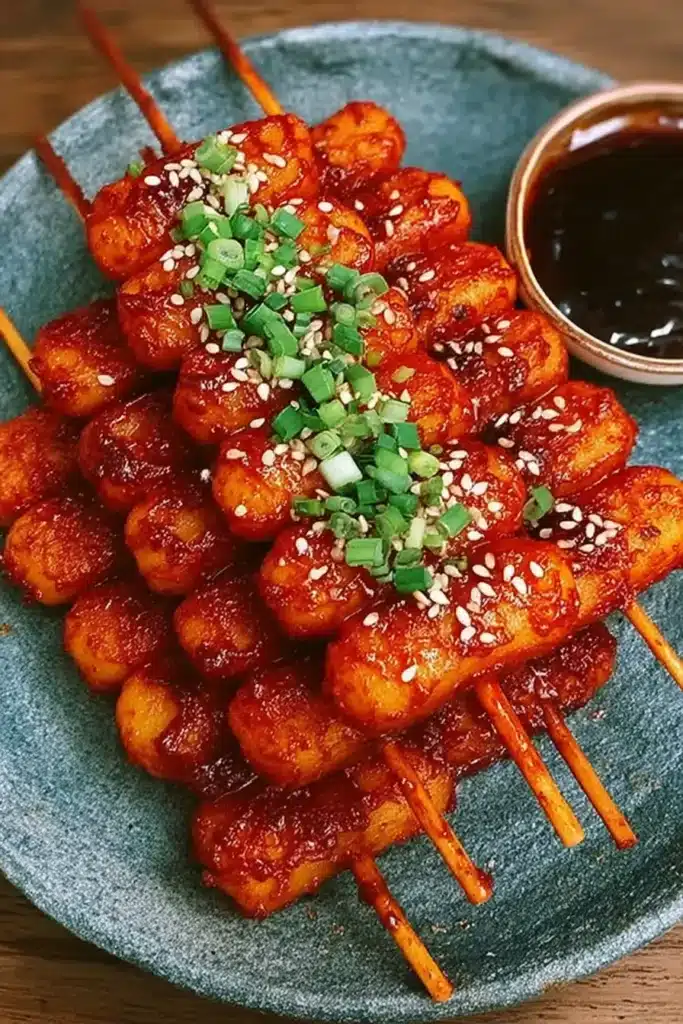
Ingredients for Korean Spicy Rice Cake Skewers
Core Ingredients
- 1–1¼ lb (450–560 g) small cylindrical rice cakes (tteok), fresh or vacuum-packed
- 3 tbsp gochujang (Korean red pepper paste)
- 1½ tbsp low-sodium soy sauce (or tamari)
- 1½ tbsp honey (or sugar/maple)
- 1 tbsp neutral oil (plus more as needed)
- 1 tbsp sesame seeds
- 2 scallions, thinly sliced
Helpful Add-Ins (Optional)
- 1 tsp rice vinegar or lemon juice (brightness)
- 1 tsp toasted sesame oil (aroma at the end)
- ½–1 tsp brown sugar (for extra shine and balance)
- Pinch of garlic powder or 1 small minced clove (savory depth)
- Shredded mild cheese for melting finish, if desired
- Crushed roasted peanuts or nori flakes for garnish
Gear
- Skewers (bamboo or metal; 6–8 short skewers)
- 10–12 inch nonstick, cast-iron, or stainless skillet
- Small saucepan and brush/spoon for glazing
- Tongs and a spatula
Ingredient Notes
- Rice cakes: Fresh tteok cook quickly. Vacuum-packed tteok are firmer; blanch briefly to soften before skewering. Aim for bite-size cylinders about 1–1¼ inches long.
- Gochujang: Choose a brand with heat level you enjoy. Start modestly; you can always add more for extra kick.
- Sweetener: Honey lends glossy sheen and cling; granulated sugar or maple work well.
- Soy sauce: Use low-sodium to keep seasoning balanced; tamari for gluten-sensitive eaters.
- Aromatics: A whisper of garlic or sesame oil rounds the glaze without stealing focus.
Step-by-Step Instructions
Step 1 – Soften the Rice Cakes
If using vacuum-packed tteok, blanch in simmering water for 1–2 minutes until supple, then drain and rinse under cool water. Pat dry with paper towels. Fresh tteok usually skip this step; if they feel stiff, a quick 30-second blanch helps.
Step 2 – Skewer Neatly
Thread 7–8 rice cake pieces onto each skewer, snug but not jammed. Even spacing helps every side crisp and glaze evenly.
Step 3 – Make the Glaze
In a small saucepan over medium-low heat, whisk together gochujang, soy sauce, and honey. Simmer 1–2 minutes until glossy and slightly thickened. For balance, add rice vinegar or lemon juice, a pinch of garlic powder, and/or a drizzle of toasted sesame oil off heat. Set aside; it will thicken further as it cools.
Step 4 – Pan-Sear the Skewers
Heat a large skillet over medium-high. Add a thin film of neutral oil. Lay in the skewers without crowding. Cook 2–3 minutes per side, turning with tongs until the surfaces develop pale golden spots and a delicate crust. If the pan looks dry, add a small splash of oil.
Step 5 – Glaze Generously
Lower heat to medium-low. Brush or spoon glaze over each skewer, flipping to coat all sides. Let the glaze bubble for 20–30 seconds to set and cling. If it thickens too much, thin with a teaspoon of water and whisk.
Step 6 – Finish and Serve
Transfer to a platter. Sprinkle with sesame seeds and scallions. Serve immediately while the glaze is shiny and the rice cakes are warm and chewy.
Ingredient Notes (Substitutions & Healthy Swaps)
- Gluten-aware: Use tamari and ensure your gochujang brand is gluten-free (check labels).
- Refined sugar-free: Use honey or maple syrup; reduce slightly if your gochujang is sweet.
- Oil choice: Any neutral oil works (avocado, canola, sunflower). A tiny drizzle of toasted sesame oil at the end brings classic aroma.
- Mild heat: Use 2 tbsp gochujang and add 1 tbsp ketchup or extra honey for a sweeter, gentler glaze.
Step-by-Step Instructions Without Skewers (Sheet-Pan Option)
- Toss blanched rice cakes with 1 tsp oil on a lined sheet pan.
- Roast at 425°F (220°C) for 8–10 minutes, shaking once.
- Brush with glaze; return for 2–3 minutes to set.
- Garnish and serve in bowls with toothpicks.
Pro Tips for Success
- Dry surfaces = better sear. After blanching, pat the tteok dry so they brown instead of steam.
- Heat management matters. Medium-high to crisp, then medium-low to set the glaze without scorching.
- Test one piece. If the center feels firm, give the skewers another minute; you want bouncy, tender chew.
- Glaze viscosity. Aim for a ketchup-like pour. Too thick? Whisk in warm water by teaspoons. Too thin? Simmer 30 seconds.
- Serve immediately. The texture is best hot off the pan. If holding, keep warm in a low oven and glaze again lightly before serving.
Flavor Variations
- Sweet-Garlic: Add ½ tsp garlic powder and an extra teaspoon honey to the glaze.
- Tangy-Ginger: Whisk ½ tsp grated ginger and 1–2 tsp rice vinegar into the glaze.
- Sesame-Miso: Stir in 1 tsp white miso and finish with toasted sesame oil.
- Chili-Lime: Add a squeeze of lime and a pinch of chili flakes for bright heat.
- Street-Food Melt: Sprinkle a little mild shredded cheese over glazed skewers and broil 20–30 seconds until bubbly.
Serving Suggestions
- Party Platter: Arrange skewers with bowls of sesame seeds, scallions, and nori flakes so guests can top their own.
- Bowl Night: Slide glazed tteok off the sticks into a bowl with quick sautéed greens and steamed rice.
- Snack Board: Pair with cucumber salad, kimchi, and roasted peanuts.
- Kids’ Plate: Make mini-skewers (4–5 tteok each) and serve with mild glaze and extra sesame seeds.
Storage and Freezing Instructions
- Refrigerate: Store glazed rice cakes in an airtight container up to 3 days.
- Reheat: Warm in a lightly oiled skillet over medium heat with a teaspoon of water; brush on a little extra glaze to refresh shine.
- Freeze: Best to freeze plain, blanched tteok (unglazed). Thaw in the fridge, then sear and glaze fresh.
Nutrition Facts (Per Serving)
Approximate values for 1 of 4 servings (about 2 skewers):
| Calories | Protein | Carbs | Fat | Fiber | Sodium |
|---|---|---|---|---|---|
| ~280 | ~4 g | ~58 g | ~4 g | ~1 g | ~530 mg |
Values vary with tteok brand, glaze thickness, and toppings.
FAQ About Korean Spicy Rice Cake Skewers
Do I need to soak or boil the rice cakes first?
If your tteok are vacuum-packed or feel hard, blanch 1–2 minutes to soften, then drain and pat dry. Fresh tteok often need only a quick rinse. This step ensures the centers stay tender while the outsides crisp.
Why are my rice cakes tough or rubbery?
They likely didn’t soften before searing, or the pan ran too hot for too long. Blanch firm tteok, pat dry, and use medium-high heat just to crisp the surface, then glaze on medium-low.
Can I bake these instead of pan-frying?
Yes. Use the sheet-pan method above: roast to lightly crisp, brush with glaze, then finish briefly to set. It’s great for big batches and keeps stovetop splatter down.
How spicy is the glaze?
It’s warmly spicy, not scorching. Start with 3 tbsp gochujang; for milder results, use 2 tbsp and add a touch more honey. For extra heat, stir in a pinch of red pepper flakes or a dab more gochujang.
How do I keep the glaze from burning?
Glaze on medium-low heat and move the skewers frequently. Sugar in honey scorches at high heat; let the glaze bubble gently for 20–30 seconds—just enough to set and shine.
Can I make the glaze ahead?
Absolutely. The glaze keeps 1 week in the fridge. Warm gently and whisk with a teaspoon of water to loosen before brushing on.
What can I serve with these?
They play well with cucumber salad, simple stir-fried greens, steamed edamame, or a crisp slaw. For a fuller meal, add rice and a protein of your choice.
Are there gluten-free options?
Yes. Use tamari and confirm your gochujang is gluten-free (brands vary). Rice cakes themselves are typically rice-based—always check labels.
TastyInspo Notes
- Zest First: A tiny hit of lemon or lime zest in the glaze brightens rich gochujang.
- Two-Brush Method: Brush a thin coat, let it set 15 seconds, then brush again for lacquered shine.
- Skewer Spacing: Leave a hair of space between pieces; better browning, easier glazing.
- Cast-Iron Bonus: Preheat well for the best golden spots and quick heat recovery between flips.
- Last-Second Sesame Oil: A few drops off heat smell amazing without turning bitter.
- Garnish Generously: Scallions, sesame seeds, and nori flakes add pop, crunch, and aroma.
- Mini Appetizers: Cut tteok smaller and use cocktail picks for bite-size party snacks.
Final Thoughts
Korean Spicy Rice Cake Skewers prove that a handful of pantry staples can turn into a glossy, unforgettable snack with almost no effort. Crisp the edges, whisk a balanced glaze, and finish with bright garnishes for a street-food experience that feels both playful and polished. Master the quick blanch-sear-glaze flow once, and you’ll have an easy, crowd-pleasing recipe ready for weeknights, parties, and anytime cravings.