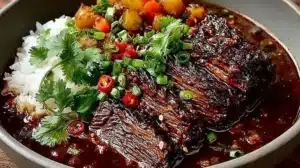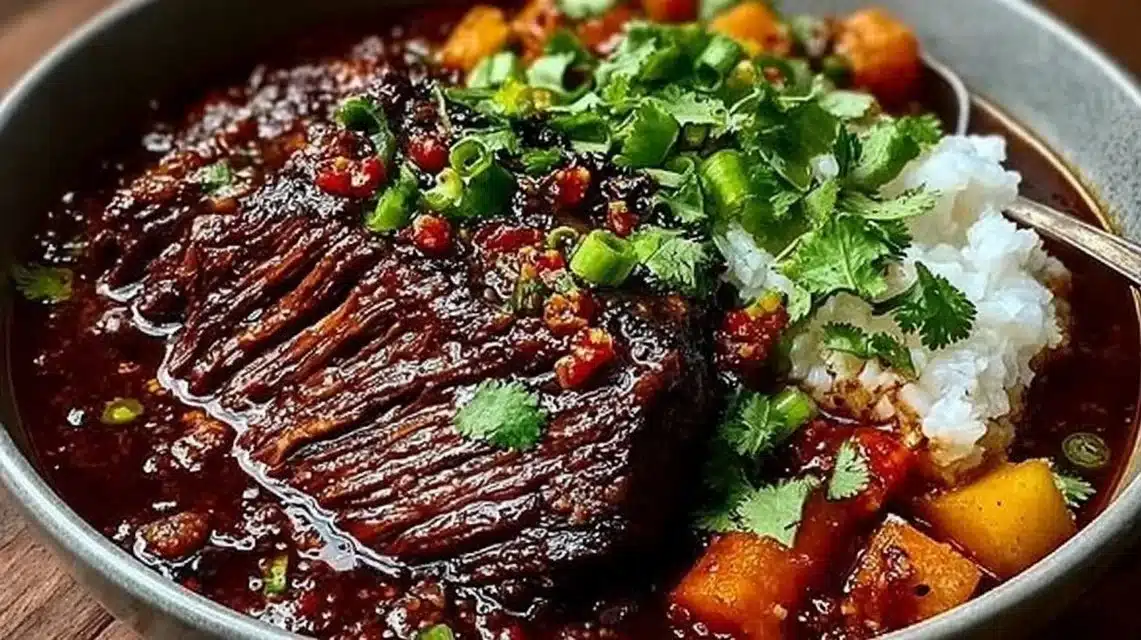
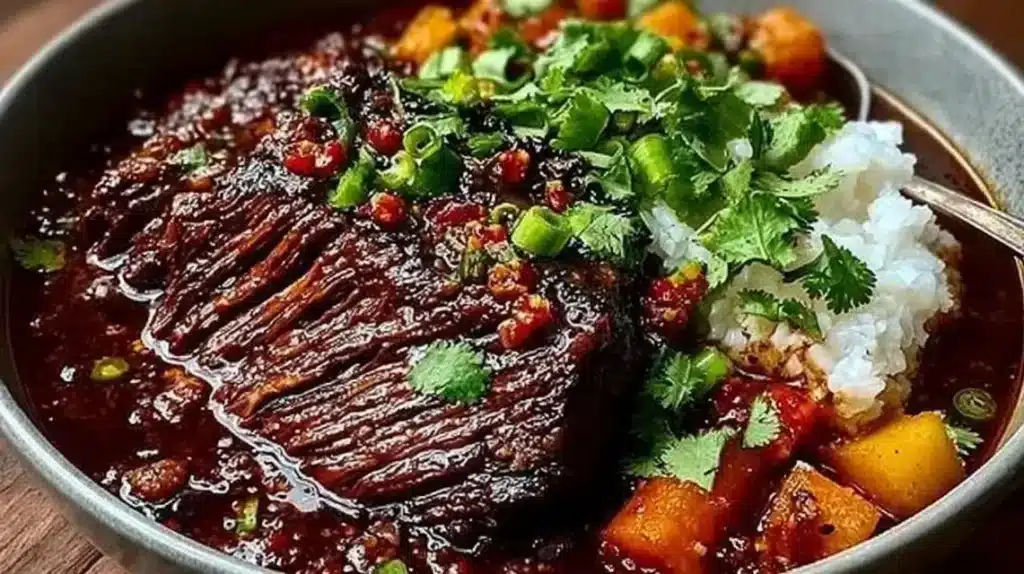
Warm, sweet, salty and gently spicy, this Korean Style Pot Roast delivers fork-tender beef with a glossy, savory sauce that clings to vegetables and rice. The chuck roast braises low and slow until meltingly soft while gochujang and soy build deep umami and a warm heat. Texture is rich — soft shredded beef, toothy carrots and soft onion — and finish notes of sesame oil and fresh green onion lift each bite. It’s an easy one-pot meal that mostly cooks itself, and it’s perfect served over steamed rice, mashed potatoes, or wrapped in lettuce for a quick weeknight dinner. For an alternative hands-off method, check the slow-cooker approach at an easy slow-cooker version on TastyInspo.
Why You’ll Love This Korean Style Pot Roast
- Hands-off braising: once seared and combined, it cooks low and slow with minimal attention.
- Bold, balanced flavor: gochujang, soy, brown sugar, and rice vinegar create sweet, salty, tangy, spicy layers.
- Deep, homey comfort: the chuck roast turns ultra-tender and soaks up the sauce.
- Simple pantry staples: uses common Asian condiments you may already have.
- Flexible serving: great over rice, mashed potatoes, in wraps, or as a hearty sandwich filling.
- Make-ahead friendly: flavors deepen after a day in the fridge, making it great for meal prep.
- Crowd-pleaser: rich and savory enough for company, easy enough for weeknights.
What Is Korean Style Pot Roast?
Korean Style Pot Roast is a braised beef dish that blends classic pot roast technique with Korean pantry flavors. You sear a chuck roast to build flavor, then simmer it slowly with gochujang (Korean chili paste), soy sauce, brown sugar and rice vinegar until fork-tender. The result is a savory, slightly sweet, mildly spicy meat that flakes easily and carries a glossy sauce. It feels like comfort food — warm, satisfying, and a little bit bold — perfect for busy weeknights or relaxed weekend dinners. The method is classic braising: low heat, plenty of time, and a tight lid so the roast becomes fall-apart tender.
Ingredients for Korean Style Pot Roast
For the Base
- 3–4 lbs chuck roast
- 3 carrots, peeled and cut into chunks
- 1 large onion, sliced
- 5 garlic cloves, minced
- 1 tablespoon fresh ginger, minced
For the Sauce
- 1/4 cup soy sauce
- 2 tablespoons gochujang Korean chili paste
- 2 tablespoons brown sugar
- 2 tablespoons rice vinegar
- 1 tablespoon sesame oil
- 1 cup beef broth
To Serve
- 2 green onions, chopped (for garnish)
- 2 tablespoons chopped cilantro (optional)
Ingredient Notes (Substitutions, Healthy Swaps)
- Chuck roast: Stick with a well-marbled chuck for best texture. You can use a 3–4 lb chuck shoulder or blade roast. Brisket can work but will change texture.
- Gochujang: Key for authentic flavor. If you don’t have it, mix 1 tablespoon hot chili paste (like sambal oelek) with 1 tablespoon miso and 1 teaspoon sugar as a short substitute (optional).
- Soy sauce: Use low-sodium soy sauce to control salt; adjust to taste near the end.
- Brown sugar: You can swap coconut sugar or honey (use 1 tbsp honey for 2 tbsp sugar, slightly sweeter).
- Rice vinegar: Apple cider vinegar is an acceptable substitute but is slightly stronger—use a touch less.
- Sesame oil: Toasted sesame oil is used for flavor finish; do not cook it long at high heat — it’s best at the end.
- Beef broth: Use a good-quality broth or stock; water plus a beef bouillon cube is acceptable in a pinch.
Step-by-Step Instructions
Step 1 – Season and sear the roast
Pat the 3–4 lb chuck roast dry and season all over with salt and pepper. Heat a Dutch oven over medium-high heat with a little neutral oil and sear the roast on all sides until deeply browned, about 3–4 minutes per side. Remove and set aside.
Visual cue: You want a dark brown crust — not burned. This crust adds big flavor.
Step 2 – Sauté the aromatics
In the same pot, add the sliced onion, minced garlic, and minced fresh ginger. Sauté for 3–4 minutes until fragrant and the onions soften and begin to brown at the edges.
Step 3 – Add sauce ingredients
Stir in 2 tablespoons gochujang, 1/4 cup soy sauce, 2 tablespoons brown sugar, and 2 tablespoons rice vinegar. Mix well so the aromatics coat with the sauce paste and sugars.
Step 4 – Deglaze with broth
Pour in 1 cup beef broth and stir, scraping the bottom of the pot to loosen browned bits and combine flavors. This deglaze lifts fond and prevents burning.
Step 5 – Return roast and add vegetables
Return the seared roast to the pot, nestle it into the sauce, and add the 3 carrot chunks around the roast. Cover the pot with the lid.
Step 6 – Braise until fork-tender
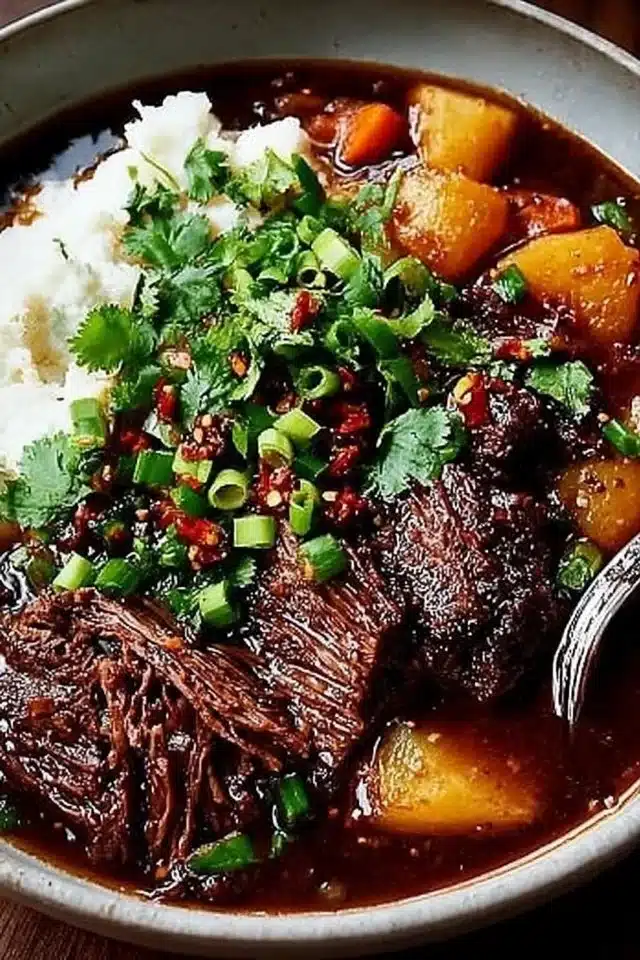
Place the covered pot in an oven set to 325°F and braise for 3 to 3.5 hours until the roast is fork-tender. Remove the roast to a cutting board, skim any excess fat from the sauce, then drizzle 1 tablespoon sesame oil over the roast and sauce. Garnish with 2 chopped green onions and 2 tablespoons chopped cilantro (optional). Slice or shred the roast and serve hot over rice, mashed potatoes, or in wraps.
Pro cue: If the roast shreds easily with two forks, it’s done. If it resists, continue braising in 20–30 minute increments.
Pro Tips for Success
- Dry the roast well before searing — moisture prevents browning.
- Sear on high heat until a deep brown crust forms; flavor builds here.
- Deglaze the pot completely with beef broth to capture all browned bits.
- Keep the oven temperature steady at 325°F for even braising.
- Check liquid level about halfway through; add a little hot broth if it’s nearly dry to prevent scorching.
- Let the roast rest 10–15 minutes before shredding to keep juices from running out.
- Taste the sauce after braising and adjust salt, sugar, or vinegar to balance flavors.
- Use a wide Dutch oven so the carrots sit around the roast rather than on top; they’ll cook evenly.
Flavor Variations
- Optional — Smoky Gochujang: Add 1/2 tablespoon smoked paprika for a subtle smoky edge.
- Optional — More Heat: Stir in 1 teaspoon extra gochujang or a pinch of red pepper flakes.
- Optional — Citrus Brightness: Add a splash (1 teaspoon) of fresh lime juice to the sauce at the end for a fresh lift.
- Optional — Honey Swap: Substitute brown sugar with 1½ tablespoons honey for a different sweet note.
- Optional — Herb Finish: Stir in chopped cilantro and a squeeze of lime before serving for a fresher finish.
Serving Suggestions
- Serve over steamed white rice or brown rice to soak up the sauce.
- Spoon over mashed potatoes for a hearty, comfort-food plate.
- Use shredded roast inside warm tortillas or lettuce wraps with extra green onion.
- Make sandwiches: pile shredded beef on toasted rolls with quick pickled onions.
- Serve alongside roasted or steamed greens (bok choy, spinach) to lighten the plate.
- Offer kimchi or pickled vegetables on the side for texture and acidity.
Make-Ahead, Storage & Reheating
- Make-ahead: You can sear the roast and prepare the sauce a day ahead. Store covered in the fridge and finish braising the next day, or fully cook and reheat later.
- Fridge storage: Keep cooked roast and sauce in an airtight container up to 3–4 days.
- Reheating: Rewarm gently on the stovetop over low heat with a splash of beef broth to loosen the sauce. Avoid very high heat to prevent drying the meat.
- Texture changes: The sauce will thicken in the fridge and the meat will firm up; gently reheat and add broth if you want a looser sauce. Flavors often develop and taste even better the next day.
Storage and Freezing Instructions
- Freeze: Cool the roast and sauce fully, then portion into airtight, freezer-safe containers. Freeze up to 3 months for best quality.
- Thaw: Thaw overnight in the refrigerator before reheating gently on the stove with a splash of broth.
- Note: Vegetables like carrots may soften more after freezing and reheating. If you care about vegetable texture, store sauce and shredded beef separately from cooked carrots and add them after reheating.
Nutrition Facts (Per Serving)
Calories | Protein | Carbs | Fat | Fiber | Sodium
— | —: | —: | —: | —: | —:
Approx. 520 kcal | 38 g | 20 g | 28 g | 2 g | 900 mg
Estimates vary by brands and portions.
FAQ About Korean Style Pot Roast
Q: My sauce is too thick. How do I thin it?
A: Stir in a little hot beef broth or water, 1–2 tablespoons at a time, until you reach the desired consistency.
Q: The roast is not tender after 3 hours. What should I do?
A: Continue braising in 20–30 minute increments. Tougher spots or variations in oven temps can require more time.
Q: Can I use a slow cooker instead?
A: Yes. Brown the roast and aromatics, then transfer everything to a slow cooker and cook on low 6–8 hours or until fork-tender.
Q: How can I make this less salty?
A: Use low-sodium soy sauce and taste the sauce after cooking. Add a touch more brown sugar or vinegar to balance saltiness if needed.
Q: Can I omit gochujang?
A: You can, but gochujang provides signature depth and mild heat. As a last resort, use a mix of miso + chili paste to mimic the flavor (optional).
Q: Can I use other cuts of beef?
A: Chuck is best for braising. Brisket or short ribs work but change the cooking time and texture.
TastyInspo Notes
- Finish with a small drizzle of extra sesame oil at the table for aroma and shine.
- Chop green onions thinly on a diagonal for a nicer visual and texture.
- For a glossy sauce, skim fat after braising and reduce sauce on the stove for 5–7 minutes.
- Serve with quick-pickled cucumbers to cut richness and add crunch.
- Use tongs to move the roast when plating to keep its shape if you plan to slice.
Troubleshooting
- Bland flavor: Brown the roast thoroughly and scrape up browned bits; finish with a splash of rice vinegar to brighten.
- Too watery sauce: Simmer uncovered on the stove for 5–10 minutes to reduce and thicken.
- Overcooked/shredded too finely: Let roast rest longer and slice instead of shredding next time.
- Burnt bottom: Reduce oven temp slightly and add more broth; avoid stirring aggressively during braise.
- Too salty: Add unsalted broth, a peeled whole potato while simmering (remove before serving), or a squeeze of rice vinegar to balance.
- Sauce too spicy: Add a pinch of sugar or extra broth to mellow heat.
Final Thoughts
This Korean Style Pot Roast is a simple, one-pot way to bring bold Korean flavors to a classic braise. It’s forgiving, flexible, and delivers rich, comforting results with little hands-on time. Try it for a family dinner, meal prep, or a weekend that calls for something special but easy.
Conclusion
If you’d like another take or inspiration for variations, see the detailed write-up and photos at Korean Style Pot Roast | The Modern Proper.
Korean Style Pot Roast
Ingredients
For the Roast
- 3-4 lbs chuck roast Stick with a well-marbled chuck for best texture.
- 3 pieces carrots, peeled and cut into chunks
- 1 large onion, sliced
- 5 cloves garlic, minced
- 1 tablespoon fresh ginger, minced
For the Sauce
- 1/4 cup soy sauce Use low-sodium to control salt.
- 2 tablespoons gochujang Korean chili paste Key for authentic flavor.
- 2 tablespoons brown sugar Can swap with coconut sugar or honey.
- 2 tablespoons rice vinegar Apple cider vinegar can be substituted.
- 1 tablespoon sesame oil Best used at the end for flavor.
- 1 cup beef broth Use good-quality or homemade broth.
To Serve
- 2 pieces green onions, chopped (for garnish)
- 2 tablespoons chopped cilantro (optional)
Instructions
Preparation
- Pat the chuck roast dry and season with salt and pepper.
- Heat a Dutch oven over medium-high heat and add a little neutral oil.
- Sear the roast until deeply browned, about 3–4 minutes per side, then remove and set aside.
Cooking
- In the same pot, add onion, garlic, and ginger; sauté for 3–4 minutes until fragrant.
- Stir in gochujang, soy sauce, brown sugar, and rice vinegar; mix well.
- Pour in beef broth, deglazing the pot to loosen browned bits.
- Return the roast to the pot and nestle into the sauce, adding carrot chunks around.
- Cover and braise in an oven preheated to 325°F for 3 to 3.5 hours, until fork-tender.
Serving
- Remove the roast, skim excess fat from the sauce, then drizzle with sesame oil.
- Garnish with green onions and cilantro, then serve over rice or mashed potatoes.