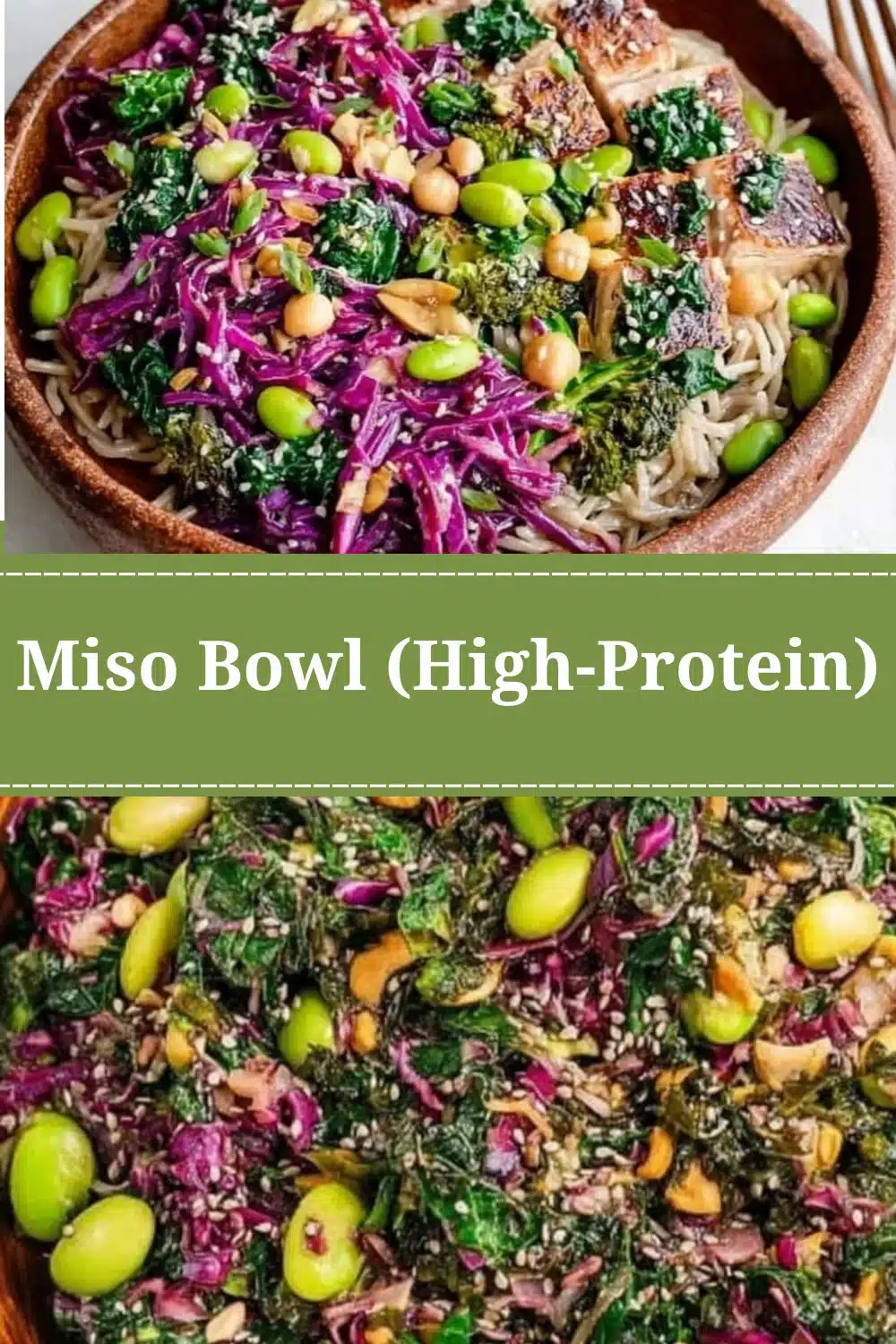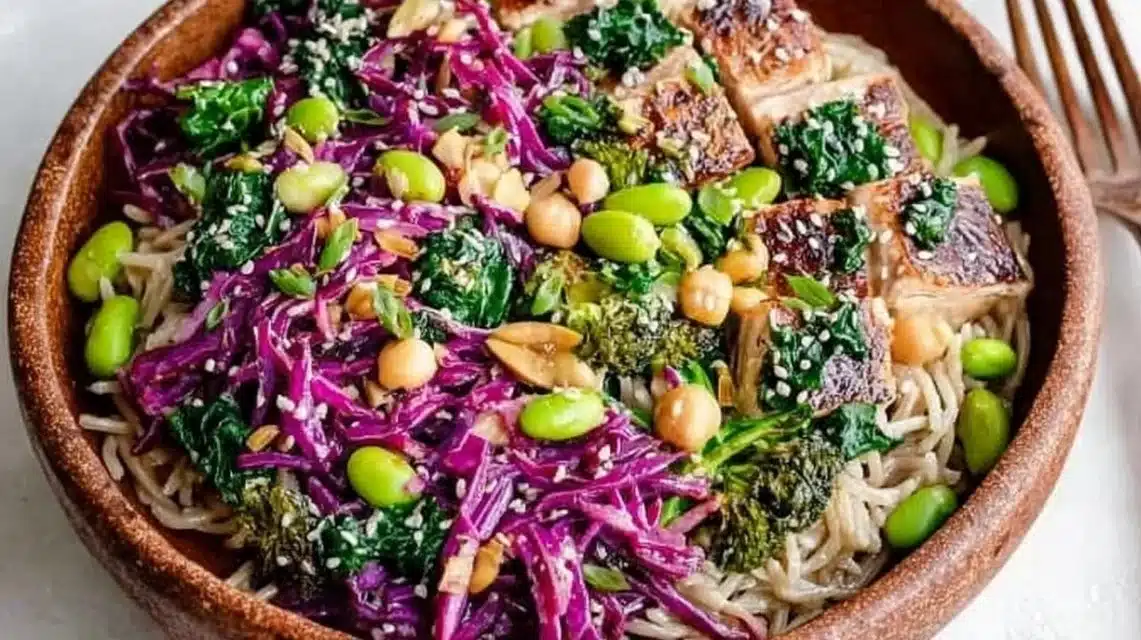
This miso bowl is bright, savory, and built for protein. Crunchy chopped kale and red cabbage meet nutty soba noodles and a big scoop of shelled edamame for texture and bite. The dressing is bold — white miso, tamari, rice vinegar, garlic, ginger, and a touch of maple — so every forkful tastes layered and balanced. It’s fast to assemble on weeknights and plays well for meal prep. Serve it warm, chilled, or room temperature; a squeeze of lemon or extra scallions finishes it nicely and keeps it fresh.
If you like bold bowl recipes, try a different flavor profile with our Bang Bang Chicken Bowl recipe for another easy weeknight idea.
Why You’ll Love This Miso Bowl (High-Protein)
- High in plant protein from edamame, soba, and peanuts — great for post-workout or lunch.
- Bright, savory dressing that clings to every ingredient without being heavy.
- Crunchy raw greens and soft noodles give a satisfying mix of textures.
- Fast to make: noodles cook while you chop and toss the dressing.
- Flexible: swap noodles for grains or change herbs to suit your mood.
- Meal-prep friendly: holds well in the fridge and tastes great cold or at room temp.
- Balanced flavors: umami from miso, tang from rice vinegar, heat from ginger and garlic.
What Is Miso Bowl (High-Protein)?
This Miso Bowl (High-Protein) is a composed bowl that layers chopped kale and red cabbage with protein-rich edamame and soba noodles, then dresses everything in a mellow white miso sauce. It tastes savory and slightly sweet with a clean ginger-garlic kick and a nutty finish from sesame seeds and peanuts. The texture is a mix of crisp greens, chewy noodles, and soft edamame — very satisfying. It’s a weeknight-friendly bowl that feels like comfort food but still fresh and light.
The method is simple: cook the noodles and edamame (if needed), chop the raw veg, whisk a quick miso dressing, and assemble. The vibe is weekday comfort with a healthy, protein-forward twist.
Ingredients for Miso Bowl (High-Protein)
For the Base
- 1 large bunch kale (about 4 packed cups chopped)
- 1/2 medium red cabbage (about 4 packed cups chopped)
- 10 ounces shelled frozen edamame
- Drizzle of olive oil (or lemon juice)
- 1 teaspoon onion powder (optional)
- 1 teaspoon garlic powder (optional)
- 3/4 teaspoon sumac (optional)
- 1/2 teaspoon salt-free seasoning (or salt to taste)
- 3 scallions (thinly sliced, white and light green parts)
- 1/2 cup chopped cilantro (or parsley, mint, or basil)
- 1 tablespoon sesame seeds
- 1/2 cup unsalted peanuts (roughly chopped, optional)
For the Sauce
- 1 1/2 tablespoons white miso (or mellow miso)
- 1 tablespoon tamari (or soy sauce, preferably reduced sodium)
- 3 tablespoons rice vinegar
- 2 cloves garlic (minced)
- 1 1/2 inches ginger (minced or grated)
- 1 tablespoon maple syrup (or date syrup, or to taste)
For the Starch
- 8 ounces soba noodles (or vermicelli noodles, quinoa, farro, or kamut — see notes)
Ingredient Notes (Substitutions, Healthy Swaps)
- Kale & Cabbage: Use spinach, bok choy, or mixed salad greens if you want a softer base. Massage kale with the drizzle of olive oil or lemon to soften it.
- Edamame: Swap for chickpeas, white beans, or cooked tofu for similar protein.
- White Miso: If you only have darker miso, reduce amount slightly — darker miso is saltier and stronger. For a lower-sodium option, use reduced-sodium tamari and a little extra vinegar to balance.
- Soba Noodles: If gluten-free, use rice vermicelli, quinoa, or cooked farro for chew and fiber.
- Peanuts: Swap for toasted almonds, cashews, or omit for nut-free. Sesame seeds keep the nutty note even without peanuts.
- Sweetener: Use a neutral sweetener like agave or honey (if not strictly vegan). Adjust to taste.
Step-by-Step Instructions
Step 1 – Prep the veg and aromatics
- Chop the kale and red cabbage into bite-sized pieces. Thinly slice scallions. Mince garlic and grate the ginger.
- Toss the chopped kale with a drizzle of olive oil or lemon and a pinch of salt-free seasoning; let it sit while you finish other prep.
- Visual cue: The kale should look glossy and slightly wilted after massaging with oil or lemon.
Step 2 – Cook noodles and edamame
- Bring a pot of salted water to a boil. Cook soba noodles according to package directions until al dente. In the last 3–4 minutes, add the frozen shelled edamame to the pot to heat through.
- Drain both well and run briefly under cold water if you prefer a chilled bowl.
- Pro cue: Don’t overcook soba — it should hold a bit of bite so it doesn’t turn mushy when dressed.
Step 3 – Make the miso dressing
- Whisk together white miso, tamari, rice vinegar, minced garlic, grated ginger, and maple syrup until smooth. If thick, add 1–2 teaspoons of warm water to loosen.
- Taste and adjust: more maple for sweetness, more tamari for salt, or more vinegar for brightness.
Step 4 – Assemble the bowl
- In a large bowl, combine the kale, red cabbage, scallions, cilantro, sesame seeds, and roughly chopped peanuts.
- Add the drained noodles and edamame, then pour the miso dressing over everything. Toss gently to coat.
Step 5 – Season and serve
- Sprinkle with optional onion powder, garlic powder, and sumac for a fragrant lift. Adjust salt if needed.
- Serve warm, at room temp, or chilled. Garnish with extra sesame seeds, scallions, or herbs.
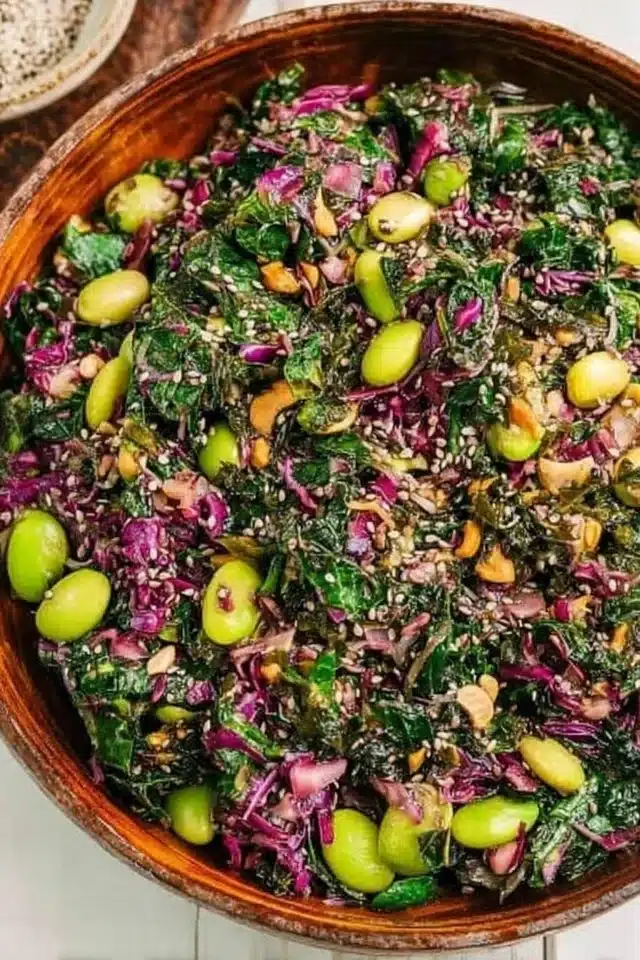
- Visual cue: The bowl should show even coating — no dry pockets — and a mix of colors from greens, purple cabbage, and the paler noodles.

Pro Tips for Success
- Heat control: Cook soba to al dente and shock in cold water if you want firm noodles for chilled bowls.
- Miso handling: Dissolve miso in a little warm water or vinegar first to avoid clumps in the dressing.
- Kale texture: Massage kale with oil or lemon for 1–2 minutes to soften and reduce bitterness.
- Balance flavors: Miso adds salt, so add tamari slowly and taste. Maple syrup should be just enough to round harsh edges.
- Nut toast: Lightly toast peanuts and sesame seeds in a dry pan for 1–2 minutes for extra aroma.
- Make it uniform: Toss gently but thoroughly so the dressing coats the vegetables and noodles evenly.
- Serving temp: Bring the bowl to room temp if stored chilled — flavors marry better than serving ice-cold.
Flavor Variations
- Optional Chili-Sesame: Add 1 teaspoon chili oil or a pinch of red pepper flakes to the dressing for heat.
- Optional Citrus Twist: Add 1 tablespoon freshly squeezed orange or lime juice to brighten the dressing.
- Optional Creamy Miso: Stir in 1–2 tablespoons tahini or peanut butter to the dressing for creaminess and richer flavor.
- Optional Herb Swap: Replace cilantro with mint or basil for a fresh twist that pairs well with the ginger.
- Optional Grain Bowl: Replace half the soba with cooked farro or quinoa for extra chew and fiber.
- Optional Crunch Boost: Top with roasted seaweed strips or fried shallots for texture contrast.
Serving Suggestions
- Serve in wide bowls so every bite mixes greens, noodle, and edamame.
- Pair with a simple miso soup and steamed greens for a full Asian-inspired meal.
- Offer lime wedges or extra tamari at the table for guests to adjust acidity and salt.
- Add a soft-boiled egg on top for extra richness (optional).
- Great for lunches: pack cold in meal-prep containers; add peanuts and sesame seeds at the time of eating if you want the crunch fresh.
- Serve as a light dinner with grilled fish or tempeh on the side.
Make-Ahead, Storage & Reheating
- Make-ahead: Prep the dressing and chop the vegetables up to 3 days in advance. Cook noodles and edamame and store separately.
- Storage: Combine and store in an airtight container in the refrigerator for up to 4 days.
- Reheating: If you prefer warm, briefly microwave a serving for 30–60 seconds or warm in a skillet just until heated through. Toss after warming so dressing coats everything.
- Texture note: Greens will soften over time and the bowl will absorb some dressing flavors; this often improves taste but reduces crunch. If you want maximum crunch, store greens separately and assemble before eating.
Storage and Freezing Instructions
- Freezing not recommended: The dressing, cabbage, and greens change texture after freezing and thawing, becoming limp and watery.
- Best approach: Freeze cooked proteins or grains (like soba or farro) separately if needed, then thaw and reassemble with fresh or refrigerated greens and dressing.
- Short-term fridge tip: Keep dressing in a separate small container and add just before serving for brighter flavor and texture.
Nutrition Facts (Per Serving)
Calories | Protein | Carbs | Fat | Fiber | Sodium
— | —: | —: | —: | —: | —:
~480 kcal | ~28 g | ~48 g | ~12 g | ~9 g | ~650 mg
Estimates vary by brands and portions.
FAQ About Miso Bowl (High-Protein)
Q: My dressing is too thick — how do I thin it?
A: Stir in 1–2 teaspoons of warm water or rice vinegar until you reach the desired consistency.
Q: Can I use frozen edamame without cooking?
A: If they are pre-cooked and shelled, thaw them or heat briefly. If raw frozen, cook them in boiling water for 3–4 minutes first.
Q: How do I stop the soba from sticking?
A: Rinse cooked soba under cold running water and toss with a tiny drizzle of oil if you won’t dress them immediately.
Q: What if I don’t have white miso?
A: Use mellow or yellow miso and reduce the amount slightly; taste and adjust with extra vinegar or maple syrup.
Q: Is this recipe vegan?
A: Yes, as written it’s vegan. Add a soft-boiled egg or grilled fish only if you want animal protein.
Q: How do I keep the kale from getting bitter?
A: Massage it with oil or lemon and let it sit 5 minutes before assembling; this breaks down fibers and reduces bitterness.
TastyInspo Notes
- Toast sesame seeds and peanuts just before serving for the best aroma.
- A final squeeze of lemon or lime brightens the whole bowl and lifts the miso flavor.
- Layer your bowl so noodles sit under a mound of greens for a nicer presentation and easier eating.
- Chop herbs finely and scatter on top to make each bite fresh and herb-forward.
- If plating for guests, serve dressing on the side so everyone can control the salt level.
Troubleshooting
- Bland bowl: Add a pinch more tamari or a splash of rice vinegar to wake up flavors.
- Too salty: Add more shredded cabbage or kale and a small splash of water or lemon to balance.
- Watery dressing: Use less vinegar or chill the dressing; miso can separate if too cold or too thin.
- Overcooked noodles: Rinse in cold water to stop cooking and toss with oil to prevent clumping.
- Mushy greens: Don’t over-massage kale; if already too soft, add extra raw cabbage or fresh herbs for crunch.
- Clumpy miso: Dissolve miso in a little warm water before adding other dressing ingredients.
Final Thoughts
This Miso Bowl (High-Protein) is simple to make, full of texture, and easy to customize. It works for quick lunches, make-ahead dinners, or a satisfying meal any time you want something nourishing and flavorful. Try small swaps and keep the dressing balanced for the best results.
Conclusion
For another bold bowl to add to your weekly rotation, check the detailed recipe and ideas on Longevity Miso Bowl (High-Protein) – Cooking For Peanuts.