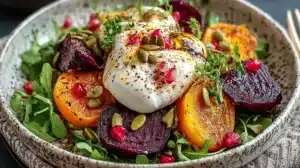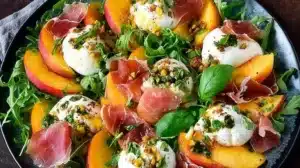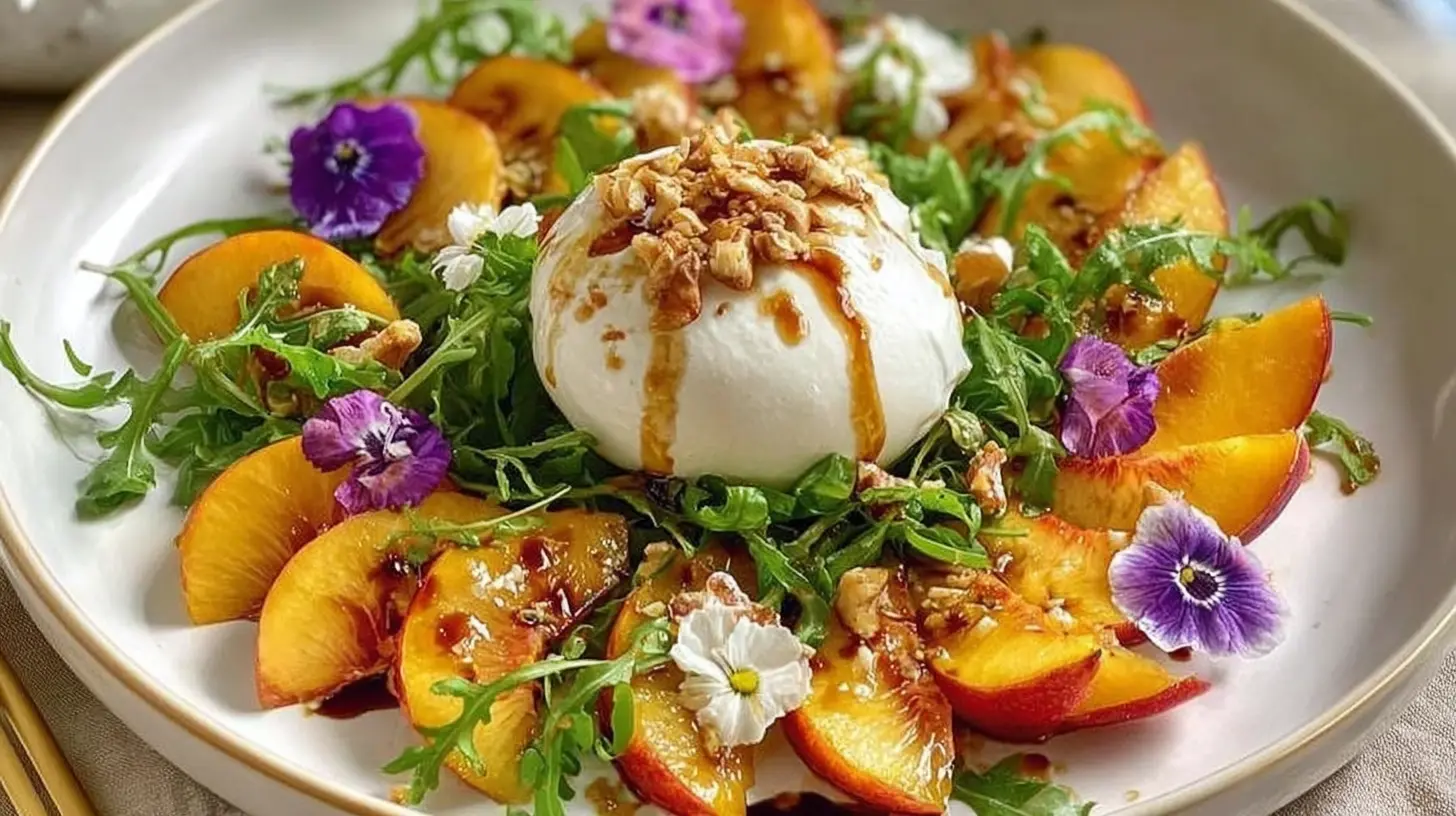
Peach Burrata Salad is a bright, fresh plate of contrasts: creamy burrata sits against peppery arugula while juicy ripe peaches add sweet warmth and toasted almonds give a clean crunch. The taste is sweet, slightly peppery, rich and milky, with a sharp pop from balsamic glaze and a gentle olive oil finish. The textures move from silky cheese to crisp greens and tender fruit. It’s quick to assemble and needs no cooking, so it’s perfect for a fast weeknight dinner, a light lunch, or a relaxed brunch. If you enjoy burrata-forward salads, try the related Beet and Carrot Salad with Burrata for another creamy, colorful option.
Why You’ll Love This Peach Burrata Salad
- Hands-off prep: no cooking required — just slice and assemble.
- Sweet-and-savory balance from ripe peaches and tangy balsamic glaze.
- Creamy burrata makes each bite feel indulgent without heavy cooking.
- Fast to make for guests — looks elegant with little effort.
- Flexible: works as a starter, side, or light main with simple swaps.
- Textural contrast: soft cheese, tender fruit, crisp arugula, and crunchy almonds.
- Seasonal star: shines with fresh summer peaches and quick to adapt in other seasons.
- Minimal ingredients: pantry-friendly and easy to shop for.
What Is Peach Burrata Salad?
Peach Burrata Salad is a simple composed salad that pairs fresh burrata cheese with sliced ripe peaches on a bed of arugula, finished with almonds, olive oil, balsamic glaze, salt, and pepper. The flavor profile is sweet, creamy, peppery, and slightly tangy. There is no cooking — this is an assembly recipe that relies on ingredient quality and timing. The vibe is light, elegant, and relaxed: it fits brunches, summer dinners, and casual entertaining. The salad highlights fresh produce and a single soft cheese to create a refined but uncomplicated dish.
Ingredients for Peach Burrata Salad
For the Base
- Arugula
For the Fruit
- Ripe peaches
For the Cheese
- Burrata cheese
For Crunch
- Almonds
To Finish
- Balsamic glaze
- Olive oil
- Salt
- Pepper
Ingredient Notes (Substitutions, Healthy Swaps)
- Burrata: If burrata is not available, use fresh mozzarella or stracciatella as a close substitute. Burrata gives the creamiest center; mozzarella will be firmer.
- Peaches: Use very ripe peaches for the best sweetness. If peaches are out of season, substitute ripe nectarines or high-quality canned peaches drained well (optional).
- Arugula: Peppery arugula works best. For a milder salad, swap for baby spinach, mixed baby greens, or watercress.
- Almonds: Toasted sliced almonds add the best crunch. Use chopped walnuts or pistachios if you prefer. For a nut-free option, use toasted sunflower seeds.
- Balsamic glaze: If you don’t have glaze, reduce balsamic vinegar with a touch of sugar until thick, or drizzle high-quality aged balsamic sparingly.
- Olive oil: Use a good extra-virgin olive oil for flavor. A lighter olive oil is fine if you prefer less peppery olive notes.
- Salt & pepper: Use flaky sea salt or kosher salt for finishing. Freshly cracked black pepper gives better flavor than pre-ground.
Step-by-Step Instructions
Step 1 – Prepare the arugula bed
Arrange a bed of arugula on a serving plate. Spread the leaves evenly so they form a loose, textured base.
Visual cue: The arugula should look fresh, crisp, and slightly airy, not tightly packed.
Step 2 – Slice the peaches
Slice the ripe peaches into even wedges or half-moons and place them on top of the arugula in a single layer or gentle overlapping pattern.
Step 3 – Add the burrata
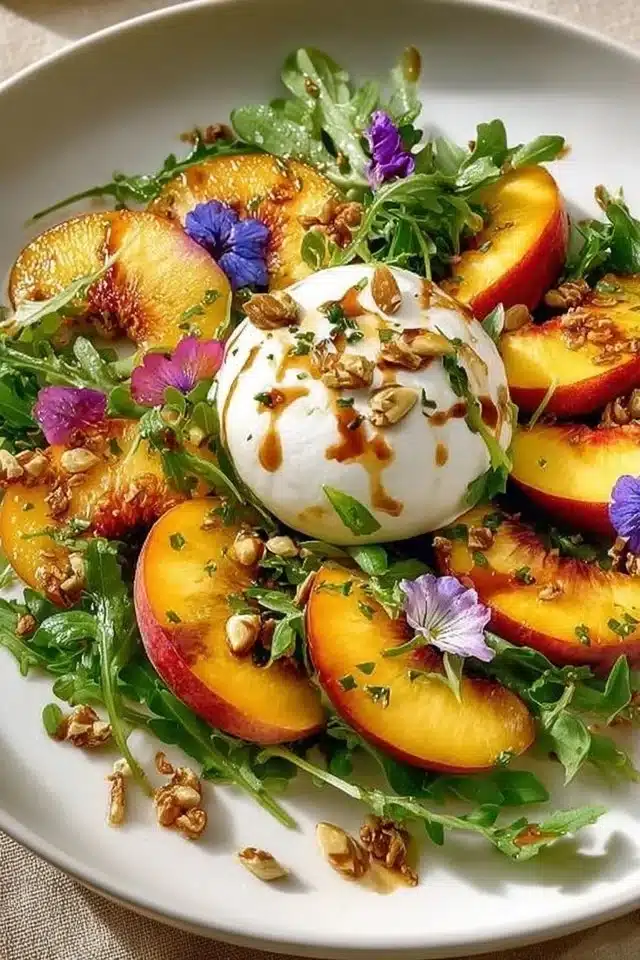
Tear the burrata with your hands and place it in the center of the salad. Let the creamy center slightly ooze over the peaches and greens for a decadent look and texture.
Pro cue: Tear the burrata just before serving so the center remains silky and fresh.
Step 4 – Sprinkle the almonds
Scatter almonds evenly over the salad. Use whole, sliced, or chopped almonds depending on your preferred crunch level.
Step 5 – Drizzle fats and glaze
Drizzle olive oil lightly over the salad, then finish with balsamic glaze in a thin ribbon across the plate. The glaze should add a sweet-tart concentration without overpowering.
Step 6 – Season and serve
Season with salt and pepper to taste. Serve immediately and enjoy. The salad is best eaten right away while burrata is fresh and peaches retain their texture.
Pro Tips for Success
- Use the ripest peaches you can find; they bring the most flavor and natural juice.
- Tear burrata by hand, not with a knife, to keep the creamy center intact.
- Toast almonds in a dry pan over medium heat for 3–5 minutes, shaking the pan often until fragrant; cool before adding to preserve crunch.
- Place the burrata in the center last so it stays cool and visually appealing.
- Drizzle olive oil evenly — a light stream helps bring out flavors without overwhelming the delicate cheese.
- Add salt at the end to season the whole plate; flaky sea salt works beautifully as a final touch.
- If using balsamic reduction instead of glaze, apply sparingly — a little goes a long way.
- Keep all cold ingredients chilled until assembly to ensure the burrata stays firm and the peaches retain shape.
Flavor Variations
- Optional: Prosciutto and Honey — add thin slices of prosciutto around the plate and a light drizzle of honey for a sweet-salty contrast (omit if avoiding pork).
- Optional: Herb Brightness — sprinkle chopped fresh basil or mint over the salad for fresh herbal notes.
- Optional: Citrusy Lift — add a few drops of lemon juice or thin lemon zest curls to brighten the overall flavor.
- Optional: Spicy Kick — lightly dust with red pepper flakes or add a few turns of cracked black pepper for heat.
- Optional: Cheesy Swap — use ricotta salata crumbles instead of burrata for a saltier, firmer texture (keeps salad drier).
- Optional: Grainy Base — serve the salad over cooked farro or quinoa to make it a heartier main course.
Serving Suggestions
- Serve as a starter for a summer dinner party with warm crusty bread on the side.
- Pair with grilled chicken or fish to turn the salad into a light main.
- Offer as part of a brunch spread alongside frittata and fresh fruit.
- Plate on small individual salad plates for elegant single-serve presentations.
- Add a chilled glass of iced tea or citrus-infused sparkling water for a simple pairing.
- Place burrata in the center and let guests tear and combine pieces themselves for a casual, shareable plate.
Make-Ahead, Storage & Reheating
- Make-ahead: Prep components separately. Wash and dry the arugula, slice peaches, and toast almonds up to one day ahead and store them chilled in airtight containers. Keep burrata refrigerated and add it just before serving.
- Storage duration: Store assembled salad in the fridge for up to 8–12 hours, but note texture changes. Burrata and peaches will become softer and the arugula may wilt.
- Reheating: This salad is best served cold or at room temperature. Do not reheat the burrata. If you warmed any protein served with it, reheat that separately.
- Texture changes: Burrata will lose some creaminess if stored too long; peaches may release juice, making the arugula soggy. Assemble as close to serving time as possible for best texture.
Storage and Freezing Instructions
- Freezing is not recommended. Burrata and fresh peaches do not freeze well: burrata will become grainy and watery when thawed, and peaches will become mushy.
- Instead of freezing, store components separately for up to one day: chilled burrata in its original packaging in the coldest part of the fridge, sliced peaches in an airtight container lined with a paper towel to absorb excess moisture, and almonds at room temperature in a sealed jar.
Nutrition Facts (Per Serving)
- Calories | Protein | Carbs | Fat | Fiber | Sodium
- 320 kcal | 10 g | 18 g | 22 g | 3 g | 280 mg
Estimates vary by brands and portions.
FAQ About Peach Burrata Salad
Q: Can I use frozen peaches?
A: You can, but thawed frozen peaches are softer and wetter. Pat them dry and drain excess liquid before assembling.
Q: How ripe should the peaches be?
A: They should yield slightly to gentle pressure and smell sweet. Overripe fruit will be too soft to slice neatly.
Q: Can I make this dairy-free?
A: For a dairy-free version, omit burrata and use a dairy-free ricotta or marinated tofu for creaminess.
Q: Will the salad be soggy if made ahead?
A: Yes, the arugula and peaches can release moisture. Store components separately and assemble just before serving for best texture.
Q: How much balsamic glaze should I use?
A: Use a light ribbon across the salad — 1 to 2 tablespoons total, adjusted to taste. It’s concentrated, so a little goes a long way.
Q: Can I prepare this without nuts?
A: Yes. Replace almonds with toasted seeds like sunflower or omit entirely for a nut-free salad.
TastyInspo Notes
- Finish with a few flakes of sea salt right before serving for a bright pop against the creamy burrata.
- Serve on a large white platter to make the colors of peaches and arugula stand out.
- Use whole burrata and let guests break it open at the table for a dramatic presentation.
- For a glossy finish, warm the balsamic glaze slightly and spoon it in a thin stream across the plate.
- If plating for photos, arrange peaches in a fan around the burrata and scatter almonds last to maintain crisp edges.
Troubleshooting
- Problem: Salad tastes bland. Fix: Add a pinch more salt and freshly cracked pepper, and make sure the peaches are ripe. A little extra balsamic glaze can boost acidity.
- Problem: Burrata is watery. Fix: Gently pat the outside rind with a paper towel, and serve immediately after tearing to avoid excess pooling.
- Problem: Peaches are too firm. Fix: Let them ripen at room temperature for a day or slice thinly to make them easier to eat.
- Problem: Arugula wilts quickly. Fix: Dry greens thoroughly after washing and keep chilled until assembly; dress only at serving.
- Problem: Almonds lose crunch. Fix: Toast right before use or store in an airtight container and add just before serving.
- Problem: Balsamic glaze too sweet. Fix: Use a thinner ribbon and balance with a small squeeze of lemon or extra cracked pepper.
Final Thoughts
Peach Burrata Salad is simple, fast, and elegant — it relies on quality ingredients and light assembly to make a big impression. Serve it fresh, keep components cold until the last moment, and let the sweet peaches and creamy burrata shine.
Conclusion
For another summer-ready take on burrata and fruit, check out this detailed recipe for Summer Peach Salad with Burrata which offers a similar approach and serving ideas.
Peach Burrata Salad
A light and refreshing salad featuring creamy burrata, ripe peaches, peppery arugula, and crunchy almonds, drizzled with balsamic glaze and olive oil for a deliciously balanced dish.
For the Base
- 4 cups Arugula (Peppery arugula works best.)
For the Fruit
- 2 Ripe peaches (Use very ripe peaches for the best sweetness.)
For the Cheese
- 8 oz Burrata cheese (If burrata is unavailable, use fresh mozzarella or stracciatella.)
For Crunch
- 1/2 cup Almonds (Use sliced, chopped, or whole almonds as preferred.)
To Finish
- 2 tbsp Balsamic glaze (Drizzle high-quality aged balsamic if not using glaze.)
- 2 tbsp Olive oil (Use a good extra-virgin olive oil for flavor.)
- to taste Salt (Use flaky sea salt or kosher salt.)
- to taste Pepper (Freshly cracked black pepper is preferred.)
Preparation
- Arrange a bed of arugula on a serving plate. Spread the leaves evenly.
- Slice the ripe peaches into wedges and place them on top of the arugula.
- Tear the burrata with your hands and place it in the center of the salad.
- Scatter almonds evenly over the salad.
- Drizzle olive oil and balsamic glaze over the salad.
- Season with salt and pepper to taste. Serve immediately.
Use the ripest peaches for best flavor. Store components separately if prepping ahead. Best served fresh.