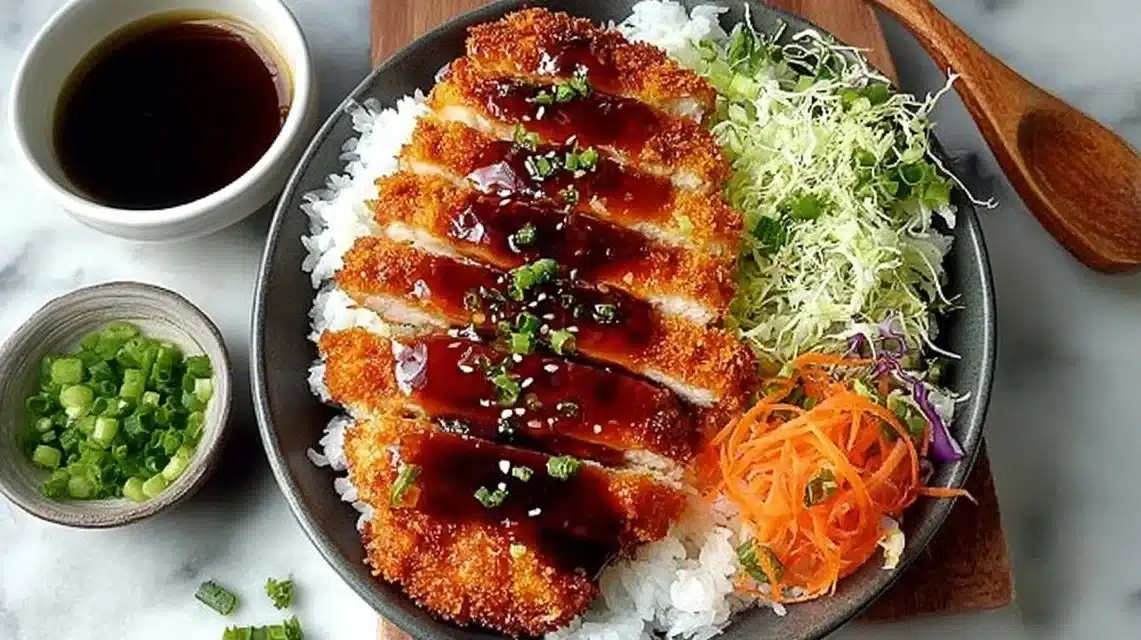
Easy homemade chicken katsu is a crisp, golden breaded chicken cutlet with a juicy, tender inside and a crunchy panko crust. The taste is savory and mildly nutty from the panko, with a soft, well-seasoned chicken center that pairs perfectly with tangy katsu sauce. This version is quick and simple: a three-step breading station and a short pan-fry make it a perfect weeknight meal. It’s great sliced over steamed rice or tucked into a sandwich for lunch. If you want a different weeknight idea, try it alongside a bright, easy grain bowl like an anti-inflammatory turmeric chicken rice for a fuller meal.
Why You’ll Love This Easy Homemade Chicken Katsu
- Crunchy panko crust that stays crisp when properly drained and served.
- Simple pantry ingredients: flour, egg, panko, salt, pepper, and oil.
- Fast cook time — about 4–5 minutes per side for quick weeknight dinners.
- Tender, juicy chicken breasts inside the crisp coating.
- Flexible: makes great sandwiches, rice bowls, or a classic katsu plate.
- Kid-friendly flavors and easy to cut into strips for dipping.
- Low prep fuss — a basic breading station you can set up in minutes.
- Makes a restaurant-style dish at home without complex techniques.
What Is Easy Homemade Chicken Katsu?
Chicken katsu is a Japanese-style breaded chicken cutlet. You pound or leave the breasts whole, dredge them in flour, dip in beaten egg, and coat with panko breadcrumbs. The cooking method here is shallow frying in a skillet to achieve a golden crust and a moist interior. The taste is simple and comforting: lightly seasoned chicken with a crispy, slightly airy breadcrumb exterior. The vibe is classic comfort food — great for a relaxed weeknight, a casual weekend lunch, or a simple dinner when you want something satisfying without a long ingredient list.
Ingredients for Easy Homemade Chicken Katsu
For the Base
- 2 chicken breasts
- 1/2 cup all-purpose flour
- 1 egg, beaten
- 1 cup panko breadcrumbs
- Salt and pepper to taste
- Oil for frying
To Serve
- Katsu sauce (for serving)
Ingredient Notes (Substitutions, Healthy Swaps)
- Chicken breasts: Use thin-cut breasts or butterflied breasts for even cooking. You can also pound thicker breasts gently to a uniform thickness.
- Panko breadcrumbs: Panko gives the light, airy crunch. If you must substitute, use regular breadcrumbs mixed with a bit of oil for crispness, but expect a denser crust.
- Flour: All-purpose flour works best for the initial dredge. For a gluten-free option, use rice flour or a 1:1 gluten-free flour blend.
- Egg: If you need an egg-free binder, try a slurry of 2 tablespoons of plain yogurt and 1 tablespoon water, but the texture will differ slightly.
- Oil for frying: Use neutral oils with a high smoke point — vegetable, canola, or sunflower oil are good choices. Avoid strong-flavored oils that will change the taste.
Optional swaps are allowed but label them as optional in your prep and keep the base method the same.
Step-by-Step Instructions
Step 1 – Season the chicken
Pat the chicken breasts dry with paper towels. Season both sides with salt and pepper to taste. If one breast is much thicker than the other, slice it in half horizontally or gently pound to an even thickness so both cook evenly.
Visual cue: The chicken should be dry to the touch and evenly seasoned before coating.
Step 2 – Set up the breading station
Arrange three shallow dishes: one with the 1/2 cup flour, one with the beaten egg, and one with the 1 cup panko breadcrumbs. This keeps the process smooth and avoids clumping.
Step 3 – Bread the chicken
Dredge each chicken breast in flour, shaking off any excess. Dip into the beaten egg, letting extra drip off. Press into the panko breadcrumbs until evenly coated. Make sure the breadcrumb layer covers the chicken fully.
Visual cue: The coated chicken should have an even, dry-looking breadcrumb crust with no bare spots.
Step 4 – Heat the oil and fry
In a skillet, pour enough oil to cover the bottom by about 1/8–1/4 inch and heat over medium heat until shimmering. Place the breaded breasts in the skillet without crowding. Fry for about 4–5 minutes per side, until the crust is golden brown and the chicken is cooked through.
Pro cue: Cook until an instant-read thermometer in the thickest part reads 165°F (74°C). If the crust browns too fast, lower the heat slightly and finish cooking a bit longer.
Step 5 – Drain and rest
Transfer the cooked katsu to a paper towel-lined plate to drain excess oil. Let rest 2–3 minutes — this brief rest helps the juices settle and keeps the cutlet juicy inside.
Step 6 – Serve
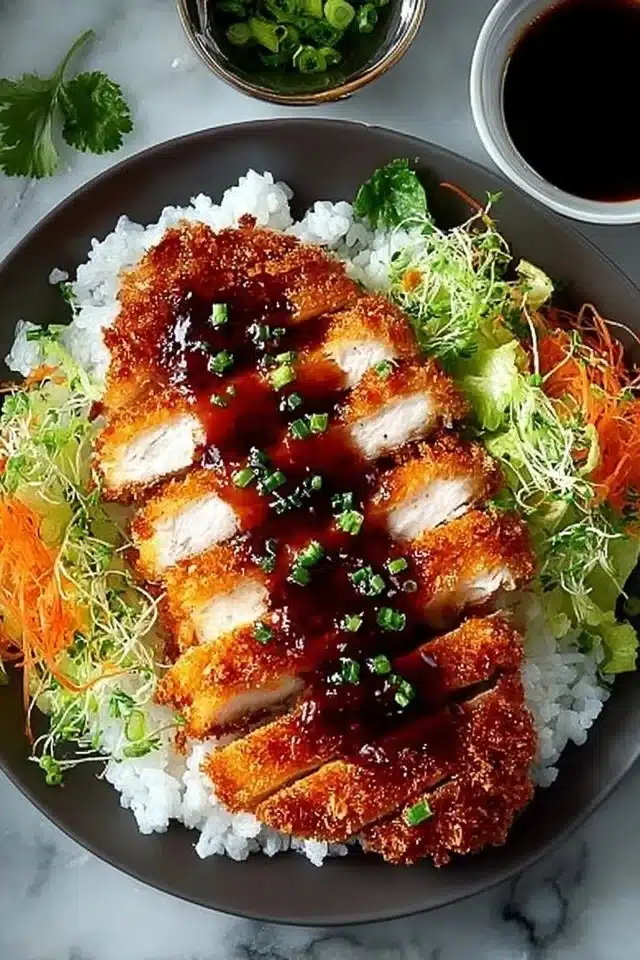
Slice the chicken into strips or serve whole with katsu sauce on the side. Enjoy immediately for the best crunch.
Pro Tips for Success
- Dry the chicken thoroughly before seasoning; moisture prevents a good crust.
- Use even thickness for the breasts so both sides cook evenly. Pound or butterfly if needed.
- Heat the oil until shimmering but not smoking; too low and the crust absorbs oil, too hot and it burns.
- Don’t overcrowd the skillet. Fry in batches if needed to keep oil temperature steady.
- Press panko gently onto the egg-coated chicken — firm pressure helps crumbs stick but avoid compacting them too much.
- Keep a thermometer handy; 165°F (74°C) is the safe internal temp for chicken.
- Let the cutlets rest briefly after frying to retain juices and avoid tearing when slicing.
- For extra crispness, finish in a 350°F oven for 3–4 minutes after pan-frying.
Flavor Variations
(Optional — keep the base method the same)
- Garlic-Parmesan: Mix 1–2 tablespoons grated Parmesan and 1/2 teaspoon garlic powder into the panko before coating.
- Spicy Katsu: Add 1/2–1 teaspoon cayenne or a tablespoon of chili powder to the breadcrumbs for a kick.
- Sesame Crust: Mix 2 tablespoons toasted sesame seeds into the panko for nutty flavor and extra crunch.
- Herb Panko: Stir 1 tablespoon chopped fresh parsley or dried mixed herbs into the panko for brightness.
- Citrus twist (optional): Add a little lemon zest to the flour for a light citrus note that cuts through the richness.
- Light oven-fry (optional): To reduce oil, spray the breaded chicken lightly with oil and bake at 425°F for 12–15 minutes, flipping halfway, until golden and 165°F internal.
Serving Suggestions
- Classic plate: Serve sliced katsu with steamed rice, shredded cabbage, and katsu sauce.
- Sandwich: Place strips on toasted bread with mayonnaise and shredded lettuce for a katsu sando.
- Rice bowl: Serve over steamed rice with quick pickles and scallions for a simple donburi.
- Salad topping: Slice and place on a bed of mixed greens with sesame dressing for a crunchy protein boost.
- Kids’ friendly: Serve with fries or sweet potato wedges and a small dish of katsu sauce for dipping.
- Party platter: Cut into strips and serve with assorted dipping sauces for a casual gathering.
Make-Ahead, Storage & Reheating
- Make-ahead: You can bread the chicken up to a few hours in advance and keep it uncovered in the fridge on a tray for the crust to stay drier. Do not fry until ready to cook.
- Fridge storage: Store cooked chicken katsu in an airtight container for up to 3–4 days.
- Reheating: For best texture, reheat in a 350°F oven on a rack over a baking sheet for 8–12 minutes until warmed through and the crust re-crisped. A toaster oven works well for single pieces. Microwaving will warm the chicken but will soften the crust.
- Texture changes: The crust will lose some crunch after refrigeration; reheating in dry heat restores much of the texture.
Storage and Freezing Instructions
- Freezing cooked katsu: Place cooled, cooked cutlets on a baking sheet and flash-freeze until firm, then transfer to a freezer-safe bag or container. Store up to 2 months.
- Reheating from frozen: Reheat in a 375°F oven for 15–20 minutes, flipping once, until hot and crisp.
- Freezing un-cooked, breaded chicken: You can freeze breaded, uncooked pieces separated by parchment paper. Thaw fully in the fridge before frying; frying from fully frozen will overbrown the crust before the center cooks.
- If you prefer not to freeze, cook fresh and store leftovers in the fridge for up to 4 days for best quality.
Nutrition Facts (Per Serving)
Calories | Protein | Carbs | Fat | Fiber | Sodium
— | —: | —: | —: | —: | —:
Approx. 660 kcal | 38 g | 45 g | 32 g | 1 g | 650 mg
Estimates vary by brands and portions.
FAQ About Easy Homemade Chicken Katsu
Q: My katsu is soggy after frying — what went wrong?
A: The oil was likely too cool or the chicken was wet. Make sure the oil is hot enough (shimmering) and the chicken is patted dry before breading.
Q: How do I know when the chicken is done without cutting it open?
A: Use an instant-read thermometer — the center should reach 165°F (74°C).
Q: Can I bake instead of fry?
A: Yes — spray the breaded chicken lightly with oil and bake at 425°F for 12–15 minutes, flipping once. Texture will be slightly different but still tasty.
Q: My panko falls off while frying. How can I prevent that?
A: Ensure you shake off excess flour before dipping in egg and press the panko gently onto the chicken. Let the breaded pieces rest for a minute before frying to set the coating.
Q: Can I use chicken thighs instead of breasts?
A: Yes, thighs work but adjust cooking time. Boneless, skinless thighs may need different timing; check internal temp for 165°F.
Q: Is it okay to use a nonstick skillet?
A: Yes. Use a skillet you’re comfortable controlling the heat with. A heavy-bottomed pan keeps oil temperature steady.
TastyInspo Notes
- Slice the katsu across the grain into 1/2-inch strips for neat presentation and easy dipping.
- Serve shredded cabbage lightly dressed with rice vinegar and a pinch of sugar for a classic crunchy side.
- Warm the katsu sauce slightly before serving — it blends better with rice and coats the cutlet evenly.
- Add a lemon wedge on the side for diners who like a bright squeeze over fried foods.
- For clean plating, rest the cutlet on a wire rack over a sheet pan briefly to drain excess oil before plating.
Troubleshooting
- Issue: Bread crumbs burn but interior is undercooked. Fix: Lower the heat and cook longer; you may also flatten the chicken to a uniform thickness.
- Issue: Coating slips off during frying. Fix: Press panko firmly onto the egg-coated chicken and let it rest to adhere before frying.
- Issue: Oil splatters a lot. Fix: Dry the chicken and work carefully; avoid overcrowding and use a splatter screen if needed.
- Issue: Dry chicken center. Fix: Reduce cooking time by using thinner breasts or pound to even thickness; check with thermometer.
- Issue: Too oily after frying. Fix: Drain on paper towels or a wire rack and use the proper oil temp so the crust doesn’t soak oil.
Final Thoughts
This Easy Homemade Chicken Katsu is straightforward, satisfying, and quick to make. With a light panko crust and juicy chicken inside, it’s an excellent option for family dinners, sandwiches, or a simple weekend treat. Try the simple tweaks and serving suggestions to make it your own.
Conclusion
For a classic reference and more background on the traditional dish, see this helpful guide to Easy Chicken Katsu (Japanese Chicken Cutlet) – Cookerru for additional tips and variations. 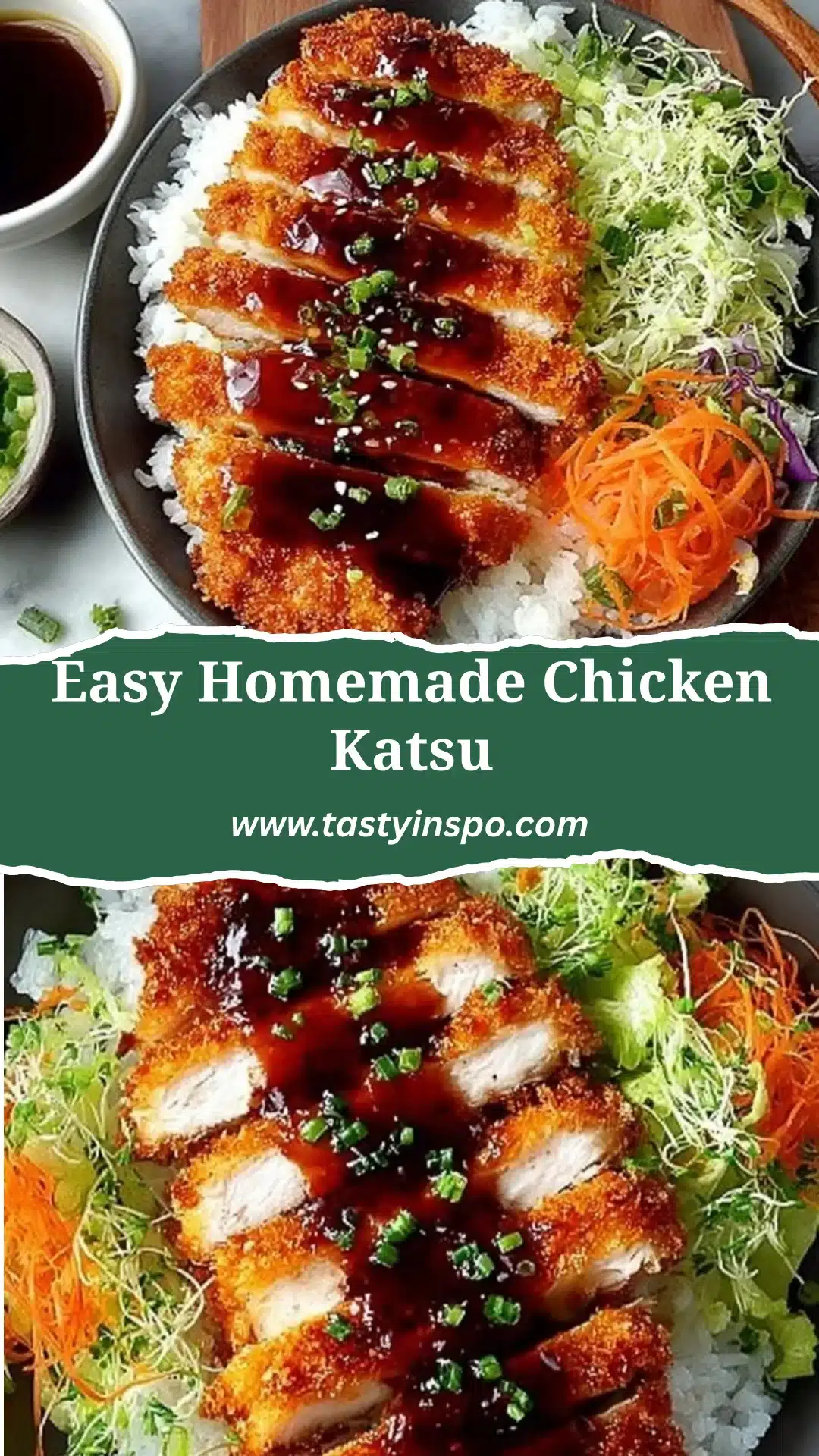
Easy Homemade Chicken Katsu
A crisp, golden breaded chicken cutlet with a juicy inside and crunchy panko crust, perfect for weeknight dinners.
For the Chicken
- 2 pieces chicken breasts (Use thin-cut or butterflied for even cooking.)
- 1/2 cup all-purpose flour (Gluten-free option: use rice flour or 1:1 gluten-free blend.)
- 1 piece egg, beaten (For egg-free option, use 2 tablespoons of plain yogurt mixed with 1 tablespoon water.)
- 1 cup panko breadcrumbs (Panko provides a light, airy crunch.)
- to taste Salt and pepper (Season to taste.)
- as needed cups Oil for frying (Use neutral oils like vegetable, canola, or sunflower.)
To Serve
- to taste Katsu sauce (Serve on the side.)
Preparation
- Pat the chicken breasts dry and season both sides with salt and pepper.
- Set up a breading station with three shallow dishes: one for flour, one for beaten egg, and one for panko breadcrumbs.
Breading
- Dredge each chicken breast in flour, dip into the beaten egg, and coat with panko breadcrumbs until evenly covered.
Frying
- Heat oil in a skillet over medium heat until shimmering. Fry the breaded chicken breasts for about 4–5 minutes per side until golden brown and cooked through.
- Transfer to a paper towel-lined plate to drain excess oil and let rest for 2–3 minutes.
Serving
- Slice the chicken into strips or serve whole with katsu sauce on the side.
For best results, dry the chicken well before seasoning and avoid overcrowding the skillet while frying. Finish in a 350°F oven for extra crispness if desired.