
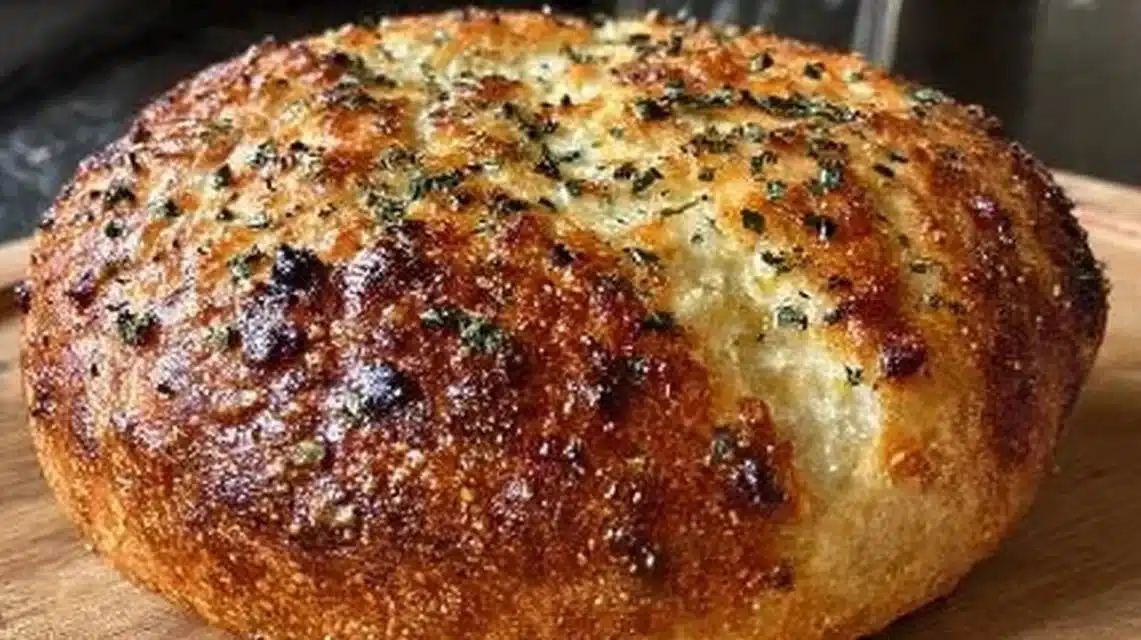
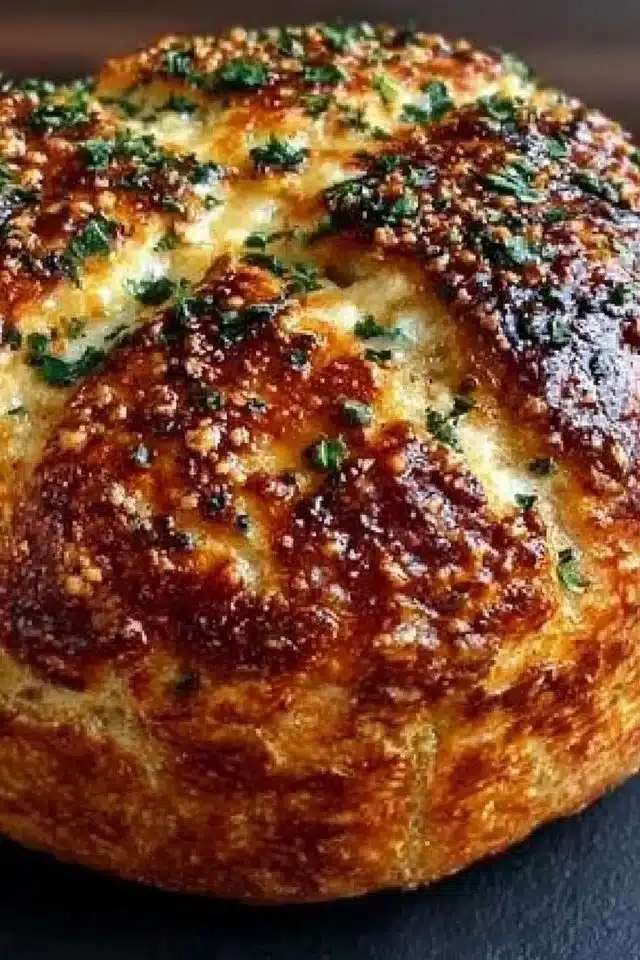
This Italian Herbs and Cheese Bread brings warm, garlicky herb flavor and melty cheese into a crisp, golden crust with a soft, chewy crumb. The outer crust is lightly crisp and browned, while the inside stays tender thanks to a good knead and resting time. It’s an easy loaf to make at home with simple steps and minimal fuss—perfect for a weeknight dinner, picnic, or to serve with soup. Serve warm with olive oil or butter, or slice for sandwiches. If you like pull-apart cheese breads, you’ll enjoy this, and for a related sandwich idea try this best French dip sliders with melty cheese for pairing inspiration.
Why You’ll Love This Italian Herbs and Cheese Bread
- Simple pantry ingredients and one dough make a flavorful artisan-style loaf.
- A soft, chewy interior with a crisp, golden crust—classic bread comfort.
- Melty mozzarella pockets and salty Parmesan in every bite add rich depth.
- Italian herb mix gives bright, savory notes without extra work.
- Hands-on kneading time is short and rewarding; most time is inactive rise time.
- Versatile: serve with soup, use for sandwiches, or enjoy plain with butter.
- Easy to scale: double the batch for guests or freeze extra loaves.
- No special equipment required—just a mixing bowl, baking sheet, and oven.
What Is Italian Herbs and Cheese Bread?
Italian Herbs and Cheese Bread is a home-baked round loaf flavored with a classic mix of oregano, basil, and thyme and folded through with shredded mozzarella and grated Parmesan. It tastes savory, cheesy, and herb-forward with a tender crumb that yields to melty cheese. The crust becomes golden and slightly crisp from baking at 425°F (220°C). This bread feels like comfort food with a simple, rustic vibe—great for weeknight dinners, brunch spreads, or as a baked appetizer. It blends the warmth of freshly baked bread with Italian-style seasoning and is satisfying for both family meals and casual entertaining.
Ingredients for Italian Herbs and Cheese Bread
For the Dough
- 4 cups all-purpose flour (480 grams)
- 1 ½ cups warm water (360 ml, about 110°F or 43°C)
- 2 ¼ teaspoons active dry yeast (1 packet)
- 1 teaspoon salt (6 grams)
- 2 tablespoons olive oil (30 ml)
- 2 teaspoons Italian herbs (oregano, basil, thyme) (10 grams, mixed)
For the Cheese
- 1 cup shredded mozzarella cheese (100 grams)
- ½ cup grated Parmesan cheese (50 grams)
Ingredient Notes (Substitutions, Healthy Swaps)
- Flour: All-purpose works perfectly. You can substitute up to half the flour with bread flour for a chewier texture (not required).
- Water temperature: Aim for about 110°F (43°C) to activate yeast. Too hot will kill yeast; too cool slows activation.
- Yeast: Active dry yeast is specified. If using instant yeast, reduce proofing time slightly and add directly to dry ingredients. Use 2 teaspoons instant yeast in place of 2 ¼ teaspoons active and skip the initial bloom step if desired.
- Oil: Olive oil gives flavor. You can use a neutral oil (canola) if preferred, but olive oil complements the herbs.
- Cheese: Use fresh shredded mozzarella and real grated Parmesan for best melt and flavor. Pre-shredded cheese with anti-caking agents can be used but may be less creamy.
- Herbs: The recipe uses a mixed Italian herb blend; use dried oregano, basil, and thyme in equal parts if you don’t have a mix. Fresh herbs can be used as an optional variation (see Variations).
Step-by-Step Instructions
Step 1 – Bloom the yeast
In a small bowl, combine 1 ½ cups warm water (360 ml, about 110°F/43°C) and 2 ¼ teaspoons active dry yeast. Let sit 5–10 minutes until frothy. This confirms the yeast is active.
Visual cue: The mixture should look foamy and smell slightly yeasty.
Step 2 – Mix dry ingredients
In a large mixing bowl, whisk together 4 cups all-purpose flour (480 g), 1 teaspoon salt (6 g), and 2 teaspoons Italian herbs (10 g). Make a well in the center to receive the wet ingredients.
Step 3 – Combine and form dough
Add the frothy yeast mixture and 2 tablespoons olive oil (30 ml) to the dry ingredients. Stir until a shaggy dough forms. Turn the dough onto a lightly floured surface and knead for 8–10 minutes until smooth and elastic.
Step 4 – Incorporate the cheeses
Flatten the dough slightly and spread 1 cup shredded mozzarella (100 g) and ½ cup grated Parmesan (50 g) over it. Fold the dough over the cheese and knead gently until the cheeses are evenly distributed in the dough. Don’t overwork to avoid squeezing all melted pockets out.
Step 5 – First rise
Oil a clean bowl, place the dough inside, and cover with a damp cloth. Let rise in a warm place for 1–2 hours until doubled in size.
Step 6 – Shape and second rise
Punch down the dough gently, shape it into a round boule, and place on a parchment-lined baking sheet. Cover and let rise for 30–45 minutes until puffed.
Step 7 – Bake
Preheat the oven to 425°F (220°C). Score the top with shallow slashes. Bake 25–30 minutes until the crust is deep golden and the internal temperature reaches 190°F (88°C). Cool on a wire rack at least 20 minutes before slicing.
Pro cue: If the crust browns too fast, tent loosely with foil for the last 5–10 minutes.
Pro Tips for Success
- Always proof yeast in warm (not hot) water to confirm it’s active before mixing.
- Measure flour by weight (480 g) if possible; spoon-flour-into-cup if using volume to avoid dense dough.
- Knead until the dough is smooth and elastic—8–10 minutes by hand. Under-kneaded dough will be sticky and lack structure.
- Keep the dough covered during rises to prevent a dry skin forming. A damp towel or plastic wrap works well.
- Use a thermometer to check doneness: 190°F (88°C) internal for a fully baked loaf.
- Add the cheese last in small batches to avoid creating large pockets that leak during bake.
- Cool at least 20 minutes before slicing to finish the crumb set and avoid gummy texture.
Flavor Variations
- OPTIONAL: Garlic and herb butter swirl — brush softened garlic butter on the dough before folding in cheese.
- OPTIONAL: Sun-dried tomatoes — chop and fold in ¼ cup for a savory, tangy boost.
- OPTIONAL: Fresh herbs — replace half the dried herbs with 2 tablespoons chopped fresh basil and oregano for brighter flavor.
- OPTIONAL: Spicy kick — add ¼ teaspoon red pepper flakes to the dough for mild heat.
- OPTIONAL: Whole-grain mix — replace up to 25% of the flour with whole wheat for nuttier taste (expect denser crumb).
- OPTIONAL: Cheesy top — sprinkle extra Parmesan on top before baking for a crisp, salty crust.
Serving Suggestions
- Warm slices with a small dish of extra virgin olive oil and balsamic for dipping.
- Serve alongside tomato or vegetable soup for a hearty meal.
- Use sliced loaf for rustic sandwiches with deli meats and roasted vegetables.
- Offer as part of a brunch spread with cheeses, olives, and cured meats.
- Cut into thick slices, toast them lightly, and top with avocado and tomato.
- Pair with a simple green salad and vinaigrette for a balanced plate.
Make-Ahead, Storage & Reheating
- Make-ahead: You can mix and knead the dough, then refrigerate it overnight for a slow rise. Bring to room temperature and complete shaping and second rise before baking.
- Fridge storage: Store baked bread in a bread box or loosely wrapped at room temperature for 2–3 days. Refrigeration accelerates staling.
- Reheating: Reheat slices in a 350°F (175°C) oven for 8–10 minutes to refresh crust and melt cheese slightly. For single slices, toast until warmed through. Avoid microwave reheating for long times; it makes bread chewy.
Note: The crumb will be freshest the day it’s baked; expect a gradual firming of the crumb over 1–3 days.
Storage and Freezing Instructions
- To freeze: Cool the baked loaf completely. Wrap tightly in plastic wrap and then in foil or a freezer bag. Freeze up to 3 months.
- To thaw: Remove wrapping and thaw overnight in the refrigerator or at room temperature for a few hours. Reheat in a 350°F (175°C) oven for 10–15 minutes to refresh crust and soften the crumb.
- If you prefer to freeze dough: After the first rise, punch down, shape, wrap well, and freeze. Thaw in the fridge overnight, then allow a full second rise and bake.
- If freezing is not desired: Keep at room temperature for up to 2 days and finish by reheating; freezing is recommended for longer storage to preserve texture.
Nutrition Facts (Per Serving)
Calories | Protein | Carbs | Fat | Fiber | Sodium
—|—:|—:|—:|—:|—:
~250 kcal | ~9 g | ~45 g | ~8 g | ~2 g | ~420 mg
Estimates vary by brands and portions.
FAQ About Italian Herbs and Cheese Bread
Q: My dough is too sticky—what do I do?
A: Add a tablespoon of flour at a time while kneading until it’s tacky but manageable. Don’t over-flour or bread will be dense.
Q: The loaf is dense after baking—why?
A: Likely under-kneaded or under-proofed. Knead until smooth and allow full rise (doubled) in a warm spot before shaping.
Q: How do I know when the loaf is done?
A: Use a digital thermometer—internal temp should be 190°F (88°C). The crust should be nicely browned and sound hollow when tapped.
Q: Can I use instant yeast instead of active dry?
A: Yes. Use 2 teaspoons instant yeast and add directly to the dry ingredients. You can skip the bloom step or still proof for reassurance.
Q: Can I omit the Parmesan or mozzarella?
A: You can reduce or omit cheeses, but that changes flavor and texture. Try reducing rather than removing for best results.
Q: The cheese leaked out and burned on the sheet—how to avoid this?
A: Fold cheese well into the dough and avoid placing large chunks near the surface. Use a parchment-lined baking sheet to catch any drips and make cleanup easy.
TastyInspo Notes
- Finish with a light brush of olive oil right after baking for a soft sheen and richer mouthfeel.
- Right before serving, sprinkle a pinch of flaky sea salt to highlight the cheese and herbs.
- For even browning, rotate the pan halfway through baking.
- Serve on a wooden board with a serrated knife for rustic presentation.
- Let guests tear warm pieces—melty cheese and herbs make it an interactive snack.
Troubleshooting
- Problem: Bread didn’t rise much. Fix: Check yeast freshness, water temperature, and proof time. Warm, draft-free place helps.
- Problem: Interior is gummy. Fix: Likely under-baked—bake longer or check internal temp to reach 190°F (88°C).
- Problem: Crust too hard. Fix: Reduce oven time slightly or tent with foil during the last minutes. Store loaf covered with a clean cloth to soften crust.
- Problem: Too salty. Fix: Use low-sodium Parmesan or reduce added salt to ¾ teaspoon next time. Balance with unsalted butter when serving.
- Problem: Cheese pockets large and oozed out. Fix: Cut cheese into smaller shreds and fold gently to distribute evenly.
Final Thoughts
This Italian Herbs and Cheese Bread is a simple, satisfying loaf that combines classic herb flavors and two kinds of cheese for a cozy, flavorful result. It’s forgiving for home bakers and flexible enough for small flavor tweaks. With a little time for rising you’ll have a warm, aromatic loaf that pairs well with many meals and makes any table feel special.
Conclusion
If you want to explore a similar flavor profile or try a copycat commercial recipe for inspiration, see this Subway Bread Recipe (Italian Herb and Cheese Copycat) for comparison and ideas. 
Italian Herbs and Cheese Bread
This Italian Herbs and Cheese Bread features warm, garlicky herb flavor, melty cheese, and a crisp, golden crust with a soft, chewy crumb. Perfect for dinner, picnics, or serving with soup.
For the Dough
- 4 cups all-purpose flour (480 grams) (You can substitute up to half the flour with bread flour for a chewier texture.)
- 1.5 cups warm water (360 ml, about 110°F or 43°C) (Aim for about 110°F (43°C) to activate yeast.)
- 2.25 teaspoons active dry yeast (1 packet) (If using instant yeast, use 2 teaspoons and skip the initial bloom step.)
- 1 teaspoon salt (6 grams)
- 2 tablespoons olive oil (30 ml) (Olive oil complements the herbs.)
- 2 teaspoons Italian herbs (oregano, basil, thyme) (10 grams, mixed) (Use fresh herbs for brighter flavor, if desired.)
For the Cheese
- 1 cup shredded mozzarella cheese (100 grams) (Use fresh shredded for best melt.)
- 0.5 cup grated Parmesan cheese (50 grams) (Use real grated for best flavor.)
Preparation
- In a small bowl, combine warm water and active dry yeast. Let sit for 5–10 minutes until frothy.
- In a large mixing bowl, whisk together all-purpose flour, salt, and Italian herbs. Make a well in the center.
- Add the frothy yeast mixture and olive oil to the dry ingredients. Stir until a shaggy dough forms.
- Turn the dough onto a lightly floured surface and knead for 8–10 minutes until smooth and elastic.
- Flatten the dough and spread shredded mozzarella and grated Parmesan over it. Fold the dough over the cheese and knead gently until the cheeses are distributed.
- Oil a clean bowl, place the dough inside, and cover with a damp cloth. Let rise in a warm place for 1–2 hours until doubled in size.
- Punch down the dough gently, shape it into a round boule, and place on a parchment-lined baking sheet. Cover and let rise for 30–45 minutes until puffed.
Baking
- Preheat the oven to 425°F (220°C). Score the top with shallow slashes.
- Bake for 25–30 minutes until the crust is deep golden and the internal temperature reaches 190°F (88°C).
- Cool on a wire rack for at least 20 minutes before slicing.
Serve warm with olive oil or butter, or use slices for sandwiches. To refresh crust after storing, reheat slices in a 350°F (175°C) oven for 8–10 minutes.


1 thought on “Easy Italian Herbs and Cheese Bread (No-Fail Recipe)”