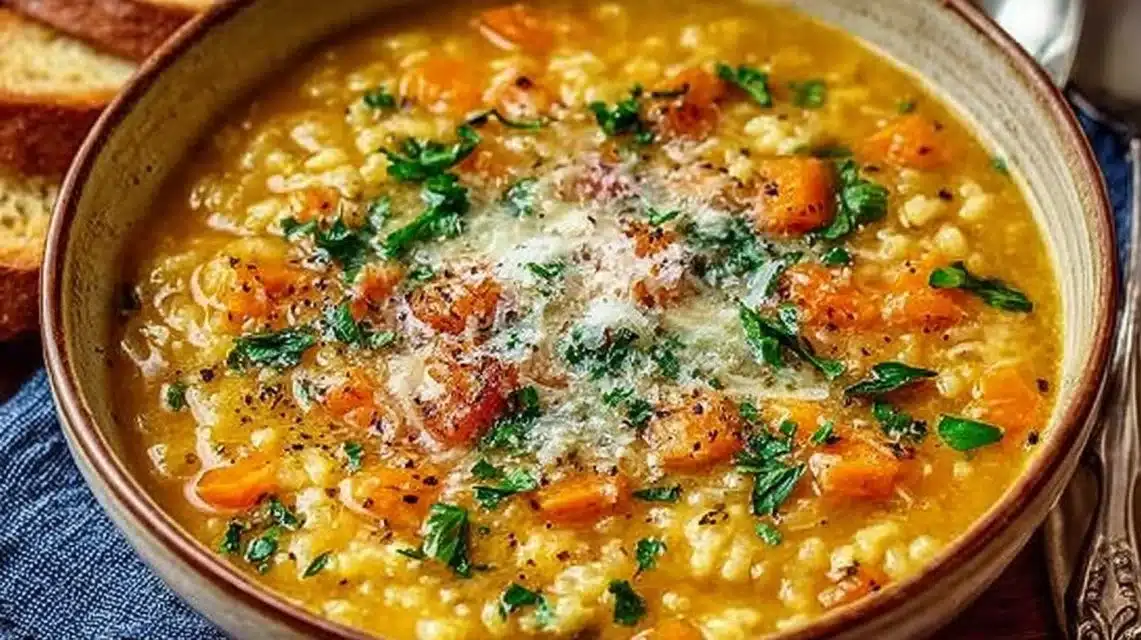
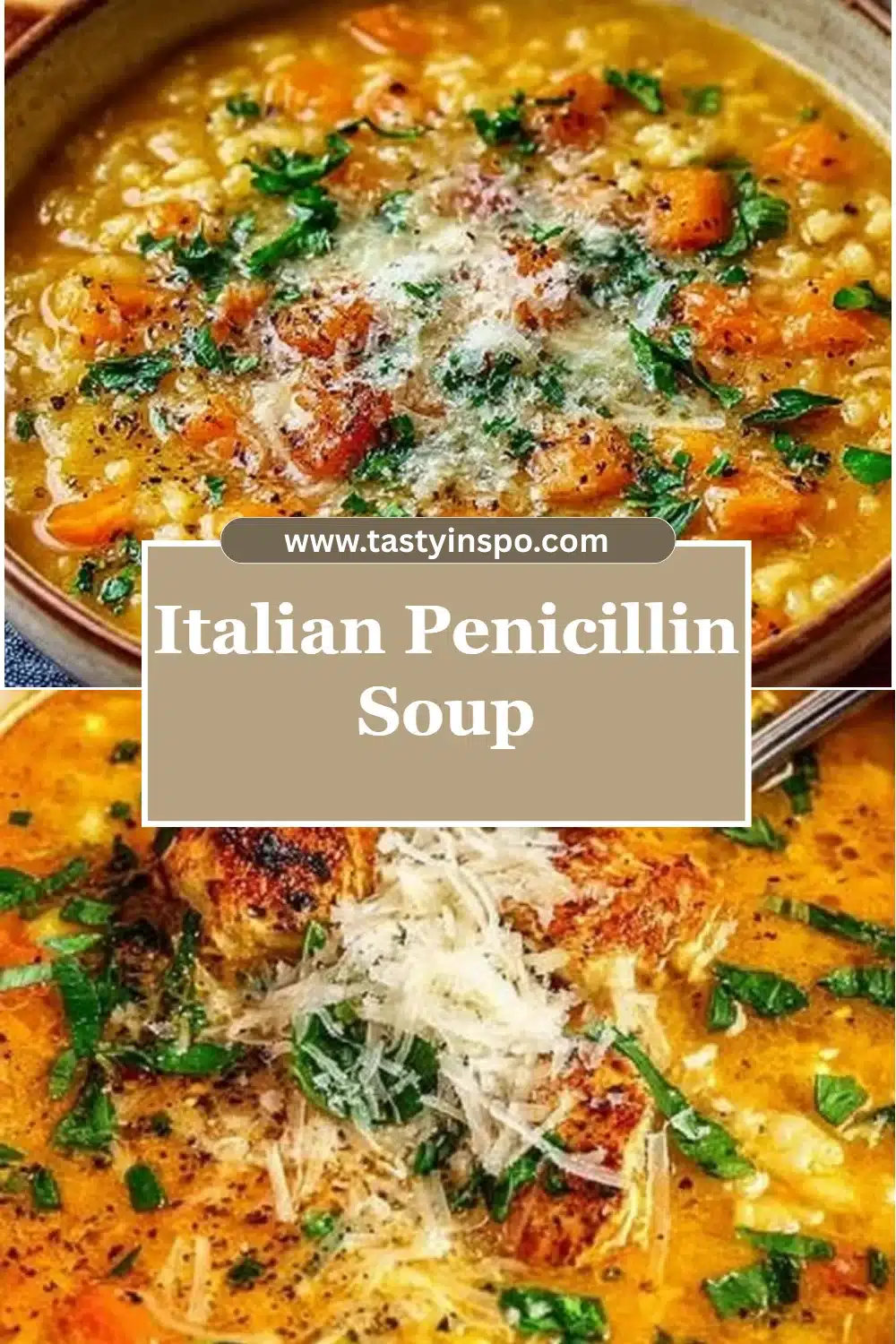
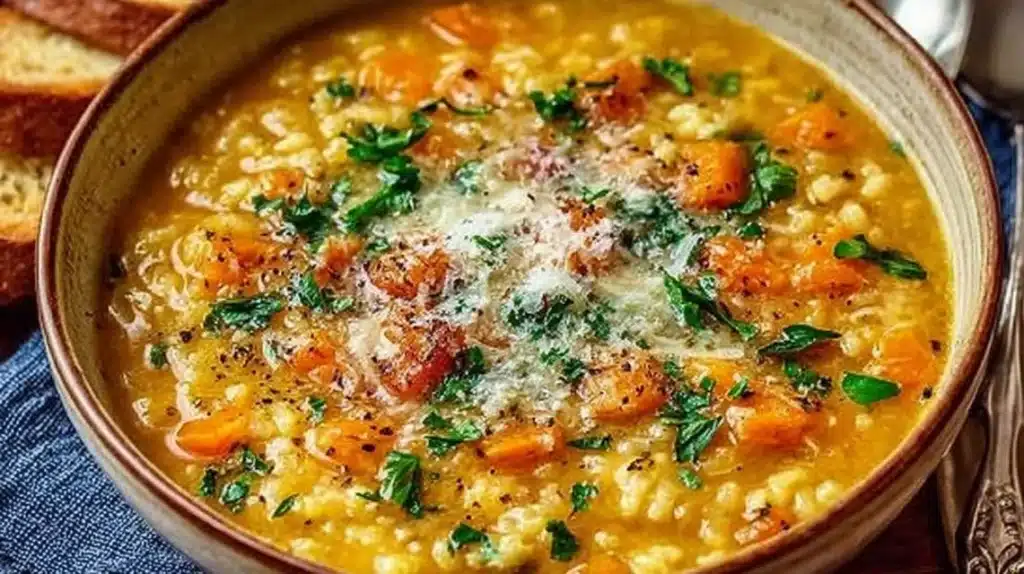
This Italian Penicillin Soup is warm, brothy, and deeply comforting with tender shredded chicken, soft vegetables, and small pasta that slightly thickens the broth. The taste is bright from a final splash of lemon, savory from the chicken and Parmigiano-Reggiano, and lightly herbal from oregano and thyme. The texture mixes silky broth with bite-size pasta and shredded meat, making every spoonful satisfying. It’s an easy, one-pot soup that comes together with basic pantry staples and a short simmer—perfect for a weeknight dinner or a simple lunch. If you like hearty brothy soups, try it alongside our baked potato soup for more cozy options.
Why You’ll Love This Italian Penicillin Soup
- One-pot comfort: everything cooks in a single pot for easy cleanup.
- Bright finish: fresh lemon juice lifts the rich chicken broth.
- Gentle spice: a pinch of red pepper flakes adds warmth without heat.
- Pantry-friendly: uses small pasta and common dried herbs.
- Flexible for diets: easy vegetarian or gluten-free swaps.
- Make-ahead friendly: flavors meld well when reheated.
- Quick protein: a single chicken breast gives tender shredded meat.
- Bread-friendly: pairs perfectly with crusty Italian bread for dipping.
What Is Italian Penicillin Soup?
Italian Penicillin Soup is a simple, comforting chicken-and-pasta soup with roots in classic Italian flavors. It tastes savory and clean, with the slow-simmered broth carrying notes of onion, carrot, celery, garlic, oregano, and thyme. The shredded chicken adds satisfying protein and texture, while small pasta like ditalini or orzo makes the broth slightly thicker and more filling. The lemon at the end brightens the whole bowl and Parmigiano-Reggiano gives a savory finish. It cooks by simmering broth with aromatics and chicken, then shredding the chicken and adding pasta—an easy, weeknight-friendly method with a comforting vibe.
Ingredients for Italian Penicillin Soup
For the Base
- 2 tablespoons extra virgin olive oil
- 1 large onion, diced (about 1 cup)
- 3 medium carrots, sliced into rounds
- 3 celery stalks, chopped
- 4 garlic cloves, minced
- 8 cups low-sodium chicken broth (or vegetable broth for vegetarian option)
- 1 whole chicken breast, bone-in and skin-on (about 1 pound)
- 2 bay leaves
For the Seasoning & Pasta
- 1 cup small pasta (ditalini, orzo, or small shells)
- 1 teaspoon dried oregano
- 1/2 teaspoon dried thyme
- 1/4 teaspoon red pepper flakes (optional)
- Salt and freshly ground black pepper to taste
To Finish & Serve
- 2 tablespoons fresh lemon juice
- 1/4 cup fresh parsley, chopped
- Freshly grated Parmigiano-Reggiano cheese (for serving)
- Extra virgin olive oil for drizzling
- Crusty Italian bread for serving
Substitution Notes
- For gluten-free diets, replace pasta with rice or omit entirely.
- Vegetarians can skip the chicken and use vegetable broth, adding white beans for protein.
- Those avoiding dairy can skip the cheese garnish or use nutritional yeast instead.
Ingredient Notes (Substitutions, Healthy Swaps)
- Chicken: Bone-in, skin-on breast adds more flavor. If you only have boneless skinless, reduce simmer time slightly and skip removing skin.
- Broth: Low-sodium broth gives more control over salt; taste and add salt at the end. Vegetable broth works well for a meatless version.
- Pasta: Use ditalini, orzo, or small shells. For gluten-free, swap in rice, gluten-free small pasta, or omit pasta and add extra beans for heartiness.
- Herbs: Fresh oregano or thyme can replace dried—use three times the amount of fresh.
- Spicy: Red pepper flakes are optional. Omit for no heat or add a pinch more for a stronger kick.
- Cheese: Parmigiano-Reggiano is traditional for its umami. Use nutritional yeast for a dairy-free finish.
Step-by-Step Instructions
Step 1 – Build the Aromatic Base
Heat 2 tablespoons extra virgin olive oil in a large pot over medium heat. Add the diced onion, sliced carrots, and chopped celery. Cook for about 5–7 minutes until the vegetables start to soften and the onion becomes translucent. Stir in the minced garlic and cook for another minute until fragrant.
Visual cue: Vegetables should be soft but not browned.
Step 2 – Add Broth and Chicken
Pour in 8 cups low-sodium chicken broth and nestle the whole bone-in, skin-on chicken breast into the pot. Add 2 bay leaves, 1 teaspoon dried oregano, 1/2 teaspoon dried thyme, and 1/4 teaspoon red pepper flakes if using. Bring the pot to a gentle boil, then reduce heat to maintain a steady simmer.
Pro cue: Keep the simmer gentle to prevent the broth from becoming cloudy.
Step 3 – Simmer Until Tender
Cover the pot partially and simmer for 25–30 minutes, or until the chicken is fully cooked and easily shreds with a fork. Remove the chicken breast and set aside to cool slightly.
Visual cue: Chicken should reach an internal temperature of 165°F (74°C) and pull apart easily.
Step 4 – Shred and Season
Remove the skin and bones from the cooled chicken, shred the meat into bite-size pieces, and return it to the pot. Taste the broth and season with salt and freshly ground black pepper as needed. Remove the bay leaves.
Step 5 – Cook the Pasta
Bring the soup back to a gentle boil and add 1 cup small pasta. Cook according to package directions until al dente. The pasta will release starch and slightly thicken the broth.
Pro cue: If you plan to store leftovers, slightly undercook the pasta by 1–2 minutes to prevent it from getting mushy later.
Step 6 – Finish with Fresh Elements
Stir in 2 tablespoons fresh lemon juice and 1/4 cup chopped fresh parsley. Adjust salt and pepper to taste. Serve bowls with freshly grated Parmigiano-Reggiano, a drizzle of extra virgin olive oil, and crusty Italian bread on the side.

Pro Tips for Success
- Use bone-in, skin-on chicken for deeper flavor; discard the skin and bones after shredding.
- Keep the simmer low to keep the broth clear and clean-tasting.
- Taste and add salt only after the chicken cooks—broth reduces slightly as it simmers.
- If freezing, slightly undercook pasta to avoid a mushy texture when reheated.
- For brighter flavor, add lemon juice at the end, not during simmering.
- Use low-sodium broth so you can control salt at the end.
- Lift the lid briefly instead of removing it to maintain even simmer and heat.
Flavor Variations
- OPTIONAL: Lemon-Garlic Boost — add 1 teaspoon lemon zest at the end for extra brightness.
- OPTIONAL: White Bean Addition — for extra protein in vegetarian or hearty versions, stir in one can of drained white beans after removing bay leaves.
- OPTIONAL: Herb Swap — use fresh basil or a mix of fresh Italian herbs instead of dried for a fresher taste.
- OPTIONAL: Veg-Forward — add chopped zucchini or spinach in the last 5 minutes of cooking for extra vegetables.
- OPTIONAL: Spicy Kick — increase red pepper flakes to 1/2 teaspoon for more heat.
- OPTIONAL: Dairy-Free — skip Parmigiano-Reggiano and drizzle with good olive oil and sprinkle nutritional yeast.
Serving Suggestions
- Serve with thick slices of crusty Italian bread for dipping.
- Top bowls with extra parsley and a generous pinch of Parmigiano-Reggiano.
- Pair with a simple green salad dressed with lemon vinaigrette to keep the meal light.
- Offer red pepper flakes and lemon wedges on the side for guests to customize.
- Make it a comfort lunch by serving with toasted focaccia on the side.
- For a heartier bowl, add a scoop of cooked white beans or a few extra handfuls of pasta.
Make-Ahead, Storage & Reheating
- Make-ahead: Chop the vegetables and keep them in an airtight container in the fridge for 1–2 days. You can simmer the soup fully and refrigerate without pasta, then add fresh pasta when reheating.
- Storage: Keep the soup in an airtight container in the refrigerator for up to 3–4 days. If the pasta is cooked in the soup, expect some softening over time.
- Reheating: Reheat gently on the stovetop over low heat. If the soup is too thick, add a splash of broth or water to loosen it. Add a fresh squeeze of lemon after reheating to revive brightness.
- Texture changes: Pasta absorbs broth and softens with time. To keep texture, store pasta separately or undercook pasta slightly when first cooking.
Storage and Freezing Instructions
- To freeze: Cool the soup completely and freeze in airtight containers for up to 3 months. For best results, remove or undercook pasta before freezing; add freshly cooked pasta when reheating.
- Thawing and reheating: Thaw overnight in the refrigerator and reheat on the stovetop over low heat, adding a little broth if too thick.
- If you freeze with pasta, expect softer pasta after thawing—this is why freezing without pasta is recommended. If freezing vegetarian versions with beans, they freeze well but may slightly change texture.
Nutrition Facts (Per Serving)
Calories | Protein | Carbs | Fat | Fiber | Sodium
—|—:|—:|—:|—:|—:
~350 kcal | ~30 g | ~30 g | ~10 g | ~4 g | ~550 mg
Estimates vary by brands and portions.
FAQ About Italian Penicillin Soup
Q: My soup is too thin. How can I thicken it?
A: Cook a bit longer to reduce the broth, or stir in an extra handful of pasta and cook until it releases starch. Alternatively, whisk 1 tablespoon cornstarch with 2 tablespoons cold water and stir into simmering soup until it thickens.
Q: My soup turned out too salty. Help?
A: Add unsalted cooked rice or a peeled potato to the pot and simmer 10–15 minutes; the starch can absorb some salt. You can also add more unsalted broth or water and adjust other seasonings.
Q: How do I keep the broth clear and not cloudy?
A: Keep the simmer gentle and avoid a rolling boil. Skim foam or small impurities from the surface during the first few minutes of simmering.
Q: Can I use boneless, skinless chicken breast?
A: Yes. Reduce simmer time and check for doneness sooner. Boneless breasts cook faster and won’t add as much depth to the broth.
Q: Is there a vegetarian alternative with similar flavor?
A: Use vegetable broth and add white beans for protein. Finish with lemon and parsley and skip the Parmigiano-Reggiano or use nutritional yeast.
Q: My pasta got soggy after storing. Any tips?
A: Store pasta separately or undercook it by 1–2 minutes before adding to the soup so it holds up when reheated.
TastyInspo Notes
- Finish with a tiny drizzle of very good extra virgin olive oil for a silkier mouthfeel.
- Warm the serving bowls before ladling the soup to keep it hot longer at the table.
- Grate Parmigiano-Reggiano fresh from the rind for the best savory finish.
- Keep lemon wedges on the side so each guest can adjust acidity to taste.
- If serving for a crowd, hold the pasta separately and add it to bowls to prevent over-thickening.
Troubleshooting
- Bland flavor: Add salt in small amounts and finish with lemon juice. A bit of freshly grated Parmigiano-Reggiano also boosts umami.
- Overcooked chicken: Reduce simmer time and check often; shred as soon as it pulls apart.
- Watery soup: Simmer uncovered to reduce liquid or add a small amount of starchy pasta to thicken.
- Burning or sticking: Use a heavy-bottom pot and keep heat at medium to medium-low; stir the base if it looks like it’s catching.
- Pasta too firm: Continue cooking a few minutes, testing for al dente texture.
- Too spicy: Add more broth or a splash of cream or milk (if dairy is acceptable) to mellow heat.
Final Thoughts
This Italian Penicillin Soup is an easy, forgiving bowl of comfort—bright, savory, and simple to make. It works for busy weeknights, light lunches, or when you need something soothing and quick. With small adjustments it fits many diets and keeps well, making it a practical recipe to return to all winter long.
Conclusion
For a more detailed variation and extra tips, check this trusted reference: Italian Penicillin Soup Recipe – Allrecipes.
Italian Penicillin Soup
Ingredients
For the Base
- 2 tablespoons extra virgin olive oil
- 1 large onion, diced (about 1 cup)
- 3 medium carrots, sliced into rounds
- 3 stalks celery, chopped
- 4 cloves garlic, minced
- 8 cups low-sodium chicken broth (or vegetable broth for vegetarian option)
- 1 whole chicken breast, bone-in and skin-on (about 1 pound)
- 2 leaves bay leaves
For the Seasoning & Pasta
- 1 cup small pasta (ditalini, orzo, or small shells)
- 1 teaspoon dried oregano
- 1/2 teaspoon dried thyme
- 1/4 teaspoon red pepper flakes (optional)
- to taste Salt and freshly ground black pepper
To Finish & Serve
- 2 tablespoons fresh lemon juice
- 1/4 cup fresh parsley, chopped
- Freshly grated Parmigiano-Reggiano cheese (for serving)
- Extra virgin olive oil (for drizzling)
- Crusty Italian bread (for serving)
Instructions
Build the Aromatic Base
- Heat 2 tablespoons extra virgin olive oil in a large pot over medium heat. Add the diced onion, sliced carrots, and chopped celery. Cook for about 5–7 minutes until the vegetables start to soften and the onion becomes translucent. Stir in the minced garlic and cook for another minute until fragrant.
Add Broth and Chicken
- Pour in 8 cups low-sodium chicken broth and nestle the whole bone-in, skin-on chicken breast into the pot. Add 2 bay leaves, 1 teaspoon dried oregano, 1/2 teaspoon dried thyme, and 1/4 teaspoon red pepper flakes if using. Bring the pot to a gentle boil, then reduce heat to maintain a steady simmer.
Simmer Until Tender
- Cover the pot partially and simmer for 25–30 minutes, or until the chicken is fully cooked and easily shreds with a fork. Remove the chicken breast and set aside to cool slightly.
Shred and Season
- Remove the skin and bones from the cooled chicken, shred the meat into bite-size pieces, and return it to the pot. Taste the broth and season with salt and freshly ground black pepper as needed. Remove the bay leaves.
Cook the Pasta
- Bring the soup back to a gentle boil and add 1 cup small pasta. Cook according to package directions until al dente. The pasta will release starch and slightly thicken the broth.
Finish with Fresh Elements
- Stir in 2 tablespoons fresh lemon juice and 1/4 cup chopped fresh parsley. Adjust salt and pepper to taste. Serve bowls with freshly grated Parmigiano-Reggiano, a drizzle of extra virgin olive oil, and crusty Italian bread on the side.