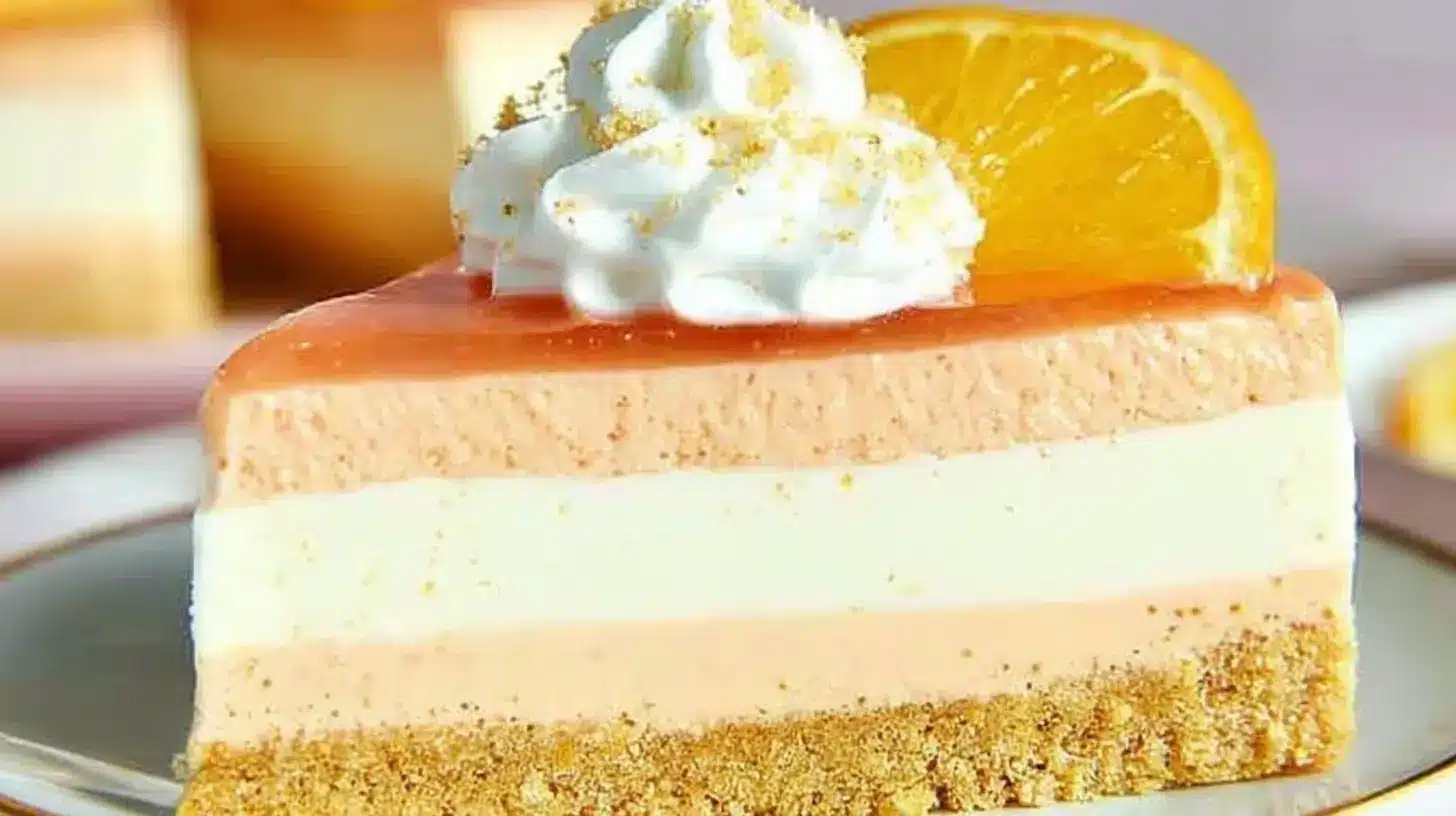
If you’re craving an orange cream cheesecake, this no-bake beauty gives you all the nostalgic creamsicle flavor in a cool, creamy slice—without turning on the oven. A vanilla-wafer crumb crust anchors two silky layers: a classic vanilla cheesecake mousse and a bright, citrusy orange layer. Lightly whipped cream keeps the texture airy, while orange gelatin and a long chill create the picture-perfect slices you can lift like a bakery pro. It’s fuss-free, refreshingly citrus-forward, and ideal for make-ahead entertaining.
Whether you’re planning a weekend dessert, a holiday potluck, or a birthday surprise, this recipe brings big payoff for minimal effort. The crust mixes in one bowl. The filling uses everyday ingredients. And after a hands-off chill, you’ve got a showstopper with clean, defined layers that taste like sunshine.
Why You’ll Love This Orange Cream Cheesecake
- No oven needed. A press-in cookie crust and a fully chilled filling make this a true no-bake win.
- Two luscious layers. Vanilla cheesecake mousse + orange cream = a nostalgic creamsicle bite.
- Ultra-creamy texture. Whipped cream folded into both layers keeps the filling cloud-soft, never dense.
- Make-ahead friendly. Chill for 4–8 hours (or overnight) and slice when you’re ready to serve.
- Gorgeous presentation. The color contrast looks bakery-level with zero piping required.
- Customizable crust. Use vanilla wafers, graham crackers, or chocolate sandwich cookies—your call.

Ingredients for Orange Cream Cheesecake
Crust (9-inch Springform)
- 12 oz vanilla wafer cookies (about 340 g)
- ½ cup granulated sugar
- 4 Tbsp unsalted butter, melted
Vanilla Cheesecake Layer
- 2 (8-oz) blocks cream cheese, softened
- 1 cup granulated sugar
- 1 cup heavy cream (from the 2 cups listed below)
- ¼ cup powdered sugar (from the ½ cup listed below)
- ½ tsp vanilla extract
Orange Cream Layer
- 1 (3-oz) box orange gelatin
- 1 cup boiling water
- 1 cup heavy cream (remaining)
- ¼ cup powdered sugar (remaining)
- Zest of 1 orange, finely grated
Garnish (Optional but Lovely)
- Extra whipped cream for swirls
- Orange zest or thin orange slices
- Vanilla wafer crumbs to sprinkle
Yield: 1 (9-inch) cheesecake; about 12–16 servings depending on slice size.
Active time: ~20 minutes. Chill time: at least 4 hours (8 hours or overnight for best slices).
Ingredient Notes (Helpful Tips & Smart Swaps)
- Cookies for the crust: Vanilla wafers bring a gentle, nostalgic sweetness that plays beautifully with orange. Graham crackers offer a toastier vibe, and chocolate sandwich cookies give dramatic contrast. Use roughly 12 ounces of whichever crumb base you choose.
- Butter, not too much: Four tablespoons bind the crumbs without turning the crust greasy. If your crumbs feel dry, you can add another teaspoon—but start with the stated amount.
- Cream cheese: Use full-fat blocks at room temperature for the smoothest texture. Avoid whipped tubs, which contain more air and stabilizers.
- Sugar split: The ½ cup granulated sugar sweetens the crust; the 1 cup goes into the cream cheese mixture. Powdered sugar sweetens the whipped cream, dissolving instantly without graininess.
- Heavy cream: Chill it well; cold cream whips faster and holds peaks better.
- Orange gelatin: Provides flavor, color, and setting power for that neatly sliceable orange layer.
- Orange zest: A microplane grates super-fine zest that perfumes the whole cake. Fresh zest = brighter flavor than extract alone.
- Vanilla extract: Just enough to echo the cookie crust and make the vanilla layer taste like ice-cream.

Step-by-Step Instructions
Step 1 – Make and Chill the Crust
- Crush the cookies: Pulse vanilla wafers in a food processor until fine. (No processor? Seal cookies in a zip-top bag and crush with a rolling pin.)
- Mix: In a bowl, stir crumbs with ½ cup granulated sugar and melted butter until the mixture looks like damp sand. It should clump when pressed.
- Press: Pour into a 9-inch springform pan. Use the bottom of a measuring cup to firmly press the mixture into an even layer across the base and slightly up the sides.
- Chill: Refrigerate while you prepare the filling, at least 30 minutes. The chill helps the butter set so the crust stays neat when sliced.
Pro Tip: If your kitchen is warm, pop the empty springform in the freezer for 5 minutes before pressing in the crumbs. A cold pan helps the crust set faster.
Step 2 – Whip the Cream (For Both Layers)
- Start cold: In a large, chilled bowl, combine 2 cups heavy cream and ½ cup powdered sugar with ½ tsp vanilla extract.
- Whip to stiff peaks: Using a hand mixer or stand mixer on medium-high, whip until the cream holds stiff peaks that stand tall but still look smooth.
- Divide: Scoop about half of the whipped cream into a second bowl (this will be for the orange layer). Keep both bowls refrigerated while you proceed.
Why Divide Now? Splitting the whipped cream ensures each layer gets the right volume and keeps the textures even. You’ll fold one half into the vanilla cheesecake base and the other half into the orange gelatin mixture.
Step 3 – Make the Vanilla Cheesecake Layer
- Beat the base: In a separate large bowl, beat cream cheese and 1 cup granulated sugar on medium speed until silky-smooth and no lumps remain, about 2–3 minutes. Scrape the bowl as needed.
- Lighten it: Gently fold in half the whipped cream (from Step 2) using a spatula. Fold in thirds—sweep down and over—until no streaks remain.
- Layer: Spoon this vanilla filling onto the chilled crust and smooth the top with an offset spatula. Refrigerate the pan while you prepare the orange layer.
Texture Check: The vanilla layer should look like soft mousse—airy yet spreadable. If it’s too loose, give it a 10-minute chill before layering.
Step 4 – Prepare the Orange Cream Layer
- Bloom and dissolve: Pour orange gelatin into a heat-safe bowl. Add 1 cup boiling water and whisk until fully dissolved and clear. Let it cool to room temperature—not cold and set, just no longer warm to the touch.
- Flavor boost: Stir in the orange zest.
- Fold: Retrieve the reserved whipped cream. Gently fold it into the cooled orange gelatin mixture, a third at a time, until evenly combined and fluffy.
- Layer: Pour or spoon the orange mixture over the vanilla layer. Smooth the surface.
Important: If the gelatin is still warm when you fold in cream, it can deflate the mixture. Cooling takes just a few minutes—worth the wait for a cloud-soft layer.
Step 5 – Chill Until Set, Then Garnish
- Chill: Cover the pan and refrigerate at least 4 hours, preferably 8 hours or overnight, until fully set.
- Release: Run a thin knife around the inside edge, then unclasp the springform ring.
- Garnish: Pipe or dollop whipped cream around the rim, add fresh orange zest, and sprinkle a few cookie crumbs for texture.
Clean Slices Tip: Warm a thin knife under hot water, wipe it dry, and cut. Wipe the blade between slices for clean, photo-ready edges.

Pro Tips for Success
- Room-temp cream cheese is non-negotiable. Cold blocks cause lumps. Remove from the fridge 45–60 minutes ahead (or gently soften unwrapped in short 10-second microwave bursts, flipping sides).
- Chill everything else. Cold bowls, cold cream, and a cold crust make no-bake layers set evenly and quickly.
- Cool the gelatin before folding. If it’s warm, it’ll melt and flatten the whipped cream; if it’s already starting to gel, whisk briefly to loosen, then fold.
- Fold, don’t stir. Gentle folding keeps air in the batter, which translates into that mousse-like texture.
- Give it time. Four hours is the minimum; overnight is best for tidy slices and a dessert that travels well.
- Travel-proofing: Keep the cheesecake cold. If transporting, place the springform on a rimmed sheet, tent with foil, and surround with ice packs in a cooler.
Flavor Variations (Choose Your Adventure)
- Orange Swirl: Dollop a few spoonfuls of the orange mixture over the vanilla layer, then swirl with a skewer before adding the rest.
- Citrus Trio: Replace half the orange gelatin with lemon gelatin and add a little lemon zest for a more complex citrus profile.
- Chocolate Crust Contrast: Use chocolate sandwich cookies for the crust to create a striking orange-and-dark-chocolate look and flavor.
- Creamsicle Parfaits: Skip the springform and layer crumbs, vanilla filling, and orange filling into clear glasses. Chill 2–3 hours.
- Mini Cheesecakes: Line a muffin tin with paper liners. Press in crumbs, pipe in vanilla and orange layers, and chill 3–4 hours. Great for parties and portion control.
Serving Suggestions
- Finish with Freshness: A light snow of orange zest right before serving wakes up the citrus aroma.
- Textural Toppers: Crushed vanilla wafers, thin candied orange strips, or a sprinkle of toasted coconut add crunch.
- Plated Dessert: Serve with a small pool of lightly sweetened whipped cream and a wafer cookie on the side.
- Brunch Table: Offer thin slices with fresh berries and a pot of hot tea.
- Celebration-Ready: Pipe tall rosettes around the rim and tuck tiny orange wedges between swirls for a party look.
Storage and Freezing Instructions
- Refrigerate: Cover and chill leftovers. The cheesecake keeps 3–4 days in the fridge.
- Freeze (Yes, It Works): Chill completely first, then freeze the whole cheesecake (unmolded) until firm. Wrap in plastic and foil, or freeze individual slices in airtight containers. Store up to 1 month. Thaw overnight in the fridge; expect the texture to remain creamy thanks to the whipped-cream base.
- Make-Ahead: You can prepare the crust and vanilla layer a day early, then add the orange layer the following day to stagger prep.
- Do Not Rush the Chill: Setting time is what turns a soft mousse into crisp, clean slices. Plan ahead and let the fridge do the work.
Troubleshooting Guide
- My crust is crumbly.
It likely needs more pressing or a touch more butter. Next time, pack the crumbs firmly with a flat-bottomed cup. If still dry, add an extra teaspoon of melted butter. - I see lumps in the cream cheese layer.
The cream cheese wasn’t soft enough. Beat the cream cheese and sugar longer until smooth before folding in cream. Small lumps won’t affect flavor, but smoother is prettier. - The orange layer looks streaky.
The gelatin may have cooled too far and begun to set before folding. Whisk gently to loosen the gelatin mixture, then fold in the cream in smaller increments. - The layers separated when slicing.
The cheesecake may have been sliced before fully set, or the crust wasn’t pressed firmly. Chill longer next time and use a hot, dry knife for cleaner cuts. - My whipped cream collapsed.
The cream was under-whipped (soft peaks). Whip to stiff peaks—tall, glossy peaks that hold shape—before folding.
Ingredient Notes & Technique Deep Dive
- The Role of Gelatin: In no-bake cheesecakes, gelatin (here, flavored) is your best friend. It firms the orange layer just enough to slice while staying tender. Cooling the gelatin before folding is the single biggest key to a plush texture.
- Sugar Types: Granulated sugar offers structure when beaten with cream cheese; powdered sugar stabilizes whipped cream and dissolves instantly, preventing gritty texture.
- Why Fold in Thirds: Adding whipped cream in three additions prevents deflation. You’re marrying two textures: dense cream cheese and airy cream. Folding slowly protects all that beautiful air you whipped in.
- Springform Wisdom: A 9-inch springform yields a classic height. For taller slices, use an 8-inch springform (expect slightly longer set time), or line the sides with an acetate cake collar for razor-clean edges.
- Smoothing the Top: For glassy surfaces, glide an offset spatula dipped in warm water over the top of each layer. Wipe the blade and repeat.
- Clean Edges on Release: Run a thin knife (warmed in hot water and dried) around the pan before unclasping. This prevents tearing along the rim.
Nutrition Facts (Per Serving)
Estimated for 16 slices; values will vary by brand.
| Serving Size | Calories | Protein | Carbs | Fat | Fiber | Sodium |
|---|---|---|---|---|---|---|
| 1 slice | 400 | 5 g | 45 g | 22 g | 0 g | 230 mg |
Notes: Heavier garnishes or a thicker crust will increase calories. For slightly lighter slices, cut into 16–20 portions or use a thinner cookie layer.
FAQ About Orange Cream Cheesecake
Can I use graham crackers instead of vanilla wafers?
Absolutely. Use about 12 oz graham crackers to make crumbs, then combine with the same sugar and butter amounts. The flavor will be a touch toastier and less sweet, which pairs beautifully with the orange layer.
What if I only have whipping cream, not heavy cream?
Whipping cream (30–36% fat) can work, but it may be slightly less stable than heavy cream. Whip to firm stiff peaks and keep everything cold. If your kitchen runs warm, stabilize with a tablespoon of instant pudding mix or a teaspoon of unflavored gelatin bloomed and cooled before folding.
Can I make this without a springform pan?
Yes. A 9-inch deep-dish pie plate or an 8-inch square pan works. Line with parchment overhanging the sides so you can lift out the dessert for clean slicing. Expect a slightly shorter layer height in a wider dish.
The orange layer started to set before I folded in the cream. What now?
If it’s only partially thickened, whisk the gelatin mixture briefly to loosen, then fold in the whipped cream gently. If it’s fully gelled, warm it in a bowl set over barely simmering water for a few seconds, whisk smooth, cool to room temperature, and try again with freshly whipped cream.
How far ahead can I make this?
You can make the entire cheesecake 24 hours ahead. For best texture, add decorative whipped cream the day you plan to serve, but the base layers hold perfectly overnight and slice like a dream.
Can I reduce the sugar?
You can trim the granulated sugar in the cheesecake layer to ¾ cup if your vanilla wafers are very sweet. Keep the powdered sugar in the whipped cream—its role is part sweetness, part stabilization.
Will a different gelatin flavor work?
Yes. Lemon gelatin makes a citrus-tart variation, and strawberry gives a creamsicle-meets-berries vibe. Keep the 3-oz box size and add matching fresh zest if available.
How do I get perfectly even layers?
Level each layer with an offset spatula and tap the pan on the counter a few times to settle air pockets. If the vanilla layer is very soft, chill it 10–15 minutes before adding the orange layer.
Final Thoughts
This orange cream cheesecake is the kind of dessert that brings everyone back for another sliver. It’s cool and creamy, full of bright citrus, and stunning on the table—yet the method is wonderfully approachable. Press, whip, fold, layer, and chill. That’s it. Because it’s no-bake, you can make it year-round without heating up the kitchen, and the make-ahead chill time actually improves the texture.
Use the base recipe as your reliable blueprint. Keep the crust ratio, whip the cream to firm peaks, let the gelatin cool before folding, and give the fridge plenty of time to work its magic. From there, play with swirls, citrus blends, or a chocolate-cookie base. However you finish it, you’ll slice into a dessert that tastes like the happiest parts of summer—any day of the year.
Orange Cream Cheesecake
Ingredients
Crust
- 12 oz vanilla wafer cookies about 340 g
- 0.5 cup granulated sugar
- 4 Tbsp unsalted butter melted
Vanilla Cheesecake Layer
- 16 oz cream cheese softened (2 blocks)
- 1 cup granulated sugar
- 1 cup heavy cream from the 2 cups divided
- 0.25 cup powdered sugar from the ½ cup divided
- 0.5 tsp vanilla extract
Orange Cream Layer
- 3 oz orange gelatin 1 box
- 1 cup boiling water
- 1 cup heavy cream remaining
- 0.25 cup powdered sugar remaining
- 1 orange zest zest of 1 orange, finely grated
Garnish (Optional)
- whipped cream for swirls
- orange zest or slices for topping
- vanilla wafer crumbs to sprinkle
Instructions
- Crush cookies into fine crumbs using a food processor or rolling pin. Mix with ½ cup sugar and melted butter until clumpy. Press into a 9-inch springform pan and chill for at least 30 minutes.
- In a chilled bowl, whip 2 cups cold cream with ½ cup powdered sugar and vanilla until stiff peaks form. Divide whipped cream into two bowls. Keep cold.
- Beat softened cream cheese with 1 cup sugar until smooth. Fold in half of the whipped cream. Spread this vanilla layer over chilled crust and smooth. Refrigerate.
- Dissolve gelatin in 1 cup boiling water. Let cool to room temp, then stir in orange zest. Fold in remaining whipped cream gently until smooth. Layer over vanilla base and smooth top.
- Cover and chill cheesecake at least 4 hours or overnight until fully set. Release from pan, garnish with whipped cream, zest, and crumbs. Slice with a hot knife for clean cuts.