These Vanilla French Beignets are everything you want from a warm breakfast pastry: puffy and light with a delicate vanilla aroma, crisp-golden outside, and soft, steamy interiors that practically disappear with each bite. You’ll make a simple yeast dough enriched with milk, a little butter, and eggs, perfume it with real vanilla, let it rise, then roll, cut, and fry until each square balloons in the oil. A snowfall of powdered sugar finishes the café-style experience at home. This guide walks you through timing, temperature, and all the tiny tricks that turn a few pantry staples into a spectacular morning treat.
Why You’ll Love These Vanilla French Beignets
- Pillowy texture: The dough is designed for lift—high hydration, gentle handling, and a proper rest make beignets that float.
- Luxurious vanilla aroma: Real vanilla in the dough and optional vanilla-sugar dusting make them smell like a bakery as they hit the table.
- Do-ahead friendly: Make the dough the night before and fry in the morning—your future self will thank you.
- Beginner-proof method: Clear cues for dough feel, rise volume, oil temperature, and the exact color you’re aiming for.
- Customizable: Swap dustings, add citrus zest to the dough, or fill with jam or cream for a brunch showstopper.
- Festive yet simple: Few ingredients, minimal equipment, and a quick fry for results that look restaurant-worthy.
What Is Vanilla French Beignets?
Vanilla French Beignets are yeast-raised pastries—think of them as delicate, square doughnuts made from a soft enriched dough. Unlike cake doughnuts, beignets rise from yeast fermentation, which creates a gentle tang and an airy, web-like crumb that puffs dramatically in hot oil. The classic finish is a generous coat of powdered sugar, but here the dough itself is scented with vanilla, giving each bite a warm, custardy perfume even before the sugar hits. Frying takes just a couple of minutes per batch, so once the dough is ready, you’re moments away from a café-style breakfast.
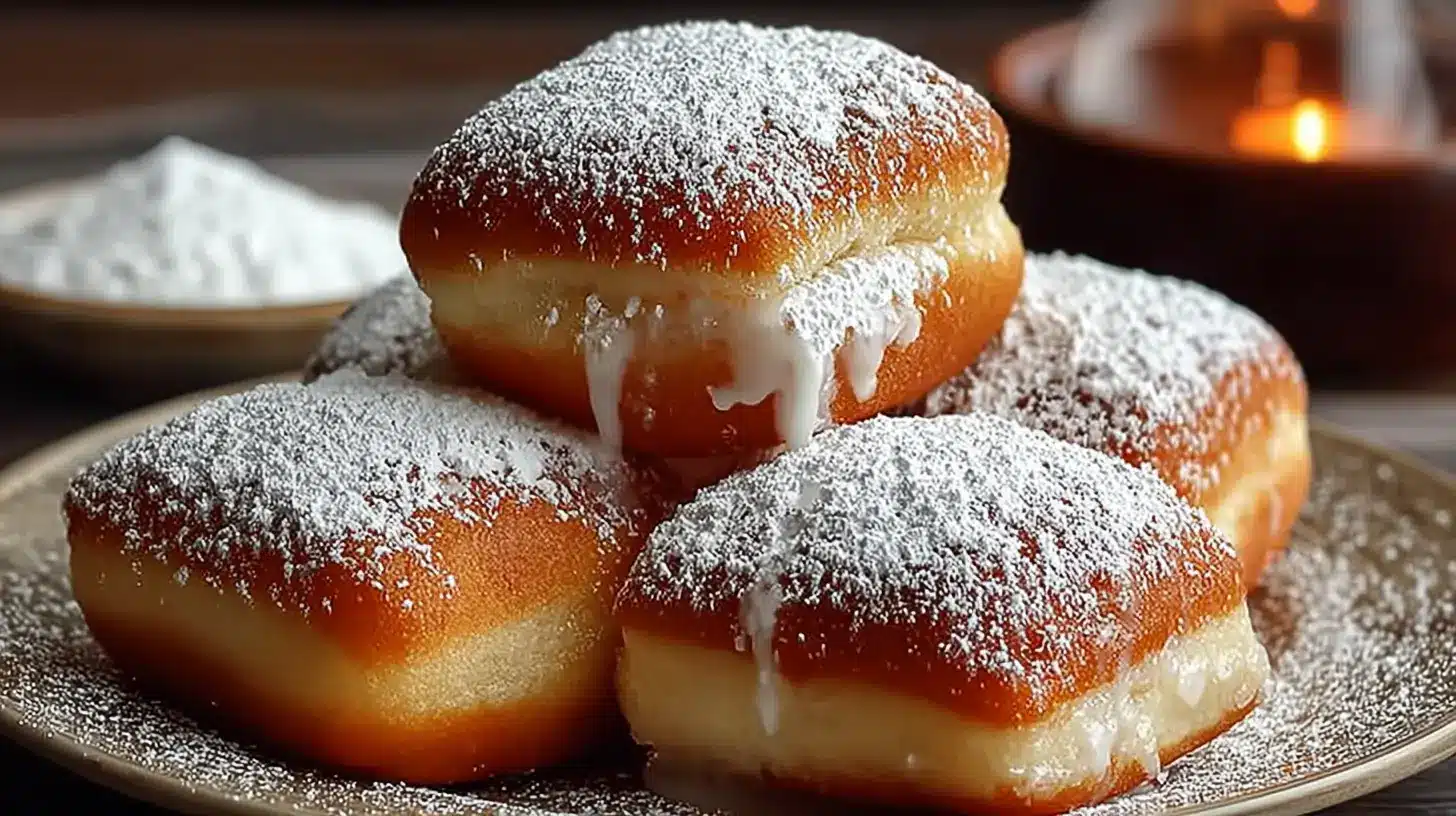
Vanilla French Beignets: Easy, Pillowy & Wonderful
Ingredients
Dough
- 1 cup warm milk 105–110°F / 40–43°C
- 2.25 tsp active dry yeast
- 0.25 cup granulated sugar
- 2 large eggs room temperature
- 2.5 tsp pure vanilla extract or paste
- 3 tbsp unsalted butter melted and cooled
- 3.25 cups all-purpose flour plus more for dusting
- 0.5 tsp fine sea salt
Frying & Finishing
- 1.5 quarts neutral oil for frying (about 2 inches deep)
- 1.5 cups powdered sugar for dusting
- 1 tsp vanilla powder or seeds from ½ vanilla bean optional, mixed into sugar
Instructions
- Step 1 – Wake the yeast
Warm milk to 105–110°F. Whisk with sugar and yeast in a large bowl. Let stand 5–10 minutes until foamy. - Step 2 – Build the dough
Add eggs, vanilla, and melted butter to yeast mixture. Stir in 3 cups flour and salt until a shaggy dough forms. Add flour as needed for a soft, tacky dough. - Step 3 – Knead to smooth
Knead by hand or mixer for 6–8 minutes until elastic and smooth. Dough should be soft and slightly tacky. - Step 4 – First rise
Place in a lightly oiled bowl, cover, and rise 60–90 minutes until doubled. - Step 5 – Optional overnight rest
After rising, punch down and refrigerate 8–24 hours. Proceed straight to rolling and frying in the morning. - Step 6 – Roll & cut
Roll dough to ¼ inch thick. Cut into 2–2½ inch squares. Transfer to a floured tray, cover, and rest 20–30 minutes. - Step 7 – Heat the oil
Heat oil in a deep pot to 350–360°F (175–182°C). Maintain this temperature for even frying. - Step 8 – Fry in small batches
Fry 3–5 beignets at a time for 60–90 seconds per side. Flip once. Drain on a wire rack. - Step 9 – Dust & serve
While still warm, dust generously with powdered sugar. Serve immediately for best texture.
Notes
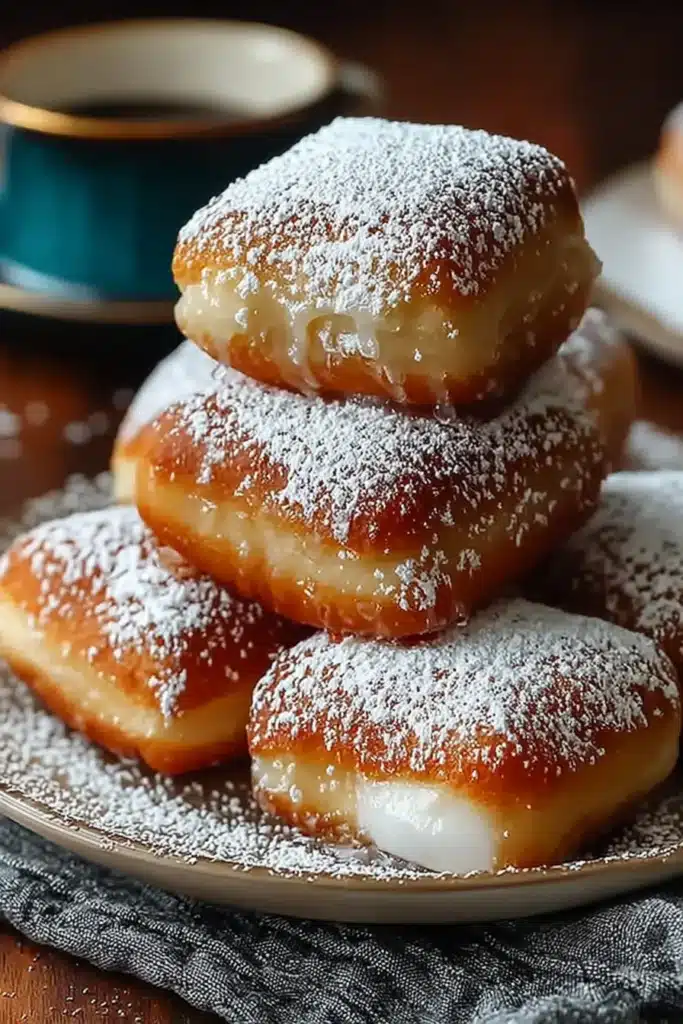
Ingredients for Vanilla French Beignets
Dough (Makes 12–16 beignets)
- 1 cup (240 ml) warm milk (about 105–110°F / 40–43°C)
- 2¼ tsp (7 g) active dry yeast
- ¼ cup (50 g) granulated sugar
- 2 large eggs, room temperature
- 2–3 tsp pure vanilla extract (or paste)
- 3 Tbsp (42 g) unsalted butter, melted and cooled slightly
- 3–3½ cups (360–420 g) all-purpose flour, plus more for dusting
- ½ tsp fine sea salt
For Frying & Finishing
- 1–1½ quarts neutral oil (enough for 2 inches/5 cm depth in a wide pot)
- 1–1½ cups powdered sugar (for dusting)
- Optional: 1 tsp vanilla powder or the seeds from ½ vanilla bean mixed into the powdered sugar
Yield: 12–16 beignets (2–2½ inch / 5–6 cm squares).
Ingredient Notes (Substitutions & Smart Tips)
- Milk: Whole milk gives the richest flavor, but 2% works well. Non-dairy alternatives (oat or almond drink) are fine; keep them warm (not hot) so they don’t shock the yeast.
- Yeast: Active dry yeast is standard. Instant yeast can be swapped 1:1 and mixed directly into the flour; still warm the milk and sugar so the dough temp lands in the sweet spot.
- Flour: Standard all-purpose flour keeps crumb tender; sub up to 25% bread flour for a chewier bite. For a lighter dough, start with 3 cups and add only as needed.
- Vanilla: Extract is classic. Vanilla paste or scraped beans intensify aroma—use a little less if the paste is potent.
- Butter: Melted butter enriches the dough. Neutral oil also works if needed.
- Oil for frying: Choose a neutral, high-heat oil. Keep a thermometer in the pot for consistent results.
- Powdered sugar: Sift before dusting for a delicate, even blanket. Stir in vanilla powder or bean seeds for an aromatic finish.
Step-by-Step Instructions
Step 1 – Wake the yeast
Warm the milk to 105–110°F (40–43°C). In a large bowl, whisk warm milk with sugar and yeast. Let stand 5–10 minutes until foamy. If it doesn’t foam, the yeast may be inactive—start again with fresh yeast.
Step 2 – Build the dough
Whisk in eggs, vanilla, and melted butter until smooth. Add 3 cups flour and salt; mix with a wooden spoon or dough hook until a shaggy dough forms. If very sticky, add flour 1 Tbsp at a time until the dough is soft and slightly tacky but clears the sides of the bowl.
Step 3 – Knead to smooth
Knead 6–8 minutes (stand mixer on medium-low or by hand) until the dough is elastic and smooth. It should feel soft, a touch tacky, and spring back slowly when pressed. Resist the urge to add too much flour—softer dough = lighter beignets.
Step 4 – First rise
Shape into a ball, place in a lightly oiled bowl, cover, and let rise 60–90 minutes in a warm, draft-free spot until doubled. The dough should look domed and jiggly with visible bubbles.
Step 5 – Optional overnight rest (flavor & scheduling)
For weekend mornings, punch down after the first rise, cover tightly, and refrigerate 8–24 hours. Cold dough rolls and cuts beautifully; the flavor deepens, and your morning is basically just roll–cut–fry.
Step 6 – Roll & cut
Turn dough onto a lightly floured surface. Roll to ¼ inch (6 mm) thick. Square off edges, then cut into 2–2½ inch (5–6 cm) squares with a sharp knife or pastry cutter. Transfer to a floured tray, cover lightly with a towel, and rest 20–30 minutes while you heat the oil—this “bench rest” boosts puff.
Step 7 – Heat the oil
In a wide, heavy pot, heat 2 inches (5 cm) oil to 350–360°F (175–182°C). Keep a thermometer clipped on; consistent heat equals even color and airy interiors.
Step 8 – Fry in small batches
Gently slip 3–5 squares into the oil—don’t crowd. Fry 60–90 seconds per side until deep golden. They should puff dramatically within 15–20 seconds. Adjust heat to stay in range; too cool = greasy, too hot = browned outside/raw inside. Use a spider to transfer to a rack set over a sheet pan.
Step 9 – Dust & serve
While warm, shower generously with powdered sugar (classic) or vanilla-sugar. Serve immediately. Beignets are at their peak within minutes of frying—light, steamy, and fragrant.

Step-by-Step Photos in Words (Cues to Watch)
- Yeast bloom: Thick foam cap, sweet-bready aroma.
- Proper dough feel: Soft, slightly tacky; pulls from bowl but still plush.
- First rise: Doubled, airy wobble, tiny bubbles visible at the surface.
- Bench rest: Cut squares look slightly puffier; edges relax; surface feels satiny.
- Fry: Quick bloom to pillows; flip once when the first side is richly golden.
Pro Tips for Success
- Measure flour lightly: Spoon and level (or weigh). Too much flour makes dense beignets.
- Temperature is everything: Warm liquids, a cozy rise, and 350–360°F oil are your guardrails.
- Don’t overwork after first rise: Gentle handling preserves gas bubbles for lighter puff.
- Fry small batches: Crowding drops the oil temperature and encourages greasiness.
- Flip only once: Repeated flips knock out puff and can create uneven color.
- Drain on a rack, not paper: Racks keep bottoms crisp so sugar clings better.
- Dust generously: Powdered sugar coats best when beignets are still warm—do a second dust at the table for drama.
- Test beignet first: Fry one, then adjust timing, oil temp, and sugar level to taste before cooking the rest.
Flavor Variations
- Vanilla–Citrus: Add 1 tsp lemon zest to the dough and a pinch to the powdered sugar. Fresh, bright, and brunchy.
- Cinnamon–Vanilla: Whisk ½ tsp cinnamon into the dough and into the powdered sugar.
- Chocolate Drizzle: Melt a small handful of chips with a splash of milk; drizzle over dusted beignets.
- Jam-Filled: Pipe a bit of jam into warm beignets with a pastry tip (poke a small hole in the side). Dust again.
- Vanilla Bean Sugar: Split a vanilla bean, scrape seeds into 1 cup powdered sugar; bury the pod in the sugar jar to perfume it for next time.
- Baked Shortcut (different style): If frying isn’t an option, bake cut squares on a parchment-lined sheet at 400°F (205°C) for 9–12 minutes, then brush with melted butter and dust. The texture isn’t identical, but it’s a fun weekday hack.
Serving Suggestions
- Classic café style: Tower on a platter and sift powdered sugar over the stack at the table.
- Fruit pairing: Serve with strawberries, blueberries, or sliced oranges for color and contrast.
- Dips: Offer small bowls of vanilla yogurt or a quick chocolate sauce.
- Brunch board: Pair with a veggie frittata or fresh salad, plus coffee or hot tea.
Storage and Make-Ahead
- Dough ahead: After the first rise, refrigerate 8–24 hours for an easy morning fry.
- Same-day holds: Cut squares can rest up to 45 minutes at room temp under a towel while you set up the fry station.
- Fried beignets: Best enjoyed fresh. If needed, keep on a rack in a 200°F (95°C) oven for up to 20 minutes.
- Leftovers: Store (undusted) in an airtight container for 1 day; rewarm at 300°F (150°C) for 4–6 minutes, then dust. They won’t be as ethereal but still lovely.
- Freezing: Freeze cut, un-fried dough squares on a tray; bag and keep up to 1 month. Fry from frozen at 340–350°F, adding 30–60 seconds; dust while warm.
Troubleshooting Guide
- Beignets didn’t puff: Oil too cool; dough under-proofed; or flour-heavy dough. Check thermometer, extend rise, and avoid adding excessive flour.
- Greasy beignets: Oil below 340°F or crowded pot. Fry fewer at a time and maintain heat.
- Dark outside, raw inside: Oil too hot or beignets too thick. Reduce to 350°F and roll to ¼ inch.
- Dense texture: Over-floured or overworked dough. Measure carefully and knead only to smooth.
- Soggy after dusting: Dusted while wet with oil. Let drain on a rack 1–2 minutes, then dust.
- Uneven shapes: Use a sharp knife or pizza wheel; flour the blade lightly between cuts.
Nutrition Facts (Per Beignet)
Estimate for 14 beignets, with a moderate dusting of powdered sugar. Values vary by size and oil absorption.
| Calories | Protein (g) | Carbs (g) | Fat (g) | Fiber (g) | Sodium (mg) |
|---|---|---|---|---|---|
| 190 | 5 | 27 | 6 | 1 | 120 |
To lighten slightly: cut beignets smaller, drain thoroughly, and dust lightly.
FAQ About Vanilla French Beignets
Can I mix the dough entirely by hand?
Yes. Use a sturdy spoon until the dough gathers, then knead on a lightly floured counter. It may be tackier than typical bread dough—dust your hands, not the dough, to avoid adding too much flour.
Do I need a stand mixer?
No. A mixer is convenient, but hand-kneading works. The cues—smooth surface, soft tack, slow spring-back—matter more than equipment.
What oil temperature is best?
350–360°F (175–182°C). Below 340°F they absorb oil and taste heavy; above 365°F they brown before cooking through.
How thick should I roll the dough?
¼ inch (6 mm) is the sweet spot: thin enough to puff quickly, thick enough to stay pillowy.
Can I bake them instead of frying?
Yes, but the result is different—more like an airy roll. For best flavor and texture, frying is recommended for classic beignets.
How do I keep the first batches warm without losing crispness?
Place on a wire rack in a 200°F (95°C) oven. Don’t cover—it traps steam and softens the crust.
Can I flavor the powdered sugar?
Absolutely. Whisk in a little vanilla powder, citrus zest, or warm spices. Sift again for even dusting.
Why did my dough taste yeasty?
Likely over-proofed or too warm during rise. Aim for a gentle double, not a triple, and keep dough around 75–80°F (24–27°C).
TastyInspo Notes
- Vanilla two ways: Add extract to the dough and a whisper of vanilla powder or bean seeds to the powdered sugar for layered aroma.
- Gentle edges: Don’t saw the dough—press straight down to cut. Clean cuts help beignets puff evenly.
- Thermometer loyalty: Clip it to the pot from the start. Stable heat is the difference between ethereal and oily.
- Fry order: Test one beignet first; it sets your timing and confirms oil temp before you commit the whole tray.
- Dust at the table: Bring a small sieve and powdered sugar to the table—give them a final snow just before serving for the café moment.
- Make it a ritual: Mix dough after dinner, chill overnight, and fry in the morning. Fresh, warm beignets + coffee turn any day into a tiny celebration.
Final Thoughts
Vanilla French Beignets are proof that a little yeast, patience, and a pot of hot oil can transform breakfast into something unforgettable. The method is welcoming even to first-time fryers: measure the flour lightly, keep the dough soft, watch your oil temperature, and fry in relaxed, small batches. The payoff—puffy squares that collapse into sweet vanilla clouds—feels like magic every time. Once you’ve made them, you’ll start dreaming up new twists: citrus-kissed sugar, chocolate drizzle, jam-filled centers, or that perfect, simple mountain of powdered snow. Keep vanilla and yeast in the pantry and you’re always an hour away from café-style bliss at home.