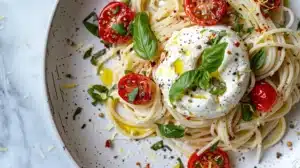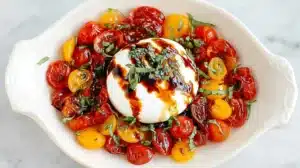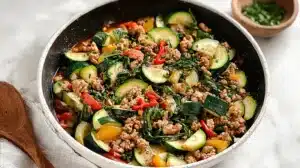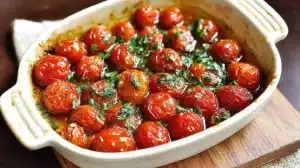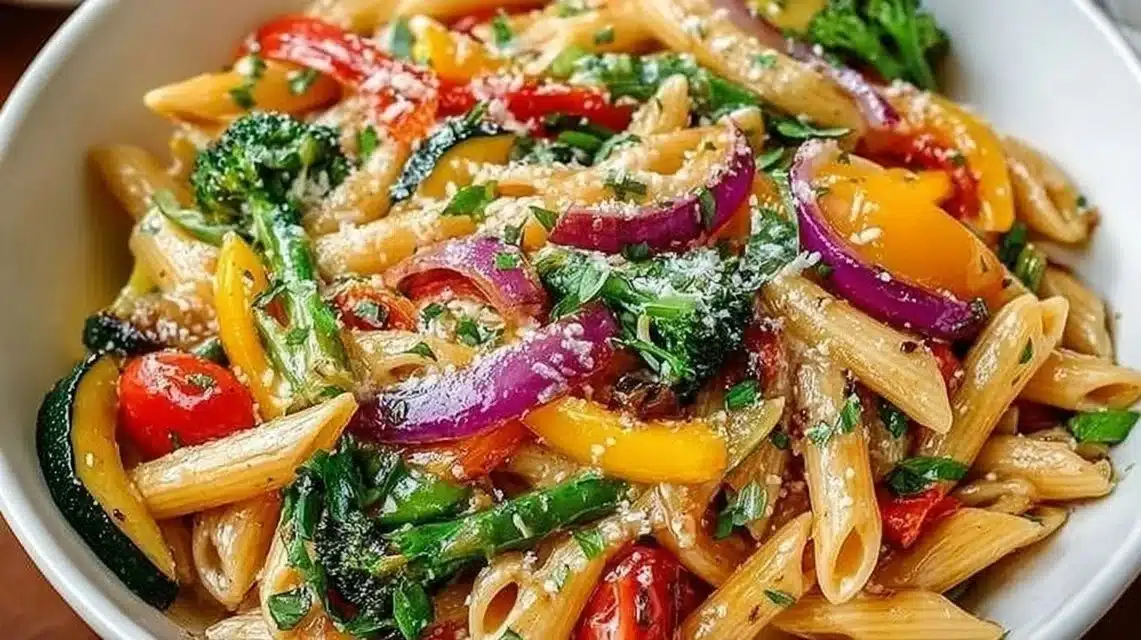
This Vegetarian Pasta Primavera is bright, light, and full of fresh vegetable flavor. Tender pasta meets crisp-tender bell pepper, zucchini, and carrot with sweet cherry tomatoes and garlicky spinach for a mix of textures — a little chew from the pasta, a little snap from the veggies, and a silky finish if you add Parmesan. It’s easy because it cooks in one skillet after the pasta is done, and the steps are quick and forgiving. Serve it hot as a weeknight main, or cool slightly for a spring lunch. If you want a creamier take, try our best creamy burrata pasta recipe for another simple, showy pasta option.
Why You’ll Love This Vegetarian Pasta Primavera
- Ready in about 20–30 minutes using pantry pasta and simple produce.
- Bright, fresh flavors: sweet tomatoes, garlicky spinach, and crisp vegetables.
- Light but satisfying: vegetables and pasta make a balanced, not-heavy meal.
- One-skillet finish keeps cleanup easy after boiling the pasta.
- Flexible: swap or add vegetables based on what’s in season or your fridge.
- Kid-friendly textures — soft pasta with slightly firm veggies — easy to please.
- Quick to scale up for guests or scale down for leftovers.
- Optional Parmesan adds a savory finish without changing the core recipe.
What Is Vegetarian Pasta Primavera?
Vegetarian Pasta Primavera is a simple Italian-American pasta dish that celebrates fresh vegetables. It tastes fresh and lightly savory: a base of cooked pasta tossed with sautéed bell pepper, zucchini, carrot, cherry tomatoes, garlic, and spinach. The vegetables keep some bite so each forkful has texture and color. The cooking method is straightforward: pasta is boiled, vegetables are sautéed in olive oil, then everything is combined and seasoned. The vibe is casual comfort — perfect for a quick weeknight dinner, a light weekend lunch, or a seasonal brunch centerpiece.
Ingredients for Vegetarian Pasta Primavera
For the Base
- 8 oz pasta (e.g., penne or fettuccine)
- Salt (for the boiling water)
For the Vegetables
- 2 tablespoons olive oil
- 1 bell pepper, sliced
- 1 zucchini, sliced
- 1 carrot, julienned
- 1 cup cherry tomatoes, halved
- 2 cups spinach
- 2 cloves garlic, minced
To Serve
- Salt and pepper to taste
- Grated Parmesan cheese (optional)
Ingredient Notes (Substitutions, Healthy Swaps)
- Pasta: Use whole-wheat or legume-based pasta if you want more fiber or protein. Cooking time may vary slightly.
- Olive oil: Keeps the dish light; you can use avocado oil in a pinch.
- Bell pepper / zucchini / carrot: Any similar firm vegetables work — broccoli florets, asparagus, or green beans are fine swaps. Keep pieces similar in size for even cooking.
- Cherry tomatoes: Grape tomatoes or chopped Roma tomatoes work. If using large tomatoes, seed and chop.
- Spinach: Baby spinach is the easiest. Kale or arugula can replace spinach — if you use kale, thinly slice and cook a bit longer.
- Garlic: Garlic powder can be used if fresh is not available, but add it later to avoid a raw taste.
- Parmesan: Optional. Substitute with a sprinkle of nutritional yeast for a vegan option (note: that is a substitution—Parmesan in the recipe is optional, not required).
Step-by-Step Instructions
Step 1 – Cook the pasta
Bring a large pot of salted water to a boil. Add 8 oz pasta and cook according to package instructions until al dente. Drain and set aside.
Visual cue: Pasta should be tender but still slightly firm in the center.
Step 2 – Heat the pan and oil
In a large skillet, heat 2 tablespoons olive oil over medium heat until shimmering.
Step 3 – Sauté the firmer vegetables
Add the sliced bell pepper, sliced zucchini, and julienned carrot to the skillet. Sauté for about 5–7 minutes, stirring occasionally, until tender but still have a bite.
Step 4 – Add garlic and tomatoes
Stir in the minced garlic and halved cherry tomatoes. Cook for another 2–3 minutes until fragrant and the tomatoes soften.
Step 5 – Combine spinach and pasta
Add the 2 cups spinach and the cooked pasta to the skillet. Toss until the spinach wilts and everything is heated through.
Step 6 – Season and serve
Season with salt and pepper to taste, and plate hot, topping with grated Parmesan if desired.
Pro cue: Taste before serving and adjust salt and pepper — a little extra seasoning brightens the dish.
Pro Tips for Success
- Salt the pasta water well so the pasta itself has flavor; it should taste slightly salty like the sea.
- Slice vegetables evenly so they cook at the same rate; thinner slices will cook faster.
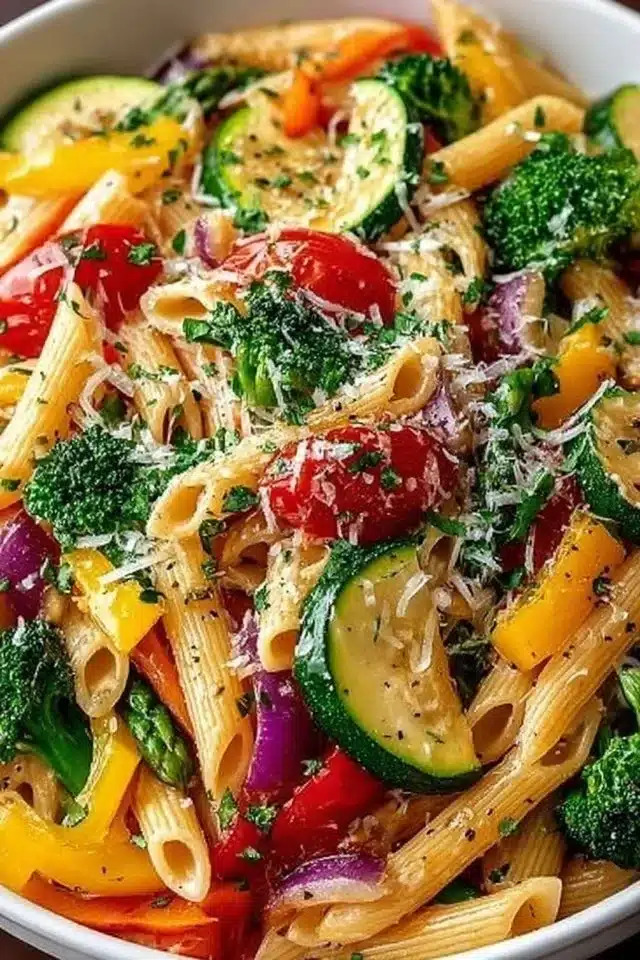
- Don’t overcook the vegetables — aim for tender-crisp to keep color and texture.
- Use medium heat for sautéing so garlic doesn’t burn; add garlic after firmer vegetables start to soften.
- If the pasta seems dry when you toss it with vegetables, add a splash of the reserved pasta water (if you saved some) or a teaspoon of olive oil.
- If using protein-rich or whole-grain pasta, check doneness a minute early; these can become mushy if overcooked.
- Serve immediately for best texture; if you must hold it, keep covered over very low heat and stir occasionally.
Flavor Variations
- OPTIONAL: Lemon zest and a squeeze of lemon juice for bright acidity — add at the end to preserve flavor.
- OPTIONAL: Red pepper flakes for heat — sprinkle while tossing for even distribution.
- OPTIONAL: Add olives or capers for a salty, briny kick — toss them in with tomatoes.
- OPTIONAL: Stir in a spoonful of cream or a splash of pasta cooking water plus a pat of butter to create a light sauce (still keep Parmesan optional).
- OPTIONAL: Add fresh herbs like basil or parsley at the end for a fresh finish.
- OPTIONAL: Mix in cooked chickpeas or white beans to add plant-based protein without changing the dish’s character.
Serving Suggestions
- Plate hot and finish with a sprinkle of grated Parmesan and a grind of black pepper.
- Serve with a simple green salad and a light vinaigrette for a full meal.
- Offer crusty bread or garlic bread on the side to soak up any juices.
- Pair with a crisp white wine or sparkling water with lemon for a light, casual dinner.
- Serve in shallow bowls for a dinner or on a platter for family-style sharing.
- Bring to a picnic or potluck — serve warm or at room temperature.
Make-Ahead, Storage & Reheating
- Make-ahead: Cook the pasta and sauté the vegetables separately, then store in airtight containers. When ready to eat, warm the vegetables in a skillet and toss with pasta to combine.
- Storage duration: Store in the refrigerator for up to 3–4 days in an airtight container.
- Reheating best practices: Reheat gently on the stovetop over low to medium heat with a splash of water or oil to keep the pasta from drying. Microwave in short bursts, stirring between intervals. Expect some texture softening after refrigeration and reheating.
Storage and Freezing Instructions
- Freezing cooked pasta primavera is not ideal because the vegetables and pasta will soften and become mushy after thawing. If you must freeze: pack in a shallow, airtight container and freeze for up to 1 month. Thaw in the fridge overnight and reheat gently on the stove with a splash of olive oil.
- Better option: Freeze vegetables separately before cooking (blanched or raw depending on vegetable), and store dried pasta; combine fresh when ready to cook for best texture.
Nutrition Facts (Per Serving)
Calories | Protein | Carbs | Fat | Fiber | Sodium
~380 kcal | ~12 g | ~55 g | ~11 g | ~6 g | ~420 mg
Estimates vary by brands and portions.
FAQ About Vegetarian Pasta Primavera
Q: My pasta is too dry after tossing with vegetables. What can I do?
A: Add a splash of olive oil or 1–2 tablespoons of reserved pasta water and toss to loosen.
Q: How do I avoid limp, overcooked vegetables?
A: Slice evenly and cook just until tender-crisp. Start with firmer vegetables and add softer ones later as directed.
Q: Can I make this gluten-free?
A: Yes, use a gluten-free pasta and follow the same cook steps; check the package for al dente timing.
Q: The dish tastes bland — how do I fix it?
A: Increase salt slightly, add freshly ground pepper, or finish with grated Parmesan or a squeeze of lemon if using an optional variation.
Q: Can I add protein like beans or tofu?
A: Yes — optional additions like cooked chickpeas or cubed, pan-fried tofu work well. Add them when combining pasta and spinach.
Q: How long will leftovers last in the fridge?
A: Stored properly in an airtight container, leftovers last 3–4 days.
TastyInspo Notes
- Finish with a little extra olive oil right before serving to add shine and richness.
- For color contrast, leave some cherry tomato halves on top after tossing.
- Warm plates slightly before serving to keep the dish hot longer.
- If using Parmesan, grate it fresh — pre-grated cheese has a different texture and melts less smoothly.
- Toss just before serving for the best texture; prolonged standing softens the veggies.
Troubleshooting
Problem: Vegetables burned or garlic tastes bitter.
Fix: Lower the heat, remove the pan from the heat briefly, and scrape out any overly browned bits. Start over with fresh garlic if it tastes burned.
Problem: Pasta is mushy.
Fix: Check pasta for al dente when boiling and drain promptly. Use firm timing on the package and taste a minute early.
Problem: Dish is too salty.
Fix: Add more pasta or a handful of unsalted vegetables to balance salty taste, or toss with a little unsalted cooked pasta.
Problem: Sauce or mix is watery.
Fix: Sauté a bit longer to evaporate excess moisture from tomatoes, or add a small spoon of grated cheese to bind juices.
Problem: Flavor is flat after reheating.
Fix: Brighten with a squeeze of lemon juice, a pinch of salt, or a quick drizzle of olive oil before serving.
Final Thoughts
This Vegetarian Pasta Primavera is a fast, colorful, and forgiving meal that highlights simple vegetables and pantry pasta. It’s ideal for busy nights, light lunches, or whenever you want a fresh, satisfying plate without fuss. Use the basic steps, keep vegetables crisp-tender, and adjust seasoning at the end for the best result.
Conclusion
For another take on bright vegetable-forward pasta, check this well-tested Pasta Primavera Recipe – Love and Lemons to compare methods and inspiration.
Vegetarian Pasta Primavera
Ingredients
For the Base
- 8 oz pasta (e.g., penne or fettuccine) Use whole-wheat or legume-based pasta for more fiber or protein.
- Salt (for the boiling water) Salt the pasta water well for flavor.
For the Vegetables
- 2 tablespoons olive oil You can use avocado oil if needed.
- 1 large bell pepper, sliced Any firm vegetables can work.
- 1 large zucchini, sliced Cut evenly for even cooking.
- 1 large carrot, julienned Keep pieces similar for even cooking.
- 1 cup cherry tomatoes, halved Grape or chopped Roma tomatoes can be used.
- 2 cups spinach Baby spinach is easiest; kale can be used if sliced thin.
- 2 cloves garlic, minced Garlic powder can substitute if needed.
To Serve
- Salt and pepper to taste Adjust according to preference.
- Grated Parmesan cheese (optional) Can substitute with nutritional yeast for a vegan option.
Instructions
Cooking the Pasta
- Bring a large pot of salted water to a boil. Add the pasta and cook according to package instructions until al dente.
- Drain and set aside.
Sautéing the Vegetables
- In a large skillet, heat the olive oil over medium heat until shimmering.
- Add the bell pepper, zucchini, and carrot. Sauté for about 5–7 minutes until tender but with a bite.
- Stir in the minced garlic and halved cherry tomatoes. Cook for another 2–3 minutes until fragrant.
Combining Ingredients
- Add spinach and cooked pasta to the skillet. Toss until the spinach wilts and everything is heated through.
- Season with salt and pepper to taste, and serve hot, topping with Parmesan if desired.