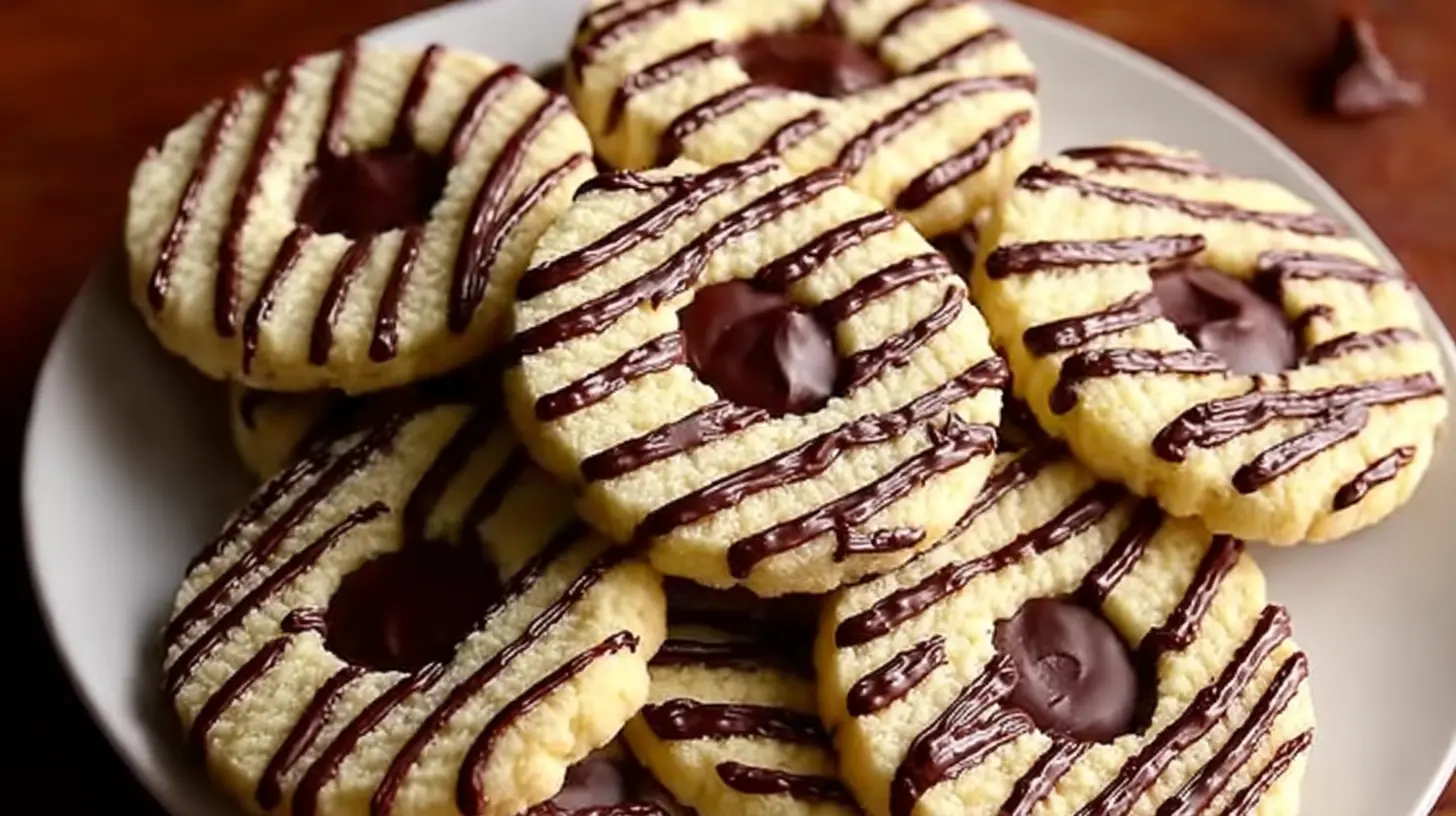
This fudge stripe cookies recipe gives you crisp-tender vanilla rings finished with glossy chocolate stripes on top and a chocolate-coated base—everything you love about the iconic store-bought treat, only richer, fresher, and more flavorful. The dough is a simple buttery shortbread-style base that rolls out cleanly, bakes evenly, and sets up with delicate snap at the edges. After a quick melt of chocolate, you’ll pipe sleek stripes and dip the bottoms for that signature two-tone look. Below you’ll find clear measurements, step-by-step instructions, expert troubleshooting, variations, and storage guidance so your cookies turn out elegant and delicious every time.
Why You’ll Love These Fudge Stripe Cookies
- Classic look, homemade flavor. Real butter and vanilla create a superior shortbread with deep aroma and tender bite.
- Beginner-friendly techniques. If you can roll dough and cut shapes, you can make these. The striping method is straightforward and forgiving.
- Make-ahead friendly. Dough chills well; baked cookies stay fresh for days and freeze beautifully.
- Customizable chocolate. Use semisweet for classic flavor, go darker for grown-up intensity, or choose milk chocolate for a softer, nostalgic finish.
- Party-ready presentation. The contrast of pale cookie and glossy chocolate stripes always looks bakery-professional on a platter.
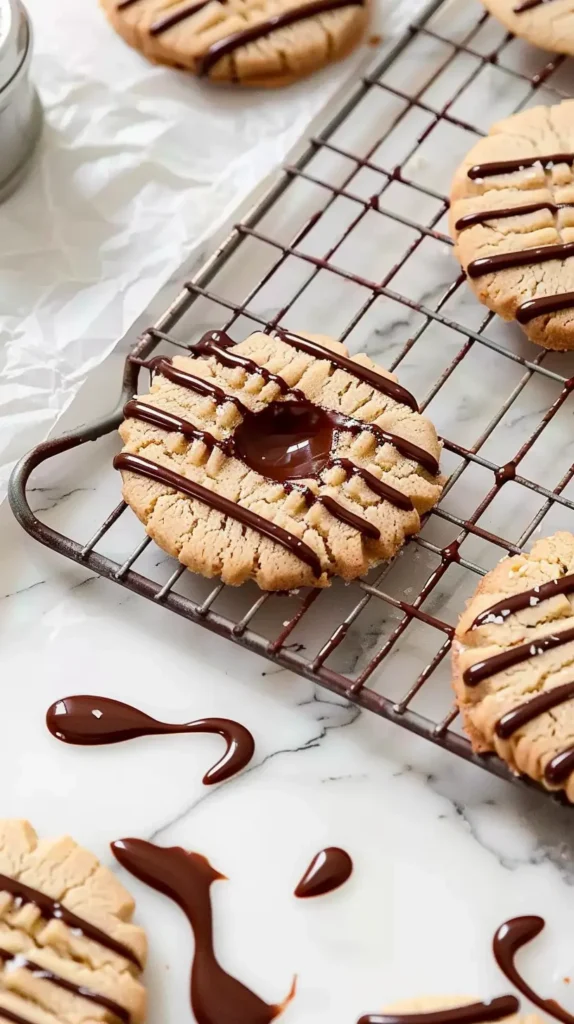
Ingredients for Fudge Stripe Cookies
Cookie Dough
- 1 cup (226 g) unsalted butter, softened
- ¾ cup (150 g) granulated sugar
- 1 large egg, room temperature
- 1½ teaspoons vanilla extract
- ½ teaspoon kosher or fine sea salt
- 2½ cups (312 g) all-purpose flour
Chocolate Finish
- 12 oz (340 g) semisweet chocolate chips or chopped chocolate (for striping and dipping)
Yield: About 36 cookies (2-inch rings with ½-inch center holes).
Bake Temp:350°F / 175°C.
Ingredient Notes (Substitutions & Helpful Details)
- Butter: Use real unsalted butter for best flavor and structure. If using salted butter, reduce added salt to a pinch. Plant-based stick “butter” is workable; choose one formulated for baking (not soft tub spreads).
- Sugar: All granulated sugar keeps the crumb delicate and crisp at the edges. If you sub in 2–3 tablespoons light brown sugar, expect a slightly chewier center and deeper color.
- Egg: Adds tenderness and cohesion, making the dough easier to roll and cut than an egg-free shortbread.
- Flour: Use standard all-purpose flour. For a melt-in-the-mouth effect, whisk flour before measuring, then spoon and level. A 1:1 gluten-free baking blend can work—keep dough cold and handle gently for clean cuts.
- Vanilla: Real vanilla extract subtly perfumes the dough; vanilla bean paste is lovely if you want visible specks.
- Chocolate: Choose quality chocolate that melts smoothly. Chips are convenient; chopped bars often melt glossier. If your chocolate seems thick, add a small drizzle of neutral oil to loosen for dipping.
- Flavor Add-Ins (Optional): ⅛ teaspoon almond extract or a whisper of citrus zest can customize the dough without losing its classic profile.
Step-by-Step Instructions
Step 1 – Make the Dough
- Cream the butter and sugar. In a large bowl, beat 1 cup softened butter and ¾ cup sugar on medium speed for 2–3 minutes until light and slightly fluffy. Proper creaming traps tiny air pockets that help the cookies bake evenly.
- Add egg and vanilla. Mix in 1 large egg and 1½ teaspoons vanilla just until smooth. Scrape the bowl and beat 10–15 seconds more to combine.
- Add dry ingredients. Sprinkle in ½ teaspoon salt and 2½ cups flour. Mix on low just until no dry streaks remain. The dough should be soft and cohesive but not sticky.
Dough Texture Check: If dough feels sticky (warm room), mix in 1–2 teaspoons extra flour. If crumbly, knead gently by hand for 10 seconds and it will come together.
Step 2 – Chill the Dough
- Divide the dough in half.
- Flatten each portion into a 1-inch-thick disk, wrap, and chill 30 minutes–2 hours (or up to 2 days). Chilling firms the butter for clean rolling and precise edges.
Step 3 – Roll & Cut the Rings
- Prep the station. Line baking sheets with parchment. Lightly flour a cool work surface and your rolling pin.
- Roll. Working with one disk at a time, roll to ¼-inch (6 mm) thickness. Rotate the dough occasionally and add a dusting of flour as needed to prevent sticking.
- Cut rounds. Use a 2-inch (5 cm) round cutter to cut circles. Transfer rounds to a parchment-lined sheet.
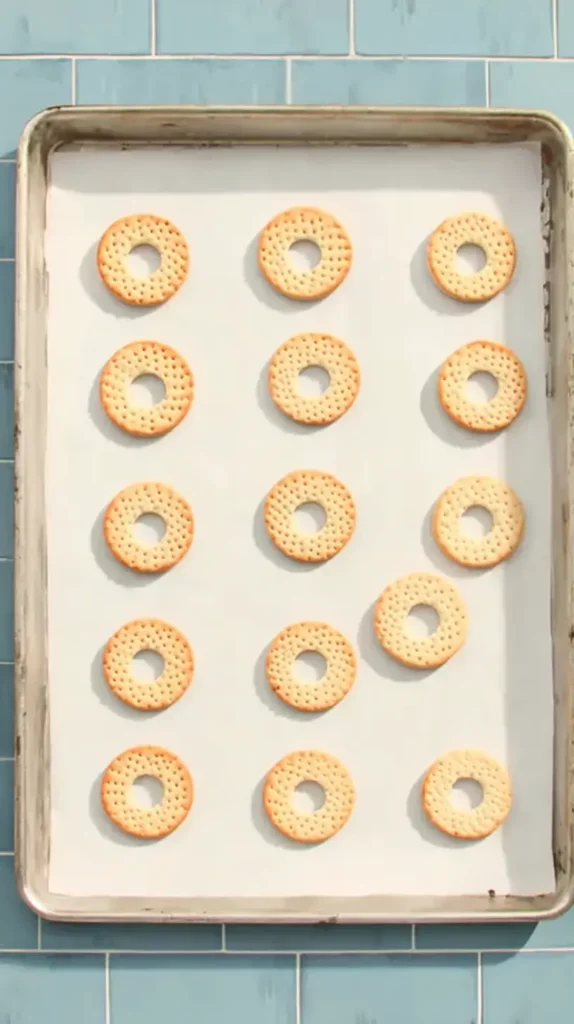
- Cut center holes. Use a ½-inch cutter (or wide piping tip) to punch a hole in each center, forming donut-style rings.
- Re-roll scraps once to minimize toughness; keep scraps lightly floured and handle gently.
- Chill the cutouts on the baking sheet for 25–30 minutes. This step helps the cookies hold shape and minimizes spread.
Pattern Option: For a textured top, lightly press a clean, patterned meat mallet or embossed rolling pin onto the rolled dough before cutting. It adds a subtle bakery look beneath the stripes.
Step 4 – Bake
- Heat oven to 350°F / 175°C while the cutouts chill.
- Bake one sheet at a time on the center rack for 10–12 minutes, until edges look just turning light golden but centers remain pale.
- Cool on the sheet for 3 minutes, then transfer to a rack to cool completely. The cookies will crisp slightly as they cool.
Step 5 – Melt Chocolate & Finish
- Melt chocolate. Place 12 oz chocolate in a microwave-safe bowl. Microwave 20–30 seconds at a time, stirring between bursts until smooth. (Or melt in a heatproof bowl set over barely simmering water.)
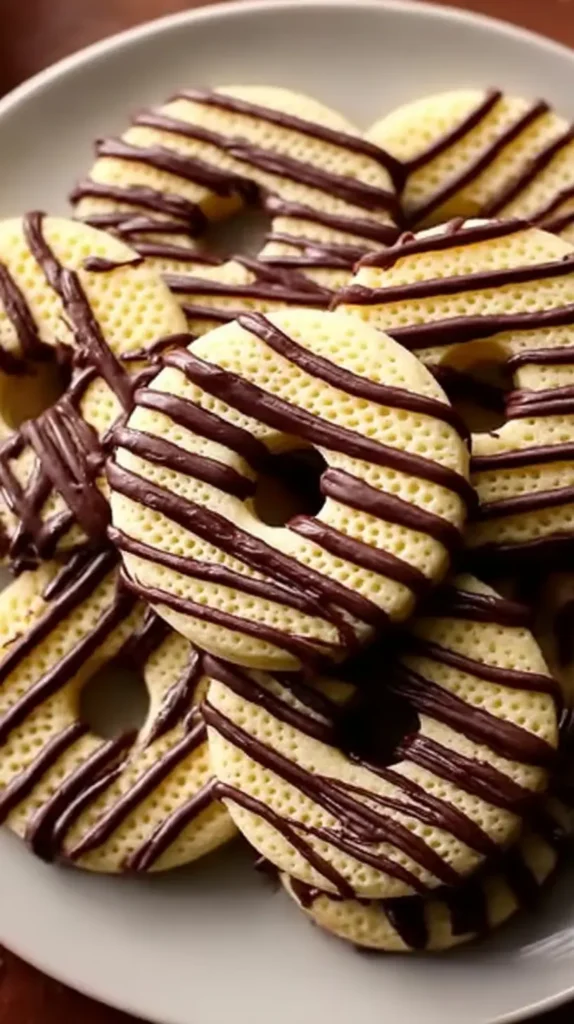
- Stripe the tops. Transfer a portion of melted chocolate to a piping bag (or a zip-top bag with a tiny corner snipped). Pipe 4 evenly spaced stripes across each cookie. Let set slightly at room temperature 5–10 minutes.
- Dip the bottoms. Rewarm chocolate if needed. Dip the bottom side of each cookie into the chocolate, tap off excess, and place chocolate-side-down on parchment so the base sets smooth and flat.
- Set. Chill the sheet 10–15 minutes to firm the chocolate, then bring back to room temp before storing to avoid condensation.
Neatness Tip: For perfectly straight stripes, place cookies on a wire rack set over parchment and pipe in long, continuous passes across a full row, moving your hand steadily from left to right.
Pro Tips for Success
- Weigh your flour. 312 g all-purpose flour is the sweet spot. Too much flour makes a dry, crumbly cookie; too little can cause spreading.
- Chill strategically. A short chill before rolling and another chill after cutting keep edges sharp and thickness even.
- Cut cleanly. Dip cutters in flour every few cuts and press straight down; avoid twisting, which can distort edges.
- Bake by color, not time. Pull when edges are pale golden and centers are set but still light. Overbaking leads to a hard snap instead of a delicate crisp.
- Melt chocolate gently. Low heat prevents seizing and keeps chocolate glossy. If it thickens, stir in ½ teaspoon neutral oil.
- Work in batches. Stripe a sheet, then dip; melted chocolate stays workable longer if you don’t heat it all at once.
- Room-temp set. Let dipped cookies sit a few minutes before moving the tray to the fridge; the surface sets smoother and shinier.
Flavor Variations
- Extra-Vanilla Shortbread
Add ½ teaspoon vanilla bean paste in addition to extract for visible vanilla flecks and a fragrant aroma. - Dark Chocolate Accent
Use 70% cacao chocolate for striping and dipping. The bittersweet edge balances the buttery cookie beautifully. - Milk Chocolate Throwback
Prefer a softer, sweeter profile? Melt milk chocolate for a nostalgic flavor and lighter color contrast. - Cinnamon Sugar Dust
Before striping, lightly brush cookie tops with a whisper of simple syrup and dust with cinnamon sugar. Stripe once dry for a playful, churro-style effect. - Marbled Chocolate Base
Melt equal parts semisweet and white chocolate separately. Dip bottoms in semisweet, then drizzle white and swirl with a toothpick for marbling. - Sprinkle Stripe
While stripes are still wet, shower on a pinch of finely chopped nuts or festive sprinkles for party flair.
Serving Suggestions
- Cookie Platter Star: Alternate stripe directions (vertical/horizontal) for visual variety on dessert trays.
- Ice-Cream Rings: Sandwich a small scoop of vanilla or cinnamon ice cream between two cookies; freeze on a tray until firm.
- Coffee Companions: The crisp-tender texture makes them ideal with hot coffee or tea—perfect for afternoon treats or holiday gatherings.
- Giftable Treats: Pack in cookie tins with parchment between layers; tie with ribbon and add a hand-written tag.
Storage and Freezing Instructions
- Room Temperature: Store in an airtight container up to 4 days. Keep away from heat or direct sun to protect the chocolate finish.
- Refrigerator: For warmer climates, refrigerate to keep chocolate set; bring to room temperature before serving for best texture.
- Freezer (Baked Cookies): Freeze in layers separated by parchment up to 2 months. Thaw in the container at room temperature to avoid condensation.
- Freezer (Unbaked Dough): Wrap well-chilled dough disks tightly in plastic and then in a freezer bag; freeze up to 2 months. Thaw overnight in the fridge before rolling and cutting.
- Freezer (Cutouts): Freeze cut rings flat on a tray, then bag. Bake from frozen, adding 1–2 minutes to bake time.
Nutrition Facts (Per Cookie)
Approximate values for one of 36 cookies. Calculations will vary based on chocolate type and thickness of coating.
| Calories | Protein | Carbs | Fat | Fiber | Sodium |
|---|---|---|---|---|---|
| ~140 | ~2 g | ~18 g | ~7 g | ~1 g | ~70 mg |
Note: Using darker chocolate may slightly increase fiber and reduce sugar; milk chocolate will increase sugar and calories per cookie.
FAQ About Fudge Stripe Cookies
Do I have to chill the dough?
Yes, briefly. Chilling before rolling and after cutting helps the cookies hold their shape, produce cleaner edges, and bake with a fine crumb. If you skip chilling, expect more spread and softer definition.
Why are my cookies tough or dry?
Common causes: too much flour, over-mixing after adding flour, or overbaking. Weigh flour if possible, mix just until combined, and pull cookies when edges are pale golden.
My chocolate set streaky or dull. What happened?
Likely overheated chocolate or condensation. Melt gently in short bursts and stir often. Allow cookies to set partially at room temperature before chilling; moving them to the fridge too soon can dull the finish.
How do I keep stripes tidy without a piping bag?
Use a small zip-top bag and snip a tiny corner off. Practice a few stripes on parchment first to check flow. Hold the bag a little above the cookie and pull in one smooth motion.
Can I make the cookies larger or smaller?
Absolutely. For 1½-inch minis, cut bake time to 8–9 minutes; for 3-inch cookies, bake 12–14 minutes. Watch the color cues.
Can I flavor the dough differently?
Yes. Add a pinch of cinnamon or a little citrus zest to the dough. Keep add-ins light so the dough rolls cleanly and bakes level.
What if I don’t have a small cutter for the center holes?
Use the wide end of a large round piping tip, a clean bottle cap, or even a metal straw (twist to widen the hole). The exact size isn’t critical; a visible center opening gives the signature look.
My dough sticks to the counter when rolling—help!
Chill the dough longer, flour the surface lightly, and roll from the center out, lifting and turning the dough occasionally. If needed, roll between two sheets of parchment to eliminate sticking.
How do I avoid air bubbles under the stripes?
Pipe slowly and evenly with steady pressure. If a bubble appears, tap the cookie gently on the counter before the chocolate sets to settle lines.
Can I double or triple the recipe?
Yes. Work in stages: make one batch of dough while another chills, and melt chocolate in smaller portions so it stays fluid. Bake one sheet at a time for even results, rotating halfway if your oven has hot spots.
Final Thoughts
Fudge stripe cookies are that rare baking project that’s both nostalgic and show-stopping. With a simple dough, minimal equipment, and a bit of chocolate finesse, you’ll produce cookies that look like they came from a boutique bakery—only warmer, fresher, and tailored to your taste. The keys are precise measurements, quick, confident cutting, and gentle chocolate melting. From holiday tins to everyday coffee breaks, these striped beauties deliver a perfect balance of buttery crumb and chocolaty snap. Bake a batch today, and don’t be surprised when they disappear in minutes.
Fudge Stripe Cookies: Easy, Buttery & Beautiful

This fudge stripe cookies recipe gives you crisp‑tender vanilla rings finished with glossy chocolate stripes on top and a chocolate‑coated base—everything you love about the iconic store‑bought treat, only richer, fresher, and more flavorful.
Cookie Dough
- 1 cup unsalted butter, softened
- 0.75 cup granulated sugar
- 1 large egg, room temperature
- 1.5 teaspoons vanilla extract
- 0.5 teaspoon kosher or fine sea salt
- 2.5 cups all-purpose flour
Chocolate Finish
- 12 oz semisweet chocolate chips or chopped chocolate (for striping and dipping)
Step 1 – Make the Dough
Cream the butter and sugar in a large bowl on medium speed for 2–3 minutes until light and fluffy. Add the egg and vanilla and beat until smooth. Sprinkle in salt and flour; mix on low until combined. Dough should be soft but not sticky.
Step 2 – Chill the Dough
Divide dough in half, shape into 1-inch thick disks, wrap, and chill 30 minutes–2 hours. This firms the butter for cleaner cuts.
Step 3 – Roll & Cut the Rings
Roll one disk at a time to ¼-inch thickness on a floured surface. Cut 2-inch rounds, then punch out ½-inch centers to create rings. Transfer to parchment-lined baking sheet and chill for 25–30 minutes.
Step 4 – Bake
Preheat oven to 350°F (175°C). Bake cookies for 10–12 minutes until edges are lightly golden. Cool on sheet for 3 minutes, then transfer to wire rack to cool completely.
Step 5 – Melt Chocolate & Finish
Melt chocolate in a microwave-safe bowl in 30-second intervals, stirring between. Transfer some to a piping bag and stripe the tops of cookies. Let set, then dip the bottoms and place chocolate-side-down on parchment to set. Chill for 10–15 minutes if needed.
Weigh flour for accuracy. Chill dough twice for clean shapes. For glossy chocolate, avoid overheating. Add vanilla bean paste or citrus zest for variation. Cookies freeze well baked or unbaked.