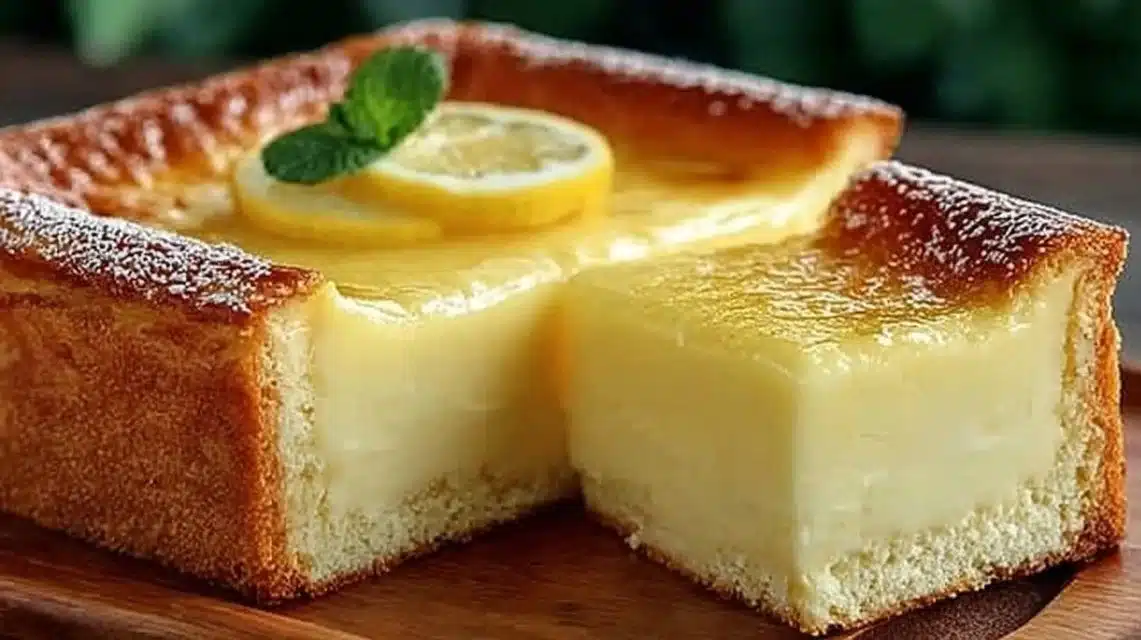
Italian Grandma’s Lemon Custard Cake is a bright, tender cake that tastes like a slice of home. The crumb is soft and buttery, with a gentle lemon custard note from fresh juice and zest that keeps each bite lively but not sharp. The texture feels like a light sponge with a faint custard richness — dense enough to be comforting, yet soft enough to melt on the tongue. This recipe is simple and forgiving: basic pantry ingredients, no fancy tools, and a straightforward bake-and-cool routine that any home cook can handle. Serve it thinly sliced with a dusting of powdered sugar or a small scoop of vanilla ice cream for a quick dessert or Sunday brunch treat. If you like lemon desserts, you may also enjoy this easy lemon blueberry cheesecake cookies recipe for another lemon-forward option.
Why You’ll Love This Italian Grandma’s Lemon Custard Cake
- Bright lemon flavor from both juice and zest without being overly tart.
- Soft, custardy crumb that feels homemade and satisfying.
- Uses common ingredients you likely already have in the kitchen.
- Easy, single-batter method — no separate custard to cook.
- Works for casual coffee breaks, brunch, or as a simple dessert.
- Light finish with powdered sugar keeps it elegant and not heavy.
- Flexible: serve warm, room temperature, or chilled depending on preference.
- Quick cleanup — one round pan and basic mixing tools.
What Is Italian Grandma’s Lemon Custard Cake?
Italian Grandma’s Lemon Custard Cake is a homestyle cake with a soft, moist texture and a gentle lemon custard flavor. It combines butter, eggs, milk, and fresh lemon juice into a batter that bakes into a cake with a tender crumb and a mildly tangy finish. The lemon zest lifts the aroma, while the whole milk and eggs bring a custard-like richness without needing a separate sauce. This cake is cozy and approachable — the kind of comfort food that suits a lazy afternoon, a family brunch, or a simple weeknight dessert. The bake-and-cool method gives it that old-fashioned, made-by-nonna feel that’s both humble and memorable.
Ingredients for Italian Grandma’s Lemon Custard Cake
For the Cake
- 1 cup unsalted butter, softened
- 1 cup granulated sugar
- 1 cup all-purpose flour
- 4 large eggs
- 1 cup whole milk
- 1/2 cup freshly squeezed lemon juice
- Zest of 2 lemons
- 1 teaspoon vanilla extract
- 1/4 teaspoon salt
To Serve
- Powdered sugar for dusting
Ingredient Notes (Substitutions, Healthy Swaps)
- Butter: Use unsalted butter as listed for control over salt. If you only have salted butter, reduce added salt to a pinch.
- Sugar: Granulated sugar is used here for structure. For a slightly more caramel flavor, you could use 3/4 cup granulated + 1/4 cup light brown sugar (optional).
- Flour: All-purpose flour is standard. For a lighter crumb, you can replace up to 1/4 cup with cake flour (optional).
- Eggs: Room temperature eggs mix better and trap air. Do not skip — they provide structure and custardy texture.
- Milk: Whole milk gives the best richness. For a lighter cake, use 2% milk, but expect a slightly less rich mouthfeel.
- Lemon juice and zest: Fresh lemon juice and zest are essential for bright, natural lemon flavor. Bottled lemon juice will not give the same freshness.
- Salt: Do not skip; it balances the sweet and lemon.
- Powdered sugar: Keeps the finish simple. For a glazed top, make a thin lemon glaze with powdered sugar and extra lemon juice (optional).
Step-by-Step Instructions
Step 1 – Prep the oven and pan
Preheat your oven to 350°F (175°C). Grease and flour a 9-inch round cake pan, tapping out the excess flour so the pan is evenly coated.
Visual cue: The pan should have a thin, even film of butter and flour — not heavy clumps.
Step 2 – Cream butter and sugar
In a large bowl, cream together the softened butter and granulated sugar until light and fluffy, about 3–4 minutes with a hand mixer or 5 minutes with a stand mixer. This step helps create air that gives the cake lift.
Step 3 – Add eggs and flavorings
Add the eggs one at a time, mixing well after each addition so the batter stays smooth. Stir in the lemon zest and vanilla extract until evenly distributed.
Step 4 – Combine dry and wet in alternation
Gradually add the flour and salt to the mixture, alternating with the milk. Begin and end with the flour. Mix just until smooth — do not overbeat.
Pro cue: Scrape the bowl down once or twice so no streaks of flour remain and the batter is uniform.
Step 5 – Add lemon juice and bake
Stir in the lemon juice until fully incorporated. Pour the batter into the prepared pan and smooth the top. Bake for 40–45 minutes, or until the top is golden and a toothpick inserted in the center comes out clean.
Visual cue: The cake will pull slightly away from the pan edges and the top will be evenly golden.
Step 6 – Cool and finish
Let the cake cool in the pan for about 10 minutes before transferring to a wire rack to cool completely. Once cool, dust with powdered sugar before serving.
Pro cue: Allowing the cake to cool fully helps it set into that custard-like texture. Warm is nice for serving, but completely cooled slices cut cleaner.

Pro Tips for Success
- Use room temperature butter and eggs for easier mixing and better emulsification.
- Zest lemons before juicing to avoid losing zest into the juice. Fresh zest is more aromatic.
- Measure flour by spooning into the cup and leveling with a knife — don’t scoop directly from the bag to avoid dense cake.
- Alternate flour and milk beginning and ending with flour to keep the batter from curdling.
- Test doneness with a toothpick; a few moist crumbs are fine — over-baking dries the cake.
- Cool in the pan briefly to reduce sticking, then transfer to a rack to avoid soggy bottoms.
- If the top browns too quickly, tent a loose piece of foil over the cake for the last 10–15 minutes.
- For the cleanest slices, chill the cake slightly before cutting or use a warm, wiped knife.
Flavor Variations
- Lemon-Blueberry (optional): Fold in 1 cup fresh blueberries (tossed in 1 tbsp flour) into the batter before baking. This adds juiciness and color.
- Almond-Lemon (optional): Replace 1/4 teaspoon of salt with 1/4 teaspoon almond extract (reduce vanilla to 1/2 teaspoon) for a nutty lift.
- Honey Lemon (optional): Replace 1/4 cup of granulated sugar with 1/4 cup mild honey for floral sweetness — reduce baking time slightly and monitor browning.
- Citrus Mix (optional): Add 1 tablespoon orange zest to the lemon zest for a multi-citrus aroma.
- Light Glaze (optional): Whisk 1 cup powdered sugar with 1–2 tablespoons lemon juice to drizzle over the cooled cake for a shiny finish.
Serving Suggestions
- Dust with powdered sugar and serve with a small scoop of vanilla ice cream for contrast.
- Pair slices with a cup of black coffee or an herbal tea for breakfast or afternoon snack.
- Serve warm with a dollop of whipped cream and fresh berries for brunch.
- Plate thin slices on dessert plates and garnish with extra lemon zest for a refined look.
- Offer alongside fresh ricotta lightly sweetened with honey for a rustic Italian feel.
- Bring to picnics or potlucks — serve at room temperature for best texture.
Make-Ahead, Storage & Reheating
- Make-ahead: Bake the cake up to 24 hours ahead. Store covered at room temperature or lightly wrapped. Dust with powdered sugar just before serving.
- Storage: Keep the cake in an airtight container in the refrigerator for up to 4–5 days. Refrigeration helps preserve moisture and freshness.
- Reheating: Warm a slice briefly in the microwave for 10–15 seconds (check at 10 seconds) or in a 300°F oven for 5–7 minutes. Avoid overheating or it will dry out.
- Texture changes: The cake firms slightly in the fridge and tastes more custardy once chilled. If you prefer soft and tender, serve at room temperature after chilling.
Storage and Freezing Instructions
- To freeze whole: Wrap cooled cake tightly in plastic wrap and then in foil. Freeze up to 2 months. Thaw overnight in the fridge before bringing to room temperature.
- To freeze slices: Individually wrap slices in plastic wrap and place in a freezer bag. Freeze up to 2 months. Thaw in the fridge and warm slightly if desired.
- Not recommended: Freezing is fine, but expect a slight loss of freshness and change in texture — the crumb may be more delicate after thawing. For best results, freeze only for long-term storage and consume soon after thaw.
Nutrition Facts (Per Serving)
Assumes 10 servings per 9-inch cake (estimates)
Calories | Protein | Carbs | Fat | Fiber | Sodium
— | —: | —: | —: | —: | —:
Approx. 360 | 6 g | 30 g | 22 g | 0.5 g | 170 mg
Estimates vary by brands and portions.
FAQ About Italian Grandma’s Lemon Custard Cake
Q: Why is my cake dense?
A: Overmeasuring flour, under-creaming the butter and sugar, or overmixing after adding flour can make it dense. Use proper measuring and mix just until combined.
Q: Why did the center sink?
A: Underbaking or opening the oven door too early can cause sinking. Check at 40 minutes and bake till a toothpick is clean.
Q: Can I use low-fat milk or dairy-free milk?
A: Yes, but whole milk gives the best custard-like richness. Use 2% or a richer plant milk if needed, but texture will change slightly.
Q: My cake tastes flat. What can I do?
A: Use fresh lemon zest and fresh lemon juice. Also ensure you added the full 1/4 teaspoon salt to balance flavors.
Q: Can I make this in a different pan?
A: Yes. For a 9×13 pan, bake time will be shorter — start checking at 30 minutes. For smaller pans, bake longer; watch closely.
Q: How can I tell when the cake is done without a toothpick?
A: The top should be golden and spring back slightly when touched, and the cake will begin to pull away from the pan edges.
TastyInspo Notes
- Finish with a few strands of fresh lemon zest over the powdered sugar for a bright look.
- Use a serrated knife for neater slices, wiping the blade between cuts.
- Serve on a warm plate for an inviting presentation at brunch.
- Add a tiny sprig of mint or basil for color contrast when serving with berries.
- For a rustic touch, place the cake on a wooden board and slice at the table.
Troubleshooting
Issue: Cake is too dry. Fix: Reduce bake time; check with a toothpick earlier. Ensure you measured flour correctly. Serve slightly warmed with a moist topping like whipped cream.
Issue: Cake is too wet or undercooked in center. Fix: Return to oven and bake in 5–7 minute increments until a toothpick shows only a few crumbs. Avoid opening oven early during baking.
Issue: Excessive browning on top. Fix: Tent foil over the cake for the remaining bake time. Lower oven rack one level if top is browning too fast.
Issue: Bitter lemon taste. Fix: Use only the yellow part of the zest (avoid white pith) and use fresh lemon juice; reduce juice slightly if lemons are exceptionally sour.
Issue: Batter curdles or looks broken. Fix: Alternate dry and wet ingredients and mix gently to bring the batter back together; room temperature ingredients help prevent this.
Final Thoughts
This Italian Grandma’s Lemon Custard Cake is an easy, homey dessert that balances bright lemon with a soft, custardy crumb. It’s forgiving to make, quick to come together, and perfect for sharing at small gatherings or quiet family meals.
Conclusion
For a classic take on lemon custard cake and more background on the traditional Torta della Nonna, see this helpful recipe and history at Torta della Nonna – Italian ‘Grandma’s cake’ with lemon custard.


Italian Grandma’s Lemon Custard Cake
Ingredients
For the Cake
- 1 cup unsalted butter, softened Use unsalted butter for control over salt.
- 1 cup granulated sugar For a caramel flavor, consider using 3/4 cup granulated and 1/4 cup brown sugar.
- 1 cup all-purpose flour Can replace up to 1/4 cup with cake flour for a lighter crumb.
- 4 large eggs Use room temperature eggs for better mixing.
- 1 cup whole milk For lighter cake, use 2% milk.
- 1/2 cup freshly squeezed lemon juice Fresh juice is essential for flavor.
- 1 teaspoon vanilla extract Adds depth of flavor.
- 1/4 teaspoon salt Do not skip; it balances sweetness.
To Serve
- Powdered sugar for dusting Keep the finish simple or add a glaze.
Instructions
Preparation
- Preheat your oven to 350°F (175°C). Grease and flour a 9-inch round cake pan.
- In a large bowl, cream together the softened butter and granulated sugar until light and fluffy, about 3–4 minutes.
- Add the eggs one at a time, mixing well after each addition. Stir in the lemon zest and vanilla extract.
- Gradually add the flour and salt to the mixture, alternating with the milk. Mix just until smooth.
- Stir in the lemon juice until fully incorporated. Pour the batter into the prepared pan and smooth the top.
Baking
- Bake for 40–45 minutes, or until the top is golden and a toothpick inserted in the center comes out clean.
Cooling and Finishing
- Let the cake cool in the pan for about 10 minutes before transferring to a wire rack to cool completely.
- Dust with powdered sugar before serving.